Perceptions of group typicality can shape how resources, such as scholarships, are distributed among group members. Across two studies, we predicted that East Asian applicants (e.g., Chinese) would be perceived as more typical of Asian Americans and thus more likely to be seen as worthy of an Asian American scholarship than their South Asian (e.g., Indian) and Southeast Asian (e.g., Filipino) counterparts. In Study 1, Chinese applicants were rated as more worthy of an Asian American scholarship than both Indian and Filipino applicants. Moreover, perceptions of Asian typicality predicted greater scholarship worthiness. In Study 2, we added a general scholarship condition that did not specify ethnicity to test whether Asian typicality influenced scholarship worthiness when the award was not designated for Asian Americans. However, we did not find the expected interaction between applicant ethnicity and scholarship type. Instead, we found only that the Chinese applicant was rated as more worthy of scholarships, regardless of scholarship type. Overall, perceptions of Asian typicality may guide judgements of scholarship worthiness in contexts where Asian identity is relevant.
We use “mind” in language on a regular basis. But what does it mean to have a mind? Within moral psychology, mind perception refers to the act of ascribing a mind, characterized in terms of mental and emotional capacities, to others. As the U.S. becomes increasingly diverse, we are interested in how people conceptualize minds, and how their conceptions of the mind affect how they treat individuals from diverse social groups. However, research to date takes an “identity‐neutral” approach to mind perception in that it overlooks the identities of perceivers and the target characters they are perceiving. In this paper, we draw on moral psychology research on mind perception, developmental and intergroup psychology, intersectional and critical perspectives, and consciousness theory to argue for the need to include identity in mind perception work. In doing so, we outline the theoretical and practical benefits of nuancing current mind perception research to include identity. Finally, we provide three concrete strategies to include identity in research on mind perception, organized by their potential to inform work that could make strong theoretical contributions. Thus, we aim to provide a framework for how researchers can build rigorous models of mind perception that are representative of an increasingly diverse society.
In the United States, Multiracial people with White ancestry may benefit from racial privilege not accessible to their monoracial minority counterparts. We examined this possibility by studying the racial position (Zou & Cheryan, 2017) of Multiracial-White groups (Study 1) and individuals (Study 2). In Study 1, Multiracial-White (specifically, Asian-White, Black-White, and Latino-White) groups were perceived as superior compared to their monoracial minority counterparts, and Asian-White and Latino-White groups were perceived as more American than monoracial Asian and Latino groups. In Study 2, racially ambiguous individuals were rated as higher in superiority and Americanness when they were described as having one White parent versus two minority parents. Furthermore, we examined perceptions of White phenotypicality as a possible mechanism underlying stereotypes that privilege Multiracial-White people. Indeed, racially ambiguous individuals were perceived as looking more phenotypically White when they were described as having one White parent versus two minority parents. Judgments of White phenotypicality partially mediated higher ratings of superiority and Americanness ascribed to individuals who identified as Multiracial-White (versus as monoracial minority). In sum, the present studies shed light on the mechanisms that may convey and sustain White privilege to Multiracial-White people.
Colorblindness may undermine the effective translation of psychological research findings to policy insights. Colorblindness, the ideological position that race should be ignored, may shape psychological research to the extent that psychologists assume that race does not matter to an understanding of human thought and behavior. This assumption creates a large gap between psychological research and the lived experiences of U.S. individuals, for whom resources, wealth, and opportunities are frequently contingent on racial group membership. This article suggests that colorblindness in psychology 1) increases the likelihood that policies aligned with psychological findings will exacerbate inequality rather than address racial disparities, 2) reduces the relevance of policy insights from psychological research to people of color, and 3) reduces the relevance of policy insights from psychological research to White individuals. Recommendations for deriving racially equitable and conscious policy insights from psychology are discussed.
Scholars have been working through multiple avenues to address longstanding and entrenched patterns of global and racial exclusion in psychology and academia more generally. As part of the Society for Personality and Social Psychology’s efforts to enhance inclusive excellence in its journals, the Anti Colorism/Eurocentrism in Methods and Practices (ACEMAP) task force worked to develop recommendations and resources to counteract racism and global exclusion in standard publication practices. In this paper, the task force describes a structure and process we developed for conducting committee work that centers marginalized perspectives while mitigating cultural taxation. We then describe our recommendations and openly accessible resources (e.g., resources for inclusive reviewing practices, writing about constraints on generalizability, drafting a globally inclusive demographic information survey, inclusive citation practices, and improving representation among editorial gatekeeping positions; recommendations and resource links are provided in Table 3). These recommendations and resources are both (a) tailored for a particular set of journals at a particular time and (b) useful as a foundation that can be continually adapted and improved for other journals and going forward. This paper provides concrete plans for readers looking to enhance inclusive excellence in their committee work, authorship, reviewing, and/or editing.
As a racial group, Asians are incredibly diverse; however, psychology research may not capture heterogeneity within this social category. Recent findings suggest that U.S. perceivers consider East Asian (e.g., Chinese, Japanese) Americans as more prototypically Asian American than South (e.g., Indian, Pakistani) or Southeast Asian Americans (e.g., Filipino, Vietnamese; Goh & McCue, 2021). We investigated whether artifacts of this cultural default are present in research conducted by U.S.-based psychologists. We also examined non-U.S.-based research to understand the potential limits of this prototype and its influence on research, globally. We expected to observe that most participants in psychology research are of East Asian descent and that most stimuli used to represent Asian identity actually depict East Asian (versus South and Southeast Asian) identity. To test our hypotheses, we conducted a literature search of psychology publications that mentioned “Asian” in the abstract. In line with our hypothesis, researchers were more likely to include East Asian participants and to present East Asian stimuli than to include or present South or Southeast Asian participants and stimuli in their research – results we observed in research conducted both within and outside of the U.S. We draw on intersectionality theory to inform recommendations for how researchers may work toward greater diversity and inclusion in their research.
Abstract People’s cognitions about others frequently take the form of stereotypes associated with socially constructed categories. Although stereotype content is shared across social categories, most research has investigated stereotyping in relation to a single category. This chapter considers how intersectionality theory informs a psychological understanding of social categories and stereotypes as interlocking. It describes three perspectives on stereotyping across interlocking social categories: category dominance, integration, and compartmentalization. Additionally, it considers how research in this area may address the core tenets of intersectionality theory that have, to date, received less attention in this literature. First, the chapter suggests that research on social cognition can expound how categories and stereotypes give rise to, and are reinforced by, intersecting power structures and inequalities. Second, it suggests that research from the perspectives of people who hold multiple stigmatized identities will inform a literature on social cognition that better resonates with diverse lived experiences.
Previous research has argued that a growing multiracial population will blur boundaries between racial groups, reducing racism and improving interracial relations. However, this is unlikely to happen if multiracial groups are judged according to their proximity to Whiteness. We examined how having White ancestry shapes status perceptions of multiracial groups. Studies 1 and 2 showed that multiracial groups with White ancestry (e.g., Black/White) are considered higher status than dual minority multiracial (e.g., Black/Latinx) and monoracial minority (e.g., Black) groups. Study 3 revealed that multiracial groups with White ancestry are perceived as more competent and warmer than monoracial minority and dual minority multiracial groups, leading to higher status perceptions for multiracial groups with White ancestry. Thus, multiracial people, like other racial minorities, may be judged according to White, Eurocentric standards. The results imply that, without anti-racist intervention, the treatment of multiracial people will reinforce, rather than challenge, the existing racial hierarchy.
Psychology must grapple with Whiteness — the social context of power and privilege unique to white participants — to achieve racial justice goals; however, psychologists are incentivized to conceal its influence.
Both early social psychologists and the modern, interdisciplinary scientific community have advocated for diverse team science. We echo this call and describe three common pitfalls of solo science illustrated by the target article. We discuss how a collaborative and inclusive approach to science can both help researchers avoid these pitfalls and pave the way for more rigorous and relevant research.
Past work on Black and Latinx individuals demonstrates that observers can accurately predict an individual's racial identity strength based on the observers' perceptions of the individual's phenotypic prototypicality (how much someone looks like a prototypical member of their racial group). However, the growing Biracial demographic varies considerably in racial identification, suggesting a monoracial approach to infer racial identity strength may not translate to Biracial individuals. In three studies, Biracial Black/White participants were photographed and completed a racial identity strength scale. Subsequently, we had raters judge the Biracial targets' phenotypic prototypicality and perceived levels racial identity strength. Overall, perceivers could not accurately predict Biracial individuals' racial identity strength via their phenotypic prototypicality.
Today, identity expression and acceptance represent an important area of political advocacy and representation. Yet, how responsive are voters to new racial identity cues promoted by political leaders? Using candidates with interracial backgrounds as a case study, we assess whether voters are responsive to candidates who assert a mixed-race identity or if voters primarily rely on other traits, such as the candidate's family background, in determining their support of that candidate. Using an experimental design, this study presents participants with various hypothetical candidates who vary both in their racial heritages (i.e., candidates with Asian and White interracial parents or Black and White interracial parents) and identity choices (i.e., as single-race minority, single-race White, or biracial). We then compare how the mixed-race, single-race minority, and White participants evaluate the candidate. We expect that the mixed-race participants will be most supportive of candidates who signal a common in-group identity by identifying specifically as "biracial". On the other hand, the single-race minority and White participants should be more likely to adhere to the one-drop rule or hypodescent in their evaluations, meaning they will provide more positive evaluations of interracial candidates who identify as a single-race minority. Our study finds that the single-race minority and White participants completely overlook racial identity cues and instead focus on the description of the candidate's family heritage along with their own assumptions about hypodescent. The mixed-race participants, on the other hand, show strong support for biracial-identified, in-group political candidates This study adds to a burgeoning literature on racial perception and on political representation.
Psychological science is at an inflection point: The COVID-19 pandemic has already begun to exacerbate inequalities that stem from our historically closed and exclusive culture. Meanwhile, reform efforts to change the future of our science are too narrow in focus to fully succeed. In this paper, we call on psychological scientists—focusing specifically on those who use quantitative methods in the United States as one context for such conversations—to begin reimagining our discipline as fundamentally open and inclusive. First, we discuss who our discipline was designed to serve and how this history produced the inequitable reward and support systems we see today. Second, we highlight how current institutional responses to address worsening inequalities are inadequate, as well as how our disciplinary perspective may both help and hinder our ability to craft effective solutions. Third, we take a hard look in the mirror at the disconnect between what we ostensibly value as a field and what we actually practice. Fourth and finally, we lead readers through a roadmap for reimagining psychological science in whatever roles and spaces they occupy, from an informal discussion group in a department to a formal strategic planning retreat at a scientific society.
Multiracial people-those whose racial ancestry is comprised of two or more races-have always had a presence in the United States. However, since the recent US Census shift to allow people to identify with multiple racial groups, social psychologists have shown increased interest in multiracial identity. However, we argue multiracial research tends to emphasize the perceptions, thoughts, and interests of White people through White-centering research practices, which reproduces racial inequality. To understand how multiracial research within social psychology has been shaped by White-centering research practices, we reviewed literature in social psychology examining multiraciality. We show that White-centering practices exist within this literature and explore how White-centering research practices lead to misrepresentations of the conclusions that may be drawn from multiracial research, underscoring how these conclusions affirm racial power or Whiteness. We suggest Critical Race Psychology as a possible framework to help dismantle the affirmation of Whiteness in multiracial research.
Integrating past research on women of color, stigma transfers, and generalized prejudice, the present research examined the extent to which threats and safety cues to one identity dimension (e.g., gender) results in threat or safety to women of color’s other stigmatized identity dimension (e.g., race). Across three experimental studies (Total N = 638), the present research found support for a dual cue hypothesis, such that Black and Latina women anticipated gender bias from a racial identity threat (Studies 1 and 2) and anticipated racial bias from a gender identity threat (Study 2) resulting in greater overall anticipated bias compared to White women (Study 3). Moreover, Black and Latina women anticipated racial identity safety from a gender identity safety cue (Study 3) supporting a dual safety hypothesis. These studies add to work on double jeopardy by extending a dual threat framework to anticipation of discrimination and highlighting the transferability of threat and safety cues for women of color.
Research shows that multiracial individuals' racial identities are often questioned because their appearances are not prototypical of their racial groups. We examined whether social activism performed by a multiracial person may bolster perceptions of that person as a legitimate representative of the racial minority group. In Studies 1 and 2, participants in a voting paradigm voted for a multiracial over a monoracial candidate if the candidate displayed social activism. In addition, Study 3 found that candidates who displayed social activism, rather than a generic racially prototypical behavior, were seen as more electable and representative of the association. Overall, our findings illuminate the power of social activism to alter perceptions of how representative multiracial individuals are of their racial minority groups..
Due to their awareness of multiraciality and their perceptions of race categories as fluid, multiracial individuals may be unique in how they racially categorize multiracial faces. Yet race categorization research has largely overlooked how multiracial individuals categorize other mixed-race people. We therefore asked Asian, White, and multiracial individuals to categorize Asian-White faces using an open-ended response format, which more closely mirrors real-world race categorizations than forced-choice response formats. Our results showed that perceivers from all three racial groups tended to categorize Asian-White faces as monoracial Asian, White, or Hispanic. However, multiracial perceivers categorized the Asian-White faces as multiracial more often than monoracial perceivers did. Our findings suggest that multiracial individuals may approach racial categorization differently from either monoracial majority or minority group members. Furthermore, our results illustrate possible difficulties multiracial people may face when trying to identify other multiracial in-group members.
The model of stigma-induced identity threat suggests that stigmatized individuals use situational cues (e.g., presence of an out-group member) to assess the identity threat potential of, or the risk of experiencing discrimination in, their environments. To date, however, this model has been tested in samples of participants with only one stigmatized identity. In three studies, we show that women of color attribute rejection to sexism more than racism when men are involved and to racism more than sexism when Whites are involved. Participants clearly attended to situational cues, despite predictions advanced in past research that women of color see all ambiguous situations in the same way: as involving primarily racism (ethnic prominence) or as involving both racism and sexism (double jeopardy). Study 3 further revealed that double-jeopardy-like attributions are more likely when rejections involve “double” out-group members, and single attributions are more likely when rejections involve “partial” out-group members.
Emotional eating is defined as an increase in eating following negative emotion. Self-reported emotional eating has been associated with physical health concerns. However, experimental and daily diary studies indicate that induced or naturally experienced negative emotions do not reliably lead to increased eating behavior in people without eating disorders, not even among self-professed emotional eaters. Emotional eating may depend on associations people have made between specific emotions and eating. We describe a set of studies with the overarching goal of determining whether accounting for the variation in people's associations between eating and different discrete emotions is the key to observing emotional eating. In both Study 1 (N = 118) and 2 (N = 111), we asked people to report on their tendency to eat following sadness and anxiety and determined how much they ate when induced to feel sad or anxious in the lab (Study 1) or experiencing these emotions in daily life (Study 2). We found no support for our hypotheses in either study; self-professed sad- or anxious-eaters did not eat more when induced to experience these emotions in the lab, or when experiencing these emotions in daily life. Thus, accounting for the variation in people's associations between eating and two discrete emotions, sadness and anxiety, is not the key to observing sad or anxious eating behavior in the lab or in daily life. Preregistration, materials, data, and code: https://osf.io/kcqej/ (Study 1) and https://osf.io/3euvg/ (Study 2).
 Alison Chasteen合作论文数Intergroup Relations Lab, Department of Psychology, Faculty of Arts and Science, University of Toronto10
 Diana T. Sanchez合作论文数9
 Sarah Elizabeth Gaither合作论文数Department of Psychology and Neuroscience, Trinity College of Arts & Sciences, Duke University7Kimberly E. Chaney合作论文数6
 Keith B. Maddox合作论文数Department of Psychology, Tufts University6Samantha H. Snyder合作论文数5
 Neil Lewis合作论文数Department of Communication, College of Agriculture and Life Sciences, Cornell University4Samuel R. Sommers合作论文数Tufts University4
 Sonia Kang合作论文数Institute for Management & Innovation, University of Toronto Mississauga4A. Chyei Vinluan合作论文数3Maria M. Garay合作论文数3
 Franki Y. H. Kung合作论文数Purdue Univ, Dept Psychol Sci, W Lafayette, IN 47907 USA3
 Hannah Moshontz合作论文数University of Wisconsin - Madison3
 Crystal N Steltenpohl合作论文数Psychol, Univ Southern Indiana3
 Jason Plaks合作论文数Department of Psychology, Faculty of Arts & Science, University of Toronto3
 Taylor Valerie Jones合作论文数Department of Psychology, Spelman College.3
 Forscher Patrick S合作论文数3
 Heather L. Urry合作论文数Department of Psychology and W.M. Keck Laboratory for Functional Brain Imaging and Behavior, University of3
 Alison Ledgerwood合作论文数University of California , Davis;New York University;University of California , Davis, New York University3C Pickett合作论文数2
 Chanel Meyers合作论文数Whitman Coll, Walla Walla, WA USA2Lindsey A. Cary合作论文数2
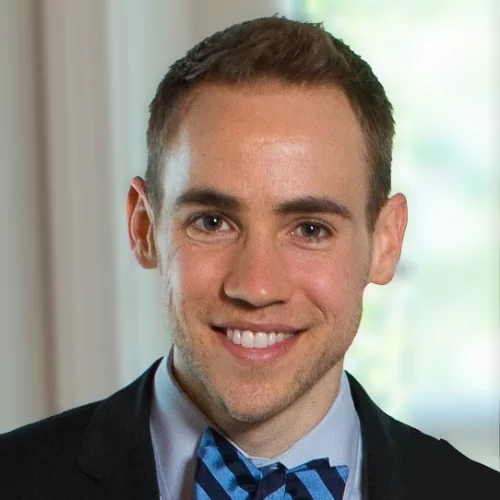 Nicholas Rule合作论文数Department of Psychology, University of Toronto Mississauga2
 Danielle Navarro合作论文数Certara2
 Erin C. Westgate合作论文数Department of Psychology, University of Virginia2
 John Paul Wilson合作论文数2Schultz Jennifer R合作论文数2
 Kristin Pauker合作论文数Department of Psychology, Stanford University2Adeyemi Adetula合作论文数1Joel E. Martinez合作论文数1Neil Anthony Lewis合作论文数1
 Sara Manuel合作论文数1Gregory John Leslie合作论文数1Bianca M. Hinojosa合作论文数1
 Erin Buchanan合作论文数1Katherine Weltzien合作论文数1Gizem Altheimer合作论文数1Muna Akhtar合作论文数1Dorainne J Green合作论文数1elvina oey合作论文数1Brianna Pankey合作论文数1Braeden F. Hall合作论文数1
 Maria Iankilevitch合作论文数1jeffrey d paek合作论文数1Lysander James Montilla Doble合作论文数1
 Joseph S. Reiff合作论文数UCLA Anderson Sch Management, Univ Calif Los Angeles1
 Lindsay Hinzman合作论文数Dept Psychol, Tufts Univ1
 Dulce Wilkinson合作论文数University of Minnesota1
 Sa-kiera Tiarra Jolynn Hudson合作论文数1




