Genomic prediction models that fit multiple environments globally are valuable tools for assessing cultivar performance across diverse and variable growing conditions. We analyzed 2,064 strawberry (Fragaria × ananassa) accessions genotyped with 12,591 SNP markers. Soluble solids content (SSC) was measured in multi-year trials conducted at seven locations spanning the U.S., Europe, and Australia. Population structure analysis grouped accessions into two major clusters corresponding to subtropical and temperate origins, which was confirmed by significant differences in allele frequency distributions. To improve prediction accuracy across environments, we developed factor analytic models focusing on genotype-by-environment interactions rather than covariance between sub-populations. We compared three genomic prediction approaches: (i) a standard GBLUP model (Gfa), (ii) a GBLUP model incorporating principal component analysis eigenvalues and re-parameterization (Pfa), and (iii) a multi-population GBLUP model that fits sub-population genomic relationship matrices (Wfa). The Pfa and Wfa models achieved the highest prediction accuracy (r = 0.8) for SSC, outperforming individual environment models and the standard GBLUP. These findings demonstrate that accounting for population structure and genotype-by-environment interactions enhances multi-environment genomic prediction and supports practical implementation of genomic selection in global strawberry improvement programs.
Due to climate change, the northern highbush blueberry production regions will be faced with increasing average temperatures and greater environmental variability. Highbush breeders will need to be cognizant of these changes and develop new cultivars that are more heat tolerant than our traditional ones and less subject to varying temperatures in the spring and fall. There is probably a readily available source of genes to meet these needs in southern highbush cultivars, which were developed by crossing wild southern blueberry species with cultivated northern highbush types.
Fifty Years Later—The Legacy of Alfred Crosby’s “The Columbian Exchange: Biological and Cultural Consequences of 1492.” It has been 50 years since the publication of Alfred Crosby’s revolutionary book on what he coined the “Columbian Exchange.” Crosby’s observations have stood the test of time and remain rock solid. There has been little argument about his central premise that the arrival of the Iberians in the New World was a collision that dramatically changed the whole world. All the work following his classic text has been of addition and expansion, not correction. Much greater detail has been provided on the “Great Dying” associated with the arrival of European diseases and the homogenization of New and Old World crops and livestock in the Americas. Information has also been generated on related topics little explored by Crosby including the following: 1) intra-hemispheric crop movements before the voyages of Columbus, 2) the crop homogenization that occurred during the European colonization of North America, 3) the role of the Portuguese and their African slave trade on the dissemination of crops across the world, 4) the inter-hemispheric exchange of wild plant species associated with migration, and 5) the cultural aspects associated with the Columbian Exchange. Herein is a review of the literature that has been published on the Columbian Exchange since Crosby’s ground-breaking masterpiece first appeared.
Anthracnose fruit rot, caused by Colletotrichum spp. is a major disease of highbush blueberries. The inheritance of fruit rot resistance to C. fioriniae was investigated in crosses of parents with varying levels of susceptibility. Three cultivars with known resistance profiles (Bluecrop, Elliott, and Jersey) and progeny from 16 crosses of parents with varying levels of susceptibility were screened. Fruit of field-grown bushes was inoculated when immature, harvested when ripe, and rated for infection incidence after 5, 8, and 12 days of incubation at 100% RH and 22–23°C. Area under the disease progress curves (AUDPC) values were calculated for 2010 and 2011 and slightly higher disease pressure was observed in 2011. These values were then regressed against actual disease incidences of cultivars and predicted (midparent) values for cross families based on two previous studies in 2010 and 2011 and significant correlations with the proportion of fruit decayed and sporulation capacity were observed. These findings provide strong evidence that anthracnose resistance is heritable in highbush blueberries, which has important implications for anthracnose resistance breeding. Additionally, this research provides benchmark AUDPC values for evaluation of future breeding selections for their resistance to C. fioriniae.
Among the most distantly separated plant species are those that are found on the polar regions of the northern and southern hemispheres, the so-called bipolar species. Two routes of introduction have been proposed—long-distance dispersal (LDD) and mountain hopping (MH). Shorebirds have been implicated in the distribution of the bipolar species by several authors, but the most likely participants and the most probable routes of introduction have been little investigated. The Global Biodiversity Information Facility database was accessed to determine the geographic range of those angiosperm species that have been reported to have bipolar distributions. A bipolar plant species was considered most likely to have been dispersed by LDD if it has a distinct disjunct distribution between North and South America, and through MH if it is found in intermediate latitudes. The Atlas of Bird Migrations and the Cornell Birds of the World database were searched to discover which birds make long-distance migrations from Arctic North America to the tip of South America, and their mode of travel. Twenty-three plant species have been identified as bipolar. LDD appears to have been more important than MH in their dispersal, as seventeen (75%) have disjunct distributions and six (25%) are found in intermediate latitudes. The most likely players in the LDD dispersal of the bipolar plant species are the Eskimo Curlew, Hudsonian Godwit, Red Knot, Ruddy Turnstone and Whimbrel. Of these five long flyers, the Hudsonian Godwit may have delivered the most seeds as its breeding and migration ranges overlap with the most bipolar species, 12 in all.
This chapter describes the commercial, political, and trade landscape of the early ancient civilizations. It consists of ten subchapters which are about the early Egyptian-Levantine trade, the Minoans and Mycenaeans, the invisible commodities in early commerce between Egypt and the Levant, Solomon and the Kingdom of Israel, Phoenicians, emergence of the Greek City States, Alexander and the City of Alexandria, Egypt under the Ptolemies, Rome and Carthage rise and fight for Mediterranean supremacy, and lastly, the Romans control of Egypt.
This chapter entails fourteen subchapters that detail the course of the South East Asian maritime trade. The subsections are about the beginning of Indonesian trade, the origin of trade between India and South East Asia, maritime trade of the Anuradhapura Kingdom, the Indianization of Indonesia, China's slow entry into the South East Asia trade network, Java becomes the nucleus of Indonesia, the Chinese Pilgrims - Chroniclers of the ancient spice and silk routes, early trade in the outer reaches of Indonesia, the Golden Peninsula, the first great trading empire: Funan, South East Asian trading spheres in the early first century CE, European connections, the two ways to Rome, and finally, the first direct contact between Rome and China.
This chapter elaborates the landscape of political power and Silk trade in the Middle East. It consists of eleven subchapters which are about the empires of the Middle East, Roman intrusions into the Middle East, Palmyra as the greatest of the Middle Eastern trading centres, the power of Zenobia, Kushans take the centre of the silk routes, Kushan Connections, Parthia's control of the Terminus, Sasanians taking over, ebbs and flows of the silk route, plague that slowed the trade, and lastly, silk trade after 400 ce.
When the Dutch and English first entered the Indian Ocean, the primary goal of both nations was to gain a monopoly in the spice trade. To do this, they had to militarily push out the Portuguese and prevent the other from gaining a foothold. Ultimately, the VOC came out the big Winner taking control of the clove, nutmeg and mace trade of the Moluccas. It also took a considerable portion of the Indonesian pepper trade by force, but not all. With the loss of the Spice Islands, the British shifted their attention to India and its pepper, saltpetre, cotton and indigo. The VOC also turned its eyes to India, but with far less lasting impact. To gain their foothold in India the English and Dutch were faced with two significant challenges: they would need to gain the favour of the Mughals who now controlled most of North India and they would have to push back the Portuguese who were well entrenched along the west coast. The Mughals had left the Portuguese ports mostly alone, preferring to trade with them rather than fight.
Abstract Summarizing how the Ottoman took over the Middle East, the chapters also outlines the boom of the Muslim trade in Europe. Three powerful Muslim empires eventually ringed the Indian Ocean: the Ottomans controlled the Red Sea, the Safavid Dynasty controlled the Persian Gulf route, and the Mughal Empire covered most of India. The chapters also show the flow of the huge Indian Ocean trading network, stating how Muslim communities grew to become trading empires led by powerful sultans who established strong trading by navigating the seas. The terminals of the ocean trade involves: India, Aden, Ormuz, Swahili Coast of Africa, Strait of Malacca and the City of Malacca, Sumatra and Java, Ceylon, and Moluccas. Also, the chapters provide a summary of the ocean trade with Chinese dynasties and other Far East Asian countries.
 Chad Finn合作论文数United States Department of Agriculture;Agricultural Research Service;Horticultural Crops Research Laboratory;Horticultural Crops Research Laboratory, United States Department of Agriculture43
 Nahla Bassil合作论文数U.S. Department of Agriculture32
 James Luby合作论文数Department of Horticultural Science, College of Food, Agricultural and Natural Resource Sciences, University of Minnesota29
 Jorge B. Retamales合作论文数Facultad de Ciencias Agrarias;Centro de Investigación en Biotecnología Silvoagrícola;Universidad de Talca;Centro de Investigación en Biotecnología Silvoagrícola, Universidad de Talca20
 Sedat Serce合作论文数Dept Hort, Mustafa Kemal Univ18Megan M. Mathey合作论文数16
 Cholani Weebadde合作论文数15
 James Flore合作论文数14
 Eric Van de Weg合作论文数13P. W. Callow合作论文数13Mp Pritts合作论文数12
 Guoqing Song合作论文数Michigan State University11
 Lisa J. Rowland合作论文数11Amy F. Iezzoni合作论文数11Stan C. Hokanson合作论文数11Sonali Mookerjee合作论文数10
 Natalia Salinas合作论文数IFAS Gulf Coast Res & Educ Ctr, Univ Florida10
 Vance Whitaker合作论文数University of Florida10Denoyes Beatrice合作论文数UMR BFP, INRA10
 Kazim Gunduz合作论文数9
 Rebecca Grumet合作论文数9Jh Siefker合作论文数8Rs Bringhurst合作论文数8
 Daniel James Sargent合作论文数Westfalia Fruit8
 Pete Callow合作论文数8
 Thomas M Davis合作论文数8
 Gustavo A. Lobos合作论文数Fac Ciencias Agr, Univ Talca8D. C. Ramsdell合作论文数8
 Philip J. Stewart合作论文数Department of Plant Sciences, University of Oxford8
 James W. Olmstead合作论文数Michigan State University8Sl Krebs合作论文数7
 Jason Zurn合作论文数Department of Animal Sciences, North Dakota State University7
 Cameron P. Peace合作论文数Department of Horticulture, Washington State University7
 Iraida Amaya合作论文数IFAPA-Centro de Churriana7Kim S. Lewers合作论文数Genetic Improvement of Fruits and Vegetables Lab, Beltsville Agricultural Research Center7Peter W. Callow合作论文数6Bl Goulart合作论文数6
 Walworth Aaron E合作论文数6Hanson Eric J合作论文数6Mahoney Lise合作论文数6
 Kim Hummer合作论文数Department of Horticulture, College of Agricultural Sciences, Oregon State University6
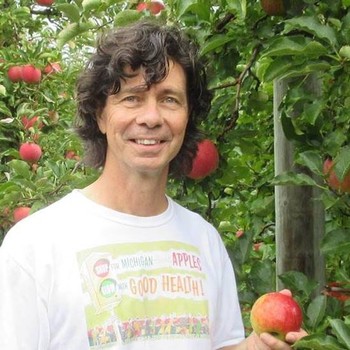 Randolph M. Beaudry合作论文数Department of Horticulture, College of Agriculture & Natural Resources, Michigan State University6Susan Mccallum合作论文数6Julie Graham合作论文数6Ce Finn合作论文数5
 Richard Rees合作论文数5
 Sujeet Verma合作论文数GCREC, University of Florida5
 Annemiek Schilder合作论文数5n l schulte合作论文数4




