Heavy metal contamination in herbal medicines is a global threat to human beings especially at levels above known threshold concentrations. The concentrations of five heavy metals cadmium (Cd), lead (Pb), arsenic (As), mercury (Hg) and copper (Cu) were investigated using Inductively Coupled Plasma Optical Mass Spectrometry (ICP-MS) with 1773 samples around the world. According to Chinese Pharmacopoeia, 30.51% (541) samples were detected with at least one over-limit metal. The over-limit ratio for Pb was 5.75% (102), Cd at 4.96% (88), As at 4.17% (74), Hg at 3.78% (67), and of Cu, 1.75% (31). For exposure assessment, Pb, Cd, As, and Hg have resulted in higher than acceptable risks in 25 kinds of herbs. The maximal Estimated Daily Intake of Pb in seven herbs, of Cd in five, of Hg in four, and As in three exceeded their corresponding Provisional Tolerable Daily Intakes. In total 25 kinds of herbs present an unacceptable risk as assessed with the Hazard Quotient or Hazard Index. Additionally, the carcinogenic risks were all under acceptable limits. Notably, As posed the highest risk in all indicators including Estimated Daily Intake, Hazard Index, and carcinogenic risks. Therefore further study on enrichment effect of different states of As and special attention to monitoring shall be placed on As related contamination.
适宜性产区能够保障傣族药的品质,然而有关植物类傣族药适宜生态因子及适宜产区的研究目前较为匮乏.本研究利用中药材产地适宜性分析地理信息系统(GMPGIS)对植物类傣族药进行全国产地生态适宜性分析,首次提出了植物类傣族药主要分布区域的生态因子范围和主要土壤类型,如年均温8.6~23.7℃,年均降水量1 212~1 881 mm,年均日照149.7~157.4W·m-2,主要土壤类型为强淋溶土、冲积土、高活性强酸土等.以179个采样点为基础,通过生态相似性分析得到植物类傣族药在全球范围内的最大生态相似度区域,主要包括中国、巴西、美国、缅甸、老挝等国家.在中国主要集中在云南的西部和南部,包括西双版纳傣族自治州、德宏傣族景颇族自治州普洱市、保山市、临沧市具有较大的适宜栽培区域.除此之外,本文通过分析傣族药人才匮乏、傣族药资源日益减少、文化传承具有局限性、科学研究薄弱等问题,并提出了通过傣族医药高素质人才培养、傣族药资源调研和保护工作、推进傣族药资料古籍的搜集整理、加强傣族药基础研究和应用研究等策略促进傣族医药发展.本研究为指导植物类傣族药生产基地合理布局、引种繁育等提供依据,为高品质傣族药的科学规范化生产奠定基础.
Focus on the safety of herbal medicines has mainly been directed towards the presence of intrinsic toxicity, as found in the cases of renal and hepatic dysfunction caused by aristolochic acids. However, contamination from extrinsic hazards may impart an even greater reduction in their safety and efficacy. This study reveals that pesticides were present in the majority (88%) of a comprehensive cross-section (n = 1771) of herbal medicine samples. Alarmingly, more than half (59%) contained pesticides over the European Pharmacopoeia (EP) limit, and 43% of them contained 35 varieties of banned, extremely toxic pesticides, eight of which were detected at levels over 500 times higher than the default Maximum Residue Limit (MRL). DDTs, carbofuran, and mevinphos were confirmed as being among the most risk-inducing pesticides by three different risk assessment methods, reported to produce carcinogenic, genotoxic, reproductive, and developmental effects, in addition to carrying nephrotoxicity and hepatotoxicity. In light of these findings, and withstanding that extrinsic hazards can be controlled unlike intrinsic toxicity, the authors here strongly recommend the application of herbal medicine quality-control measures and solutions to safeguard against a neglected but certainly potentially serious health risk posed to the majority of the global population that consumes herbal medicines.
The shortage of new cannabis varieties with low THC and high CBD content and irregular planting techniques have become the bottleneck for he development of non-psychoactive medicinal cannabis industry. Based on the cannabis germplasm resources,this paper proposes strategies for breeding high CBD content,seed-type and high-efficiency,dwarf non-psychoactive medicinal cannabis varieties through molecular marker development,assisted breeding,genetic engineering breeding and traditional breeding. According to the suitable ecological factors of non-psychoactive medicinal cannabis,the CBD content and grain yield of non-psychoactive medicinal cannabis can be improved by regulating the nutritional structure and illumination properties of non-psychoactive medicinal cannabis,scientific harvesting and storage. At the same time,in order to further accelerate the application of non-psychoactive medicinal cannabis,we can accelerate the selection of new varieties of non-psychoactive medicinal cannabis by mining genetic information of cannabis,and strengthen the application of information technology and automation of modern agriculture in the production of non-psychoactive medicinal cannabis. Provide basis for the cultivation and wide application of new non-psychoactive medicinal cannabis varieties with high quality and high yield.
Background: Focus on the safety of herbal medicines has mainly been directed towards the presence of intrinsic toxicity, as found in the reported cases of renal and hepatic dysfunction caused by aristolochic acids. However, contamination from extrinsic hazards may have the potential to impart an even greater reduction in their safety and efficacy.Methods: Currently available herbal medicine samples from large-scale cultivation areas in major herbal medicines markets in China were collected for analysis of pesticides by LC/MS-MS or GC/MS-MS. Additionally, dietary exposure assessment, risk-ranking score and comparative health impact analysis were employed to estimate the hazard potential of pesticide residue exposure in herbal medicines.Findings: This study reveals that pesticides were present in the majority (88%) of a large, comprehensive cross-section (n=1771) of herbal medicine samples. Alarmingly, more than half (59%) contained pesticides over the European Pharmacopoeia (EP) limit, and 43% contained 35 varieties of banned, extremely toxic pesticides, eight of which were detected at levels over 500 times higher than the default Maximum Residue Limit (MRL). DDTs, carbofuran, and mevinphos were confirmed as being among the most risk-inducing pesticides by three different risk assessments methods, reported to produce carcinogenic, genotoxic, reproductive, and developmental effects, in addition to carrying nephrotoxicity and hepatotoxicity.Interpretation: Herbal medicines are severely contaminated with risk-inducing pesticides, therefore the authors strongly recommend the application of quality-control measures to safeguard public health.Funding Statement: This study was funded by the Study on the Key Safety Validation Elements of Chinese Medicine in International Trade, International Science & Technology Cooperation Program, PR China (2015DFM30030) and the OLCA-Pest Project, financially supported by ADEME, Denmark (17-03-C0025).Declaration of Interests: All authors declare no competing interests.Ethics Approval Statement: Not required.
 Linlin Dong (董林林)合作论文数Institute of Chinese Materia Medica, China Academy of Chinese Medical Sciences5
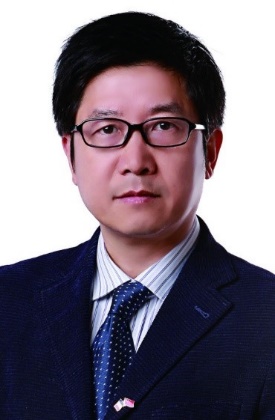 Shilin Chen (陈士林)合作论文数Chengdu University of Traditional Chinese Medicine;China Academy of Chinese Medical Sciences4
 Qin Huang合作论文数3Guangfei Wei合作论文数3
 Martin Fitzgerald合作论文数Ashdale Clin3Lu Luo (骆璐)合作论文数3
 Jianhe Wei (魏建和)合作论文数Institute of Medicinal Plant Development, Peking Union Medical College, Chinese Academy of Medical Sciences3
 Jiang Jingwen合作论文数West China Hospital, Sichuan University3Jianhui Li合作论文数2Kaito Mizuno合作论文数2Shumei Wang合作论文数2Mengzhi Li合作论文数2Chao Xiong合作论文数2Haifeng Wang (王海峰)合作论文数2Jane Yang合作论文数2Chao-qun WANG (王超群)合作论文数2YiChuan Liang (梁乙川)合作论文数2ZhengWei Jia (郏征伟)合作论文数2
 Lan Wu (吴兰)合作论文数Nanchang University2
 Han Zhang (张晗)合作论文数First Teaching Hospital, Tianjin University of Traditional Chinese Medicine2
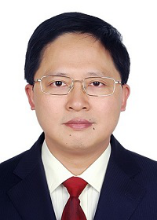 Cheng Peng (彭成)合作论文数School of Pharmacy, Chengdu University of Traditional Chinese Medicine2
 YunTao Dai (代云桃)合作论文数中国中医科学院中药研究所2
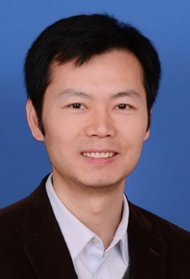 Wei Zhang (张伟)合作论文数Institute of Clinical Pharmacology, Central South University2
 Jiang Xu (徐江)合作论文数Graduate School of China Academy of Chinese Medical Sciences2
 Jingyuan Song (宋经元)合作论文数Institute of Medicinal Plant Development, Chinese Academy of Medical Sciences2
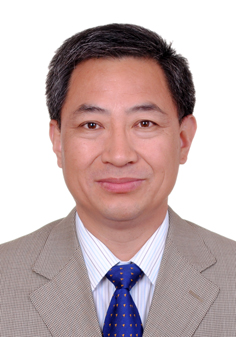 Shuangcheng Ma (马双成)合作论文数National Institutes for Food and Drug Control2
 Peter Fantke合作论文数Substitute Aps;Usetox Team2Guang-wei ZHU (朱广伟)合作论文数1
 Chenyuyan Yang合作论文数1Lei WANG (王磊)合作论文数1Bo Wang合作论文数Hubei Inst Drug Control, Wuhan 430012, Peoples R China1Xiao-hui ZHANG (张小会)合作论文数1Xiao-ming SUN (孙晓明)合作论文数1
 Hui Zhang合作论文数Akupunktur Akad1
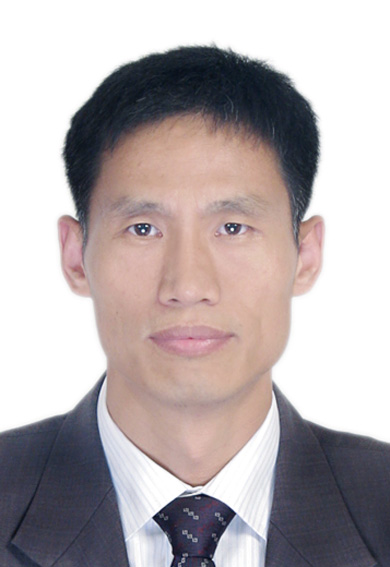 Guangwei Zhu (朱广伟)合作论文数Nanjing Institute of Geography & Limnology, Chinese Academy of Sciences;University of Chinese Academy of Sciences1Hui Li合作论文数1
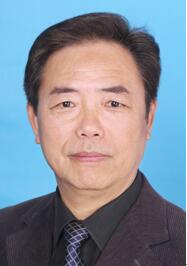 Yu Zheng (郑煜)合作论文数Department of Physiology, West China School of Basic Medical Sciences & Forensic Medicine, Sichuan University1




