This study presents a low-cost laser line-based 3D scanning system tailored for digitizing biological and educational tools in secondary schools, addressing the dual challenges of high equipment costs and limited accessibility of physical specimens. The proposed system integrates a structured laser emitter, monocular camera, and motion guide, utilizing optical triangulation and optimized algorithms to achieve cost-effective 3D reconstruction. Key innovations include an improved Steger algorithm for laser stripe extraction, enhanced by adaptive brightness thresholding, connected-region analysis, and noise suppression to address redundant point generation in biological microstructure reconstruction. Experimental validation demonstrated sub-millimeter accuracy in reconstructing crucian carp specimens, successfully capturing critical morphological features like lateral line systems. The system’s cheap hardware configuration and high computational efficiency make it particularly suitable for resource-constrained educational settings. This solution bridges the gap between the preservation challenges of physical specimens and the demand for interactive digital resources in biology education, enabling high-fidelity 3D visualization of anatomical structures while maintaining ethical and budgetary constraints.
Artificial intelligence (AI) is reshaping the landscape of medical education with unprecedented depth and breadth. As technologies like large language models and natural language processing advance, AI agents with multimodal interaction capabilities—such as intelligent teaching assistants and virtual simulation labs—are demonstrating immense potential. Concurrently, medical students face challenges including a disconnect between theoretical knowledge and clinical practice, excessive cognitive load, and a lack of personalized practical opportunities. Medical education AI agents are poised to address these issues, but their successful integration hinges on student acceptance and adoption. This study aims to fill a gap in the current empirical research by investigating the key psychological mechanisms and behavioral factors that influence medical students’ adoption of AI educational agents. This study constructed an extended Unified Theory of Acceptance and Use of Technology (UTAUT) model by integrating four key variables tailored to the medical education context: AI Trust, Perceived Risk, Hedonic Motivation, and Trialability. A cross-sectional survey was conducted with an initial sample of 200 clinical medicine students following their interaction with a custom-developed interactive medical education AI agent. After excluding invalid responses, a final valid sample of 155 participants was retained. Partial Least Squares Structural Equation Modeling (PLS-SEM) was employed to validate the theoretical model and test the research hypotheses. The constructed model demonstrated strong explanatory power, successfully accounting for 85.3
Three-dimensional (3D) reconstruction measurement technology utilizing line-structured light offers non-contact operation, making it widely applicable in industrial production. An effective scanning-direction calibration method in a line-structured light-based 3D measurement system can not only enhance the system accuracy but also mitigate the production inefficiencies caused by measurement errors. Consequently, developing a high-efficiency and high-precision scanning-direction calibration technique is a pivotal challenge for advancing structured light-based 3D measurement systems. In this study, we propose an improved method to calibrate the sensor’s scanning direction that iteratively optimizes control points via plane transformation while leveraging the rotational invariance of the rotation matrix during translation. By minimizing the reprojection error, an optimized rotation matrix is identified, and the Levenberg–Marquardt (LM) algorithm is subsequently employed to iteratively refine the displacement vector, enabling precise estimation of the scanning direction. Usually, in line-structured light-based 3D reconstruction measurement, a 5 mm standard gauge block is first reconstructed, and then, the reconstruction error of the standard gauge block is used to compare the accuracy of the scanning-direction calibration (other quantities remain unchanged). Hence, we conducted a comparison experiment using the constructed line-structured light-based 3D reconstruction measurement system, and the experimental results demonstrated that the proposed method reduces the reconstruction errors by 29% compared to the classical independent estimation method and by 5% compared to the current joint estimation method. Furthermore, our method eliminates strict distance constraints, thereby enhancing its adaptability in practical applications.
Online learning has drawn attention to the problem of adaptive learning path recommendations. The reinforcement learning (RL) algorithm has become an important tool in this research field due to its effectiveness in solving the multi-sequence decision-making problem during dynamic environment interaction. This study enhances the cognitive structure enhanced framework for adaptive learning (CSEAL) and constructs a new adaptive learning path recommendation (ALPR) framework to address problems like incomplete characterization of dynamic learning environments and sparse and delayed reward design incentives. First, the framework incorporates the core dynamic features of the domain model into dynamic learning environment characterization with increased completeness and accuracy. Second, the reward function is redesigned based on the idea of reward shaping to make the performance of the agent more stable while exploring. The adaptive learning algorithms involved in the ALPR framework are described in detail. Finally, experiments on appropriate datasets show that the learning path recommended by the ALPR method is better than those recommended by other advanced baseline methods. The proposed framework raises the standard of learning path recommendations in a dynamic learning environment, which not only enhances the theory of adaptive learning but also encourages the creation and use of individualized online learning programs.
This paper proposes a new scheme for measuring the upper body 3D pose of all students using existing cameras in a standardized smart classroom. Unlike the current scheme of only using one camera in the smart classroom, it adopts a scheme of using multiple cameras. When the missing detection problem arises in the students’ 3D pose measurement scheme based on a single camera in the smart classroom, our scheme can still successfully measure the 3D human body pose of all students in the classroom due to the use of information from multiple cameras. Meanwhile, there is currently almost no research on 3D human body pose estimation in scenes with more than 10 persons and severe occlusion. This pilot study provides a reference for the new task in this new scene.
Semantic segmentation is a basic task in the interpretation of remote sensing images. Mainstream deep-learning-based semantic segmentation algorithms typically process images with small sizes. However, remote sensing images typically involve large areas with buildings and water, which have weak textures. Owing to the limited range of receptive fields, the semantic segmentation of such areas from small images may lead to problems, such as loss of spatial features and inaccurate boundary extraction. To address these problems, this paper devises a patch-to-region framework for the semantic segmentation of large-format remote sensing images. This framework has a bottom-up pyramid structure, where the bottom layer is a small image patch, referred to as a “patch,” and the upper layer is a large image region, referred to as a “region.” The classical semantic segmentation network is first used to process small image patches to obtain pixel-by-pixel semantic features. Then, the pixel-by-pixel semantic features are sparsely reduced into patch-level semantic feature vectors, and the semantic feature vectors of the entire image region are processed through the contextual information extractor to extract the global semantic feature vectors. Subsequently, an information aggregation module is used to integrate the global semantic feature vectors and semantic features to obtain new semantic features with both global and local information. Finally, a lightweight decoding module is used to process the new semantic features to obtain the final semantic segmentation result. The developed framework is evaluated over three public datasets. The results of extensive experiments show that the framework can achieve more accurate and reliable semantic segmentation of high-resolution remote sensing images than state-of-the-art semantic segmentation algorithms. Moreover, ablation studies are performed to verify the effectiveness of each module of the framework.
This paper studies the application of pose estimation algorithm in ballet movement analysis. In view of the complexity and diversity of ballet movements, traditional analysis methods often fail to accurately capture key movement and posture information. Therefore, in this study, a new pose estimation algorithm was proposed based on key point correlation modeling and full-view data expansion techniques, and a deep neural network structure was used to extract and classify ballet movements. Through the training network, the input ballet movement data is converted into key point coordinates and the exact position and pose information for each key point is predicted. Experimental results show that compared with traditional methods, the new pose estimation algorithm based on key point correlation modeling and full- view data expansion can more accurately capture the details and features of ballet movements, and the correct rate of pose analysis is increased by 7.76%. In summary, the pose estimation algorithm based on key point correlation modeling and full view data expansion technology provides an effective solution for ballet movement analysis. In the future, the algorithm is expected to play an important role in the fields of dance teaching, dance evaluation and art research.
Intelligent interpretation of remote sensing images using deep learning is heavily reliant on large datasets, and models trained in one domain often struggle with crossdomain application. Pretraining the backbone network via masked image modeling can effectively diminish this reliance on extensive sample data, thereby reducing crossdomain transfer obstacles. However, current masked image models typically employ a pure Transformer architecture, which may not fully capitalize on low-level features. To address these issues, this article proposes masked feature modeling (MFM), a methodology for the generative self-supervised learning of high-resolution remote sensing images that combines convolutional neural network (CNN) and Transformer architectures. This methodology has several advantages: 1) The hybrid CNN + Transformer architecture not only retains the advantages of the local feature representation of the CNN architecture but also has the full-text information modeling capabilities of the Transformer architecture; 2) the feature extraction network outputs multiscale features, and it is easier to add upsampling and a skip connection to improve the accuracy of the downstream dense prediction task; and 3) the pretrained MFM can be applied to various downstream tasks through fine-tuning with limited samples. The publicly available WHU and Massachusetts Building Datasets are used to verify the effectiveness of the proposed method. Extensive experiments involving main properties of the MFM for generative self-supervised learning, fine-tuning the MFM on the downstream semantic segmentation task, and comparisons with the other state-of-the-art generative self-supervised learning algorithms show that, through the combined advantages of the CNN and Transformer architectures, the proposed method has better feature extraction capability and higher accuracy on downstream tasks such as semantic segmentation.
Since the term "virtual reality" (VR) was first used in the 1960s, VR has evolved to the point where it is being used in a variety of fields. Most scholars' studies on engagement have focused on the field of online learning, but there is a lack of research on learning engagement in immersive virtual environments. Therefore, this study uses an experimental research method under the guidance of immersive education theory to investigate the learning engagement and learning satisfaction of students of CCNU in quantitative data analysis of learning engagement and learning satisfaction in the immersion environment and in the laptop video learning environment. The correlation between curiosity, presence and learning engagement was also explored. The experimental results reveal that 1) the immersive virtual environment has a significant positive effect on the learning engagement of college students; 2) the learning engagement of students in the immersive virtual environment is positively correlated with curiosity and presence, respectively. This is also a good proof that the stronger immersion brought by virtual reality technology is a major reason for positively influencing students' learning engagement.
Online discussion forums are an important component of communication and interactions between teachers and students. The success of online discussion forums depends largely on the e-moderating behavior of the students who are assigned the role of peer moderators. Their ability to facilitate meaningful discussions, encourage diverse perspectives, and keep the conversation on track is paramount to achieving group cognitive engagement and superior performance. This study analyzed the discourse generated by learners in online discussion forums, with a particular focus on the still under-explored effort of peer moderation on groups' cognitive engagement and learning achievement in online discussion forums. The result of multiple regression analyzes demonstrates how certain levels of cognitive engagement and peer moderation relate to learning achievement. Furthermore, this study examined the moderating role of peer moderation in the association between high-order cognitive engagement and learning achievement. The findings indicate that while peer moderation can have a positive moderating effect, this effect is weaker for a higher number of Development moderations, suggesting that excessive Development may lead to endless arguments and decrease discussion efficiency.
High-resolution remote-sensing-image change detection is widely used in urban dynamic monitoring, geographic information updating, natural disaster monitoring, illegal building investigation, and land resource surveys. Common change-detection algorithms are mainly implemented in a fully supervised manner that relies on a large number of high-quality samples. Compared with a building change-detection dataset, a building semantic-segmentation dataset is easier to accumulate and obtain. Making full use of this semantic information in the design of a building change-detection network can effectively reduce the sample size required to train a change-detection model. In view of this, a semantic feature-guided Siamese change-detection framework is devised in this letter. The framework effectively exploits the prior information of building semantic features and uses the popular transformer structure to improve the change analysis module. The results of extensive experiments on two public datasets show that the framework is more accurate than the other state-of-the-art change detection algorithms and can effectively reduce the dependence of data on change detection samples in the model training process.
Story segmentation plays an important role in helping students quickly locate key knowledge points within massive and fragmented teaching video resources. It also serves as the basis for accurate searching of valuable teaching video clips. While keyframe-based story segmentation has achieved remarkable results in news videos, achieving accurate story segmentation in teaching videos is challenging. Therefore, we propose an unsupervised teaching video story segmentation method called SegRewardGraph, which utilizes a subtitle length-rewarding strategy and semantic relatedness graphs. SegRewardGraph employs subtitle semantic similarity to divide video stories, ensuring semantic integrity and improving the accuracy of story segmentation. Specifically, SegRewardGraph first uses the Bidirectional Encoder Representation from Transformers (BERT) model combined with first-last-avg pooling to encode semantic vectors for sentences within video stories. Then, it computes similarities between all sentence vectors and utilizes the associations to build semantic relatedness graphs. A subtitle length-rewarding strategy is formulated to evaluate the segmentation effect. Additionally, boundary detection and boundary merging algorithms are designed based on the subtitle length-rewarding strategy to generate effective segmentation suggestions. Finally, the selected boundaries are mapped to keyframes, enabling semantic content-based segmentation of teaching videos. This study verifies the effectiveness of the proposed method using massive open online courses (MOOC) teaching video datasets. Experimental results demonstrate that the model proposed in this paper outperforms existing methods and achieves state-of-the-art results for teaching video segmentation tasks.
High-resolution remote sensing image change detection technology compares and analyzes bi-temporal or multitemporal high-resolution remote sensing images to determine the change areas. It plays an important role in land cover/use monitoring, natural disaster monitoring, illegal building investigation, military target strike effect analysis, and land and resource investigation. The change detection of high-resolution remote sensing images has developed rapidly from data accumulation to algorithm models because of the rapid development of technologies such as deep learning and earth observation in recent years. However, the current deep learning-based change detection methods are strongly dependent on large sample data, and the training model has insufficient cross-domain generalization ability. As a result, a prior semantic information-guided change detection framework (PSI-CD), which alleviates the change detection model's dependence on datasets by making full use of prior semantic information, is proposed in this paper. The proposed method mainly includes two parts: one is a prior semantic information generation network that uses the semantic segmentation dataset to extract robust and reliable prior semantic information; the other is the prior semantic information guided change detection network that makes full use of prior semantic information to reduce the sample size of the change detection. To verify the effectiveness of the proposed method, we produced pixel-level semantic labels for the bi-temporal images of the public change detection dataset (LEVIR-CD). Then, we performed extensive experiments on the WHU and LEVIR-CD datasets, including comparisons with existing methods, experiments with different amounts of data, and ablation study, to show the effectiveness of the proposed method. Compared with other existing methods, our method has the highest IoU for all training samples and different amounts of training samples on WHU and LEVIR-CD, reaching a maximum of 83.25% and 83.80%, respectively.
In this study, we propose an end-to-end deep learning method to accomplish image co-segmentation pair-wise. The Siamese encoder network is used to extract the high-level features. The core cross-correlation module is based on depth-wise convolution, which models the common semantic information between images from the perspective of feature similarity matching on each channel. And this module can highlight the center position of the high-level features of common objects. A multi-scale feature pyramid is constructed to improve the model’s adaptability for objects of different sizes. We conducted the experiments on several public datasets. The experimental results show that our approach achieves state-of-the-art performance and can well accomplish the image co-segmentation task. Additionally, several groups of ablation experiments are designed to show the segmentation effect under different hyperparameters. The results show a good effect based on the cross-correlation operation of the pyramid features. Please see Appendixes A–C for details.
Change detection is a key step in various geographic information applications such as land cover change monitoring, agricultural assessment, natural disaster evaluation, and illegal building investigation. In practice, discovering, or outlining these changes is labour intensive and time-consuming. To address this problem, a novel end-to-end Siamese correlation-and-attention-based change detection network (SCA-CDNet) is proposed for bitemporal very-high-resolution images in this paper. In this method, five strategies are adopted to improve the final change detection results. First, data augmentation is used to reduce the overfitting effectively and improve the generalization ability of the training model. Second, in encoding, classic networks (e.g. ResNet) are introduced to extract the multiscale features of the image and make full use of the existing pretraining weights of the network to reduce the difficulty of subsequent model training. Third, a new correlation module is designed to stack the above bitemporal features correspondingly and extract change features with smaller dimensions. Fourth, an attention model is introduced between the correlation module and the decoder module to make the network pay more attention to areas or channels with a greater effect on change analysis. Fifth, a new weighted cross-entropy loss function is designed, which enables training to focus on error detection and improve the final accuracy of the training model. Finally, extensive experimental results on three public data sets including the evaluation of data augmentation, ablation study, and comparison with the state of the art demonstrate the effectiveness and superiority of our proposed method, achieving an intersection of union (IoU) of 84.15%, 83.50%, and 77.29% on the three data sets, respectively.
As a key on-orbit service technology, relative measurement of non-cooperative spatial targets can give accurate relative pose for the unmanned rendezvous and docking of non-cooperative targets. With the rapid development of three-dimensional data acquisition equipment such as flash lidar in the field of non-cooperative targets’ pose measurement in recent years, research on the pose tracking technology based on the three-dimensional (3D) point cloud of non-cooperative targets has become more and more urgent. In this paper, we proposed an approach for autonomous recognition and pose tracking of non-cooperative targets based on point cloud features. For this method, the density, curvature and normal angle of a non-cooperative target 3D point cloud are first calculated as the local feature description (DCA) of the point cloud, and then the feature description is used to match and remove errors through RANSAC. Finally the Iterative Closest Point (ICP) algorithm is adopted to obtain the precise pose of the non-cooperative target. Experimental results have shown that this approach can effectively find the features of non-cooperative tumbling targets, get rid of the dependence on the target model and database, and realize the pose tracking of non-cooperative targets.
Kinect, which has the functions of depth data acquisition and human skeleton 3D key-points detection, is one of the most popular consumer-grade depth data acquisition devices in the past decade. In 2019, Microsoft released the latest generation of Kinect (Azure Kinect). The contribution of this paper is to design experiments to evaluate the performance of this sensor in depth data acquisition and human skeleton 3D key-points detection. In particular, we explored the effect of Azure Kinect and Kinect 2.0 in 3D key-points detection of students in the classroom environment. In order to qualitatively compare their performance in the detection of human skeleton 3D key-points in classroom environment, we conducted a multi-person experiment in the classroom environment. The experimental results show that: (1) Azure Kinect is better than Kinect 2.0 in depth data acquisition accuracy; (2) The performance of Azure Kinect is better than Kinect 2.0 in acquiring depth data at different distances; (3) In terms of human 3D key-points detection accuracy, the difference between Kinect 2.0 and Azure Kinect is not big; Under the condition that the detected people are occluded, the detection effect of Azure Kinect is better than Kinect 2.0; (4) In the experiment of multi-person 3D key-points detection, Azure Kinect has better performance than Kinect 2.0; Azure Kinect is more accurate than Kinect 2.0 in assigning ID to the tested person.
In the field of learning analytics, mining the regularities of social interaction and cognitive processing have drawn increasing attention. Nevertheless, in MOOCs, there is a lack of investigations on the combination of social and cognitive behavioral patterns. To fill in this gap, this study aimed to uncover the relationship between social interaction, cognitive processing, and learning achievements in a MOOC discussion forum. Specifically, we collected the 3925 participants’ forum data throughout 16 weeks. Social network analysis and epistemic network analysis were jointly adopted to investigate differences in social interaction, cognitive processing between two achievement groups, and the differences in cognitive processing networks between two types of communities. Finally, moderation analysis was employed to examine the moderating effect of community types between cognitive processing and learning achievements. Results indicated that: (1) the high- and low-achieving groups presented significant differences in terms of degree, betweenness, and eigenvector centrality; (2) the stronger cognitive connections were found within the high-achieving group and the instructor-led community; (3) the cognitive processing indicators including insight, discrepancy, and tentative were significantly negative predictors of learning achievements, whereas inhibition and exclusive were significantly positive predictors; (4) the community type moderated the relationship between cognitive processing and learning achievements.
Widely used in three-dimensional (3D) modeling, reverse engineering and other fields, point cloud registration aims to find the translation and rotation matrix between two point clouds obtained from different perspectives, and thus correctly match the two point clouds. As the most common point cloud registration method, ICP algorithm, however, requires a good initial value, not too large transformation between the two point clouds, and also not too much occlusion; Otherwise, the iteration would fall into a local minimum. To solve this problem, this paper proposes an ICP registration algorithm based on the local features of point clouds. With this algorithm, a robust and efficient 3D local feature descriptor (density, curvature and normal angle, DCA) is firstly designed by combining the density, curvature, and normal information of the point clouds, then based on the feature description, the correspondence between the point clouds and also the initial registration result are found, and finally, the aforementioned result is used as the initial value of ICP to achieve fine tuning of the registration result. The experimental results on public data sets show that the improved ICP algorithm boosts good registration accuracy and robustness, and a fast running speed as well.
 Shiyan Pang (庞世燕)合作论文数Faculty of Artificial Intelligence in Education, Central China Normal University9
 Zhi Liu (刘智)合作论文数Faculty of Artificial Intelligence in Education, Central China Normal University6
 Fuqin Deng合作论文数The University of Hong Kong5
 Zhifeng Wang (王志锋)合作论文数Faculty of Artificial Intelligence in Education, Central China Normal University;School of Educational Information Technology, Central China Normal University4
 Huang Yao (姚璜)合作论文数Faculty of Artificial Intelligence in Education, Central China Normal University4
 Ying He合作论文数4
 Zhiqi Zuo合作论文数3Sannyuya Liu合作论文数3
 Michael Yu Wang (王煜)合作论文数Department of Electronic & Computer Engineering, School of Engineering, The Hong Kong University of Science and Technology;Great Bay University3
 Qingtang Liu (刘清堂)合作论文数Faculty of Artificial Intelligence in Education, Central China Normal University3
 Mingwen Tong (童名文)合作论文数Faculty of Artificial Intelligence in Education, Central China Normal University3
 Zongkai Yang (杨宗凯)合作论文数Wuhan University of Technology;Faculty of Artificial Intelligence in Education, Central China Normal University3
 Xiaojun Wu (吴晓军)合作论文数School of Mechanical Engineering and Automation, Harbin Institute of Technology3Hanchun Hu合作论文数2Li Xuanfu合作论文数2Kejiang Xiao合作论文数2Xuefan Wang合作论文数2
 Dongli Wu合作论文数2Yasong Chen (陈亚松)合作论文数2
 Weihao Li合作论文数CSIRO's Data612Xiaoxiong Zhao (赵肖雄)合作论文数Faculty of Artificial Intelligence in Education, Central China Normal University2
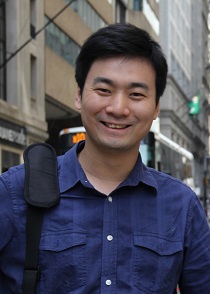 Heng Luo (罗恒)合作论文数Faculty of Artificial Intelligence in Education, Central China Normal University2
 Jun Yang合作论文数Department of Mathematical Sciences, University of Copenhagen2
 Xiangyun Hu (胡翔云)合作论文数School of Remote Sensing Information Engineering, Wuhan University2
 Edmund Y. Lam合作论文数Department of Electrical and Electronic Engineering, The University of Hong Kong2
 Jiangwen Deng合作论文数2
 Kenneth S. M. Fung合作论文数2Yepeng Shi合作论文数1
 Ning Zhang合作论文数1Anran Zhang合作论文数1
 Xi Kong合作论文数1Zichao Zhuang合作论文数1Chaodong Wen合作论文数1
 Hao Chen合作论文数1Liu Yi合作论文数1Xiuhan Li合作论文数1Song Lu合作论文数1
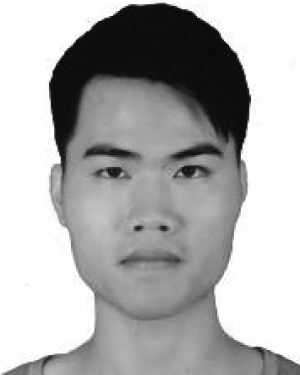 Hua Feng合作论文数Wuyi Univ, Sch Intelligent Mfg, Jiangmen 529020, Peoples R China1Jianmin Zhang合作论文数1YongShen Huang (黄永申)合作论文数1
 Lizhi Ye (叶立志)合作论文数Faculty of Artificial Intelligence in Education, Central China Normal University1Yi Liu (刘怡)合作论文数Faculty of Artificial Intelligence in Education, Central China Normal University1
 Guoqin Ning (宁国勤)合作论文数Faculty of Artificial Intelligence in Education, Central China Normal University1
 Xian Peng (彭晛)合作论文数Faculty of Artificial Intelligence in Education, Central China Normal University;National Engineering Research Center of Educational Big Data, Central China Normal University1
 Dan Xia (夏丹)合作论文数Faculty of Artificial Intelligence in Education, Central China Normal University1
 Yuan Tian (田元)合作论文数Faculty of Artificial Intelligence in Education, Central China Normal University1
 Yantao Wei (魏艳涛)合作论文数Faculty of Artificial Intelligence in Education, Central China Normal University1
 Mingzhang Zuo (左明章)合作论文数School of Educational Information Technology, Central China Normal University1




