Ecological operation of reservoirs to control the nutrient transport has been a new hotspot problem in the recent reservoir operation research. Previous studies have focused more on optimization and mechanisms, neglecting the practicality of real-time operation rules, which makes it difficult for reservoir managers to conduct real-time ecological operation of reservoirs for nutrient transport, and such real-time operation is more difficult due to the hydraulic connections between upstream and downstream reservoirs in cascade reservoirs. Therefore, this paper, taking Lancang River cascade reservoirs as an example, combining total phosphorus (TP) mass balance with the multiobjective operation model, which is based on operation charts and optimized by NSGA-II, proposes a new operation chart, i.e., the TP export operation chart (TOC), by adding three types of parameters to the conventional operation chart (COC), to guide real-time TP export ecological operation of reservoirs, thereby reducing TP retention in reservoirs and making the real-time ecological operation for cascade reservoirs easier. The multiobjective optimization results allow decision-makers to better balance power generation and TP export by selecting appropriate solutions on the Pareto front. First, TOC-specific parameters are derived from the comparison between Pareto front results taking COC and operation processes as decision variables. Then, TOC is taken as decision variables to optimize the reservoir operation, and the rationality of the optimization results is analyzed. Finally, typical solutions are selected from the TOC Pareto solution set to simulate the long-term operation and examine the practical application effect of TOC. The results indicate that TOC can greatly compensate for the shortcomings of the COC and significantly improve the TP export amount. When applying the optimal solutions for TP export, TOC can reduce the TP retention by 5% on average compared to COC, because TOC can guide the unique characteristics of operation processes that are beneficial for TP export through the extra discharge operations defined by new parameters, which COCs cannot achieve. The simulated operation results and optimized operation results of TOC are in good agreement, which means the TOC optimization results have good applicability. This paper made up for the lack of research of real-time operation rules of TP export operation of reservoirs and has important guiding significance for the formulation of rules for reservoir management.
Water rights trading is commonly used as a means of water resources reallocation between different water use sectors or between different end-users within the same sector. No studies, however, were reported on water rights trading from residential water use to other sectors. The primary reasons include the ambiguous definition of residents' water rights and lack of real-time information about water consumption. This study presents a domestic-industrial water permits trading framework for urban water demand management. The framework is applied to the case study of Dalian demonstrating its feasibility theoretically and technologically from the perspective of the whole city and typical demonstration areas. The finding obtained shows that the tradable water volume accounts for 13.72% of the total residential water use, brings a profit of 91.05 million yuan to the residents, and saves 56.67 million yuan of water resources costs for industry users. The increase in water prices for consumption through tiered pricing can raise the tradable volume to 16.10%. Furthermore, a trading platform based on WeChat is developed to completely materialize the entire water permits trading process according to the real-time water consumption data collected from smart water meters. This study shows that the water permits trading between urban domestic-industrial sectors is an effective means of redistributing urban water resources to improve economic benefits while ensuring urban water supply security.
In cross-border water supplement cooperation, the supplement water discharged from upstream hydropower stations is the key to improving downstream benefits, but will lead to upstream power generation loss, so the upstream hydropower stations have to be aware of how much water they can offer and how much power they will lose to make the water supplement cooperation more reasonable. Therefore, this study puts forward a model to calculate the upper limit flow of water supplement of cascade hydropower stations under firm power constraints and water level constraints and proposes a new optimization method called the “collaborative-independent” joint optimization method to calculate the power generation loss under water supplement constraints. The results show that the upper limit flow will increase with the increase of annual inflow, and the uncertainty of the distribution of inflow in the year will also affect the upper limit flow: the larger the proportion of non-flood season inflow, the higher the upper limit flow. In normal and wet years, delaying water supplement time can significantly increase the upper limit flow by about 5% per month. Additionally, the “collaborative-independent” joint optimization method newly proposed in this paper can significantly improve the local optimization problem compared to the traditional optimization method. The power generation loss increases with the increase of water supplement flow, and delaying water supplement time can significantly reduce the power generation loss. The results of this paper can provide essential data support for future water resources cooperation negotiations in the Lancang-Mekong river basin to promote efficient and orderly water resources cooperation in the basin.
Cascade reservoirs have interrupted the distribution and transportation of nutrients, which brings environmental and ecological problems. However, the current ecological operation methods focusing on the hydrologic regime cannot solve these problems. This paper presents an ecological optimal operation method that aims at restoring the transport pattern of biogenic substances. First, this paper establishes an optimization model that combines multiobjective reservoir operations with a dynamic mass balance calculation of total phosphorus (TP), taking the maximum TP export as the ecological objective, and a traditional model taking hydrologic regime as the ecological objective for further comparison. Then, the upper Mekong River Basin (i.e., the Lancang River Basin) is taken as a case study to investigate the competitive relationship between power generation and TP export under varying minimum outputs. The mechanism of TP export is then analyzed and the concept of optimum period for TP export is proposed. The results and analyses show that a competitive relationship between the power generation originates from the differences between the optimal operation processes for maximum TP export and maximum power generation. Lower water level, lower flow in nonflood season, and higher flow in flood season, especially in the optimum period for TP export are conducive to TP export. This method is then compared to the traditional method, which considers hydrologic regimes as the ecological objective under different conditions. The results show that reservoirs with higher sedimentation coefficient and larger capacity should consider more about the biogenic substances; otherwise, the hydrologic regime and biogenic substances can be substituted for each other to some extent.
为了合理地制定阶梯水价政策,对阶梯水价的节水效益以及居民水费支出的测算进行了研究,并以大连市为例对测算结果进行分析.首先,提出了用双正态叠加分布拟合居民用水量偏态分布的方法,以及基于价格弹性和居民用水量分布的节水效益和居民水费支出的测算方法.其次,利用收集到的居民月均用水量数据,应用笔者提出的方法,计算了阶梯水价方案实施前后大连市居民的节水比例以及居民水费支出.最后,分析了第1阶梯水价、第1阶梯水量对节水比例和居民水费支出占收入比例的影响方式,并得到不同预期节水比例和不同居民水费支出占收入比例条件下阶梯水价的可行方案集,得出的结论可为阶梯水价政策的制定提供参考.
This passage introduces a electronic accelerator which can control the output of the throttle accurately.It reserves the classical system of the output of the throttle on the present cars,adding a mode which can provide a smoother and more accurate throttle output.Considering that modern cars' electronic throttles transform the output into an electric signal,using the voltage to control the output of the throttle,we use a slide rheostat to replace the accelerator,creating the electric signal,a smoothly increasing voltage signal,and improve it to meet the different demands during the car running,avoid informally sudden acceleration,improve the process of the acceleration,and save the petrol.
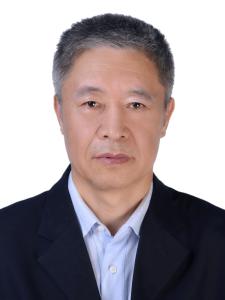 Huicheng Zhou (周惠成)合作论文数Department of Hydraulic Engineering, School of Infrastructure Engineering, Dalian University of Technology4
 Yu Li (李昱)合作论文数Department of Hydraulic Engineering, School of Infrastructure Engineering, Dalian University of Technology;School of Future Technology, Dalian University of Technology3
 Wei Ding (丁伟)合作论文数Department of Hydraulic Engineering, Dalian University of Technology3
 Bo Xu合作论文数2Xinchen Hu合作论文数1
 Bingyao Zhang (张冰瑶)合作论文数School of Economics and Management, Dalian University of Technology1Yibing LI (李一冰)合作论文数1Wen Xu (许文)合作论文数1
 Yan Sun (孙岩)合作论文数School of Public Administration and Policy, Dalian University of Technology1Yukun Zou (邹禹坤)合作论文数1Peng Xu (许鹏)合作论文数1
 Chi Zhang (张弛)合作论文数School of Hydraulic Engineering, Faculty of Infrastructure Engineering, Dalian University of Technology1
 Arthur R Schmidt合作论文数Department of Civil and Environmental Engineering, The Grainger College of Engineering, University of Illinois at Urbana-Champaign1Dabin Guo (郭大斌)合作论文数1




