The Digital Image Correlation technique recorded the process of self-compacting rubberized concrete (SCRC) under a pre-notched three-point bending beam. Load-crack opening displacement curves were measured, and the fracture process zone and crack opening displacement were comparatively analyzed to investigate the effect of rubber content and notch depth. The test results show that the incorporation of rubber increases the fracture toughness and fracture energy of the self-compacting concrete, and the increased amount is related to the incorporation amount of rubber. The fracture pattern of the specimen has also changed due to the incorporation of rubber. Finally, a mesoscopic model was proposed and verified by comparing the numerical simulation and test results.
Damage initiation and crack propagation in concrete are associated with localisation of energy dissipation by the concrete meso-structure. Meso-scale models are, therefore, required for realistic analysis of concrete non-linear behaviour. Such models are constructed either from X-ray Computed Tomography images (image-based modelling) or by in silico meso-structure generation (parametric modelling), while both approaches are widely used and their advantages and disadvantages are recognised, little work is done on comparing their performance in predicting measured macroscopic behaviour with equivalent constitutive relations for meso-structural features. This work uses microstructure characterisation and mechanical behaviour data to construct, validate and compare the two modelling approaches. The macroscopic behaviour obtained with both meso-structural models is found to be in good agreement with experimental data. Differences are observed only between the predicted distributions of damage within specimens. These outcomes suggest that the computationally simpler parametric meso-structures are sufficient to derive stress–strain behaviour for engineering-scale models in the absence of other environmental factors. The observed differences in damage distribution could be important for analysis of coupled behaviour, e.g., mass transport and chemical reactions affecting local mechanical properties and being affected by local damage. Establishing the importance of damage distribution is such cases requires further research.
This paper presents the results of an experimental study that investigated changes in the mechanical properties of two types of concrete under normal and extreme loading conditions pre- and post-carbonation. Specimens of CEM I and CEM II concrete (concrete prepared with 20% replacement cement with pulverised-fuel ash) were cured for 28 days before accelerated carbonation under 4% carbon dioxide (CO2) for 28 days at 20°C and 57% relative humidity. Static compressive mechanical tests at ambient temperature were carried out for both concrete types. For CEM I concrete, static compressive mechanical tests were performed at elevated temperatures of 300, 500 and 650°C, and high-strain-rate tests were performed at ambient temperature and elevated temperature of 500°C. The results show that the mechanical performance of CEM I concrete was improved after carbonation – that is, static compressive strength increased at ambient and elevated temperatures, and the dynamic strength was higher than that of fresh concrete at the same strain rate at both ambient and elevated temperatures. However, CEM II concrete suffered reductions in compressive strength after carbonation.
Using meso-structural representations of concrete, with aggregates dispersed in mortar, has become a standard approach for damage and fracture analysis. However, there is no full agreement on appropriate modelling of different phases and on the inclusion of interfacial transition zones (ITZ). This work explores different mortar and ITZ formulations and by comparison with own experiments demonstrates that the optimal strategy balancing physical realism and computational efficiency requires: (1) damage-plasticity formulation for mortar, calibrated with mortar tension and compression experiments; (2) cohesive-zone formulation for ITZ with zero-thickness cohesive elements, calibrated with concrete tension and com-pression experiments. Models omitting ITZ are shown to be in poor agreement with experiments, both qualitatively and quantitatively. Models with finite thickness ITZ are also in poorer agreement with experiments compared to those with zero-thickness, despite higher computational complexity. It is rec-ommended that concrete analyses follow the proposed strategy for meso-structure modelling and con-stituents' calibration. (c) 2021 Elsevier Ltd. All rights reserved.
Meso-structural models are presently in common use for analysis of the mechanical behaviour, damage evolution and failure of concrete. These are constructed either from XCT images, or in silico, using statistical information about concrete's meso-scale constituents. As a minimum, such models include mortar and aggregates as separate phases, while more detailed versions consider the interfacial transition zones (ITZ) between mortar and aggregates, and voids. Analyses of given meso-structures vary further by different constitutive modelling of constituents, with past works focusing on parameters' calibration using experiments with one loading condition - either tension or compression. Using a detailed meso-structure representation, this work proposes a novel combination of constitutive relations, involving concrete damage plasticity (CDP) for mortar and cohesive zone behaviour for ITZ. CDP parameters are calibrated using both compression and tension experiments with mortar samples. ITZ parameters are calibrated by comparing simulated stress-strain curves and failure patterns with data from compression and tension experiments with concrete samples. This process leads to constitutive relations, applicable to both loading conditions, which has not been demonstrated previously, but is essential to extending the modelling approach to complex stress states encountered in real engineering structures. After establishing the realism of the approach, parametric studies are conducted to investigate the effects of friction between loading plate and specimen, the mortar dilation angle, the ITZ cohesive stiffness, critical stresses, fracture energy and mix mode ratio. The results show that mortar plasticity is the dominant energy dissipation mechanism in both compression and tension, and its rate governs the localisation of damage. The effect of ITZ parameters on the tensile behaviour is found to be negligible. Their effect on the compressive behaviour is found to be limited, but sufficient to propose a set of parameters working for both conditions. Importantly, under both loadings the ITZ is found to control failure localisation into a macroscopic crack in combination with mortar plasticity and damage. Predicted stress-stain curves, damage evolution and macro-crack propagation are shown to be in very good agreement with the experimental observations. This justifies the use of the proposed experimental-modelling strategy for developing models for analysis of complex loading conditions.
Modelling of concrete at the meso-scale provides an effective way to analyse the effects of its constituents on damage initiation and evolution, leading to better understanding and predicting structural integrity. Majority of works to date focus on models calibration and validation with experiments in either tension or compression, leaving open the question of how such models perform under complex stress states. This work presents a modelling approach that includes all key constituents of the concrete meso-structure: coarse aggregates, represented by inclusions with elastic-brittle behaviour, mortar (including cement, sand and fine aggregates), represented with plastic-damage behaviour, interfacial transition zones (ITZ) between aggregates and mortar, represented by zero-thickness cohesive interfaces, and air voids or pores. Tension and compression experiments with mortar specimens are conducted to obtain its plastic-damage constitutive law. Similar experiments with concrete with several aggregate volume fractions are conducted to obtain stress-strain behaviours for further calibration of cohesive laws and model validation. Numerical simulations show that the proposed approach with pre-calibration of mortar behaviour leads to very good agreements between the predictions of the concrete meso-structural models and the experimental results under both tension and compression. The calibration of ITZ cohesive laws is performed by a parametric study of the effects of critical stress and fracture energy on the predicted stress-strain curves and fracture patterns. The results are used to propose a practical set of ITZ cohesive parameters.
Modelling concrete at the meso-scale has been a topic of intensive research in the last decade, as this approach allows for improved understanding of meso-structure effects on the damage and failure of concrete. The majority of previous works focus on simple stress state, either tension or compression, which does not allow for clarifying the most suitable description of the behaviour of concrete constituents: aggregates, mortar, interfacial transition zones (ITZ) between aggregates and mortar, and entrapped voids. Here all these constituents are represented explicitly and a new combination of their behaviours is explored, applicable to both tension and compression. The work is based on synthetically generated concrete with spherical coarse aggregates and voids randomly packed without overlapping. The meso-structure is meshed and zero-thickness cohesive elements are inserted at ITZs. Aggregates are considered elastic, concrete damage plasticity (CDP) model with both tension and compression hardening is adopted for mortar, and cohesive zone model is used for ITZs. The results presented demonstrate very good agreement with experiments in both tension and compression, in terms of stress-strain curves as well as crack patterns. The proposed development is a promising step towards more realistic representation of concrete behaviour, which is required in practical cases where concrete experiences complex triaxial stress states.
 Qingming Li合作论文数Department of Mechanical, Aerospace & Civil Engineering, The University of Manchester6
 Dirk Engelberg合作论文数Department of Materials, School of Natural Sciences, Faculty of Science and Engineering, The University of Manchester5
 Andrey Jivkov合作论文数Department of Mechanical, Aerospace and Civil Engineering, School of Engineering, Faculty of Science and Engineering, The University of Manchester5
 li Xing合作论文数2
 Toby Lord合作论文数1
 Yong Wang (王勇)合作论文数School of Mechanics & Civil Engineering, China University of Mining and Technology1
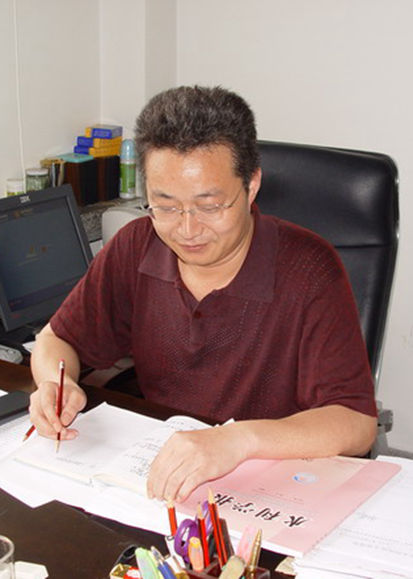 Fuheng Ma (马福恒)合作论文数水利部交通运输部国家能源局南京水利科学研究院1
 Jiang Hu合作论文数1
 Xudong Chen (陈徐东)合作论文数College of Civil and Transportation Engineering, Hohai University1
 Leon Black合作论文数Institut für Technische;Forschungszentrum Karlsruhe;Institut für Technische|Forschungszentrum Karlsruhe1




