Green Pea galaxies (GPs) are compact, extreme emission-line galaxies that serve as valuable local analogues to highredshift Ly alpha emitters and provide key insightsinto Lyman continuum escape. However, the census of known GPsremains small, limited by the difficulty of distinguishing them from point-like contaminants such as stars and quasars. While the wide-field DESI Legacy Imaging Surveys provide substantial data depth, the limited filter coverage (g,r, z) causes significant shifts in photometric colours, rendering traditional colour-selection criteria unreliable for identifying these targets. To addressthisissue, we propose MobileMamba-ECA, a novel lightweight deep learning framework that integrates State Space Models with Efficient Channel Attention (ECA) mechanisms to robustly identify GPs despite these spectral limitations. Comparative evaluations demonstrate that the model outperforms baseline methods, achieving an accuracy of 98.77 per cent and an F1-score of 98.94 per cent. By applying this method to the DESI Legacy Imaging Surveys and conducting spectroscopic confirmation, we identified a total of 775 GP candidates. Of these, we successfully recovered 48 previously recorded GPs and confirmed 216 newly identified GPs through spectroscopy. The remaining 511 candidates stand as promising targets for follow-up spectroscopic observation, significantly enhancing our sample of these rare starforming galaxies and contributing to the broader understanding of their properties and distribution.
Real-world autonomous driving, particularly in urban environments with numerous corner cases, requires rigorous testing to ensure product safety and robustness. However, few studies have explored integrating adversarial scenario generation with the training of safety agents in closed-loop testing, enabling efficient co-evolution and mutual enhancement of both. To address this challenge, an adversarial behavior knowledge repository is constructed by applying rule-based filtering to an open-source dataset, combined with knowledge retrieval modules tailored for simulation environments. A large language model (LLM) is employed to integrate knowledge-, data-, and adversarial-driven approaches, generating safety-critical traffic scenarios customized to user needs. Additionally, while evaluating the generated scenarios, we employ reinforcement learning models to train the behaviors of different types of vehicles, thereby enriching scenario diversity beyond existing datasets while preserving realism. Experimental results demonstrate that the proposed framework improves the accuracy of domain-specific language generation by 12%. Moreover, the success rate of newly generated scenario transformations increases by 8%, while obstacle-avoidance capability is enhanced by 30%. For the complete manuscript, please refer to: https://zhenhaooo.github.io/PCASim.github.io/
H ii regions are emission nebulae whose spectra are crucial for studying stellar formation and evolution, the structure of the Milky Way, and the physical and chemical properties of the interstellar medium. Therefore, expanding the existing catalog of H ii region spectra is of significant importance. Although deep learning methods have seen extensive use in astronomical research, their effectiveness typically depends heavily on the size of the available training data. Currently, the limited quantity of recorded H ii region spectra significantly hampers model performance. To address this issue and enable automated searches for H ii regions, this paper proposes a Siamese network model utilizing a few-shot learning strategy, which effectively enhances the classification accuracy. Furthermore, the model's source code has been made publicly available on GitHub for broader accessibility and to facilitate ongoing research.
Cataclysmic variables (CVs) serve as a key probe for studying accretion physics in semi-detached binary systems. Despite significant progress in this field, a comprehensive census of the CV population remains essential to advance our understanding of their evolution and spatial distribution, particularly for distant systems. Although recent surveys have substantially improved the completeness of nearby CV samples, the number of identified systems at larger distances remains limited, hindering a more complete exploration of the overall CV population. To overcome this challenge, we propose a deep learning framework, MobileMamba-CA, which integrates the efficient long-range modeling of the Mamba architecture with the Coordinate Attention (CA) mechanism to identify CV candidates from the Dark Energy Spectroscopic Instrument (DESI) Legacy Imaging Surveys. While the state-space-based backbone offers superior capability in processing pixel-level flux distributions of unresolved point sources, the integration of CA further enhances the network's spatial-channel awareness within the Point Spread Function. Benchmarking against several baseline models, our MobileMamba-CA architecture achieved superior performance, with an accuracy of 97.25%, precision of 96.85%, recall of 98.33%, and F1 score of 97.58%. Using this optimized model, we identified 684 high-confidence CV candidates across approximately 3.08 million images in the DESI Legacy Imaging Surveys Data Release 9 (DR9). Among them, 85 were spectroscopically identified as previously known CVs that were not included in the training, validation, or test sets, demonstrating the generalization capability of the proposed framework. In addition, 10 candidates were confirmed as CVs by visual inspection of DESI DR1 spectral data.
Strong gravitational lenses serve as powerful probes for cosmology and the mass distribution of galaxies. However, identifying these rare systems is often hindered by inaccurate localization and confusion with morphologically similar nonlenses. Recent deep learning-based object detection methods have enabled efficient strong-lens searches in wide-field imaging surveys and yielded a large number of promising candidates. Nevertheless, standard object detection methods typically treat the entire lens system as a single object, neglecting the fine-grained morphology of lensed arcs and the unique topology of strong-lens systems. To address these limitations, we construct a dedicated dataset of galaxy-scale strong lenses using data from the DESI Legacy Imaging Surveys DR10 and propose an arc-assisted annotation strategy that utilizes lensed arcs as auxiliary training targets. Building on D-FINE, a transformer-based object detector, we introduce GL-D-FINE, which incorporates a lens-topology relation (LTR) module to explicitly model the geometric relations between the lens system and its associated arcs. GL-D-FINE achieves 57.0% AP50:95 and 95.9% recall. Compared to the D-FINE baseline, our model delivers absolute improvements of 3.5% and 3.4% in AP50:95 and recall, respectively. Furthermore, ablation studies verify that both the arc-assisted annotations and the LTR module contribute to performance improvements, with the LTR module yielding superior detection capability compared to the arc-assisted baseline alone. Our implementation and annotated dataset are publicly available at https://github.com/qintianjian-lab/GL-D-FINE.
Green Pea galaxies (GPs) are a rare class of compact, low metallicity star-forming galaxies characterized by strong [O iii] lambda 5007 emission lines, and high specific star formation rates in surveys such as Sloan Digital Sky Survey (SDSS) and Large Sky Area Multi-Object Fiber Spectroscopic Telescope (LAMOST). However, traditional manual or semi-automated approaches to identifying GPs face significant challenges in processing large-scale spectroscopic datasets from SDSS and LAMOST due to data volume and spectral complexity, and lack of efficient automated methods tailored for spectra hinders comprehensive GP studies. To address these issues, we propose a lightweight deep learning model with a small parameter count, termed Multiscale Inception Hybrid Pooling Network (MSIHP-Net) for automated and efficient GP identification. To rigorously evaluate the model's performance, we construct different datasets sourced from SDSS and LAMOST, incorporating various signal-to-noise ratios (SNRs). The MSIHP-Net architecture is built upon a sequence of three consecutive InceptionBlock1D modules. Each module employs parallel convolutions with varying kernel sizes to perform multiscale feature extraction across different receptive fields. This is followed by a hybrid pooling layer that concatenates the outputs of adaptive average pooling and adaptive max pooling, thereby preserving both local and global information. Experimental results demonstrate that MSIHP-Net consistently achieves the highest accuracy, F1-score, precision, and recall for the GP category in all datasets with varying SNRs. Extensive experiments indicate the superior performance and robustness of MSIHP-Net. These advances offer a promising approach to further exploring the characteristics and evolutionary behaviors of GPs.
Accurate determination of stellar parameters is fundamental to astrophysical research, as it underpins our understanding of stellar evolution and characteristics. Most existing studies rely primarily on spectroscopic observations, which typically provide higher information density than photometric data. Although multimodal approaches combining spectra and photometry have been explored, they typically require both modalities to be simultaneously available—a condition rarely satisfied in practice—thus limiting their applicability. This study introduces Multi-Source Stellar Parameter Estimation (MSSPE), a model designed to efficiently integrate spectroscopic and photometric data while maintaining robustness under incomplete modality conditions. MSSPE consists of three key modules: (1) a feature extraction module for independent processing of spectra, photometric images, and magnitude data; (2) a feature fusion module for integrating representations to improve prediction accuracy; and (3) a reconstruction module that facilitates feature fusion and compensates for missing photometric information. Experimental results demonstrate that MSSPE substantially improves the accuracy of stellar parameter estimation, particularly for key parameters such as effective temperature and surface gravity. Incorporating Sloan Digital Sky Survey and Wide-field Infrared Survey Explorer photometric data yields a remarkable reduction in mean absolute error (MAE), especially under low signal-to-noise ratio spectroscopic conditions. Even when some photometric inputs are unavailable, the model maintains robust performance, highlighting its effectiveness in handling missing data. Overall, MSSPE effectively integrates multisource astronomical data and shows significant potential to enhance both the accuracy and reliability of stellar parameter estimation. All source codes and related materials have been publicly released at https://github.com/qintianjian-lab/MSSPE .
Pulsars, which are highly magnetized, rapidly rotating neutron stars, are remnants of massive stars that have undergone supernova explosions. These objects provide essential insights into neutron star evolution and the equation of state for dense matter. However, current pulsar identification models heavily rely on multi-modal data and lose their effectiveness when one or more modalities are missing. This limitation underscores the need for a unified architecture that can handle both single- and multi-modal inputs while minimizing the occurrence of false positives. To address this challenge, we propose a novel approach, Pulsar Recognition using ResNet-18 and multi-head attention (PRMA). The core innovation of PRMA lies in the integration of Transformer encoders within the ResNet-18 backbone, allowing for multi-stage embedding of features. This architecture is specifically designed to support both single- and multi-modal data inputs. Furthermore, a data-level fusion strategy is employed to process standardized diagnostic plots that originate from multiple modalities, ensuring that critical information from various sources is effectively utilized. Experimental validation using Five-hundred-meter Aperture Spherical Telescope data demonstrates the superiority of PRMA over existing methods. In both single-modal and multi-modal settings, PRMA achieves a significantly lower false positive rate, as low as 0.25% and 0.13%, respectively. These results highlight PRMA's potential as a powerful tool for large-scale pulsar data screening, offering an efficient and precise solution that addresses the challenges of missing modalities while maintaining high classification accuracy. The PRMA framework represents a novel paradigm in pulsar identification, enhancing the precision of pulsar detection and offering valuable insights into the dynamic nature of neutron star systems.
Large-scale spectroscopic surveys (e.g., LAMOST and DESI) inevitably contain a substantial fraction of defective spectra due to various observational and instrumental limitations. These defects, typically manifesting in the spectra as missing or corrupted contiguous regions, compromise downstream analyses. Conventional methods, such as interpolation, struggle with large gaps and erode features associated with physical information. In this work, we present Progressive Restoration and Inpainting for Spectral Measurement (PRISM), a deep learning model designed to restore defective stellar spectra while preserving their scientific integrity. Specifically, PRISM employs a two-stage architecture: a transformer-based encoder captures long-range dependencies to reconstruct the global structure, followed by a convolutional module that enhances local details. Furthermore, a progressive strategy iteratively recovers large defects by propagating context from valid regions. In synthetic experiments, downstream analysis of PRISM-restored spectra yields a stellar classification accuracy of 92.33% and an effective temperature mean absolute error (MAE) of 42.39 K, closely matching the baselines of pristine spectra. On real observations, PRISM reduces the effective temperature MAE to 55.95 K, drastically improving upon the standard pipeline’s 110.86 K. Finally, we deployed PRISM on all defective LAMOST DR10 spectra, releasing a value-added catalog of rederived parameters and corresponding restored spectra.
Wolf-Rayet (W-R) stars, which represent a key evolutionary stage of massive stars, exhibit strong stellar winds and broad emission lines. These features serve as direct tracers of stellar feedback and chemical enrichment in star-forming regions. Utilizing the recently released Dark Energy Spectroscopic Instrument (DESI) Data Release 1, we conduct a systematic search for W-R stars. To enhance physical interpretability while achieving high performance in the survey data, we introduce an improved model, LPA-MLK-CNN, which combines two key innovations: (i) a line-prior attention (LPA) mechanism that emphasizes diagnostic W-R emission lines by embedding astrophysical priors within a data-driven framework; (ii) a multiscale large-kernel convolutional neural network (MLK-CNN) structure that captures diverse emission-line features across stellar types. Trained on spectra from a six-class dataset, the model achieves significantly improved performance compared to conventional machine learning and deep learning baselines. When applied to the DESI spectral data, LPA-MLK-CNN recovers two newly discovered W-R candidates, contributing to the expansion of the W-R star catalog.
The fiber assignment problem in massive multi-object spectroscopic surveys constitutes a complex constrained combinatorial challenge, where mechanical collision constraints often restrict the survey's theoretical yield. In this paper, we formulate the fiber assignment problem as a Maximum Weight Independent Set problem and propose using branch-and-bound framework to address it, which can rigorously guarantee global optimality. Experimental results on real LAMOST datasets demonstrate that our method achieves an average computation time of under 5 seconds per field, which fully meets the operational requirements of large-scale surveys. Notably, our proposed framework is theoretically generalized and can be applied to other fiber-fed telescopes without significant modification. The full source code is available on GitHub (https://doi.org/10.6084/m9.figshare.32005719).
Abstract The growing volume of astronomical data demands automated classification methods to identify celestial objects, such as Cataclysmic Variables. While deep learning models achieve high accuracy, their “black-box” nature often obscures the underlying physical relationships, limiting the potential for deeper scientific insights. To bridge this interpretability gap, this study introduces a novel white-box approach to photometric data classification using Symbolic Regression (SR). Unlike conventional machine learning algorithms, SR generates explicit mathematical expressions and logical rules directly from observational data, providing unparalleled transparency and facilitating physical interpretation. Leveraging a data set of photometric data from SDSS DR17, we use the PySR framework to automatically synthesize a robust, interpretable classification criterion. Our comparative experiments show that this SR-derived criterion not only outperforms several popular machine learning models but also surpasses existing empirical formulae in classification accuracy. The analytical model derived from SR offers significantly higher inference throughput, a crucial advantage for large-scale astronomical surveys. These findings highlight the immense potential of SR as a powerful, transparent, and physically insightful tool for advancing astronomical research. It enables not only efficient classification but also the discovery of new astrophysical insights, offering a clearer path toward understanding the underlying physical processes of celestial phenomena. All associated code and data are publicly available at Github. 4 4 https://github.com/yuexiuya1/Cataclysmic-Variable-SR
Subgraph federated learning (subgraph-FL) is a distributed machine learning paradigm enabling cross-client collaborative training of graph neural networks (GNNs). However, real-world subgraph-FL scenarios often face subgraph heterogeneity problem, i.e., variations in nodes and topology across multiple subgraphs. As a result, the global model experiences a decline in performance. Despite several well-designed methods being proposed, most still rely on parameter aggregation-based global GNN for inference, which oversimplifies the subgraph knowledge and leads to sub-optimal performance. To this end, we propose achieving effective subgraph federated learning via pseudo prototype distillation (FedPPD). Specifically, FedPPD first utilizes a generator under the guidance of local prototypes to explore the global input space. Subsequently, the generated pseudo graph is used for distilling knowledge from the local GNNs to the vanilla-aggregated global GNN to convey reliable knowledge oversimplified during aggregation. Extensive experimental validation on six public datasets demonstrates that FedPPD consistently outperforms state-of-the-art baselines. Our code is available at https://github.com/KyrieLQ/FedPPD.
Recently, integrating visual foundation models into large language models (LLMs) to form video understanding systems has attracted widespread attention. Most of the existing models compress diverse semantic information within the whole video and feed it into LLMs for content comprehension. While this method excels in short video understanding, it may result in a blend of multiple event information in long videos due to coarse compression, which causes information redundancy. Consequently, the semantics of key events might be obscured within the vast information that hinders the model's understanding capabilities. To address this issue, we propose a Hierarchical Event-based Memory-enhanced LLM (HEM-LLM) for better understanding of long videos. Firstly, we design a novel adaptive sequence segmentation scheme to divide multiple events within long videos. In this way, we can perform individual memory modeling for each event to establish intra-event contextual connections, thereby reducing information redundancy. Secondly, while modeling current event, we compress and inject the information of the previous event to enhance the long-term inter-event dependencies in videos. Finally, we perform extensive experiments on various video understanding tasks and the results show that our model achieves state-of-the-art performances.
Accurate and fast segmentation of 3D medical images is crucial in clinical analysis. CNNs struggle to capture long-range dependencies because of their inductive biases, whereas the Transformer can capture global features but faces a considerable computational burden. Thus, efficiently integrating global and detailed insights is key for precise segmentation. In this paper, we propose an effective and lightweight architecture named GCI-Net to address this issue. The key characteristic of GCI-Net is the global-guided feature enhancement strategy (GFES), which integrates the global context and facilitates the learning of local information; 3D convolutional attention, which captures long-range dependencies; and a progressive downsampling module, which perceives detailed information better. The GFES can capture the local range of information through global-guided feature fusion and global-local contrastive loss. All these designs collectively contribute to lower computational complexity and reliable performance improvements. The proposed model is trained and tested on four public datasets, namely MSD Brain Tumor, ACDC, BraTS2021, and MSD Lung. The experimental results show that, compared with several recent SOTA methods, our GCI-Net achieves superior computational efficiency with comparable or even better segmentation performance. The code is available at https://github.com/qintianjian-lab/GCI-Net.
Blue straggler stars (BSS), with anomalous luminosity and temperature relative to main-sequence turn-off stars, remain pivotal for advancing insights into the dynamics and evolution of stellar systems. However, traditional manual or semi-automatic methods for identifying BSS are still limited by subjective thresholds and inefficiency in large-scale sky survey projects. Moreover, publicly available BSS datasets specifically designed for object detection are conspicuously lacking. To address the above issues, we construct two labeled BSS datasets (completed by Chenyang Lv and Yuhao Shi) for object detection, derived from 3473 original images and segmented based on grayscale thresholds. Simultaneously, we propose CAFDA-YOLO, an object-detection model that combines convolutional neural networks and the Transformer architecture. This new framework introduces the cross-axis fusion integrator module, which fuses multi-directional features through group convolution, diagonal attention, and dual-attention mechanisms, thereby improving spatial context modeling. The experimental results show that CAFDA-YOLO consistently maintains the highest mAP in BSS detection across all datasets. In particular, it achieves an impressive best result in the low gray threshold dataset, with mAP@50 reaching 90.80% and mAP@75 being 10.69% higher than the baseline model. Multiple experiments indicate that CAFDA-YOLO has strong performance and robustness. This work provides a framework for the automatic detection of BSS and provides possibilities for future research on stellar interactions and stellar evolution.
The discovery of high-redshift quasars (HQSOs) hinges on identifying candidates through photometric data from extensive sky surveys, followed by confirmation through spectroscopic analysis. This paper introduces the Photometric Vision Quasar Network (PVQNet), designed to effectively extract both local and global features from SDSS photometric images in five bands to select HQSOs with high-redshifts ($z>5$). Our model, trained on 2322 negative ($z \lt 5$) and 2322 positive ($z>5$) quasar images from SDSS DR17, achieves an accuracy of $94.03\%$ on the test dataset, surpassing the mainstream random forest method using the photometric catalog features by $6\%$. PVQNet is further validated on 307 newly discovered quasars from DESI ($z>5$) and Pan-STARRS ($z>5.6$) surveys, achieving accuracy rates of $91.11\%$ and $94.2\%$ at $|z-5|\ge 0.4$ and $|z-5|\ge 0.5$, respectively. When applied to 83256 candidates from the DR17 specObjAll catalog with low-quality spectra, PVQNet successfully identifies 682 new HQSO candidates with a confidence greater than 0.92. Utilizing a $g-r/r-i$ color-cut with DR16Q, we filter out $97\%$ of low-redshift quasars ($z \lt 2.75$) while maintaining $46\%$ completeness in HQSO identification, resulting in 107 final candidates. In summary, we explore the contribution of image features across different bands to select HQSOs, combining PVQNet with a color-cut approach to efficiently identify candidates, even with limited multiband photometric data and potentially unreliable spectroscopic pipeline results due to low-quality spectra.
Jiao-Liao Mandarin, a distinguished dialect in China, reflects the linguistic features and cultural heritage of the Jiao-Liao region. However, the labor-intensive and costly nature of manual transcription limits the scale of transcribed corpora, posing challenges for speech recognition. We present JLMS25, a transcribed corpus for Jiao-Liao Mandarin, alongside a novel multi-dialect knowledge transfer (MDKT) framework for low-resource speech recognition. By leveraging phonetic and linguistic knowledge from neighboring dialects, the MDKT framework improves recognition in resource-constrained settings. It comprises an acoustic feature extractor, a dialect feature extractor, and two modules—WFAdapter (weight decomposition adapter) and AttAdapter (attention-based adapter)—to enhance adaptability and mitigate overfitting. The training involves a three-phase strategy: multi-dialect AID-ASR multi-task learning in phase one, freezing the dialect feature extractor in phase two, and fine-tuning only the adapters in phase three. Experiments on the Jiao-Liao Mandarin subset of the KeSpeech dataset and JLMS25 dataset show that MDKT outperforms full-parameter fine-tuning, reducing Character Error Rate (CER) by 5.4% and 7.7% and Word Error Rate (WER) by 6.1% and 10.8%, respectively.
Blue straggler stars (BSSs) serve as vital tracers for investigating the dynamics and evolution of stellar systems, owing to their relatively higher luminosities and effective temperatures. However, traditional manual or semi-automated approaches to identifying BSSs are significantly constrained when processing large-scale astronomical data sets. Additionally, there is a notable absence of publicly available spectral data sets for BSSs, posing a challenge for research in this area. To address these issues, we initially construct spectral data sets for BSSs across various signal-to-noise ratio (SNR) thresholds. Furthermore, we propose an automated and efficient network called MDA-Net, which is based on Multiscale Dilation and Attention mechanisms for the BSS identification. The MDA-Net architecture integrates a MultiScale Dilated Large Kernel Convolution Block (MSDLC) and a Channel Group self-Attention Block (CGA). The MSDLC Block incorporates long and short convolution submodules with varying dilation rates to extract sufficient features across diverse receptive fields. Meanwhile, the CGA Block computes inter-channel attention scores, allowing the model to automatically focus on critical features. Experimental results demonstrate that MDA-Net consistently achieves the highest F1-score for the BSS category in all data sets with varying SNRs, reaching 85.79% even in low-SNR threshold data sets, 1.78% higher than the best baseline model. Notably, it reaches an impressive 90.22% when SNR > 30. Extensive experiments indicate the superior performance and robustness of MDA-Net. These advancements offer a promising approach for further exploring the physical characteristics and dynamical behaviors of BSSs.
Existing speech recognition models struggle to capture deep implicit representations and preserve key information during propagation when handling low-resource speech data. Furthermore, low-resource dialect datasets are even rarer than low-resource language datasets. To address these issues, we propose a model primarily consisting of layer-wise progressive fusion mamba (LPFMamba) and the concatenation-depthwise enhancement module (CDEM), named LPFMamba-CDEM. At its core, the layer-wise progressive fusion module (LPFM) employs a hierarchical selective fusion mechanism to integrate local features, global features extracted by the bidirectional mamba module, and information propagated from the preceding LPFM layer. This mechanism progressively accumulates and propagates effective representations, enhancing the model’s capacity under limited data conditions. The CDEM further enhances high-level feature representations processed through multiple encoder layers, increasing adaptability to low-resource speech. We also introduce a self-built low-resource Jilu dialect dataset with approximately 34 hours of speech, aiming to promote the equitable dissemination of technology. Extensive experiments conducted on multiple low-resource speech datasets, including both publicly available datasets and the Jilu dialect dataset, demonstrate the effectiveness of our approach.
 Meixia Qu (曲美霞)合作论文数School of Airspace Science and Engineering, Shandong University28
 Wenyu Wang (王文玉)合作论文数School of Airspace Science and Engineering, Shandong University23
 Jingchang Pan (潘景昌)合作论文数School of Airspace Science and Engineering, Shandong University19
 Yanxia Zhang (张彦霞)合作论文数中国科学院国家天文台15
 Ali Luo (罗阿理)合作论文数National Astronomical Observatories, Chinese Academy of Sciences;University of Chinese Academy of Sciences13
 Zhenping Yi (衣振萍)合作论文数School of Airspage Science and Engineering, Shandong University12
 Yongjian Zhao (赵永健)合作论文数School of Airspace Science and Engineering, Shandong University11
 Peng Wei合作论文数10
 Qiang Guo (郭强)合作论文数School of Computer Science and Technology, Shandong University of Finance and Economics10
 Liangping Tu合作论文数8Jiyu Wei合作论文数7
 Yongheng Zhao (赵永恒)合作论文数National Astronomical Observatories, Chinese Academy of Sciences6
 Xunkai Li合作论文数School of Computer Science and Technology, Beijing Institution of Technology;School of Computer Science, Beijing Institute of Technology;Graph Data Science Lab, Beijing Institute of Technology;The Hong Kong University of Science and Technology;DCML Group, Peking University5
 Mengxin Wang (汪梦欣)合作论文数University of Chinese Academy of Sciences;National Astronomical Observatories, Chinese Academy of Sciences4Jianyu Chen合作论文数4
 Yang Liu合作论文数4
 Jie Liu (刘杰)合作论文数School of Airspace Science and Engineering, Shandong University4
 Yinlin Zhu合作论文数School of Computer Science and Engineering, Sun Yat-sen University3Shuhan Kong合作论文数3gelin guo (郭格霖)合作论文数3Kang XIE合作论文数3Zhong Yun-peng合作论文数3Liyun Cheng合作论文数3Gao Jun合作论文数3Ma Chunyu合作论文数3
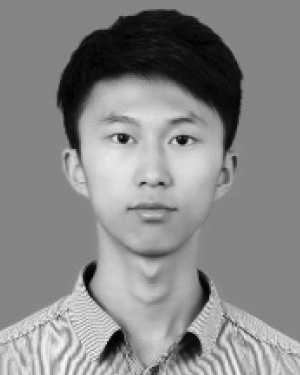 Ziliang Zhao合作论文数3Xingzhu Wang合作论文数3Qiang Zheng合作论文数3Yinbi Li (李荫碧)合作论文数3
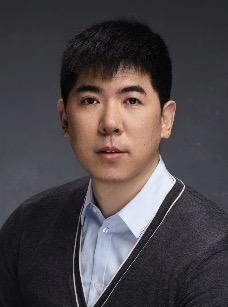 Liang Li (李亮)合作论文数Institute of Computing Technology, Chinese Academy of Sciences3Changhao Xu合作论文数2Dingxin Cheng合作论文数2Jiaqi Wei合作论文数2Jingjing Wu合作论文数2Ba Jinsheng合作论文数2Gaoxiang Cong合作论文数2Yihao Zheng合作论文数2Mingze Li合作论文数2Shuting Wang合作论文数2Guang-pei Wang合作论文数2Yuze Chen合作论文数2Qiming Huang合作论文数2Wang Lu-yao合作论文数2Xi Fang合作论文数2Zhen Zhang合作论文数2Wei Wang合作论文数2Xiaoyun Zhong合作论文数2Bo Li (李博)合作论文数2




