In this paper, we propose a hypothesis that the facial landmark detection methods constructed by a private UPFP facial dataset can perform better than the model on a healthy facial dataset in the task of UPFP facial landmark detection. For proving this hypothesis, a customized UPFP facial dataset with 68 facial landmark annotations was built. A state-of-the-art facial landmark detection method was employed on the three evaluation datasets to exploit and prove the hypothesis. The mean error of validation dataset is 3.15, 56% lower than 7.42 that of the healthy dataset, which proves the hypothesis is true.
Unilateral peripheral facial paralysis (UPFP) is a form of facial nerve paralysis and clinically classified according to conditions of facial symmetry. Prompt and precise assessment is crucial to neural rehabilitation of UPFP. The prevalent House-Brackmann (HB) grading system relies on subjective judgments with significant interobservation variation. Therefore, to explore an objective method for the UPFP assessment, clinical image sequences are captured using a web camera setup while 5 healthy and 27 UPFP subjects perform a group of predefined actions, including keeping expressionless, raising brows, closing eyes, bulging cheek, and showing teeth in turn. First, facial region is decided using Haar cascade classifier, and then landmark points are acquired by a supervised descent method. Second, these landmark points are used to generate a group of features reflecting the structural parameters of regions of eyebrows, eyes, nose, and mouth, respectively. Third, correlation coefficients are computed between the raw features HB scores. To reduce feature dimensions, only those with correlation coefficients larger than an empirically selected value, 0.35, are input into a support vector machine to generate a classifier. With the classifier, exact match (discrepancy = 0 between result from proposed method and HB scores) rate at 49.9%, and loose match (discrepancy = 1) rate at 87.97% are achieved on the experiment data. After sample augmentation, the final rate is increased to 90.01%, outperformed previous reports. In conclusion, it is demonstrated with an unobtrusive web camera setup, encouraging results have been generated with the proposed framework in this exploratory study.
Unilateral peripheral facial paralysis (UPFP) is a form of facial nerve paralysis and clinically classified according to facial asymmetry. Prompt and precise assessment is crucial to the neural rehabilitation of UPFP. For UPFP assessment, most of the existing assessment systems are subjective and empirical. Therefore, an objective assessment system will help clinical doctors to obtain a prompt and precise assessment. Distinguishing precisely between degrees of asymmetry is hard using pure pattern recognition methods. Thus, a novel objective assessment process based on convolutional neuronal networks is proposed in this paper that provides an end-to-end solution. This method could alleviate the problem and produced a classification accuracy of 91.25% for predicting the House-Brackmann degree on a given UPFP image dataset.
Electroacupuncture (EA) is often used in China for treatment of muscle spasticity in post-stroke patients, however the duration of EA stimulation is decided subjectively currently since there is no objective means of outcome monitoring for EA. To explore a potential prompt monitoring technique for EA, inertial sensor system is used in this study on tibialis anterior (TA) muscle under EA therapy among 4 volunteered patients. The module of inertial sensor system is deployed onto the tiptoe to monitor the response of TA during EA stimulation. Totally 18 valid datasets are acquired including both those from 3-axes accelerators and 3-axes gyroscopes in the experiments. The root-mean-square (RMS), average rectified value (ARV) and mean power frequency (MPF) for the accelerator signals and the dynamic range of the tiptoe relative angle (DRA) for the gyroscope signals are then computed. It's found that after EA treatment, the dynamic range of TA response decreased in terms of RMS, ARV and DRA, while MPF of the accelerator signals increased. The inertial sensors, as wearable they are, might add a promising objective monitoring means of EA therapy, suggested by the results in the preliminary study.
Architecture of skeletal muscle can change significantly during body motion, which can be observed in vivo during contraction using ultrasonography noninvasively and in real-time. Yet gender differences are paid little attention to in most current studies on muscle architecture using ultrasonography. In this study, thickness of muscle and fat is compared for young male and female subjects using automatic processing method proposed previously. Significant differences are found, between results from male and female subjects, in thickness of tibialis anterior, lateral gastrocnemius or the fat layers in 7 pre-defined posture/motion. Even after rectified by the Body Fat Index, significant differences are also found, between male and female subjects, for muscle (P<;0.05) and fat thickness (P<;0.01), and the significance is side-sensitive. Meanwhile, thickness of tibialis anterior (TA) appears to be more sensitive to gender difference.
 Guo Dan (但果)合作论文数School of Biomedical Engineering, Health Science Center, Shenzhen University5
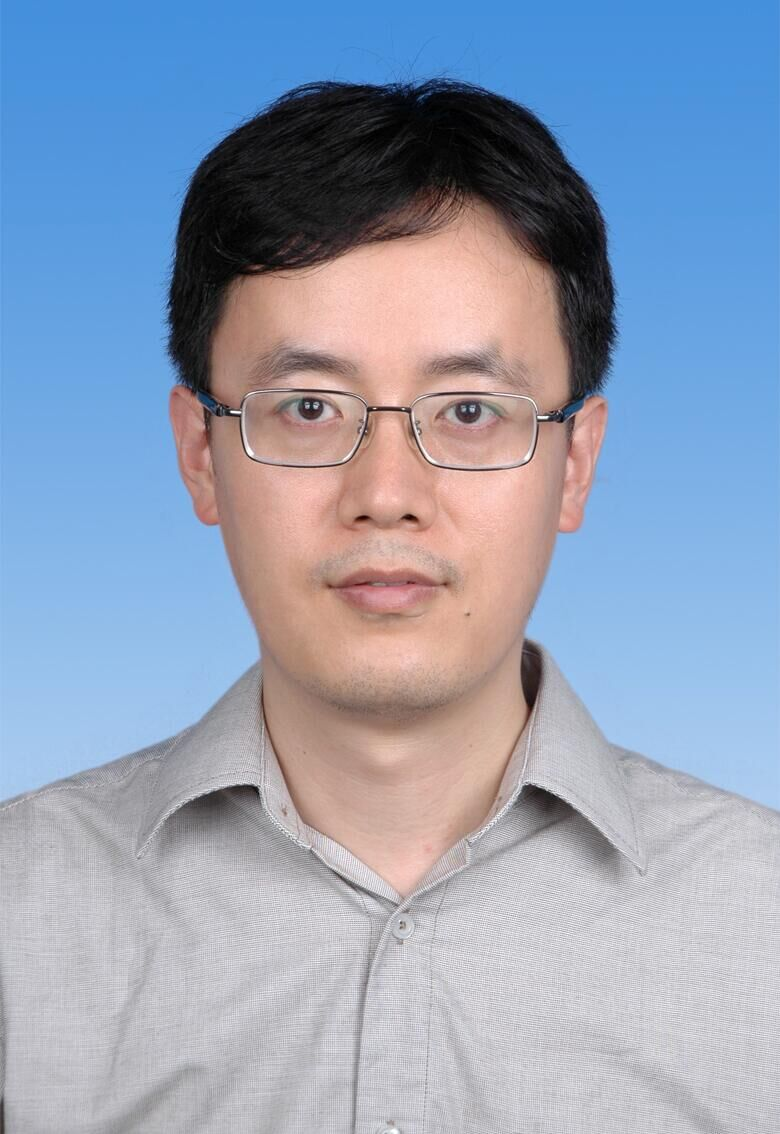 Yongjin Zhou (周永进)合作论文数Shenzhen University,Health Science Center5
 Zhexiao Guo合作论文数Univ Konstanz, INCIDE Ctr, Constance, Germany3
 WanZhang Yang (杨宛章)合作论文数3Zhien Xian合作论文数2
 Qianyue Wei (魏千越)合作论文数University College London2xiaojuan yang (杨晓娟)合作论文数2
 Yun Xiang (向云)合作论文数2
 Huijun Ding (丁惠君)合作论文数Shenzhen University Health Science Center School of Biomedical Engineering2Wenxiu Shi合作论文数1Le Duan合作论文数Univ Konstanz, INCIDE Ctr, Constance, Germany1Xiaojuan Yang合作论文数1Juan Dai合作论文数1Wanzhang Yang合作论文数1
 Jinyong Zhang合作论文数1
 Xudong Zhang合作论文数Dept. of Electron. Eng., BeiHang Univ.;c;Dept. of Electron. Eng., BeiHang Univ.1
 Minmin Shen合作论文数Amazon1
 Oliver Deussen合作论文数Department of Computer and Information Science, University of Konstanz1
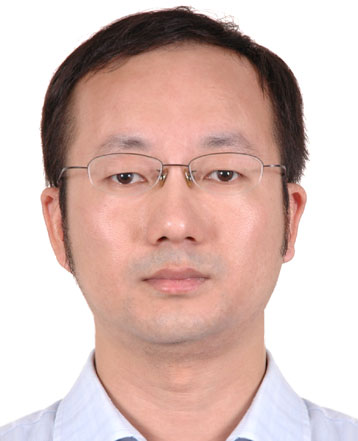 Xin Chen (陈昕)合作论文数Shenzhen University,Health Science Center1
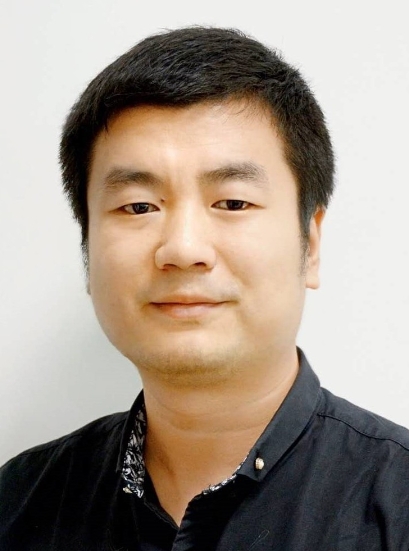 Shifeng Chen (陈世峰)合作论文数Shenzhen Institute of Advanced Technology, Chinese Academy of Sciences;University of Chinese Academy of Sciences1




