Many practical problems can be formulated as graph-based semi-supervised classification problems. For example, online finance anti-fraud. Recently, many researchers attempt using deep learning methods to solve such problems. In this paper, we propose a novel neural network architecture to perform semi-supervised classification on graph-structured data. We improve the graph convolutional network (GCN) by replacing the graph convolution matrix with auto-encoder module. The proposed neural network is trained by a multi-task objective function. Except the classification task, we train the auto-encoder module to reconstruct the graph convolution matrix. It can be seen as an adaptive spectral convolution on graph. It can increase the depth of neural network without causing over-smooth effect. Additionally, the introduction of reconstruction task can mitigate the cold-start problem. Even the graph topological structure is extreme sparse, our method can learn expressive latent features for vertices. The experimental results show that our method can achieve the state of art performance.
This paper presents a data and knowledge driven design approach for the single input rule modules connected fuzzy inference system (SIRM-FIS) which can greatly reduce the number of fuzzy rules. The data and knowledge driven SIRM-FIS can be used to the modeling, identification or prediction problems that have monotonic input-output mappings. In this study, we firstly show how to encode the prior knowledge of monotonicity into the SIRM-FIS. Then, through combining the correlation analysis and the constrained least square algorithm, we present a data-driven parameter learning strategy to optimize the SIRM-FIS. At last, we apply the proposed approach to the thermal comfort prediction. Simulation and comparisons illustrate that the proposed method is efficient to the thermal comfort prediction and performs better than some other existing methods.
This paper proposes a robust attitude control strategy for hypersonic reentry vehicles which combines novel time-varying spectrum based active disturbance rejection control techniques with a basic stabilizing controller. These techniques include time-varying tracking differentiator (TTD) and time-varying extended state observer (TESO). By adopting time-varying bandwidth, TTD can adaptively arrange transient processes for either abrupt or smooth reference commands. Also by designing time-varying bandwidth logic, TESO can not only estimate total disturbance well, but also suppress peaking phenomenon resulting from initial reentry condition dispersion. Several simulations are conducted which demonstrate that the proposed control strategy exhibits both good attitude tracking ability and great design flexibility.
This paper has proposed maximum power point tracking (MPPT) control for stand-alone solar power generation systems via the type-2 Takagi-Sugeno (T-S) fuzzy-model-based approach. In order to deal with the uncertainties in the modeling procedure, the type-2 T-S fuzzy technology is employed. To handle reducing the conservatism of LMI-based stability conditions for type-2 T-S fuzzy systems, stability conditions are relaxed by introducing more slack matrix variables. Finally, the control performance is shown from the numerical simulation and experimental results.
For the decentralized formation problem of multiple robots, this paper presents a kind of robust sliding mode controller based on nonlinear disturbance observer. According to the leader-follower-based formation mechanism, the dynamic model with external disturbances and system uncertainties is established. To perform a formation control and to guarantee system robustness, a novel formation algorithm combining sliding model control and nonlinear disturbance observer is presented. Sliding mode control (SMC) is a special nonlinear control strategy, which has invariance against the matched uncertainties, but the chattering produced by SMC limits its application to the practical system. By using nonlinear disturbance observer technology, the uncertainties cover both matched and mismatch uncertainties can be compensated. In addition, the SMC control law can be designed successfully so that chattering can be effectively alleviated. In the sense of Lyapunov, a sufficient condition is drawn to guarantee that the formation system can be asymptotically stabilized. Simulation results confirm the effectiveness of the proposed control scheme.
A disturbance compensated adaptive backstepping controller is presented for a class of nonlinear systems with external disturbances. We develop a disturbance observer, with which the problem of disturbance compensation can be transformed into an adaptive control problem. Command filtered adaptive backstepping method is then used to design the control law to track the desired trajectory. In order to analyze the property of the controller, the overall close-loop error system is built. Using the Lyapunov approach, we prove that the proposed controller provides the uniformly asymptotic stability for the considered system and achieves perfect disturbance compensation. Finally, the developed method is applied to an unmanned seaplane system in the presence of large external disturbances. Simulation results show that the controller has good performance for the unmanned seaplane in different wave conditions.
In this paper we analyze characteristics of the ground reaction force (GRF) experienced by the legs of the quadruped robot during stance phase in walk gait, in particular, when the height of center of gravity (COG) of the quadruped robot is changeable. We also build the dynamics model of the quadruped robot. Two dynamics equations during swing phase and stance phase are established, respectively. Additionally, we design a controller to adjust the height of COG of the quadruped robot. The controller uses the central pattern generator (CPG) model to generate basic rhythmic motion, and utilizes the discrete tracking differentiator (TD) to implement the transition between two different rhythmic medium values of the CPG. The combination of the CPG model and the discrete TD enables the quadruped robot to adjust the height of COG according to the environment. The ground reaction peak force and the joint torque of the quadruped robot increase with the reduction of the height of COG. Finally, we give a simulation example and the results, including an analysis of the vertical reaction force and the joint torque of the quadruped robot.
In the paper, we aim to design a controller for the four-rope-driven level-adjustment robot to adjust eccentric payload to level and keep the rope tension balanced. As the robot's actuators can only move in a certain range, it is necessary for the controller to judge whether the actuators' movement becomes constrained or not. Further, different control strategy should be taken to handle different situations. The controller is composed of two control modules, each of which regulates one diagonal of the payload's upper surface. Each control module consists of nine fuzzy sub-controllers, and each sub-controller deals with a particular situation. By selecting appropriate sub-controllers automatically, each control module can deal with different situations. Experiment results show that the controller is effective and practical.
In the paper, a control scheme, based on the SIRMs (Single Input Rule Modules) dynamically connected fuzzy inference model, is designed for a four-rope-driven level-adjustment robot to level the eccentric payload and balance the rope tension. The control scheme is composed of four controllers separately controlling one independent rope's length. Each controller, composed of nine sub-controllers, selects different sub-controllers to deal with different limit switches' situations. Each sub-controller is set up such that the angular control of the payload takes higher priority than the rope tension. Experiment results show that the control scheme works very well and can handle all possible situations. © 2010 ICIC International.
Aiming at the level-adjusting and force-balance problems of expensive and precise payloads when loading and unloading,a cable-driven aut-leveling parallel robot was developed.A synthetic strategy,which was composed mainly of force-tuning balance strategy and bottom surface leveling strategy,was proposed to realize the leveling adjustment under the premise that balance of the pulling forces was firstly satisfied.Force-tuning balance strategy was used to change the distribution of pulling forces through altering the length of cables in the adjusting process.Meanwhile,bottom surface leveling strategy was carried out through a neuro-fuzzy controller.The neuro-fuzzy controller's parameters were trained by a proposed hybrid algorithm,which was a combination of the least square estimate(LSE) method and the back-propagation(BP) algorithm.Experimental results demonstrate the steady performance of the robot and the effectiveness of the synthetic strategy,which can meet the precision requirements of practical applications.
This paper mainly concerns the intelligent control of a four-rope-driven level-adjustment device with constrained outputs. In the paper, an intelligent controller based on fuzzy systems is designed for the device to adjust eccentric payloads to level and keep the rope's tension balanced. The controller is composed of two sub-controllers, each of which deals with various situations by choosing different fuzzy rules. As the actuators adopted in the device can only move within a certain range, it is necessary to take their moving ranges into consideration. Actually, each control cycle includes two stages. At the first stage, the controller regulates the payload's diagonal joined with the constrained actuators. At the second stage, the controller adjusts the other diagonal. If the actuators joined with this diagonal are also constrained, the controller mainly regulates the payload's posture. Otherwise, the controller regulates the payload's angle as well as the ropes' tension simultaneously. Finally, the intelligent controller is used to control the four-rope-driven level-adjustment device, and gets satisfying results.
To solve the level-adjusting problem of high accurate and costly payloads when loading and unloading, a rope-driven self-leveling device is developed, and a neuro-fuzzy controller is proposed. After a brief introduction of the configuration characteristics of the device and the fundamentals of neuro-fuzzy control, the construction of the neuro-fuzzy controller is set up, in which the angles of two diagonal inclinations which are measured from the two angle sensors are chosen as input variables, and the changes of two linear motion units' positions are the control variables. The neuro-fuzzy controller, whose rules are constructed based on human's regulating experience, was tuned by a hybrid algorithm, which is a combination of the least square estimate (LSE) method and the back-propagation (BP) algorithm. Experimental results show that the proposed neuro-fuzzy controller can achieve the control objective with high accuracy of regulation and short adjusting time, and is easily applied to the practical device.
To solve the level-adjusting and force-tuning problems of high accurate and costly payloads when loading and unloading, a cable-driven auto-leveling parallel robot is developed. A hierarchical fuzzy controller, which has the ability to deal with the rule explosion problem, is proposed in this paper. After a brief introduction of the architecture of the closed-loop control system for the cable-driven auto-leveling parallel robot, the construction of the hierarchical fuzzy controller is set up, in which the force offsets of the four cables and the angle deviations of the two diagonal inclinations are chosen as input variables, and the output variables are the position changes of the four linear motion units. The hierarchical fuzzy controller contains two layers - the low level layer which generates two outputs for leveling adjustment and force tuning, and the high level layer which is used to coordinate the two outputs from the low level layer. Experimental results have demonstrated that the hierarchical fuzzy controller can achieve the control objectives with high regulation accuracy and short adjusting time, and can be easily applied to practical systems.
In order to solve the level-adjusting problem of costly payloads when loading and unloading,we design a cable-driven self-leveling robot to accomplish the obliquity adjustment,based on the analysis of advantages and disadvantages of current adjusting techniques and mechanisms.In this paper,the general structure of the robot is introduced firstly.And then,the system′s 2D model is deduced in detail according to force equation,moment equation principles and geometry restrictions.Similarly,two 3D models are established respectively from two different points of view,and their merits and defects are discussed later.Moreover,related issues about control system(such as structure design,theory) and basic working flow of robot are briefly narrated.Finally,main characteristics of the robot system are concluded.
This paper concerns the fields of the eccentric payload crane systems. We firstly introduce a four-rope-driven self-levelling crane system, which can adjust the payload to level precisely and safely by changing the lengths of the ropes. Then, the system model is deduced according to force equation, moment equation principles and geometry restrictions, without considering the acceleration items. Finally, a control strategy is proposed to adjust the system.
 Jianqiang Yi (易建强)合作论文数Integrated Information System Research Center, Institute of Automation, Chinese Academy of Sciences;School of Artificial Intelligence, University of Chinese Academy of Sciences12
 Yi Yu合作论文数8Chengdong Li (李成栋)合作论文数School of Information and Electrical Engineering,Shandong Jianzhu University,Jinan ,China6
 Dongbin Zhao (赵冬斌)合作论文数Institute of Automation, Chinese Academy of Sciences;School of Artificial Intelligence, University of Chinese Academy of Sciences6
 Xiangmin Tan (谭湘敏)合作论文数Institute of Engineering Thermophysics, Chinese Academy of Sciences;University of the Chinese Academy of Sciences2
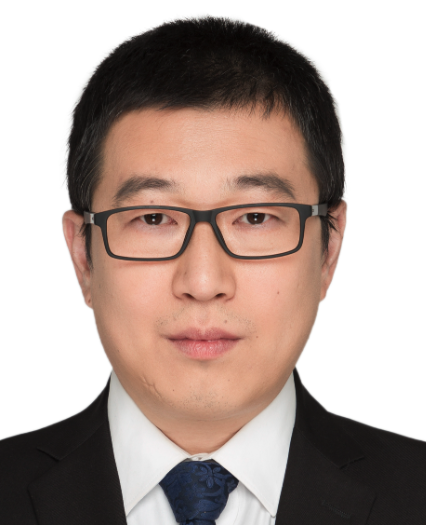 Dianwei Qian (钱殿伟)合作论文数School of Control and Computer Engineering, North China Electric Power University2Li Wang合作论文数1Shun Zhang合作论文数1
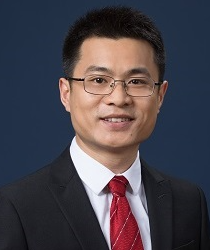 Zhiqiang Pu (蒲志强)合作论文数The State Key Laboratory for Management and Control of Complex Systems, Institute of Automation, Chinese Academy of Sciences;University of Chinese Academy of Sciences1Nanbo Peng合作论文数JD Digits, Risk Management Ctr, Beijing 100111, Peoples R China1Jie Zhang合作论文数1
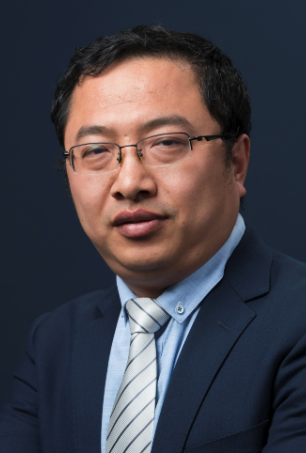 Guoliang Fan (范国梁)合作论文数Institute of Automation, Chinese Academy of Sciences;School of Artificial Intelligence, University of Chinese Academy of Sciences1
 Le Lv合作论文数1
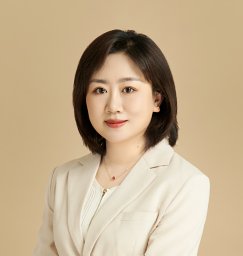 Min Fan合作论文数Simon Fraser University1Xiaoqi Li合作论文数1
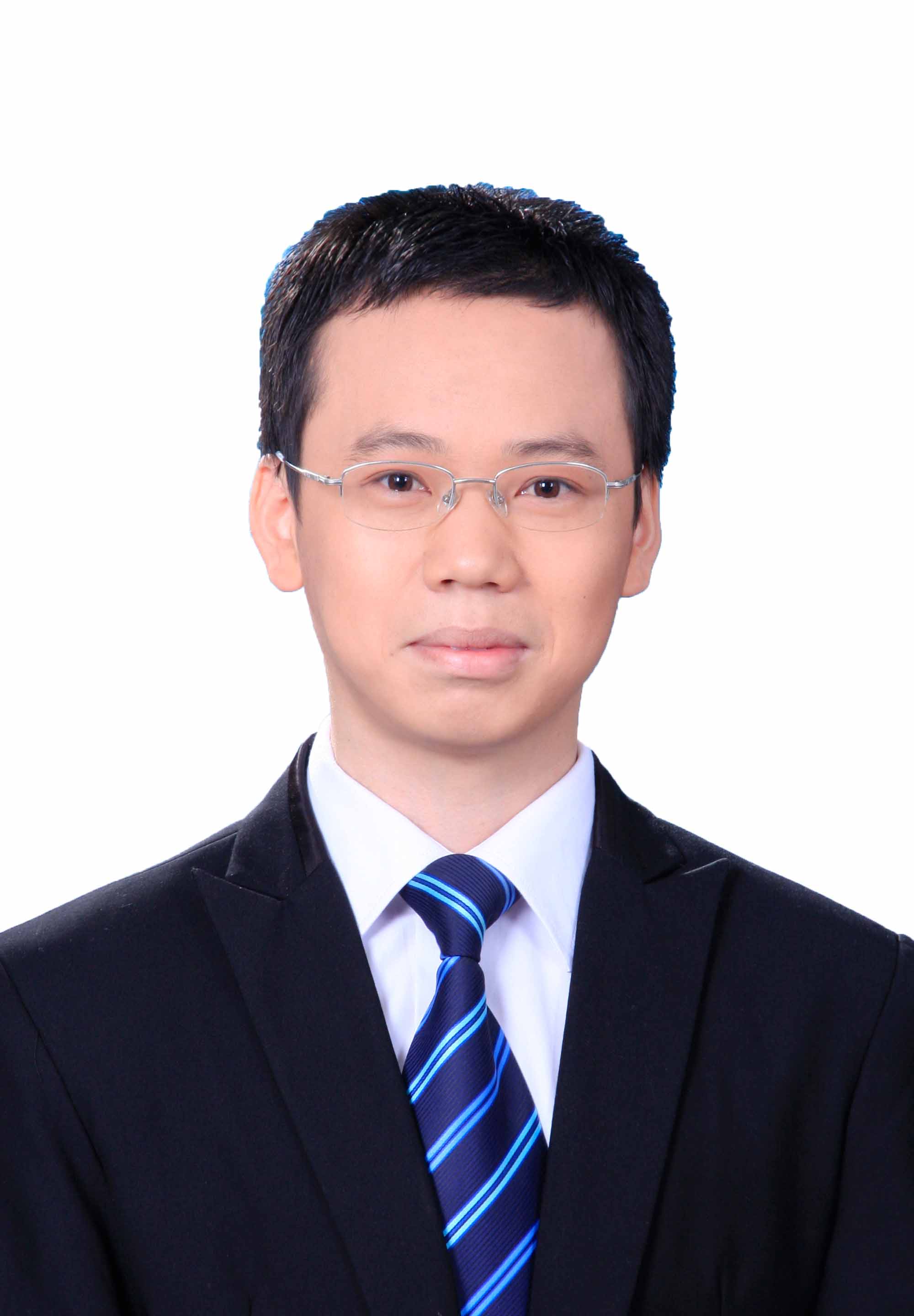 Ruyi Yuan (袁如意)合作论文数Institute of Automation, Chinese Academy of Sciences;School of Artificial Intelligence, University of Chinese Academy of Sciences1
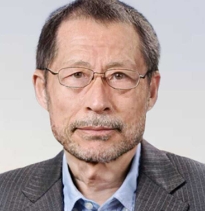 Wei Wang (王伟)合作论文数Institute of Automation, Chinese Academy of Sciences;School of Artificial Intelligence, University of Chinese Academy of Sciences1
 Huan Du合作论文数1
 Guiqing Zhang (张桂青)合作论文数山东建筑大学信息与电气工程学院1
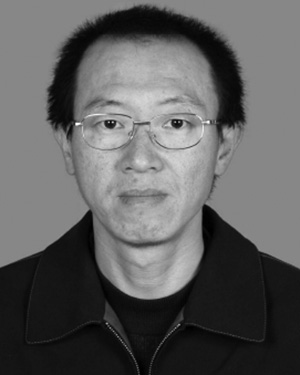 Tiechao Wang合作论文数1




