We present a novel artistic-verisimilitude driven system for watercolor rendering of images and photos. Our system achieves realistic simulation of a set of important characteristics of watercolor paintings that have not been well implemented before. Specifically, we designed several image filters to achieve: 1) watercolor-specified color transferring; 2) saliency-based level-of-detail drawing; 3) hand tremor effect due to human neural noise; and 4) an artistically controlled wet-in-wet effect in the border regions of different wet pigments. A user study indicates that our method can produce watercolor results of artistic verisimilitude better than previous filter-based or physical-based methods. Furthermore, our algorithm is efficient and can easily be parallelized, making it suitable for interactive image watercolorization.
Blue noise sampling is an important component in many graphics applications, but existing techniques consider mainly the spatial positions of samples, making them less effective when handling problems with non-spatial features. Examples include biological distribution in which plant spacing is influenced by non-positional factors such as tree type and size, photon mapping in which photon flux and direction are not a direct function of the attached surface, and point cloud sampling in which the underlying surface is unknown a priori. These scenarios can benefit from blue noise sample distributions, but cannot be adequately handled by prior art. Inspired by bilateral filtering, we propose a bilateral blue noise sampling strategy. Our key idea is a general formulation to modulate the traditional sample distance measures, which are determined by sample position in spatial domain, with a similarity measure that considers arbitrary per sample attributes. This modulation leads to the notion of bilateral blue noise whose properties are influenced by not only the uniformity of the sample positions but also the similarity of the sample attributes. We describe how to incorporate our modulation into various sample analysis and synthesis methods, and demonstrate applications in object distribution, photon density estimation, and point cloud sub-sampling.
Applications such as shape matching, visibility processing, rapid manufacturing, and 360 degree display usually require the generation of a voxel representation from a triangle mesh interactively or in real-time. In this paper, we describe a novel framework that uses the hardware tessellation support on the graphics processing unit (GPU) for surface voxelization. To generate gap-free voxelization results with superior performance, our framework uses three stages: triangle subdivision, point generation, and point injection. For even higher temporal efficiency we introduce PN-triangles and displacement mapping to voxelize meshes with rugged surfaces in high resolution. Our framework can be implemented with simple shader programming, making it readily applicable to a number of real-time applications where both development and runtime efficiencies are of concern.
Depth-of-field is one of the most crucial rendering effects for synthesizing photorealistic images. Unfortunately, this effect is also extremely costly. It can take hundreds to thousands of samples to achieve noise-free results using Monte Carlo integration. This paper introduces an efficient adaptive depth-of-field rendering algorithm that achieves noise-free results using significantly fewer samples. Our algorithm consists of two main phases: adaptive sampling and image reconstruction. In the adaptive sampling phase, the adaptive sample density is determined by a 'blur-size' map and 'pixel-variance' map computed in the initialization. In the image reconstruction phase, based on the blur-size map, we use a novel multiscale reconstruction filter to dramatically reduce the noise in the defocused areas where the sampled radiance has high variance. Because of the efficiency of this new filter, only a few samples are required. With the combination of the adaptive sampler and the multiscale filter, our algorithm renders near-reference quality depth-of-field images with significantly fewer samples than previous techniques.
This paper presents an improvement to the stochastic progressive photon mapping (SPPM), a method for robustly simulating complex global illumination with distributed ray tracing effects. Normally, similar to photon mapping and other particle tracing algorithms, SPPM would become inefficient when the photons are poorly distributed. An inordinate amount of photons are required to reduce the error caused by noise and bias to acceptable levels. In order to optimize the distribution of photons, we propose an extension of SPPM with a Metropolis-Hastings algorithm, effectively exploiting local coherence among the light paths that contribute to the rendered image. A well-designed scalar contribution function is introduced as our Metropolis sampling strategy, targeting at specific parts of image areas with large error to improve the efficiency of the radiance estimator. Experimental results demonstrate that the new Metropolis sampling based approach maintains the robustness of the standard SPPM method, while significantly improving the rendering efficiency for a wide range of scenes with complex lighting.
The synthesis quality is one of the most important aspects in solid texture synthesis algorithms. In recent years several methods are proposed to generate high quality solid textures. However, these existing methods often suffer from the synthesis artifacts such as blurring, missing texture structures, introducing aberrant voxel colors, and so on. In this paper, we introduce a novel algorithm for synthesizing high quality solid textures from 2D exemplars. We first analyze the relevant factors for further improvements of the synthesis quality, and then adopt an optimization framework with the k-coherence search and the discrete solver for solid texture synthesis. The texture optimization approach is integrated with two new kinds of histogram matching methods, position and index histogram matching, which effectively cause the global statistics of the synthesized solid textures to match those of the exemplars. Experimental results show that our algorithm outperforms or at least is comparable to the previous solid texture synthesis algorithms in terms of the synthesis quality.
In the past, several approaches have been proposed to produce high quality solid textures. Unfortunately, they often suffer from several synthesis artifacts, such as color blurry, bad texture structures, introducing aberrant voxel colors and so on. In this paper, we present a novel algorithm for synthesizing high quality solid textures from 2D exemplars. We adopt an optimization framework with the k-coherence search and the discrete solver for solid texture synthesis. The texture optimization approach is integrated with a new kind of histogram matching, Position Histogram Matching, which effectively causes the global statistics of the synthesized solid textures to match those of the exemplars. Experimental results show that our synthesized results do not suffer from color blurry, and most texture structures are preserved well, outperforming the previous solid texture synthesis algorithms in terms of the synthesis quality.
 Bin Wang (王斌)合作论文数8
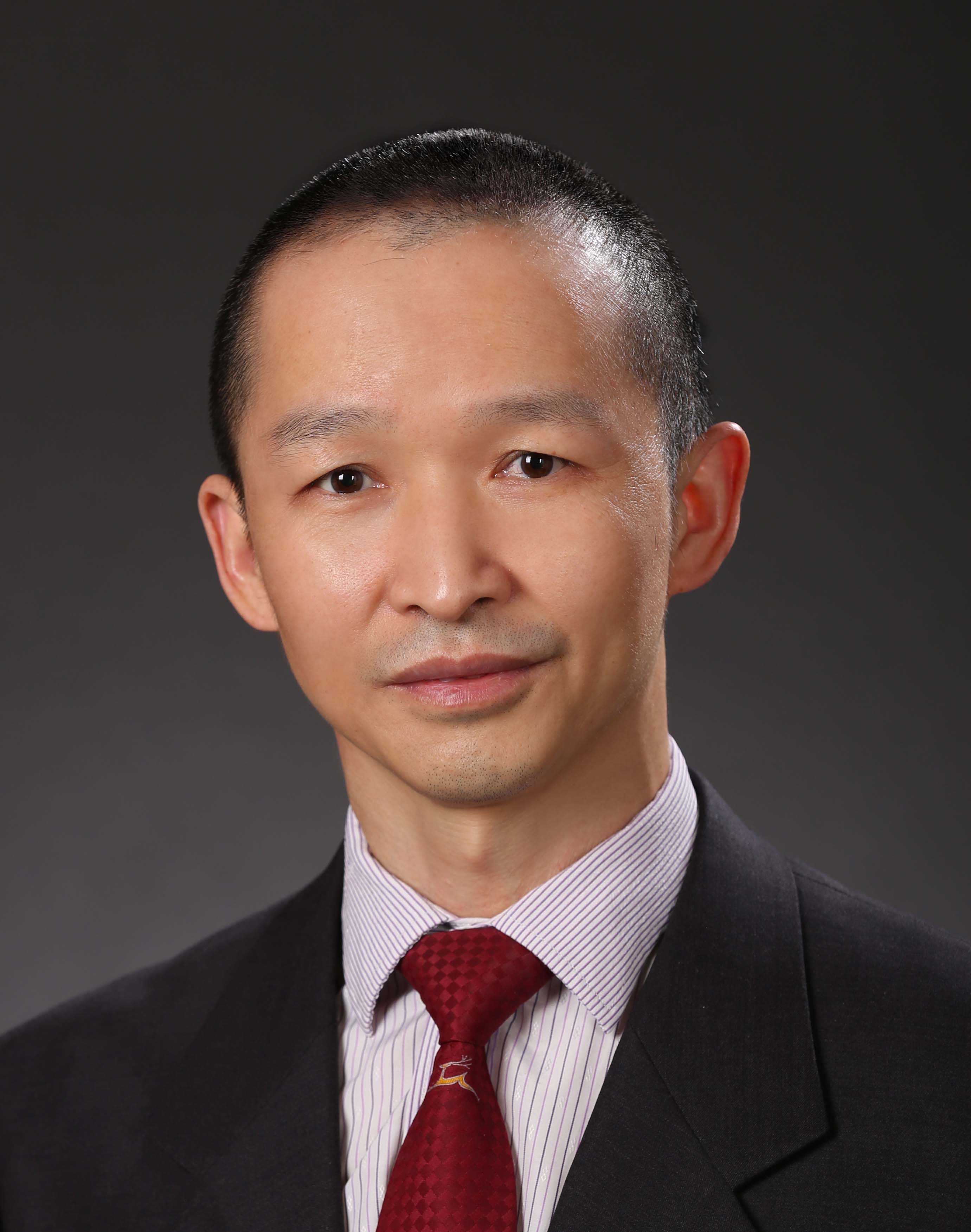 Jun-Hai Yong (雍俊海)合作论文数School of Software, Tsinghua University5
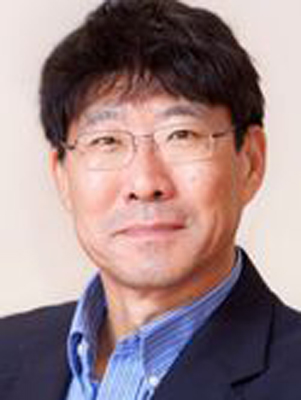 Wenping Wang合作论文数Department of Computer Science & Engineering, College of Engineering, Texas A&M University4Yun Fei合作论文数3
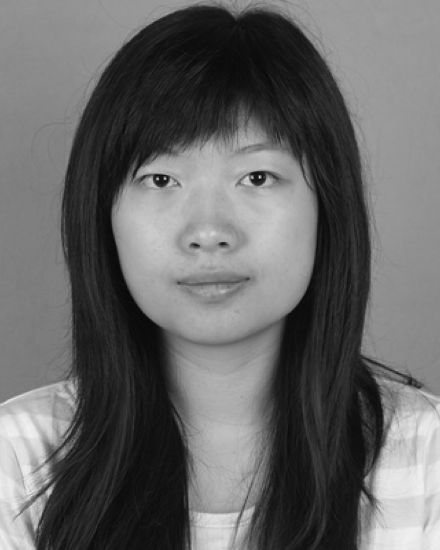 Miaoyi Wang (王妙一)合作论文数2
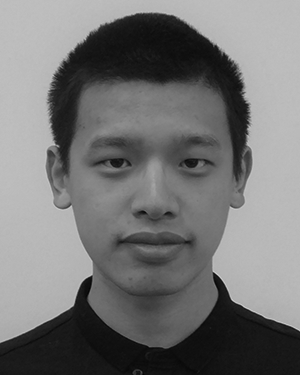 Yuxiang Wang合作论文数2
 Kang-Lai Qian合作论文数Tsinghua University2
 Ryan Overbeck合作论文数Google2Chunhui Yao合作论文数1
 Shibiao Xu (徐士彪)合作论文数School of Artificial Intelligence, Beijing University of Posts and Telecommunications1Jianliang Zhou合作论文数1
 Weiming Dong (董未名)合作论文数Institute of Automation, Chinese Academy of Sciences;University of Chinese Academy of Sciences1
 Xiaopeng Zhang (张晓鹏)合作论文数National Laboratory of Pattern Recognition, Institute of Automation, Chinese Academy of Sciences;University of Chinese Academy of Sciences1
 Huamin Wang合作论文数Style3D1Zhiyi Zhang合作论文数1Yajun Wang合作论文数1
 Xiaohong Jia (贾晓红)合作论文数Key Laboratory of Mathematics Mechanization, Institute of Systems Science, Academy of Mathematics and Systems Science, Chinese Academy of Sciences1
 Li-Yi Wei (魏立一)合作论文数Adobe Research1
 Baining Guo (郭百宁)合作论文数Microsoft Research Asia1
 Weiliang Meng (孟维亮)合作论文数State Key Laboratory of Multimodal Artificial Intelligence Systems, Institute of Automation, Chinese Academy of Sciences;School of Artificial Intelligence, University of Chinese Academy of Sciences1
 Li Chen (陈莉)合作论文数School of Software, Tsinghua University1
 Jean-Claude Paul合作论文数Institute of Computer Aided Design1
 Kartic Subr合作论文数School of Informatics,University of Edinburgh1
 Ning Zhou合作论文数Tsinghua University1
 Chao Li合作论文数Reality Labs Research, Meta1Xiaoyin Ge合作论文数1
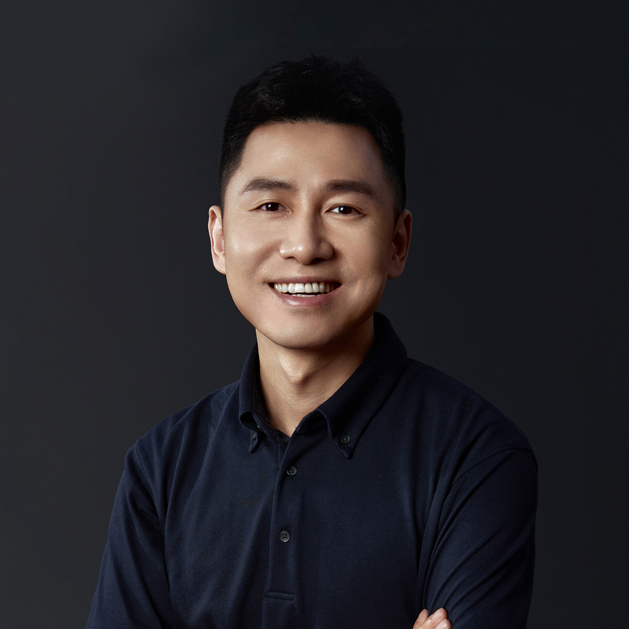 Jiaping Wang (王嘉平)合作论文数International Digital Economy Academy1
 Xing Mei合作论文数TikTok, Bytedance1
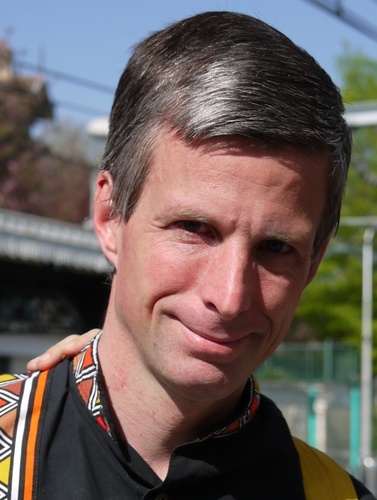 Nicolas Holzschuch合作论文数INRIA1Yusu Wang合作论文数1
 Bin Chan合作论文数1Wenshan Fan合作论文数1
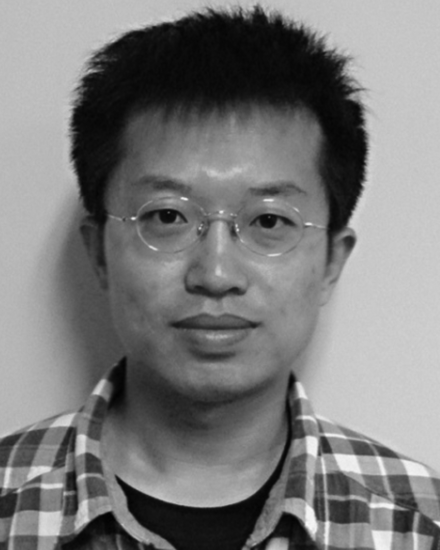 Guanbo Bao合作论文数1
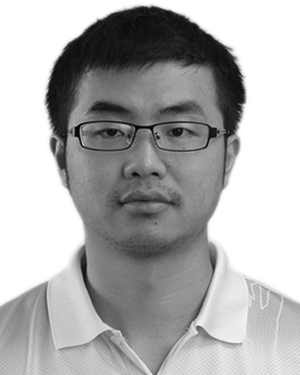 Fuzhang Wu (吴富章)合作论文数Institute of Automation, Chinese Academy of Sciences1




