Blind omnidirectional image quality assessment (BOIQA) presents a great challenge to the visual quality assessment community, due to different storage formats and diverse user viewing behaviors. The main paradigm of BOIQA models includes two steps, ie, viewport generation, and quality prediction, which brings an extra computational burden and is hard to generalize to other visual contents (eg, 2D planar image). Thus, in this paper, we make an attempt to solve these issues. First, we experimentally find that BOIQA can be formulated as a blind (2D planar) image quality assessment (BIQA) problem, ie, the first step - viewport generation - is no longer needed, which narrows the natural gap between BOIQA and BIQA. Then, we present a new BOIQA approach, which has three merits: ie, viewport-unaware - it accepts an omnidirectional image in the widely used equirectangular projection format as input without any transformation; unified - it can also be applied to BIQA; and generalized - it shows better generalizability against other competitors. Finally, we validate its promise by held-out test, cross-database validation, and the well-established gMAD competition.
Full-reference (FR) image quality assessment (IQA) (FR-IQA) has been extensively explored in the past two decades and is one of the most basic and hot topics in the image processing community, due to its indispensable role in quantitatively describing image quality degradation and guiding algorithm and system optimization. However, FR omnidirectional image quality assessment (OIQA) (FR-OIQA) has achieved less success, due to the natural gap between 2D images and omnidirectional images (OIs). To this end, we present a novel FR-OIQA model with Inter-Patch and Sequence Similarity (IPSS). Specifically, to avoid the extra computational load of viewport generation/prediction methods, IPSS processes OIs in a viewport-unaware manner, i.e., directly extracting a patch sequence from an OI in the format of Equirectangular Projection (ERP) with retaining regions of interest. Furthermore, since the patches from ERP image contain inborn geometry deformation, the deformation-aware convolution is plugged into feature extraction and used to distill quality-aware features from the intrinsic pseudo-degradation, which are then utilized to measure inter-patch similarity. Finally, a distortion-aware interaction module is used to aggregate patch-wise quality-aware features, whose output is used to calculate patch-sequence similarity, i.e., the global quality of OI. Through comprehensive experiments on a large-scale OIQA database, we demonstrate the superiority of the proposed IPSS and the effectiveness of each module. The source code is available at https://github.com/18liu/IPSS
Video Quality Assessment (VQA) strives to computationally emulate human perceptual judgments and has garnered significant attention given its widespread applicability. However, existing methodologies face two primary impediments: (1) limited proficiency in evaluating samples at quality extremes (e.g., severely degraded or near-perfect videos), and (2) insufficient sensitivity to nuanced quality variations arising from a misalignment with human perceptual mechanisms. Although vision-language models offer promising semantic understanding, their reliance on visual encoders pre-trained for high-level tasks often compromises their sensitivity to low-level distortions. To surmount these challenges, we propose the Restoration-Assisted Multi-modality VQA (RAM-VQA) framework. Uniquely, our approach leverages video restoration as a proxy to explicitly model distortion-sensitive features. The framework operates through two synergistic stages: a prompt learning stage that constructs a quality-aware textual space using triple-level references (degraded, restored, and pristine) derived from the restoration process, and a dual-branch evaluation stage that integrates semantic cues with technical quality indicators via spatio-temporal differential analysis. Extensive experiments demonstrate that RAM-VQA achieves state-of-the-art performance across diverse benchmarks, exhibiting superior capability in handling extreme-quality content while ensuring robust generalization.
The rapid advancement of text-to-3D (T23D) generation technologies has created an urgent demand for reliable objective quality assessment approaches. However, existing methods typically provide only a coarse-grained overall score, failing to capture fine-grained flaws across different perspectives, such as geometric distortion, texture blur, and text-misalignment. Furthermore, jointly learning these diverse dimensions often leads to severe feature conflicts, where strong semantic signals dominate weak geometric features. To address these challenges, we propose GateScore, a novel condition-gated multi-scale fusion framework for fine-grained multi-dimensional T23D quality assessment. Specifically, GateScore projects 3D assets into 2D multi-view images and extracts multi-modal features using CLIP encoders for cross-modal fusion. To effectively decouple conflicting tasks, we introduce a condition-aware detail gating mechanism, which conditionally filters and fuses scale-specific features based on the targeted evaluation dimension, enabling task-specific feature routing before final quality prediction. We conduct extensive experiments on three benchmark datasets with varying numbers of evaluation dimensions. Experimental results demonstrate that GateScore achieves state-of-the-art performance on multi-dimensional 3D mesh benchmarks and maintains highly competitive accuracy on video-based assets. Ablation studies further validate the individual contributions of its core components.
Accurate detection of salient objects in RGB-D images requires effective fusion of the complementary information between RGB and depth modalities while addressing the inherent modality gap. To address this issue, we propose a cross-modal adaptive correlation learning network that adaptively models and integrates RGB-depth correlations to enhance detection performance. Specifically, an adaptive cross-modal fusion module is proposed to capture modality-specific features. This module facilitates effective cross-modal knowledge integration across modalities. To further refine feature representation, a hierarchical feature fusion decoder with multi-scale feature aggregation modules is developed. This decoder progressively integrates contextual information across different scales and preserves both global semantic awareness and fine-grained local details. Furthermore, a quality-aware optimization objective is proposed to mitigate edge distortion and enforce structural consistency, which learns boundary-preserving cues and improves the structural integrity. Extensive experiments on seven benchmark datasets demonstrate that CACNet outperforms existing methods in both qualitative and quantitative evaluations. The experimental results on RGB-T salient object detection datasets further demonstrate the generalization capability of the proposed model.
While multimodal large language models (MLLMs) have demonstrated promising results in image quality assessment (IQA) through retraining or fine-tuning approaches, two critical challenges persist, as the substantial computational resource requirements, and incomplete utilization of fundamental semantic knowledge. To address these limitations, we present a novel zero-shot IQA framework that effectively leverages MLLMs’ inherent capabilities without requiring image preprocessing, fine-tuning, or task-specific training. Our key innovation involves extracting quality-aware semantic preferences directly from MLLM outputs through a dual-process mechanism: (1) capturing quality semantics trends via logit analysis, and (2) deriving perceptual weights through polarity-aware word embedding analysis. The final quality score is computed as a weighted combination of these semantic indicators. Comprehensive evaluations across multiple standard IQA benchmarks show that our method achieves state-of-the-art performance among zero-shot approaches. These results demonstrate the effectiveness of our framework in harnessing MLLMs’ evaluation potential while overcoming the computational and semantic preservation challenges of previous methods. The code is available at https://github.com/weolix/SeP-IQA.
The outstanding performance of Large Multimodal Models (LMMs) has been evidenced across various visual tasks. These models exhibit a remarkable ability to accurately interpret visual information and deliver precise feedback, leveraging their cross-modal interaction capabilities. However, the image quality in the real world is often suboptimal, and various image corruptions present significant challenges for the practical application of LMMs. In this paper, we take an initial attempt and conduct a systematic investigation into the robustness of these models against common image corruptions in the context of image captioning. Specifically, we introduce IC-Bench, a large-scale benchmark dataset comprising 1500 reference images with 420k stimuli across seven distinct distortion types. Utilizing this benchmark, we provide a comprehensive evaluation of twelve stateof-the-art LMMs on the image captioning task. Experimental results indicate that the performance of LMMs in the image captioning task is significantly affected by these quality distortions, underscoring the need for enhancements in the robustness of LMMs. We hope that our benchmark will serve as a valuable resource for the research community, fostering further investigation into improving the robustness of LMMs.
Existing Audio-visual saliency prediction (AVSP) methods often overlook the importance of spatiotemporal alignment of audio-visual features, leading models to over-reliance on visual signals. As a result, audio-visual features cannot be fully utilized, and blindly fusing misaligned audio-visual features may lead to performance decline. To address this challenge, we propose an AVSP method that combines adversarial learning and co-attention. Specifically, to achieve spatiotemporal alignment of audio-visual features, the frame-wise collaborative attention (FWCA) module is introduced. This module exploits latent correlations between audio-visual features to align spatiotemporal information using a frame-wise collaborative cross-modal attention mechanism. Additionally, it accumulates the weights of the previous frame during frame-wise propagation, thereby enhancing the model’s ability to utilize audio-visual information. To combat the interference of background noise and the limitations on the size of audio-visual datasets, we design a spatiotemporal adversarial learning (STAL) module. This further ensures the spatiotemporal consistency of audio-visual features, guides the model to balance attention to audio-visual information, and eliminates the reliance on pre-training with video datasets, significantly improving the model’s training efficiency. Through extensive experiments on several benchmark datasets, our proposed method not only achieves competitive performance but also potentially provides deep insights into the audio-visual fusion mechanism.
Blind omnidirectional image quality assessment (BOIQA) has made remarkable progress recently from scan-path driven joint optimization and viewing prior guided modeling, however, there still exists a natural gap between BOIQA and blind 2D image quality assessment (BIQA) due to the fact that omnidirectional image quality perception is essentially a dynamic process. Thus, most studies formulate BOIQA as a video quality assessment problem. In this study, we make a further attempt to formulate BOIQA as a BIQA problem (a.k.a. a two-dimensional perspective), i.e., the proposed model accepts a raw omnidirectional image in the widely used equirectangular projection (ERP) format as input, without any transformation or viewport prediction. To accommodate the inborn geometry deformation in OIs, we elaborately design two modules, namely the geometry-adaptive module and the quality-contextual representation module, both of which are mainly with two parallel submodules for better distilling distortion features from regular pixel distribution from the poles to the equator, and these two modules are deployed on different scales of an efficient backbone one after another. Through comprehensive experiments on the OIQA and IQA databases, we demonstrate the feasibility of narrowing the gap between BOIQA and BIQA. In addition, we show its robustness using a well-established model comparison methodology, Group Maximum Differentiation (gMAD). The source code is available at https://github.com/liziyi1234/GAQC.
In spike camera shooting, stray light accumulation, thermal noise, and light intensity loss make pixel-generated spike intervals inaccurately reflect original light source info, posing two video salient object detection (VSOD) challenges in spike streams: 1) Noisy spikes hinder long-term video info capture; 2) Noise makes sparse spikes struggle to capture salient object texture details. To address these issues, we propose a noise-robust VSOD model based on spiking neural networks (SNNs) with a gradual fusion strategy: the spatial-channel cross-perception module (SCPM) enhances attention to salient regions and filters spatial noise; the local deformable cross-attention module (LDCM) strengthens local feature correlations for temporal denoising; the global information-enhanced self-attention module (GISM) models global context and extracts fine-grained textures. Extensive experiments show that it achieves an average relative improvement 9.5% across all metrics compared to state-of-the-art methods.
Enhancing video quality assessment (VQA) through semantic information integration is a critical research focus. Recent research has employed the Contrastive Language-Image Pre-training (CLIP) model as a foundation to improve semantic perception. However, the image-text alignment inherent in these pre-trained Vision-Language (VL) models frequently results in suboptimal VQA performance. While prompt engineering has recently targeted the language component to address this alignment issue, the unique insights resided in visual analysis is still overlooked for further advancing VQA tasks. Additionally, seeking a trade-off between quality separability and domain invariance in VQA remains largely unresolved within the VL paradigm. In this paper, we introduce a novel cross-modal prompt-based approach to tackle these challenges. Specifically, we propose learnable prompts within the vision branch to foster synergy between visual and language modalities through a language-to-vision coupling function. The multi-view backbone is then carefully crafted with content enhancement and distortion-aware temporal modulation to ensure quality separability. The language prompts, derived from visual representations, are further supported by adaptive weighting mechanisms to optimize the balance between quality separability and domain invariance. Experimental results demonstrate the effectiveness of our proposed method over leading VQA models, showing significant improvements in generalization across diverse datasets.
Single-cell RNA sequencing (scRNA-seq) is essential for decoding tumor heterogeneity. However, pan-cancer research still faces two key challenges: learning discriminative and efficient single-cell representations, and establishing a comprehensive evaluation benchmark. In this paper, we introduce \algoname, a lightweight hybrid neural network that combines the strengths of Transformers and state-space models to achieve a balance between performance and efficiency. \algoname consists of a front-end local-context encoder with shared self-attention layers to capture complex, order-independent gene interactions; and a back-end global sequential feature decoder that efficiently integrates global context using a linear-time state-space model. This modular design preserves the expressive power of Transformers while leveraging the scalability of Mamba to enable transcriptome modeling, effectively capturing both local and global regulatory signals. To enable robust evaluation, we also construct a large-scale pan-cancer single-cell benchmark, \algoname Bench, containing over 3.5 million high-quality cells across 33 cancer subtypes, curated through a rigorous preprocessing pipeline. Experimental results show that \algoname outperforms state-of-the-art models on our pan-cancer benchmark (+4.0\%) and across multiple public tasks, including cell type annotation (+7.4\%), batch integration (+4.0\%) and multi-omics integration (+3.1\%).
Novel view synthesis methods, such as neural radiance fields and 3D Gaussian splatting, offer a promising solution for photorealistic rendering. However, they remain challenged in few-shot settings, where models tend to overfit the limited supervised views, leading to artifacts such as quality fluctuations, degradation in distant views, and geometric inconsistencies. To address these issues, we introduce Human Perceptual Preference Optimization (HuPPO), a framework that incorporates human perceptual guidance into model training. HuPPO mitigates distortions by regularizing training dynamics with perceptual preference cues, thereby reducing the reliance on extensive supervised views. Specifically, HuPPO leverages human perception to identify and select candidate novel views, and introduces a corresponding objective function that steers optimization toward perceptually preferred outcomes. In addition, a meta-learning pipeline is integrated to promote the learning of generalizable representations. The framework is flexible and can be seamlessly applied to a wide range of neural rendering models without incurring additional inference overhead. Extensive experiments and analyses demonstrate that HuPPO achieves consistent improvements over state-of-the-art baselines.
Blind omnidirectional image quality assessment (BOIQA) has been a challenging problem in the image quality assessment field, due to the geometric characteristic of omnidirectional images (OIs) and complicated human behavior in immersive experience. Toward solving this problem, we resort to Multimodal Large Language Models (MLLMs), which show great success in both computer vision and natural language processing, while they have not been investigated in BOIQA. Specifically, we first generate coarse and detailed quality-aware descriptions for OIs by feat of MLLMs to get richer information, instead of simple quantitative scalars. Upon the generated text descriptions and the paired images, we fine-tune a top-performing model (i.e., Long-CLIP) under the general contrastive learning framework, mining robust and representative embeddings in the vision-language space. Then, we design a family of MultiModal BOIQA ( MMBO ) models based on the embeddings in the built vision-language space, comprehensively investigating the effectiveness of text features, visual features, and their interaction in capturing quality degradation of OIs. Experimental results on two large-scale OIQA databases demonstrate the superior performance of MMBO models, e.g., the best performing MMBO model outperforms the second-ranked method 9.4 % and 6.6 % on these two OIQA databases in terms of PLCC, respectively, and shows promising generalizability in cross-database validation and gMAD competition.
This paper presents a comprehensive review of the NITRE 2026 Efficient Low Light Image Enhancement (E-LLIE) Challenge, highlighting the proposed solutions and final outcomes. This challenge focuses on mobile image enhancement under low-light conditions, aiming to design lightweight networks that improve enhancement quality while ensuring practical deployability under limited computational resources. A total of 207 participants registered, 27 teams submitted valid entries, and 17 teams ultimately provided valid factsheet. Based on these submissions, this paper provides a systematic evaluation of recent methods for E-LLIE, offering a comprehensive overview of state-of-the-art progress and demonstrating significant improvements in both performance and efficiency.
Light Field Salient Object Detection (LF SOD) seeks to identify visually prominent objects in complex scenes by leveraging rich multimodal data, including focal stack images, depth maps, and all-in-focus images. Despite existing methods attempting to utilize this multimodal data, several problems remain: 1) high resource consumption in focal stack images fusion; 2) insufficient modeling of cross-modal feature differences; and 3) blurred object boundaries in the detection results. To address these challenges, we propose a novel LF SOD framework that effectively integrates various modalities. Specifically, we introduce a Multi-scale Region Align module to model inter-frame semantic relationships at the region level, reducing computational overhead while enhancing feature interactions across focal stacks. Considering the heterogeneity between different modalities, we designed a Modality-Aware Descriptor module.This module can capture intra-modal and inter-modal commonalities and differences in multi-scale features, thereby enhancing the discriminative ability between salient objects and the background. To address the issue of inaccurate object boundaries, an Edge Enhancement module is proposed that utilizes depth map cues to refine the target contour and suppress background noise. Extensive experiments on three challenging datasets-DUTLF-FS, HFUT-Lytro, and Lytro Illum-demonstrate that our method consistently outperforms 14 state-of-the-art models across four widely used metrics, setting a new benchmark for light field saliency detection. https://github.com/zhiying2023/MENet
Unsupervised domain adaptation methods seek to generalize effectively on unlabeled test data, especially when encountering the common challenge in time series data that distribution shifts occur between training and testing datasets. In this paper, we propose incorporating multi-scale feature extraction and uncertainty estimation to improve the model's generalization and robustness across domains. Our approach begins with a multi-scale mixed input architecture that captures features at different scales, increasing training diversity and reducing feature discrepancies between the training and testing domains. Based on the mixed input architecture, we further introduce an uncertainty awareness mechanism based on evidential learning by imposing a Dirichlet prior on the labels to facilitate both target prediction and uncertainty estimation. The uncertainty awareness mechanism enhances domain adaptation by aligning features with the same labels across different domains, which leads to significant performance improvements in the target domain. Additionally, our uncertainty-aware model demonstrates a much lower Expected Calibration Error (ECE), indicating better-calibrated prediction confidence. Our experimental results show that this combined approach of mixed input architecture with the uncertainty awareness mechanism achieves state-of-the-art performance across multiple benchmark datasets, underscoring its effectiveness in unsupervised domain adaptation for time series data.
 Yuming Fang (方玉明)合作论文数Jiangxi University of Finance and Economics69
 Yifan Zuo合作论文数13
 Xuelin Liu合作论文数School of Information Management, Jiangxi University of Finance and Economics, Nanchang, China12
 Wenhui Jiang (姜文晖)合作论文数School of Information Technology, Jiangxi University of Finance and Economecs9
 Weide Liu合作论文数Harvard Medical School, Harvard University8
 Junjie Chen (陈俊杰)合作论文数School of Computing and Artificial Intelligence, Jiangxi University of Finance and Economics7Xiangjie Sui合作论文数7
 Jingwen Hou合作论文数School of Computer Science and Engineering, Nanyang Technological University6
 Pengfei Chen (陈鹏飞)合作论文数School of Artificial Intelligence, Xidian University6
 Leida Li (李雷达)合作论文数School of Artificial Intelligence, Xidian University6
 Jiheng Wang合作论文数Dept . of Statistics and Actuarial Science;Univ . of Waterloo;Dept . of Statistics and Actuarial Science, Univ . of Waterloo5Hantao Liu (刘汉涛)合作论文数4
 Xue Xia (夏雪)合作论文数江西财经大学4
 Qiaohong Li合作论文数4
 Liu Yang (杨柳)合作论文数School of Artificial Intelligence, College of Intelligence and Computing, Tianjin University4
 Zongming Guo (郭宗明)合作论文数Video Information Processing Group, Wangxuan Institute of Computer Technology, Peking University4
 Shiqi Wang (王诗淇)合作论文数Department of Computer Science, City University of Hong Kong4
 Rengang Du合作论文数3
 Liping Huang合作论文数China Univ Min & Technol, Sch Informat & Elect Engn, Xuzhou 221116, Peoples R China3Wan Zheng合作论文数3
 Yan Zeng合作论文数Jiangxi Univ Finance & Econ, Sch Informat Technol, Nanchang, Jiangxi, Peoples R China3
 Patrick Le Callet合作论文数Department of Electrical Engineering, Engineer School, Ecole polytechnique de l’université de Nantes;Department of Computer Science, Engineer School, Ecole polytechnique de l’université de Nantes;Département Électronique et Technologies Numériques, Nantes Université3
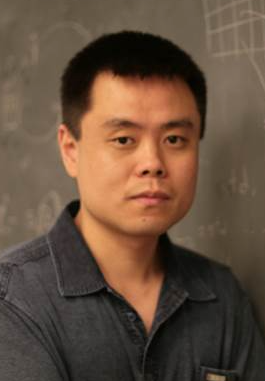 Zhou Wang合作论文数Department of Electrical and Computer Engineering, University of Waterloo;SSIMWAVE Inc.3
 Jinjian Wu (吴金建)合作论文数School of Artificial Intelligence, Xidian University3
 Xiaoshui Huang (黄小水)合作论文数Shanghai Jiao Tong University2Liu Jiaying合作论文数2Zhaoqian Li合作论文数2
 Yiru Yao合作论文数2
 Li Niu (牛力)合作论文数Department of Computer Science and Technology, Shanghai Jiao Tong University;MoE Key Lab of Artificial Intelligence, Shanghai Jiao Tong University2
 Guangtao Zhai (翟广涛)合作论文数School of Integrated Circuits, Shanghai Jiao Tong University2
 Weisi Lin合作论文数School of Computer Science and Engineering, Nanyang Technological University;College of Computing and Data Science, Nanyang Technological University2
 Jiaying Liu (刘家瑛)合作论文数Wangxuan Institute of Computer Technology, Peking University2
 Lei Shu (舒磊)合作论文数College of Artificial Intelligence, Nanjing Agricultural University;NAU-Lincoln Joint Research Center of Intelligent Engineering;Beyond Intelligent Phytoprotection Research Institute, Nanjing Agricultural University;School of Engineering, College of Health and Science, University of Lincoln2
 Kede Ma (馬柯德)合作论文数Multimedia Analytics Laboratory, Department of Computer Science, City University of Hong Kong2
 Zhihua Wang合作论文数Department of Computer Science, City University of Hong Kong1
 Wei Wang (王维)合作论文数School of Cyberscience and Technology, Sun Yat-sen University1
 Chao Huang (黄超)合作论文数School of Cyber Science and Technology, Sun Yat-sen University1Peibei Cao (曹佩蓓)合作论文数Department of Computer Science, City University of Hong Kong1
 Zongyi Xu合作论文数Chongqing University of Post and Telecommunications1Zongwei Wu合作论文数University of Wurzburg1
 Jie Wen合作论文数1Guanchen Li合作论文数1
 Chengtao Lv合作论文数1Chenyang Le (乐辰阳)合作论文数AudioCC Lab, Shanghai Jiao Tong University1Wang Shiqi合作论文数1
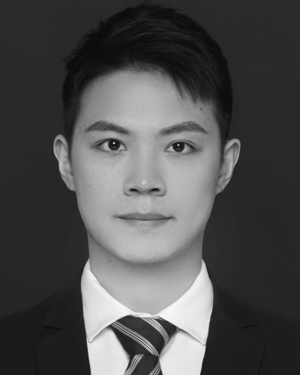 Jiacong Fan合作论文数1Wang Lu合作论文数1Huang Zijian合作论文数1




