This study presents the mathematical modeling of a staged-combustion cycle liquid-propellant rocket engine (LPRE) and the design of a thrust control algorithm using a decoupling approach. For this, a simulation environment for an oxidizer-rich staged-combustion cycle LPRE was developed in MATLAB/Simulink and validated against a design point data set. Subsequently, using the decoupling approach, an effective thrust control system was designed for a two-input, two-output system structure, where the inputs were controlled via valves and the outputs were combustion pressure and mixture ratio. This study confirms the accuracy of the simulation model and the efficacy of the designed control algorithm.
Reduced weight, size, and maintenance cost, as well as quieter and eco-friendly operation of electro-mechanical actuators (EMA), gained profound attention in various sectors, particularly aerospace. As a result, hydraulic actuators are being replaced by EMA counterparts. However, EMA comprises mating gear systems used for power transmission, and these gears experience wear through time. Among widely known EMAs variants, worm-wheel gear system is quietest, smoothest, and compact with high gear ratio. Due to these advantages, worm-wheel is utilized in various devices that require high precision such as surgical robotic arms and 3D printers. Nevertheless, worm-wheel systems, alike other variants of mating gear systems in EMA, suffer friction wear that leads to a backlash in the system. Backlash induces non-linearity in the dynamics of the worm-wheel system, resulting in reduced EMA performance and complex control system design. Therefore, as a part of EMA prognostic and health management (PHM) approaches, we develop a mathematical model of the non-linear dynamic behavior of backlash in the worm-wheel system and derived equations from the model for backlash gap size estimation. This backlash gap size estimation can be employed not only for monitoring of worm-wheel system performance and reliability as a proactive measure but also for its compensation control system design. Simulations of backlash dynamic behavior and gap size estimation were conducted using the Matlab/simscape tool. Extended and unscented Kalman filters were implemented to estimate backlash gap size, and their performance was compared using root-mean-square error technique. Results show that both Kalman filters estimate a simulated gap size very well. However, the unscented Kalman filter performs relatively higher than that of the extended Kalman filter around sharp edges during the switching behavior.
This study introduces a fault diagnosis algorithm based on particle filtering for open-cycle liquid-propellant rocket engines (LPREs). The algorithm serves as a model-based method for the startup process, accounting for more than 30% of engine failures. Similar to the previous fault detection and diagnosis (FDD) algorithm for the startup process, the algorithm in this study is composed of a nonlinear filter to generate residuals, a residual analysis, and a multiple-model (MM) approach to detect and diagnose faults from the residuals. In contrast to the previous study, this study makes use of the modified cumulative sum (CUSUM) algorithm, widely used in change-detection monitoring, and a particle filter (PF), which is theoretically the most accurate nonlinear filter. The algorithm is confirmed numerically using the CUSUM and MM methods. Subsequently, the FDD algorithm is compared with an algorithm from a previous study using a Monte Carlo simulation. Through a comparative analysis of algorithmic performance, this study demonstrates that the current PF-based FDD algorithm outperforms the algorithm based on other nonlinear filters.
This study deals with the mathematical modeling and numerical simulation of chemical propulsion systems (CPSs). For this, we investigate and summarize a comprehensive collection of the simulation modeling developments of CPSs in academic works, applications, and industrial fields. Then, we organize and analyze the simulation modeling approaches in several ways. After that, we organize differential-algebraic Equations (DAEs) for fundamental mathematical modeling consisting of the governing Equations (ordinary differential equations, ODEs) for the components and other equations derived from several physical rules or characteristics (algebraic equations or phenomenological equations, AEs) and then synthesize and summarize the fundamental structures of analytic mathematical modeling by types (liquid-propellant rocket engines, solid-propellant rocket motors, and hybrid-propellant rocket motors) of CPSs.
This study presents an optimal design approach of a pintle injector for a deep throttlable liquid-propellant rocket engine (LPRE). Even though the pintle injector is used in rocket engines, it has become more important since reusable launch vehicles (RLVs) recently became a trend due to their economic and environmental benefits. However, since many variables must be determined to design a pintle injector, optimizing the pintle injector design is complicated. For this, we design a pintle injector to optimize the performance parameters; the spray angle, vaporization distance, and Sauter mean diameter (SMD). To confirm the approach, we design a pintle injector using an optimization method based on convex quadratic programming (CQP) for a 1000 N thrust and a throttle ability of 5 to 1 LPRE with liquid oxygen and gaseous methane. Then, we verify the performance using a numerical simulation. Through this work, we check the effectiveness of the optimization method for a pintle injector design.
This paper deals with a performance comparison of the control algorithm for a variable-thrust solid-propellant rocket motor (VTSRM). To do this, we develop a simulation model of a VTSRM considering characteristic changes in the combustor and design control systems for pressure and thrust. We use three types of control algorithms for the pressure control: classical PID control, feedback linearization control, and fuzzy PID control, and two control algorithms for thrust control: classical PID control and fuzzy PID control. Finally, we compare the performance of each control system through a numerical simulation using step responses. Through this work, we check that feedback linearization is better in pressure control, and fuzzy PID control is more appropriate in thrust control. Especially using fuzzy PID control, we can get fast settling with a small undershoot even if the system is a nonminimum phase system.
The role of the structural baffle injectors and blades in the liquid rocket engine is to block the transverse pressure waves that are caused by combustion instability. Although the protection of the liquid rocket system from high-frequency combustion instability is essential, there are side effects such as increased weight of the rocket and thermal effect. In this study, a fluidic baffle injector was applied to the simulant spray system, expecting that it would operate with the same performance as a structural baffle injector. The development of the additive manufacturing technology allows for the designing of various geometrical injector arrays such as the combination of a gas-centered swirl injector and shear coaxial injector. This study aimed to compare the blockage performance of a structural baffle injector with that of a fluidic baffle injector using damping capacity and various injector arrays. The damping capacity was high in the structural baffle injector because the pressure wave was completely blocked. However, the amplitude was similar in the shear coaxial injector. This means that the blockage performance of the shear coaxial injector as a fluidic baffle injector is noteworthy.
This note deals with the infinite horizon linear regulation problem using output feedback with state equality constraints. Similar to the corresponding state feedback problem of a previous work, an existence condition for the output feedback gain and, if it exists, all constrainable output feedback gains are determined. However, different from the fore-mentioned state feedback case, only the necessary conditions for the optimal output feedback gain which minimizes the given standard cost function are determined. The performance of the developed algorithm is demonstrated using numerical simulations for a simple model of divert control system and the lateral dynamics of an F-16 aircraft.
This paper deals with an application of the fault detection and diagnosis algorithm based on nonlinear Kalman filter methods for transient state of an open-cycle liquid propellant rocket engine. In order to develop the algorithm, we designed two types of the nonlinear Kalman filter which are the extended Kalman filter and unscented Kalman filter with non-linear model of the liquid propellant rocket engine. Then using the measurement data of some important parameters of the engine, the residuals from the nonlinear Kalman filters are obtained. Using the residuals, we can detect and diagnose faults in the components of the engine by using the multiple model method. To confirm the fault detection and diagnosis algorithm, we developed mathematical model of an open-cycle liquid propellant rocket engine and artificially injected various faults such as decreasing turbopump efficiency. And then, perform the fault detection and diagnosis algorithm and check the performance of the algorithm. This process is numerically demonstrated for the open-cycle liquid propellant rocket engine under start-up process by using the simulated measurement data from the mathematical model of the engine.
This paper examines a survey on recent research regarding health monitoring and management for liquid rocket engines (LRE). For this, we investigated precedent techniques applied to LRE development. Particularly, we focused on open-cycle LRE to apply to KSLV(Korea Space Launch Vehicle ). II II Through this study, we subdivided health monitoring algorithms and analyzed fault detection and diagnosis algorithm developed in China, since China researched open-cycle LRE that have the same cycle as KSLV-II rocket engines. We discuss significant points to be considered regarding development of the KSLV. II 초 록 본 논문은 액체로켓엔진의 건전성 감시 및 관리기법에 대한 연구 동향을 소개한다 이를 위하여 실제 . 액체로켓엔진에 연구 및 적용되었던 고장진단 알고리즘을 조사하였다 특히 한국형발사체 . (Korea Space Launch Vehicle II, KSLV) II 에 적용하기 위해 한국형발사체 로켓엔진과 같은 구조인 개방형 액체로켓 엔진에 적용된 알고리즘을 조사하였다 이러한 과정을 통해 적용된 사례들의 특징을 따로 세분화하고 . , 한국형발사체 로켓엔진과 비슷한 중국의 개방형 액체로켓엔진들의 고장진단 기법 특징들을 분석하였다. 나아가 년에 발사를 목표로 하는 한국형발사체에 적용시키기 위해 고려해야 할 사항에 대하여 토 2019 론하고자 한다.
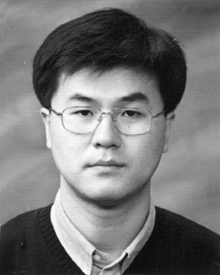 Sangho Ko合作论文数19
 Seungeun Kang合作论文数4
 Chul-Su Ha合作论文数3Soon-Young Park合作论文数3Jaye Koo合作论文数School of Aerospace and Mechanical Engineering, Korea Aerospace University3WooSung Cho合作论文数2Eunhwan Jeong合作论文数1Abera Tullu合作论文数1Erik Andersson合作论文数1
 Elcio Jeronimo de Oliveira合作论文数Onboard Space Syst, Lulea Univ Technol1
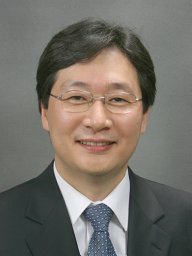 Youngbin Yoon合作论文数School of Mechanical and Aerospace Engineering, Seoul National University1
 G. Alexis Bohlin合作论文数Department of Computer Science, Electrical and Space Engineering, Luleå University of Technology/Aerodynamics, Wind Energy, Flight Performance and Propulsion, Faculty of Aerospace Engineering, Delft University of Technology1
 Woo-Seok Song合作论文数BK21 Physics Research Division, Sungkyunkwan University1




