Label assignment is a critical component in object detectors, particularly within DETR-style frameworks where the one-to-one matching strategy, despite its end-to-end elegance, suffers from slow convergence due to sparse supervision. While recent works have explored one-to-many assignments to enrich supervisory signals, they often introduce complex, architecture-specific modifications and typically focus on a single auxiliary strategy, lacking a unified and scalable design. In this paper, we first systematically investigate the effects of “one-to-many” supervision and reveal a surprising insight that performance gains are driven not by the sheer quantity of supervision, but by the diversity of the assignment strategies employed. This finding suggests that a more elegant, parameter-efficient approach is attainable. Building on this insight, we propose LoRA-DETR, a flexible and lightweight framework that seamlessly integrates diverse assignment strategies into any DETR-style detector. Our method augments the primary network with multiple Low-Rank Adaptation (LoRA) branches during training, each instantiating a different one-to-many assignment rule. These branches act as auxiliary modules that inject rich, varied supervisory gradients into the main model and are discarded during inference, thus incurring no additional computational cost. This design promotes robust joint optimization while maintaining the architectural simplicity of the original detector. Extensive experiments on different baselines validate the effectiveness of our approach. Our work presents a new paradigm for enhancing detectors, demonstrating that diverse “one-to-many” supervision can be integrated to achieve state-of-the-art results without compromising model elegance.
Previous feed-forward 4D reconstruction methods either predict per-frame static point clouds, ignoring foreground motion, or estimate point cloud trajectories while being limited to small camera motions. This restricts their ability to aggregate observations over time and reconstruct complete dynamic scenes under large viewpoint changes. To address this limitation, we propose OmniX, a feed-forward 4D reconstruction framework that predicts dense 3D point trajectories for every pixel from videos with large camera motion. OmniX decouples dynamic motion modeling from static geometry prediction and represents motion using a compact set of dynamic tokens. By leveraging the sparse and low-rank structure of 3D motion, these tokens generate trajectory fields for all pixels across all images while efficiently preserving global interactions. To facilitate training, we further build an automatic UE5-based 4D data engine and introduce a large-scale dataset containing 80K scenes and 1.28M multi-view videos with full geometric annotations. OmniX achieves state-of-the-art performance on dense 3D point trajectory prediction and 3D point tracking, while also demonstrating competitive results on video depth estimation and camera pose estimation.
Vision-Language Models(VLMs) excel at autoregressive text generation, yet end-to-end autonomous driving requires multi-task learning with structured outputs and heterogeneous decoding behaviors, such as autoregressive language generation, parallel object detection and trajectory regression. To accommodate these differences, existing systems typically introduce separate or cascaded decoders, resulting in architectural fragmentation and limited backbone reuse. In this work, we present a unified autonomous driving framework built upon a pretrained VLM, where heterogeneous decoding behaviors are reconciled within a single transformer decoder. We demonstrate that pretrained VLM attention exhibits strong transferability beyond pure language modeling. By organizing visual and structured query tokens within a single causal decoder, structured queries can naturally condition on visual context through the original attention mechanism. Textual and structured outputs share a common attention backbone, enabling stable joint optimization across heterogeneous tasks. Trajectory planning is realized within the same causal LLM decoder by introducing structured trajectory queries. This unified formulation enables planning to share the pretrained attention backbone with images and perception tokens. Extensive experiments on end-to-end autonomous driving benchmarks demonstrate state-of-the-art performance, including 0.28 L2 and 0.18 collision rate on nuScenes open-loop evaluation and competitive results (86.8 PDMS) on NAVSIM closed-loop evaluation. The full model preserves multi-modal generation capability, while an efficient inference mode achieves approximately 40
Infrared small target detection (ISTD) is challenging because tiny, low-contrast targets are easily obscured by complex and dynamic backgrounds. Conventional multi-frame approaches typically learn motion implicitly through deep neural networks, often requiring additional motion supervision or explicit alignment modules. We propose Motion Integration DETR (MI-DETR), a bio-inspired dual-pathway detector that processes one infrared frame per time step while explicitly modeling motion. First, a retina-inspired cellular automaton (RCA) converts raw frame sequences into a motion map defined on the same pixel grid as the appearance image, enabling parvocellular-like appearance and magnocellular-like motion pathways to be supervised by a single set of bounding boxes without extra motion labels or alignment operations. Second, a Parvocellular-Magnocellular Interconnection (PMI) Block facilitates bidirectional feature interaction between the two pathways, providing a biologically motivated intermediate interconnection mechanism. Finally, a RT-DETR decoder operates on features from the two pathways to produce detection results. Surprisingly, our proposed simple yet effective approach yields strong performance on three commonly used ISTD benchmarks. MI-DETR achieves 70.3
Standard softmax self-attention excels in vision tasks but incurs quadratic complexity O(N^2), limiting high-resolution deployment. Linear attention reduces the cost to O(N), yet its compressed state representations can impair modeling capacity and accuracy. We present an analytical study that contrasts linear and softmax attention for visual representation learning from a layer-stacking perspective. We further conduct systematic experiments on layer-wise hybridization patterns of linear and softmax attention. Our results show that, compared with rigid intra-block hybrid designs, fine-grained layer-wise hybridization can match or surpass performance while requiring fewer softmax layers. Building on these findings, we propose SoLA-Vision (Softmax-Linear Attention Vision), a flexible layer-wise hybrid attention backbone that enables fine-grained control over how linear and softmax attention are integrated. By strategically inserting a small number of global softmax layers, SoLA-Vision achieves a strong trade-off between accuracy and computational cost. On ImageNet-1K, SoLA-Vision outperforms purely linear and other hybrid attention models. On dense prediction tasks, it consistently surpasses strong baselines by a considerable margin. Code will be released.
This paper tackles the challenging task of achieving storage-efficient yet high-fidelity motion representation in large-scale dynamic 3D Gaussian Splatting. Our motivation stems from the truth that existing urban-scale methods, which rely on massive and unstructured individual Gaussians for scene modeling, face a critical scalability bottleneck. Inspired by recent advances in the 3DGS-based compression beyond autonomous driving, we address this challenge by leveraging the compression capability of anchor-driven methods. However, this is non-trivial as our exploratory experiments reveal that the direct application of this paradigm to dynamic, large-scale urban scenes results in performance degradation. We attribute this phenomenon to the hierarchical anchor design that severely loses dynamic information. To this end, we propose Hierarchical Dynamic Gaussian Splatting (HDGS), a novel framework designed to adapt the anchor-based Gaussian paradigm to 4D urban environments. We first establish a local support network to reinforce inter-anchor consistency, mitigating geometric and appearance fractures caused by supervision attenuation in deep hierarchies. Then, we handle heterogeneous object motion via coarse-to-fine decomposition, where high-level anchors model coarse dynamics and low-level anchors refine them with residual deformations. Third, we introduce a hybrid supervision scheme that fuses global geometric constraints and local pixel-level cues to alleviate geometrically inconsistent reconstruction under sparse LiDAR. Extensive experiments show that HDGS reduces storage by 69.0% while maintaining or even improving rendering fidelity compared to state-of-the-art methods.
Despite advancements in generating visually stunning content, video diffusion models (VDMs) often yield physically inconsistent results due to pixel-only reconstruction. To address this, we propose MMPhysVideo, the first study to enhance physical plausibility in video generation through joint multimodal modeling. We recast perceptual cues, specifically semantics, geometry, and spatio-temporal trajectories, into a unified pseudo-RGB format, enabling VDMs to directly capture complex physical dynamics. To mitigate cross-modal interference, we propose a Bidirectionally Controlled Teacher architecture, which utilizes parallel branches to fully decouple RGB and perception processing and adopts two zero-initialized control links to gradually establish pixel-wise consistency. For inference efficiency, the teacher's physical prior is distilled into a single-stream student model via representation alignment. Furthermore, we present MMPhysPipe, an end-to-end data curation and annotation pipeline tailored for constructing physics-rich multimodal datasets. MMPhysPipe employs a vision-language model (VLM) guided by a chain-of-visual-evidence rule to pinpoint physical subjects, enabling expert models to extract multi-granular perceptual information. Without additional inference costs, MMPhysVideo consistently improves physical plausibility of advanced models on the Videophy and PhyGenbench benchmarks and achieves superior performance among existing methods.
4D generation aims to animate 3D objects with realistic motion, holding great promise for applications. Existing methods typically decouple 3D asset generation from motion synthesis: acquire a 3D asset, prepare a structural representation like mesh and Gaussians, and synthesize motion from text or video control signals. However, dense mesh and Gaussian representations incur high computational costs and are prone to temporal artifacts, limiting animation quality and duration to only short clips. Meanwhile, text lacks fine-grained spatial and temporal details such as timing and coordination, while video entangles motion with appearance and background. Together, these limitations result in 4D animations that suffer from poor temporal consistency, wrong identification, and limited controllability. We address these issues with , a trajectory-conditioned framework for topology-general skeletal animation. ACT uses skeletons as a compact structured and compute-efficient representation and 3D point trajectories from monocular video as explicit motion guidance which provide detailed motion patterns without appearance entanglement. At the core of ACT is a Routed Trajectory Injector, which achieves accurate and robust trajectory-to-joint transfer through three complementary designs: prior-guided hard routing establishes precise skeleton-to-mesh correspondences, global routing enables holistic joint-track interaction for full-body motion awareness, and local windowed cross-attention enforces fine-grained temporal alignment, improving micro-timing and reducing motion misalignment across varying motion rates. Extensive experiments demonstrate that significantly outperforms existing methods in fidelity and temporal consistency.
Infrared small target detection (ISTD) remains challenging because tiny, low-contrast targets are easily overwhelmed by clutter, noise, or occlusion. Conventional single-frame and multi-frame detectors rely on bounding-box supervision, which specifies final target locations but offers little explicit guidance for prioritizing candidate regions or preserving weak-target evidence before localization. Task-driven visual search offers such guidance: top-down goals and visual evidence jointly form a spatial priority map that ranks candidate locations. Building on this principle, we propose Gaze-DETR, a bio-inspired detector that learns an internal priority map before localization. First, a priority head predicts a normalized priority map from image features. Second, Residual Priority-Guided Feature Modulation (RPFM) enhances high-priority responses while retaining multi-scale features. Finally, Priority-Guided Anchor Query Injection (PAQI) converts high-priority locations into decoder anchor queries. We train the priority head using three supervision schemes: box-derived Gaussian maps; real-gaze maps constructed from fixation-density maps; and transferred pseudo-gaze maps learned from gaze–box relations in paired annotations and applied to Anti-UAV410 training boxes. To support the latter two schemes, we construct TIR-UAV120-Gaze with paired detection and task-driven eye-tracking annotations. On TIR-UAV120-Gaze, Gaze-DETR achieves 85.76 mAP_50 and 88.77 F1 with box-derived supervision, and 86.18 mAP_50 and 89.00 F1 with real-gaze supervision. On Anti-UAV410, it achieves 87.06 mAP_50 and 90.90 F1 with box-derived supervision, and 87.08 mAP_50 and 90.43 F1 with transferred pseudo-gaze supervision. These results show that explicit spatial-priority learning provides pre-localization guidance complementary to bounding-box supervision across annotation settings and costs.
Recent advances in cross-view multi-object tracking have demonstrated promising results. These methods jointly model single-view and cross-view object associations as an undirected graph optimization problem. However, existing methods for calculating the feature distance of the same object from the same and different perspectives may lead to significant gaps in correlation scores, resulting in unfairness in modeling undirected graph edges. To address this issue, we introduce a novel dual-head feature extractor for edge alignment. The single-view motion branch, inspired by single-object tracking (SOT), focuses on single-view motion by establishing the temporal information heatmap. For the cross-view appearance branch, we introduce Cross-view Consistency Loss (CC Loss) to improve cross-view association. These two branches, integrated as detection head branches, are trained with distinct strategies to strengthen their respective feature representations without additional computational overhead. Extensive experiments demonstrate that our approach achieves state-of-the-art performance. Such a structure can adapt to different types of cross-view datasets, which means that the tracker can be deployed in more open scenarios.
Recently, one-stream trackers gradually surpass two-stream trackers and become popular due to their higher accuracy. However, they suffer from a substantial amount of computational redundancy and an increased inference latency. This paper combines the speed advantage of two-stream trackers with the accuracy advantage of one-stream trackers, and proposes a new two-stream Transformer tracker called MesTrack. The core designs of MesTrack lie in the messenger tokens and the message integration module. The messenger tokens obtain the target-specific information during the feature extraction stage of the template branch, while the message integration module integrates the target-specific information from the template branch into the search branch. To further improve accuracy, this paper proposes an adaptive label smoothing knowledge distillation training scheme. This scheme uses the weighted sum of the teacher model’s prediction and the ground truth as supervisory information to guide the training of the student model. The weighting coefficients, which are predicted by the student model, are used to maintain the useful complementary information from the teacher model while simultaneously correcting its erroneous predictions. Evaluation on multiple popular tracking datasets show that MesTrack achieves competitive results. On the LaSOT dataset, the MesTrack-B-384 version achieves a SUC (success rate) score of 73.8%, reaching the SOTA (state of the art) performance, at an inference speed of 69.2 FPS (frames per second). When deployed with TensorRT, the speed can be further improved to 122.6 FPS.
We present the first work demonstrating that a pure Mamba block can achieve efficient Dense Global Fusion, meanwhile guaranteeing top performance for camera-LiDAR multi-modal 3D object detection. Our motivation stems from the observation that existing fusion strategies are constrained by their inability to simultaneously achieve efficiency, long-range modeling, and retaining complete scene information. Inspired by recent advances in state-space models (SSMs) and linear attention, we leverage their linear complexity and long-range modeling capabilities to address these challenges. However, this is non-trivial since our experiments reveal that simply adopting efficient linear-complexity methods does not necessarily yield improvements and may even degrade performance. We attribute this degradation to the loss of height information during multi-modal alignment, leading to deviations in sequence order. To resolve this, we propose height-fidelity LiDAR encoding that preserves precise height information through voxel compression in continuous space, thereby enhancing camera-LiDAR alignment. Subsequently, we introduce the Hybrid Mamba Block, which leverages the enriched height-informed features to conduct local and global contextual learning. By integrating these components, our method achieves state-of-the-art performance with the top-tire NDS score of 75.0 on the nuScenes validation benchmark, even surpassing methods that utilize high-resolution inputs. Meanwhile, our method maintains efficiency, achieving faster inference speed than most recent state-of-the-art methods.
Masked image modeling (MIM) pre-training for large-scale vision transformers (ViTs) has enabled promising downstream performance on top of the learned self-supervised ViT features. In this paper, we question if the extremely simple lightweight ViTs' fine-tuning performance can also benefit from this pre-training paradigm, which is considerably less studied yet in contrast to the well-established lightweight architecture design methodology. We use an observation-analysis-solution flow for our study. We first systematically observe different behaviors among the evaluated pre-training methods with respect to the downstream fine-tuning data scales. Furthermore, we analyze the layer representation similarities and attention maps across the obtained models, which clearly show the inferior learning of MIM pre-training on higher layers, leading to unsatisfactory transfer performance on data-insufficient downstream tasks. This finding is naturally a guide to designing our distillation strategies during pre-training to solve the above deterioration problem. Extensive experiments have demonstrated the effectiveness of our approach. Our pre-training with distillation on pure lightweight ViTs with vanilla/hierarchical design (5.7M/6.5M) can achieve 79.4%/78.9% top-1 accuracy on ImageNet-1K. It also enables SOTA performance on the ADE20K segmentation task (42.8% mIoU) and LaSOT tracking task (66.1% AUC) in the lightweight regime. The latter even surpasses all the current SOTA lightweight CPU-realtime trackers.
Online, real-time, and fine-grained 3D segmentation constitutes a fundamental capability for embodied intelligent agents to perceive and comprehend their operational environments. Recent advancements employ predefined object queries to aggregate semantic information from Vision Foundation Models (VFMs) outputs that are lifted into 3D point clouds, facilitating spatial information propagation through inter-query interactions. Nevertheless, perception, whether human or robotic, is an inherently dynamic process, rendering temporal understanding a critical yet overlooked dimension within these prevailing query-based pipelines. This deficiency in temporal reasoning can exacerbate issues such as the over-segmentation commonly produced by VFMs, necessitating more handcrafted post-processing. Therefore, to further unlock the temporal environmental perception capabilities of embodied agents, our work reconceptualizes online 3D segmentation as an instance tracking problem (AutoSeg3D). Our core strategy involves utilizing object queries for temporal information propagation, where long-term instance association promotes the coherence of features and object identities, while short-term instance update enriches instant observations. Given that viewpoint variations in embodied robotics often lead to partial object visibility across frames, this mechanism aids the model in developing a holistic object understanding beyond incomplete instantaneous views. Furthermore, we introduce spatial consistency learning to mitigate the fragmentation problem inherent in VFMs, yielding more comprehensive instance information for enhancing the efficacy of both long-term and short-term temporal learning. The temporal information exchange and consistency learning facilitated by these sparse object queries not only enhance spatial comprehension but also circumvent the computational burden associated with dense temporal point cloud interactions. Our method establishes a new state-of-the-art, surpassing ESAM by 2.8 AP on ScanNet200 and delivering consistent gains on ScanNet, SceneNN, and 3RScan datasets, corroborating that identity-aware temporal reasoning is a crucial, previously underemphasized component for robust 3D segmentation in real-time embodied intelligence. Code is at https://github.com/AutoLab-SAI-SJTU/AutoSeg3D.
The established redundancy in visual tokens within large vision-language models allows pruning to effectively reduce their substantial computational demands. Previous methods typically employ heuristic layer-specific pruning strategies where, although the number of tokens removed may differ across decoder layers, the overall pruning schedule is fixed and applied uniformly to all input samples and tasks, failing to align token elimination with the model's holistic reasoning trajectory. Cognitive science indicates that human visual processing often begins with broad exploration to accumulate evidence before narrowing focus as the target becomes distinct. Our experiments reveal an analogous pattern in these models. This observation suggests that neither a fixed pruning schedule nor a heuristic layer-wise strategy can optimally accommodate the diverse complexities inherent in different inputs. To overcome this limitation, we introduce Complexity-Adaptive Pruning (AutoPrune), a training-free, plug-and-play framework that tailors pruning policies to varying sample and task complexities. Specifically, AutoPrune quantifies the mutual information between visual and textual tokens, then projects this signal to a budget-constrained logistic retention curve. Each such logistic curve, defined by its unique shape, corresponds to the specific complexity of different tasks and can guarantee adherence to predefined computational constraints. We evaluate AutoPrune on standard vision-language tasks and on Vision-Language-Action models for autonomous driving. Notably, when applied to LLaVA-1.5-7B, our method prunes 89
The established redundancy in visual tokens within large vision–language models (LVLMs) allows for pruning to effectively reduce their substantial computational demands. Empirical evidence from previous works indicates that visual tokens in later decoder stages receive less attention than shallow layers. Then, previous methods typically employ heuristics layer-specific pruning strategies where, although the number of tokens removed may differ across decoder layers, the overall pruning schedule is fixed and applied uniformly to all input samples and tasks, failing to align token elimination with the model’s holistic reasoning trajectory. Cognitive science indicates that human visual processing often begins with broad exploration to accumulate evidence before narrowing focus as the target becomes distinct. Our experiments reveal an analogous pattern in LVLMs. This observation strongly suggests that neither a fixed pruning schedule nor a heuristics layer-wise strategy can optimally accommodate the diverse complexities inherent in different inputs. To overcome this limitation, we introduce Complexity-Adaptive Pruning (AutoPrune), which is a training-free, plug-and-play framework that tailors pruning policies to varying sample and task complexities. Specifically, AutoPrune quantifies the mutual information between visual and textual tokens, and then projects this signal to a budget-constrained logistic retention curve. Each such logistic curve, defined by its unique shape, is shown to effectively correspond with the specific complexity of different tasks, and can easily guarantee adherence to a pre-defined computational constraints. We evaluate AutoPrune not only on standard vision-language tasks but also on Vision-Language-Action (VLA) models for autonomous driving. Notably, when applied to LLaVA-1.5-7B, our method prunes 89% of visual tokens and reduces inference FLOPs by 76.8%, but still retaining 96.7% of the original accuracy averaged over all tasks. This corresponds to a 9.1% improvement over the recent work PDrop (CVPR'2025), demonstrating the effectivenes. Code is available at https://github.com/AutoLab-SAI-SJTU/AutoPrune.
The VOTS2025 is the third edition of the Visual Object Tracking Segmentation benchmark. Organised the VOT initiative, VOTS builds on 10 years of experience in organising VOT challenges. Building on the tracking setup introduced in VOTS2023, the challenge continues to integrate short-term and long-term tracking, as well as single-target and multi-target scenarios, using segmentation masks as the sole form of target annotation. This year's benchmark features three sub-challenges. VOTS2025 and VOTSt2025, evaluate tracking of conventional objects and objects undergoing topological changes, respectively. A new addition, VOTS-RT2025, aims to foster the development of efficient tracking models by introducing constraints that highlight realtime performance. All sub-challenges adopt a consistent evaluation protocol, with VOTS-RT2025 introducing specific modifications to reflect latency-aware performance. We report and analyze results from 32 submissions. Full tracker descriptions, source code, datasets, and the evaluation toolkit are available on the project website(1).
Recent advancements in autonomous driving perception have revealed exceptional capabilities within structured environments dominated by vehicular traffic. However, current perception models exhibit significant limitations in semi-structured environments, where dynamic pedestrians with more diverse irregular movement and occlusion prevail. We attribute this shortcoming to the scarcity of high-quality datasets in semi-structured scenes, particularly concerning pedestrian perception and prediction. In this work, we present the multi-modal Pedestrian-Focused Scene Dataset(PFSD), rigorously annotated in semi-structured scenes with the format of nuScenes. PFSD provides comprehensive multi-modal data annotations with point cloud segmentation, detection, and object IDs for tracking. It encompasses over 130,000 pedestrian instances captured across various scenarios with varying densities, movement patterns, and occlusions. Furthermore, to demonstrate the importance of addressing the challenges posed by more diverse and complex semi-structured environments, we propose a novel Hybrid Multi-Scale Fusion Network (HMFN). Specifically, to detect pedestrians in densely populated and occluded scenarios, our method effectively captures and fuses multi-scale features using a meticulously designed hybrid framework that integrates sparse and vanilla convolutions. Extensive experiments on PFSD demonstrate that HMFN attains improvement in mean Average Precision (mAP) over existing methods, thereby underscoring its efficacy in addressing the challenges of 3D pedestrian detection in complex semi-structured environments. Coding and benchmark are available.
In recent years, CPU real-time object tracking has gained significant attention due to its broad applications such as UAV-tracking. To maintain computational efficiency, most existing CPU real-time object trackers rely on lightweight backbones and employ a single initial template image without intermediate online templates. Although the appearance variance between the template and the search is larger under this single template setting, the representation ability of lightweight backbones is weaker which poses a challenge when training lightweight object trackers. To address this issue, we propose SSTrack, a new easier-to-harder training schedule for the lightweight object tracker. From the data perspective, our method designed a success-aware sample scheduler that gradually increases difficult training samples with longer template-search time intervals and reduces the amount of the easier samples so the training cost remains unchanged. From the optimization perspective, we utilized a gradient scaling strategy that retains the original training objective of easier samples despite the reduction in their quantities. With the collective effort from both perspectives, our method achieves State-of-the-Art CPU-real-time accuracy on 5 UAV-tracking benchmarks and 5 general object tracking benchmarks. Codes and models will be available at https://github.com/Kou-99/SSTrack.
Spiking Neural Networks (SNNs), with their biologically inspired spatio-temporal dynamics and spike-driven processing, are emerging as a promising low-power alternative to traditional Artificial Neural Networks (ANNs). However, the complex neuronal dynamics and non-differentiable spike communication mechanisms in SNNs present substantial challenges for efficient training. By analyzing the membrane potentials in spiking neurons, we found that their distributions can increasingly deviate from the firing threshold as time progresses, which tends to cause diminished backpropagation gradients and unbalanced optimization. To address these challenges, we propose Deep Temporal-Aligned Gradient Enhancement (DeepTAGE), a novel approach that improves optimization gradients in SNNs from both internal surrogate gradient functions and external supervision methods. Our DeepTAGE dynamically adjusts surrogate gradients in accordance with the membrane potential distribution across different time steps, enhancing their respective gradients in a temporal-aligned manner that promotes balanced training. Moreover, to mitigate issues of gradient vanishing or deviating during backpropagation, DeepTAGE incorporates deep supervision at both spatial (network stages) and temporal (time steps) levels to ensure more effective and robust network optimization. Importantly, our method can be seamlessly integrated into existing SNN architectures without imposing additional inference costs or requiring extra control modules. We validate the efficacy of DeepTAGE through extensive experiments on static benchmarks (CIFAR10, CIFAR100, and ImageNet-1k) and a neuromorphic dataset (DVS-CIFAR10), demonstrating significant performance improvements.
 Weiming Hu (胡卫明)合作论文数University of Chinese Academy of Sciences;Institute of Automation, Chinese Academy of Sciences62
 Bing Li (李兵)合作论文数Institute of Automation, Chinese Academy of Sciences;School of Artificial Intelligence, University of Chinese Academy of Sciences19
 Junliang Xing (兴军亮)合作论文数Department of Computer Science and Technology, Tsinghua University19
 Liang Li (李亮)合作论文数Institute of Computing Technology, Chinese Academy of Sciences13
 Qiang Wang合作论文数Apple12
 Steve Maybank合作论文数Department of Computer Science, Birkbeck College, University of London10
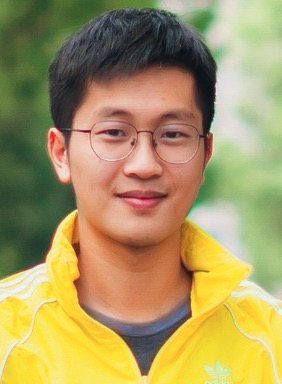 Yutong Kou合作论文数VSLab, Institute of Automation, Chinese Academy of Science9
 Shaoru Wang合作论文数NLPR, Institute of Automation, Chinese Academy of Sciences;School of Artificial Intelligence, University of Chinese Academy of Sciences9
 Mengdan Zhang (张猛丹)合作论文数Tencent Youtu Laboratory9
 Yizheng Wang (王以政)合作论文数Institutes of Brain Science, Fudan University;Huashan Hospital, Fudan University;Academy of Military Medical Sciences7
 Yanqin Jiang合作论文数University of Chinese Academy of Sciences5
 Xiaoqin Zhang (张笑钦)合作论文数Zhejiang University of Technology5
 Michael Felsberg合作论文数Department of Electrical Engineering, Linkoping University5
 Jiri Matas合作论文数The Center for Machine Perception, Department of Cybernetics, Faculty of Electrical Engineering, Czech Technical University5
 Gustavo Fernandez合作论文数Austrian Institute of Technology5
 Matej Kristan合作论文数Department of Artificial Intelligence, Faculty of Computer and Information Science, University of Ljubljana;Visual Cognitive Systems Laboratory, Faculty of Computer and Information Science, University of Ljubljana5Shubo Lin合作论文数4
 Zhenbang Li合作论文数4
 Zeming Li (黎泽明)合作论文数4
 Xiaowei Zhang (张晓炜)合作论文数兰州大学信息科学与工程学院4Guan Luo (罗冠)合作论文数4
 Jian Shen合作论文数4
 Yang Li (李洋)合作论文数School of Computer Science & Technology, East China Normal University4
 Tomáš Vojíř合作论文数Faculty of Electrical Engineering, Czech Technical University in Prague;Toyota Motor Europe4
 Richard Bowden合作论文数Centre for Vision Speech and Signal Processing, School of Computer Science and Electronic Engineering, University of Surrey4
 Ales Leonardis合作论文数Intelligent Robotics Laboratory, Centre for Computational Neuroscience and Cognitive Robotics, School of Computer Science, University of Birmingham4
 Alfredo Petrosino合作论文数Department of Science and Technology, Parthenope University of Naples4
 Karel Lebeda合作论文数Synthesia4
 Roman P. Pflugfelder合作论文数Austrian Institute of Technology;School of Computation, Information and Technology, Technical University of Munich;Israel Institute of Technology;Technische Universität Wien4
 Luka Čehovin合作论文数Visual Cognitive Systems Laboratory, Faculty of Computer and Information Science, University of Ljubljana4
 Kannappan Palaniappan合作论文数The Computational Imaging and Visualization Analysis Lab, Department of Computer Science, University of Missouri4
 Alan Lukežič合作论文数Visual Cognitive Systems Laboratory, Faculty of Computer and Information Science, University of Ljubljana4
 Hanshi Wang合作论文数Institute of Automation, Chinese Academy of Science3Jae-chan Jeong合作论文数3Xiao Huang合作论文数3
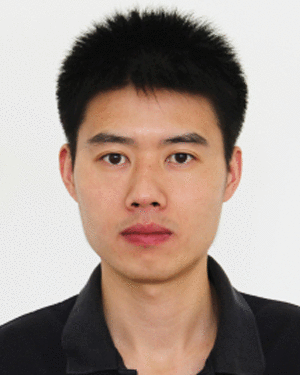 Gang Wang合作论文数3
 Rafael Martin Nieto合作论文数Milestone Systems3Mario Edoardo Maresca合作论文数Univ Naples Parthenope, Ctr Direz, Dept Sci & Technol, I-80143 Naples, Italy3
 Simon Mahony合作论文数University College London (UCL), London, WC1E 6BT,UK3Julianne Nyhan合作论文数Department of Information Studies, Faculty of Arts & Humanities, University College London3
 Zhipeng Zhang (张志鹏)合作论文数School of Ocean and Civil Engineering, Shanghai Jiao Tong University3
 Xin Li合作论文数Visual Intelligence Research Center, Pengcheng Laboratory3
 Martin Danelljan合作论文数Apple3
 Luca Bertinetto合作论文数Recursion3
 Stuart Golodetz合作论文数Visionary Machines3
 Gustav Häger合作论文数Irisity3
 Oliver Duke-Williams合作论文数Department of Information Studies, University College London3
 Philip H. S. Torr合作论文数Department of Engineering Science, University of Oxford;St Catherine's College, University of Oxford;Orphic3




