We introduce Virtual Width Networks (VWN), a framework that delivers the benefits of wider representations without incurring the quadratic cost of increasing the hidden size. VWN decouples representational width from backbone width, expanding the embedding space while keeping backbone compute nearly constant. In our large-scale experiment, an 8-times expansion accelerates optimization by over 2 times for next-token and 3 times for next-2-token prediction. The advantage amplifies over training as both the loss gap grows and the convergence-speedup ratio increases, showing that VWN is not only token-efficient but also increasingly effective with scale. Moreover, we identify an approximately log-linear scaling relation between virtual width and loss reduction, offering an initial empirical basis and motivation for exploring virtual-width scaling as a new dimension of large-model efficiency.
We introduce Seed1.5-Thinking, capable of reasoning through thinking before responding, resulting in improved performance on a wide range of benchmarks. Seed1.5-Thinking achieves 86.7 on AIME 2024, 55.0 on Codeforces and 77.3 on GPQA, demonstrating excellent reasoning abilities in STEM and coding. Beyond reasoning tasks, the method demonstrates notable generalization across diverse domains. For instance, it surpasses DeepSeek R1 by 8 non-reasoning tasks, indicating its broader applicability. Compared to other state-of-the-art reasoning models, Seed1.5-Thinking is a Mixture-of-Experts (MoE) model with a relatively small size, featuring 20B activated and 200B total parameters. As part of our effort to assess generalized reasoning, we develop two internal benchmarks, BeyondAIME and Codeforces, both of which will be publicly released to support future research. Model trial link: https://www.volcengine.com/experience/ark.
Model merging has emerged as a promising technique for enhancing large language models, though its application in large-scale pre-training remains relatively unexplored. In this paper, we present a comprehensive investigation of model merging techniques during the pre-training process. Through extensive experiments with both dense and Mixture-of-Experts (MoE) architectures ranging from millions to over 100 billion parameters, we demonstrate that merging checkpoints trained with constant learning rates not only achieves significant performance improvements but also enables accurate prediction of annealing behavior. These improvements lead to both more efficient model development and significantly lower training costs. Our detailed ablation studies on merging strategies and hyperparameters provide new insights into the underlying mechanisms while uncovering novel applications. Through comprehensive experimental analysis, we offer the open-source community practical pre-training guidelines for effective model merging.
 Xingyan Bin合作论文数3Xun Zhou合作论文数3Yiyuan Ma合作论文数3Xiaoying Jia合作论文数3Bole Ma合作论文数3Liang Xiang合作论文数3
 Yunshui Li合作论文数ByteDance Inc.3
 Shen Yan合作论文数Google3
 Yonghui Wu (吴永辉)合作论文数ByteDance Seed3Juncai Liu合作论文数2Bairen Yi合作论文数2Ru Zhang合作论文数2Lin Yan合作论文数2Chengyi Wang合作论文数2
 Mofan Zhang合作论文数2Zhiqi Lin合作论文数2Lingjun Liu合作论文数2Tiantian Fan合作论文数2Xiaochen Zuo合作论文数2Yufeng Yuan合作论文数2
 Yuxuan Wang合作论文数ByteDance2
 Yutao Zeng合作论文数2Kai Shen合作论文数Zhejiang University2
 Ge Zhang合作论文数ByteDance Inc.2
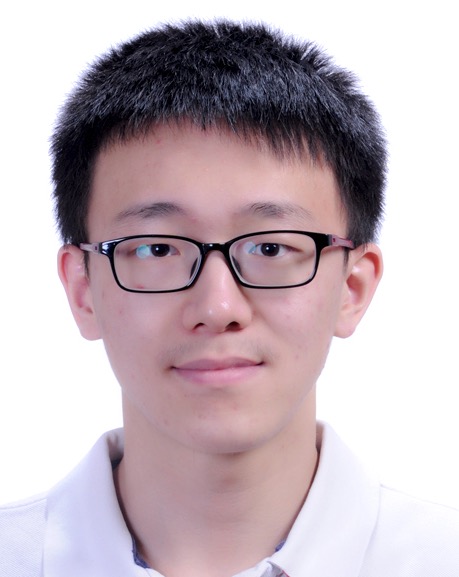 Qiying Yu (禹棋赢)合作论文数Institute for AI Industry Research, Tsinghua University;Beijing Academy of Artificial Intelligence2
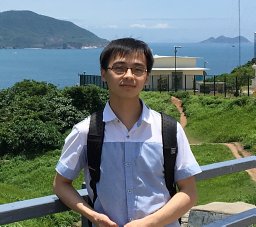 Peng Yanghua合作论文数Jiangxi University of Science and Technology, Jiangxi University of Science and Technology2
 Xin Liu (劉昕)合作论文数Amazon Search2
 Chi Zhang (张驰)合作论文数Department of Computer Science, Samueli School of Engineering, University of California2Wenhao Hao合作论文数1Mingji Han合作论文数1Hongbin Ren合作论文数1Yao Luo合作论文数1Xunhao Lai合作论文数1Shiyi Zhan合作论文数1Minrui Wang合作论文数1Ziwen Xu合作论文数1Chaoyi Zhang合作论文数1Xiangpeng Wei合作论文数1Hongli Yu合作论文数1Hang Zhu合作论文数1
 Wang Zhang合作论文数1Gaohong Liu合作论文数1Weinan Dai合作论文数1Ruofei Zhu合作论文数1
 Li Zheng合作论文数School of Cyber Science and Engineering, Wuhan University1
 Hao Ge合作论文数Peking University1
 Yifan Yang合作论文数Department of Computer Science, University of California, Santa Barbara1
 Jianqiao Lu (陆剑桥)合作论文数ByteDance1Ting Huang合作论文数1




