The editors greatly appreciate the support of all reviewers whose comments and scientific evaluation of submitted manuscripts are invaluable for ensuring the scientific quality of this journal. In addition to the listed permanent members of the board of Reviewing Editors, the following distinguished clinicians and scientists acted as reviewers for Neuroendocrinology from the beginning of November 2010 to the end of October 2011. The Editors hereby express their sincere gratitude for and their appreciation of the work done as well as the support given to this journal.
Regular Members. Membership in the ISNN is open to researchers, educators and clinicians, who have a continuing scientific interest in Nutrition and/ or Genetics/Molecular Biology/Pharmacology. Regular members pay full annual dues, may nominate and vote in Society elections, may hold elected and appointed offices, may serve on committees, receive discounted registration for Society Congresses, and receive a complimentary subscription to the Journal of Nutrigenetics and Nutrigenomics: Official Journal of the ISNN, edited by Jing X. Kang, M.D., Ph.D. (USA). Student Members must be students, trainees or post-doctoral fellows and may continue in student status for up to three years. Applicants must attach a letter from their institution or supervisor certifying their status. Student Members pay reduced annual membership dues, may vote in Society matters, receive discounted registration to Society Congresses, serve on Committees and enjoy members-only privileges. Student Members receive an online-only subscription to the Society’s official journal. Please return this application to: S. Karger AG Medical and Scientific Publishers Attn: Mr. Peter Roth Allschwilerstrasse 10 CH–4009 Basel (Switzerland) Tel. +41 61 306 1111 Fax +41 61 306 1234 E-mail p.roth@karger.com
Regular Members. Membership in the ISNN is open to researchers, educators and clinicians, who have a continuing scientifi c interest in Nutrition and/ or Genetics/Molecular Biology/Pharmacology. Regular members pay full annual dues, may nominate and vote in Society elections, may hold elected and appointed offi ces, may serve on committees, receive discounted registration for Society Congresses, and receive a complimentary subscription to the Journal of Nutrigenetics and Nutrigenomics: Offi cial Journal of the ISNN, edited by Jing X. Kang, M.D., Ph.D. (USA). Student Members must be students, trainees or post-doctoral fellows and may continue in student status for up to three years. Applicants must attach a letter from their institution or supervisor certifying their status. Student Members pay reduced annual membership dues, may vote in Society matters, receive discounted registration to Society Congresses, serve on Committees and enjoy members-only privileges. Student Members receive an online-only subscription to the Society’s offi cial journal. Please return this application to: S. Karger AG Medical and Scientifi c Publishers Attn: Mr. Peter Roth Allschwilerstrasse 10 CH–4009 Basel (Switzerland) Tel. +41 61 306 1111 Fax +41 61 306 1234 E-mail p.roth@karger.ch
Michel de Lorgeril, Grenoble Lynnette R. Ferguson, Auckland Serge Ferrari, Geneva Ronald Krauss, Oakland, Calif. Renato Mariani-Constantini, Chieti Alfredo Martínez, Pamplona John A. Milner, Rockville, Md. Sergio Muntoni, Cagliari Marjanne Senekal, Cape Town Charles N. Serhan, Boston, Mass. Gérard Siest, Nancy Antonio Velazquez, Mexico City Nikos Yiannakouris, Athens Aims and Scope The purpose of the society is to increase understanding through research and education of professionals and the general public of the role of genetic variation and dietary response and the role of nutrients in gene expression.
Omega-3 polyunsaturated fatty acids (\#969;3-PUFAs) are known to inhibit cancer cells proliferation in animal models and cell lines; in contrast, \#969;6-PUFAs promote the growth of cancer cells. However, the molecular mechanisms remain to be further understood. This study was designed to investigate action mechanisms of \#969;3-PUFAs, especially docosahexaenoic acid (DHA), on inhibition of invasion, tumorigenicity, angiogenesis and metastasis in breast cancer. DHA suppressed motility and invasion of MDA-MB-231 cells in a dose-dependent manner; in contrast, AA has no effect. In gelatin embedded zymography, activities of MMP-2 and MMP-9 were decreased by DHA treatment and the levels of their mRNA were also decreased in dose-dependent manner. MMP-2 and MMP-9 promoter activity were inhibited after DHA treatment. The levels of VEGF protein and its promoter activity were inhibited by DHA treatment. AA- and PGE2-induced VEGF promoter activity was also inhibited by DHA pretreatment. The level of NF-kB protein and binding activities of NF-\#954;B and AP-1 were decreased by DHA treatment. DHA inhibited NF-kB and Cox-2 reporter activities and PGE2-dependent increases of their promoter activities were also inhibited by DHA pretreatment. When mouse breast cancer E0771 cells were implanted into Fat1 mice (Fat1 transgenic mice express a Caenorhabditis elegans \#969;3-desaturase converting \#969;6- to \#969;3-PUFAs endigenously.), tumor size and volume were significantly reduced in Fat1 transgenic mice compared with wild mice. In immunohistochemical analysis of tumors of Fat1 mice, apoptotic cells were markedly increased and angiogenesis significantly was reduced, compared with wild mice tumor. Binding activites of NF-kB and AP-1 were decreased in Fat1 mice tumors. When E0771 cells were injected through tail vein, lung metastasis of breast cancer cells was significantly inhibited in Fat1 transgenic mice. These findings suggest that \#969;3-PUFAs may inhibit tumor invasion, tumorigenicity, angiogenesis, and metastasis by decrease of MMPs activities and VEGF level via reduction of NF-kB and AP-1 in breast cancer. Thus, utilization of \#969;3-PUFAs may represent an effective and safe therapeutic approach for the chemoprevention and treatment of human breast cancer. [This work was supported by the Korea Research Foundation Grant funded by the Korean Government (MOEHRD) (KRF-2007-521-E00014), Yihang Scholarship Foundation of Chungnam National University Medical School, and Dr. Park\#8217;s Breast Clinic, Korea]. Citation Information: In: Proc Am Assoc Cancer Res; 2009 Apr 18-22; Denver, CO. Philadelphia (PA): AACR; 2009. Abstract nr 3749.
Michel de Lorgeril La Tronche (Grenoble) Serge Ferrari Geneva Steve Humphries London Jing X. Kang Charlestown, Mass. Ronald Krauss Oakland, Calif. Sergio Muntoni Cagliari Gérard Siest Nancy Marjanne Senekal Cape Town Lisa A. Spence Rosemont, Ill. Antonio Velazquez Mexico City Nikos Yiannakouris Athens Aims and Scope The purpose of the society is to increase understanding through research and education of professionals and the general public of the role of genetic variation and dietary response and the role of nutrients in gene expression.
 Mengensatzproduktion合作论文数8YewAi Tan合作论文数4Maria de Nazaré Klautau Guimarães合作论文数4
 Mohamed Z. Gad合作论文数4Marie-Claude Vohl合作论文数Univ Laval, Inst Nutr & Funct Foods INAF, Quebec City, PQ G1V 0A6, Canada4
 Ana Luisa Miranda-Vilela合作论文数4
 Leow Soon-Sen合作论文数Malaysian Palm Oil Board4
 Sally Ibrahim合作论文数Faculty of Pharmacy and Biotechnology, German University in Cairo (GUC)4Sleem Hameis M合作论文数4
 Abu el Maaty Mohamed A合作论文数4Ribeiro Ieler Ferreira合作论文数4
 Cesar Koppe Grisolia合作论文数Institute of Biology, University of Brasilia4Simopoulos Artemis P合作论文数3
 Rui Curi合作论文数Centro de Ciencias Biologicas e da Saude, Universidade Cruzeiro do Sul;Department of Physiology and Biophysics, Institute of Biomedical Sciences, Universidade de Sao Paulo3
 Simone Lemieux合作论文数Institut sur la nutrition et les aliments fonctionnels, Universite Laval3
 Patrick Couture合作论文数2Druckerei Stückle合作论文数2
 Ravigadevi Sambanthamurthi合作论文数2
 Daiva E. Nielsen合作论文数School of Human Nutrition, Faculty of Agricultural and Environmental Sciences, McGill University2Guénard Frédéric合作论文数2
 Fermín Ignacio Milagro Yoldi合作论文数Department of Nutrition, Food Science and Physiology, University of Navarra;Center for Nutrition Research, University of Navarra;Instituto de Investigación Sanitaria de Navarra;CIBER of Obesity and Nutrition, Instituto de Salud Carlos III;Facultad de Farmacia y Nutrición, University of Navarra2
 Shamala Devi Sekaran合作论文数UCSI Hospital2
 Leticia Goni合作论文数2
 Hubert Cormier合作论文数2
 Carolina Ferreira Nicoletti合作论文数Clinical Nutrition-Department of Internal Medicine, University of São Paulo2Shih Sarah合作论文数2
 Louis Pérusse合作论文数Département de Kinésiologie, Faculté de Médecine, Université Laval;Institut Sur la Nutrition et Les Aliments Fonctionnels, Université Laval;Department of Kinesiology, Université Laval2
 Martin Kohlmeier合作论文数Department of Nutrition, Gillings School of Global Public Health, The University of North Carolina at Chapel Hill2
 Charles Nicholas Serhan合作论文数Center for Experimental Therapeutics and Reperfusion Injury, Harvard Institutes of Medicine, Brigham and Women's Hospital, Harvard Medical School2Edwin C. M. Mariman合作论文数2
 Lynnette Ferguson合作论文数The University of Auckland2
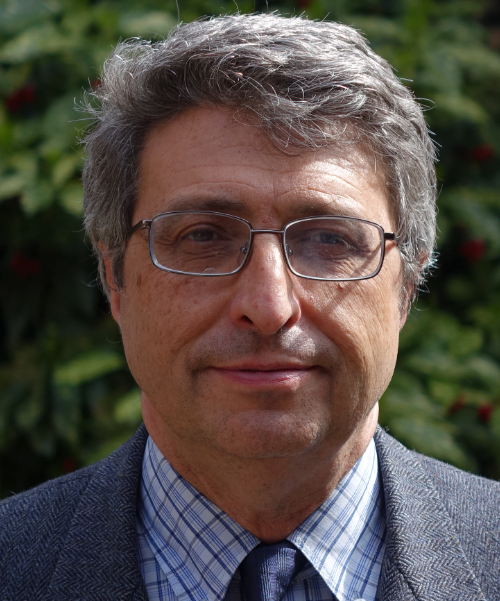 J A Martínez合作论文数Department of Physiology and Nutrition, University of Navarra;Institute of Food and Nutritional Sciences, University of Navarra2
 Iwona Rudkowska合作论文数School of Dietetics and Human Nutrition, McGill University2Hooman Allayee合作论文数General Clinical Research Center, USC Keck School of Medicine2
 Chandan Prasad合作论文数Department of Medicine, Louisiana State University Medical Center2
 Ann-Marie Paradis合作论文数2Bruno Affonso Parenti de Oliveira合作论文数1Gi Ryang Kweon合作论文数1Jose M. Ordovas合作论文数1Steve Humphries合作论文数1Vito Guerra合作论文数1
 Ian Brown合作论文数1Beri Massa合作论文数1Eul-Soon Shin合作论文数1Druck Reinhardt Druck Basel合作论文数1Bertha Ruiz Madrigal合作论文数1Lisa A. Spence合作论文数1La Tronche Grenoble合作论文数1Antonio Velazquez合作论文数1




