Multi-source sequence generation (MSG) is an important kind of sequence generation tasks that takes multiple sources, including automatic post-editing, multi-source translation, multi-document summarization, etc. As MSG tasks suffer from the data scarcity problem and recent pretrained models have been proven to be effective for low-resource downstream tasks, transferring pretrained sequence-to-sequence models to MSG tasks is essential. Although directly finetuning pretrained models on MSG tasks and concatenating multiple sources into a single long sequence is regarded as a simple method to transfer pretrained models to MSG tasks, we conjecture that the direct finetuning method leads to catastrophic forgetting and solely relying on pretrained self-attention layers to capture cross-source information is not sufficient. Therefore, we propose a two-stage finetuning method to alleviate the pretrain-finetune discrepancy and introduce a novel MSG model with a fine encoder to learn better representations in MSG tasks. Experiments show that our approach achieves new state-of-the-art results on the WMT17 APE task and multi-source translation task using the WMT14 test set. When adapted to document-level translation, our framework outperforms strong baselines significantly.
Question generation is the task of generating coherent and relevant question given context paragraph.Recently, with the development of large-scale question answering datasets such as SQuAD, the English question generation has been rapidly developed.However, for other languages such as Chinese, the available training data is limited, which hinders the development of question generation in the corresponding language.To investigate the multi-lingual question generation, in this paper, we develop a language-agnostic language model, which learns the shared representation from several languages in a single architecture.We propose an adversarial training objective to encourage the model to learn both language-specific and language-independent information.We utilize abundant monolingual text to improve the multi-lingual question generation via pre-training.With the languageagnostic language model, we achieve significant improvement in multi-lingual question generation over five languages.In addition, we propose a large-scale Chinese question generation dataset containing more than 220k human-generated questions to benefit the multi-lingual question generation research.
With the development of deep learning techniques and large scale datasets, the question answering (QA) systems have been quickly improved, providing more accurate and satisfying answers. However, current QA systems either focus on the sentence-level answer, i.e., answer selection, or phrase-level answer, i.e., machine reading comprehension. How to produce compositional answers has not been throughout investigated. In compositional question answering, the systems should assemble several supporting evidence from the document to generate the final answer, which is more difficult than sentence-level or phrase-level QA. In this paper, we present a large-scale compositional question answering dataset containing more than 120k human-labeled questions. The answer in this dataset is composed of discontiguous sentences in the corresponding document. To tackle the ComQA problem, we proposed a hierarchical graph neural networks, which represent the document from the low-level word to the high-level sentence. We also devise a question selection and node selection task for pre-training. Our proposed model achieves a significant improvement over previous machine reading comprehension methods and pre-training methods. Codes, dataset can be found at https://github.com/benywon/ComQA.
While neural machine translation has achieved state-of-the-art translation performance, it is unable to capture the alignment between the input and output during the translation process. The lack of alignment in neural machine translation models leads to three problems: it is hard to (1) interpret the translation process, (2) impose lexical constraints, and (3) impose structural constraints. These problems not only increase the difficulty of designing new architectures for neural machine translation, but also limit its applications in practice. To alleviate these problems, we propose to introduce explicit phrase alignment into the translation process of arbitrary neural machine translation models. The key idea is to build a search space similar to that of phrase-based statistical machine translation for neural machine translation where phrase alignment is readily available. We design a new decoding algorithm that can easily impose lexical and structural constraints. Experiments show that our approach makes the translation process of neural machine translation more interpretable without sacrificing translation quality. In addition, our approach achieves significant improvements in lexically and structurally constrained translation tasks.
News recommendation plays an indispensable role in acquiring daily news for users. Previous studies make great efforts to model high-order feature interactions between users and items, where various neural models are applied (e.g., RNN, GNN). However, we find that seldom efforts are made to get better representations for news. Most previous methods simply adopt pre-trained word embeddings to represent news and also suffer from cold-start users. In this work, we propose a new textual content representation method by building a word graph for recommendation, which is named WG4Rec. Three types of word associations are adopted in WG4Rec for content representation and user preference modeling, namely: 1) semantically-similar according to pre-trained word vectors, 2) co-occurrence in documents, and 3) co-click by users across documents. As extra information can be unified by adding nodes/edges to the word graph easily, WG4Rec is flexible to make use of cross-platform and cross-domain context for recommendation to alleviate the cold-start issue. To the best of our knowledge, it is the first attempt that using these relationships for news recommendation to better model textual content and adopt cross-platform information. Experimental results on two large-scale real-world datasets show that WG4Rec significantly outperforms state-of-the-art algorithms, especially for cold users in the online environment. Besides, WG4Rec achieves better performances when cross-platform information is utilized.
This paper presents the ReCO, a human-curated Chinese Reading Comprehension dataset on Opinion. The questions in ReCO are opinion based queries issued to commercial search engine. The passages are provided by the crowdworkers who extract the support snippet from the retrieved documents. Finally, an abstractive yes/no/uncertain answer was given by the crowdworkers. The release of ReCO consists of 300k questions that to our knowledge is the largest in Chinese reading comprehension. A prominent characteristic of ReCO is that in addition to the original context paragraph, we also provided the support evidence that could be directly used to answer the question. Quality analysis demonstrates the challenge of ReCO that it requires various types of reasoning skills such as causal inference, logical reasoning, etc. Current QA models that perform very well on many question answering problems, such as BERT (Devlin et al. 2018), only achieves 77% accuracy on this dataset, a large margin behind humans nearly 92% performance, indicating ReCO present a good challenge for machine reading comprehension. The codes, dataset and leaderboard will be freely available at https://github.com/benywon/ReCO.
Neural models have achieved great success on machine reading comprehension (MRC), many of which typically consist of two components: an evidence extractor and an answer predictor. The former seeks the most relevant information from a reference text, while the latter is to locate or generate answers from the extracted evidence. Despite the importance of evidence labels for training the evidence extractor, they are not cheaply accessible, particularly in many non-extractive MRC tasks such as YES/NO question answering and multi-choice MRC. To address this problem, we present a Self-Training method (STM), which supervises the evidence extractor with auto-generated evidence labels in an iterative process. At each iteration, a base MRC model is trained with golden answers and noisy evidence labels. The trained model will predict pseudo evidence labels as extra supervision in the next iteration. We evaluate STM on seven datasets over three MRC tasks. Experimental results demonstrate the improvement on existing MRC models, and we also analyze how and why such a self-training method works in MRC.
News recommendation, which aims to help users find the news they are interested in, is essential for online news platforms to alleviate the information overload problem. News is full of textual information with some knowledge entities, so recent studies try to leverage knowledge graphs (KGs) as side information to better model user preferences over news. However, most knowledge-enhanced methods assume that users are interested in the knowledge entities that occurred in the news. In real scenarios, users may like the news because of the news content rather than the knowledge entities. To take both knowledge and content factors into consideration, we propose a news recommendation method, namely knowledge and content aware network for news recommendation (KCNR). KCNR represents user and news in terms of knowledge and content, then it predicts the weight of user preferences on knowledge and content via a user preferences prediction mechanism. Besides, based on the weight of user preferences on knowledge, it extends user preferences along with entities in knowledge graphs. Experiments on two real-world datasets show that our approach achieves significant improvements over several state-of-the-art baselines in news recommendation.
System combination is an important technique for combining the hypotheses of different machine translation systems to improve translation performance. Although early statistical approaches to system combination have been proven effective in analyzing the consensus between hypotheses, they suffer from the error propagation problem due to the use of pipelines. While this problem has been alleviated by end-to-end training of multi-source sequence-to-sequence models recently, these neural models do not explicitly analyze the relations between hypotheses and fail to capture their agreement because the attention to a word in a hypothesis is calculated independently, ignoring the fact that the word might occur in multiple hypotheses. In this work, we propose an approach to modeling voting for system combination in machine translation. The basic idea is to enable words in hypotheses from different systems to vote on words that are representative and should get involved in the generation process. This can be done by quantifying the influence of each voter and its preference for each candidate. Our approach combines the advantages of statistical and neural methods since it can not only analyze the relations between hypotheses but also allow for end-to-end training. Experiments show that our approach is capable of better taking advantage of the consensus between hypotheses and achieves significant improvements over state-of-the-art baselines on Chinese-English and English-German machine translation tasks.
Neural question generation (NQG) is the task of generating questions from the given context with deep neural networks. Previous answer-aware NQG methods suffer from the problem that the generated answers are focusing on entity and most of the questions are trivial to be answered. The answer-agnostic NQG methods reduce the bias towards named entities and increasing the model's degrees of freedom, but sometimes result in generating unanswerable questions which are not valuable for the subsequent machine reading comprehension system. In this paper, we treat the answers as the hidden pivot for question generation and combine the question generation and answer selection process in a joint model. We achieve the state-of-the-art result on the SQuAD dataset according to automatic metric and human evaluation.
Detecting stance from certain types of question-answer pairs is an interesting problem which has not been carefully explored. Unlike previous stance detection tasks, targets here are not given entities or claims but entire questions, which makes it difficult to capture the semantics of targets and build target-dependent representations of answers. To address them, we introduce the Recurrent Conditional Attention (RCA) model which incorporates a conditional attention structure into the recurrent reading process. RCA iteratively guides the distillation of question semantic with answer information and collects stance-oriented text relating to question, further revealing mutual relationship among stance, answer and question. Experiments on a manually labeled Chinese community QA stance dataset show that RCA outperforms four strong baselines by average 2.90% on macro-F1 and 2.66% on micro-F1 respectively.
Automatic post-editing (APE), which aims to correct errors in the output of machine translation systems in a post-processing step, is an important task in natural language processing. While recent work has achieved considerable performance gains by using neural networks, how to model the copying mechanism for APE remains a challenge. In this work, we propose a new method for modeling copying for APE. To better identify translation errors, our method learns the representations of source sentences and system outputs in an interactive way. These representations are used to explicitly indicate which words in the system outputs should be copied, which is useful to help CopyNet (Gu et al., 2016) better generate post-edited translations. Experiments on the datasets of the WMT 2016-2017 APE shared tasks show that our approach outperforms all best published results.
Open-domain question answering focuses on using diverse information resources to answer any types of question. Recent years, with the development of large-scale data set and various deep neural networks models, some recent advances in open domain question answering system first utilize the distantly supervised dataset as the knowledge resource, then apply deep learning based machine comprehension techniques to generate the right answers, which achieves impressive results compared with traditional feature-based pipeline methods. However, these deep learning based methods suffer from the inferior quality of the distantly supervised data, and the answer score is un-normalized among multiple documents. Furthermore, unlike previous open-domain question answering system, they process each document independently which may ignore the valuable information in the context. In this paper, we propose a document gated reader to generate the right answer from multiple documents. We propose a document-level gate operation to determine the question-document relevance and embed it into the answer generation process, and optimize it with the global normalization objective. We also develop a bootstrapping based data generation scheme to obtain high-quality training data. Experimental results on several question answering datasets show the advantage of the proposed methods.
Despite the success of deep models for paraphrase identification on benchmark datasets, these models are still vulnerable to adversarial examples. In this paper, we propose a novel algorithm to generate a new type of adversarial examples to study the robustness of deep paraphrase identification models. We first sample an original sentence pair from the corpus and then adversarially replace some word pairs with difficult common words. We take multiple steps and use beam search to find a modification solution that makes the target model fail, and thereby obtain an adversarial example. The word replacement is also constrained by heuristic rules and a language model, to preserve the label and grammaticality of the example during modification. Experiments show that our algorithm can generate adversarial examples on which the performance of the target model drops dramatically. Meanwhile, human annotators are much less affected, and the generated sentences retain a good grammaticality. We also show that adversarial training with generated adversarial examples can improve model robustness.
Multilingual neural machine translation (Multi-NMT) with one encoder-decoder model has made remarkable progress due to its simple deployment. However, this multilingual translation paradigm does not make full use of language commonality and parameter sharing between encoder and decoder. Furthermore, this kind of paradigm cannot outperform the individual models trained on bilingual corpus in most cases. In this paper, we propose a compact and language-sensitive method for multilingual translation. To maximize parameter sharing, we first present a universal representor to replace both encoder and decoder models. To make the representor sensitive for specific languages, we further introduce language-sensitive embedding, attention, and discriminator with the ability to enhance model performance. We verify our methods on various translation scenarios, including one-to-many, many-to-many and zero-shot. Extensive experiments demonstrate that our proposed methods remarkably outperform strong standard multilingual translation systems on WMT and IWSLT datasets. Moreover, we find that our model is especially helpful in low-resource and zero-shot translation scenarios.
Commonsense understanding is a long-term goal of natural language processing yet to be resolved. One standard testbed for commonsense understanding isStory Cloze Test (SCT) \citemostafazadeh2016corpus, In SCT, given a 4-sentences story, we are expected to select the proper ending out of two proposed candidates. The training set in SCT only contains unlabeled stories, previous works usually adopt the small labeled development data for training, which ignored the sufficient training data and, essentially, not reveal the commonsense reasoning procedure. In this paper, we propose an unsupervised sequence-to-sequence method for story reading comprehension, we only adopt the unlabeled story and directly model the context-target inference probability. We propose a loss-reweight training strategy for the seq-to-seq model to dynamically tuning the training process. Experimental results demonstrate the advantage of the proposed model and it achieves the comparable results with supervised methods on SCT.
Knowledge graph (KG) has played an important role in enhancing the performance of many intelligent systems. In this paper, we introduce the solution of building a large-scale multi-source knowledge graph from scratch in Sogou Inc., including its architecture, technical implementation and applications. Unlike previous works that build knowledge graph with graph databases, we build the knowledge graph on top of SogouQdb, a distributed search engine developed by Sogou Web Search Department, which can be easily scaled to support petabytes of data. As a supplement to the search engine, we also introduce a series of models to support inference and graph based querying. Currently, the data of Sogou knowledge graph that are collected from 136 different websites and constantly updated consist of 54 million entities and over 600 million entity links. We also introduce three applications of knowledge graph in Sogou Inc.: entity detection and linking, knowledge based question answering and knowledge based dialog system. These applications have been used in Web search products to help user acquire information more efficiently.
Revealing the robustness issues of natural language processing models and improving their robustness is important to their performance under difficult situations. In this paper, we study the robustness of paraphrase identification models from a new perspective -- via modification with shared words, and we show that the models have significant robustness issues when facing such modifications. To modify an example consisting of a sentence pair, we either replace some words shared by both sentences or introduce new shared words. We aim to construct a valid new example such that a target model makes a wrong prediction. To find a modification solution, we use beam search constrained by heuristic rules, and we leverage a BERT masked language model for generating substitution words compatible with the context. Experiments show that the performance of the target models has a dramatic drop on the modified examples, thereby revealing the robustness issue. We also show that adversarial training can mitigate this issue.
Due to the benefits of model compactness, multilingual translation (including many-to-one, many-to-many and one-to-many) based on a universal encoder-decoder architecture attracts more and more attention. However, previous studies show that one-to-many translation based on this framework cannot perform on par with the individually trained models. In this work, we introduce three strategies to improve one-to-many multilingual translation by balancing the shared and unique features. Within the architecture of one decoder for all target languages, we first exploit the use of unique initial states for different target languages. Then, we employ language-dependent positional embeddings. Finally and especially, we propose to divide the hidden cells of the decoder into shared and language-dependent ones. The extensive experiments demonstrate that our proposed methods can obtain remarkable improvements over the strong baselines. Moreover, our strategies can achieve comparable or even better performance than the individually trained translation models.
 Ting Yao (姚霆)合作论文数HiDream.ai8
 Xing Li (李星)合作论文数Department of Electronic Engineering, Tsinghua University;China Education and Research Network;Institute for Network Sciences and Cyberspace, Tsinghua University7
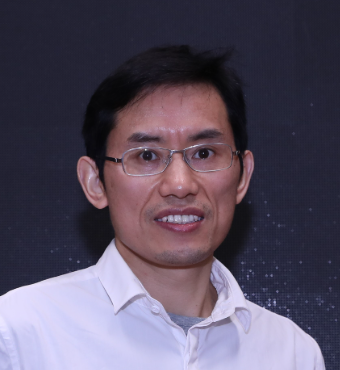 Minlie Huang (黄民烈)合作论文数Department of Computer Science and Technology, Tsinghua University7
 Yang Liu (刘洋)合作论文数Department of Computer Science and Technology, Tsinghua University;Institute for AI Industry Research, Tsinghua University6
 Maosong Sun (孙茂松)合作论文数Department of Computer Science and Technology, Tsinghua University6
 Xiaochuan Wang (王小川)合作论文数6Bingning Wang (王炳宁)合作论文数Baichuan Inc.6
 Feifei Zhai (翟飞飞)合作论文数Institute of Automation, Chinese Academy of Sciences5
 Yiqun Liu (刘奕群)合作论文数Department of Computer Science and Technology, Tsinghua University5
 Huan-Bo Luan合作论文数6Estates - Enterprise AI Solutions5
 Haizhou Zhao合作论文数4
 Shaoping Ma (马少平)合作论文数State Key Laboratory of Intelligent Technology and Systems, Department of Computer Science and Technology, Tsinghua University4
 Jia-Cheng Zhang (张家成)合作论文数School of Software, Tsinghua University4
 Qi Zhang (张奇)合作论文数Shanghai Key Laboratory of Data Science, School of Computer Science, Fudan University;Natural Language Processing Group, Fudan University4Weipeng Chen合作论文数3
 Min Zhang (张敏)合作论文数Department of Computer Science and Technology, Tsinghua University3
 Hang Li (李航)合作论文数ByteDance Technology3
 Xiaoyan Zhu (朱小燕)合作论文数Institute for Artificial Intelligence, Department of Computer Science and Technology, Tsinghua University3
 Xuancheng Huang (黄轩成)合作论文数Zhipu AI3Sheng Wu合作论文数2
 Zhouxing Shi合作论文数Department of Computer Science and Engineering, University of California, Riverside2
 Yining Wang合作论文数Natl Lab Pattern Recognit, CASIA2Qiao Qian合作论文数2
 Zhixing Tian合作论文数National Laboratory of Pattern Recognition, Institute of Automation, Chinese Academy of Sciences;University of Chinese Academy of Sciences2
 Weizhi Ma (马为之)合作论文数Institute for AI Industry Research, Tsinghua University2
 Hao Zhou (周昊)合作论文数2
 Chengqing Zong (宗成庆)合作论文数National Laboratory of Pattern Recognition, Institute of Automation, Chinese Academy of Sciences2
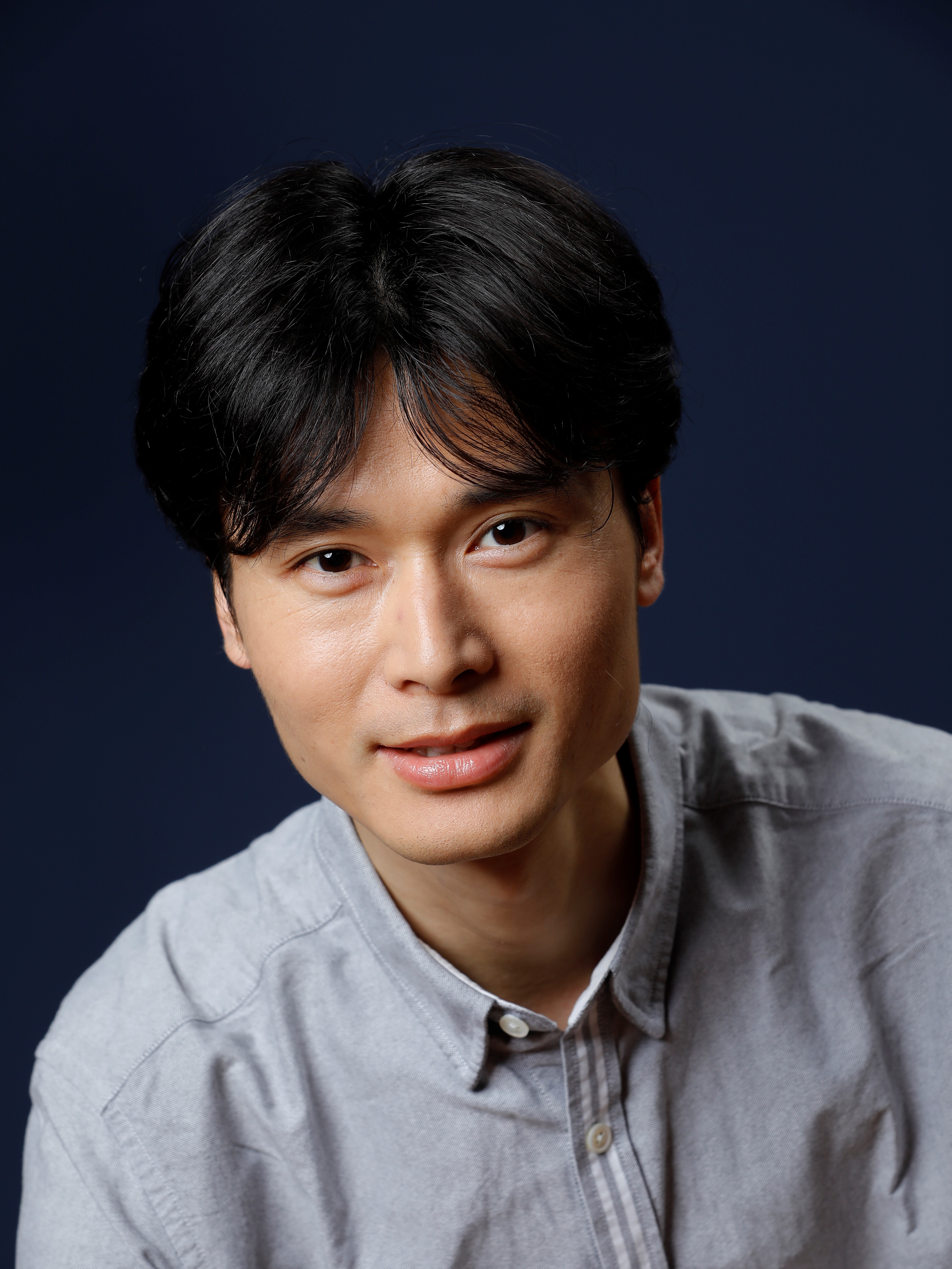 Jiajun Zhang (张家俊)合作论文数National Laboratory of Pattern Recognition, Institute of Automation, Chinese Academy of Sciences;University of Chinese Academy of Sciences2
 Tom Young (杨天吉)合作论文数National University of Singapore2
 Kang Liu (刘康)合作论文数National Laboratory of Pattern Recognition, Institute of Automation, Chinese Academy of Sciences;School of Artificial Intelligence, University of Chinese Academy of Sciences2
 Jun Zhao (赵军)合作论文数Institute of Automation, Chinese Academy of Sciences;School of Artificial Intelligence, University of Chinese Academy of Sciences2
 Cheng Luo (罗成)合作论文数National University of Singapore;MegaTech.AI2Gu Xu合作论文数2Ting Tao合作论文数1Chuanliang Chen (陈传亮)合作论文数1Yangbo Zhu合作论文数1
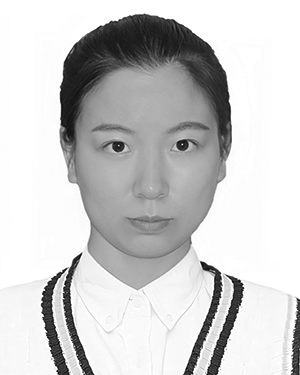 Yanping Wang合作论文数1Zhicun Fang合作论文数1Kun Fang合作论文数1Lufei Zhang合作论文数1Xiliang Song合作论文数1Li Yue合作论文数1Zhen Wang合作论文数1Zhengshan Xue合作论文数Sohu, Inc., Beijing, China1JianHua Yuan合作论文数Harbin Inst Technol, Res Ctr Social Comp & Informat Retrieval, Harbin, Heilongjiang, Peoples R China1mang wang (王蟒)合作论文数1
 Deliang Xu合作论文数1
 Wenbo Yu合作论文数Harbin Inst Technol, Dept Control Sci & Engn, Harbin, Peoples R China1




