The proliferation of photorealistic, AI-generated images threatens public trust, creating an urgent need for detectors that can reliably distinguish them from real content. However, existing detectors, typically trained on limited known generators, struggle to generalize to unseen ones. The rapid evolution of diffusion models has intensified this problem, creating a "diffusion fog" that limits practical applicability of existing detectors. To pierce this fog, we posit that the inherent patterns in the denoising process of all diffusion models are key to generalizable detection. To isolate these patterns, we create minimal fake training images by applying a single-step denoising operation to slightly perturb real images, forcing the detector to learn the subtle artifacts of denoising. We then blend these minimal fakes with their real counterparts, erasing superficial cues from the perturbation operation to prevent detector from learning shortcuts. Considering that the fake images closely resemble real ones, we propose a feature separation loss to enhance detector’s discrimination capacity. For rigorous evaluation, we constructed a new benchmark, DiffuGen, comprising 65K synthetic images from 13 modern diffusion models and 5K real images. Empirical results demonstrate that our detector achieves significantly improved generalization, reaching an average accuracy of 99% on DiffuGen.
Recently, Large Language Models (LLMs) has expanded a powerful and successful revolution in video understanding through a human-like conversational procedure. These video LLMs usually conceptualize videos as flat data sequences, but seldom explore the intrinsic temporal structure of video content. In this paper, we reformulate the input video as a sequence of action units, namely actoms. Each actom represents a semantic video clip with arbitrary number of frames, describing a certain sub-event in the video. With such actoms, we propose a new framework of Actom-Centric Video Large Language Models, dubbed as ActVLLM, that takes the actoms as the input and capitalizes on LLMs to interpret videos. Technically, ActVLLM learns a temporal action proposal model to localize the candidate actoms in the input video and then screens the actoms according to their attention strength with respect to the textual question. Next, ActVLLM exploits a clip-level visual encoder to covert the selected actoms into visual tokens, which are fed into LLMs to generate answers. Extensive experiments on six video QA benchmarks consistently demonstrate the superiority of ActVLLM over baseline methods. Notably, ActVLLM achieves 66.2 of average score on MVBench, leading to 3.6% relative improvement over the state-of-the-art approach of Oryx.
The evolution of visual generative models has long been constrained by fragmented architectures relying on disjoint text encoders and external VAEs. In this report, we present HiDream-O1-Image, a natively unified generative foundation model via pixel-space Diffusion Transformer, that pioneers a paradigm shift from modular architectures to an end-to-end in-context visual generation engine. By mapping raw image pixels, text tokens, and task-specific conditions into a single shared token space, HiDream-O1-Image achieves a structural unification of multimodal inputs within an Unified Transformer (UiT) architecture. This native encoding paradigm eliminates the need for separate VAEs or disjoint pre-trained text encoders, allowing the model to treat diverse generation and editing tasks as a consistent in-context reasoning process. Extensive experiments show that HiDream-O1-Image excels across various generation tasks, including text-to-image generation, instruction-based editing, and subject-driven personalization. Notably, with only 8B parameters, HiDream-O1-Image (8B) achieves performance parity with or even surpasses established state-of-the-art models with significantly larger parameters (e.g., 27B Qwen-Image). Crucially, to validate the immense scalability of this paradigm, we successfully scale the architecture up to over 200B parameters. Experimental results demonstrate that this massive-scale version HiDream-O1-Image-Pro (200B+) unlocks unprecedented generative capabilities and superior performance, establishing new state-of-the-art benchmarks. Ultimately, HiDream-O1-Image highlights the immense potential of natively unified architectures and charts a highly scalable path toward next-generation multimodal AI.
Cross-identity character animation aims to drive a target identity from a reference image to follow the motion of a source character from a driving video. The core challenge lies in the inherent entanglement of two capabilities: cross-identity spatial mapping (aligning position, scale, and skeletal proportions) and motion control (refining joint articulation, volumetric consistency, and view coherence). We introduce Reference-Aware Structural Alignment (RASA), a framework that disentangles spatial mapping from motion control by injecting structured priors into a Diffusion Transformer (DiT). Our approach has two stages. First, a Spatial Prior Calibrator (SPC) fuses reference identity with driving pose to generate a spatially grounded initial noise latent, ensuring correct positioning, scaling, and alignment with the driving skeleton. Second, an Inherent Motional Guider (IMG) encodes shape-agnostic SMPL articulation parameters into a semantic motion vector beyond appearance-biased 2D keypoints. Injected into intermediate DiT layers, this vector complements the base pose condition for anatomically consistent articulation and view-aware volumetric refinement. We curate CIM-Bench, a high-quality benchmark with rigorous curation, for evaluation. Extensive experiments show RASA significantly outperforms state-of-the-art methods in motion fidelity and visual quality. Our work establishes a new paradigm showing disentangled spatial and motional priors are key to robust character animation. Project page: https://hidream.ai.github.io/RASA/
Recent advances in score distillation sampling (SDS) have revolutionized the field of text-to-3D generation, enabling the distillation of prior knowledge from diffusion models for 3D generation. Although exhibiting impressive texture quality, these methods often suffer from geometric inconsistencies (“Janus” issue), as the prior 2D diffusion model inherently lacks 3D awareness. Recent work fine-tunes the 2D diffusion model on 3D data to obtain a multi-view diffusion model as the SDS prior, which addresses the Janus issue but is at the cost of sacrificing texture quality, as available 3D training data always have unrealistic texture. Thus, a natural question arises — Is there an ideal prior diffusion model for 3D generation that simultaneously has 3D awareness and high texture fidelity? In response, we present HiFi3D, a tuning-free method to establish a new hybrid diffusion model that can generate consistent multi-view images with photorealism appearances. We accomplish this by novelly marring a 3D multi-view diffusion model with a 2D image diffusion model through our unique designs. We find that such a high-fidelity multi-view diffusion model harbors an innate agency to serve as a strong prior for SDS optimization. Additionally, we introduce a depth-guided multi-view attention strategy to further improve the 3D consistency across views during optimization. Extensive experiments demonstrate that our HiFi3D outperforms previous state-of-the-art methods in faithfully generating 3D content with realistic textual details and consistent geometry.
Video Super-Resolution (VSR) fundamentally struggles with a critical trade-off: single-step models offer unmatched efficiency but often lack the high-frequency detail, creativity, and visual quality of their multi-step diffusion counterparts, which are computationally prohibitive for practical use. In this paper, we propose PS-SR, a novel "pseudo" single-step VSR framework that transcends this trade-off through a computationally asymmetric sampling pipeline. The key to PS-SR lies in its speculative diffusion mechanism: a powerful base model performs only a single, comprehensive sampling step, establishing the global structure and content fidelity, after which a lightweight draft model, directly augmented by the base model's features, speculatively performs subsequent refinements. Crucially, we further enforce a frequency-domain update rule that constrains these refinements to exclusively inject high-frequency details, preserving the foundational low-frequency content and preventing semantic drift across sampling steps. By doing so, PS-SR creates the "illusion" of a single-step model—delivering the similar inference speeds and input-output content consistency—while achieving the visual richness and creativity typically reserved for costly multi-step generative models. We demonstrate that our "pseudo-single-step" paradigm achieves state-of-the-art quality with a comparable speed to single-step models, paving the way for real-time, high-fidelity video enhancement.
We present DMSampler, a framework that accelerates diffusion reinforcement learning by using fast distillation models as its training-time sampling engine. It overcomes the key bottleneck of sampling from the policy model—typically requiring around 50 denoising steps—by employing a co-evolving distilled sampler that needs only 4–8 steps, yielding an order-of-magnitude speedup. This approach inherently offers several advantages: it drastically reduces sampling steps, operates without classifier-free guidance to prevent potential optimization bias, and often yields superior sample quality due to more deterministic denoising trajectories. The core of DMSampler is a dual iterative training scheme, where the policy model and the distillation sampler are alternately optimized to convergence. This scheme is enhanced by two key innovations: hybrid distillation sampling, which blends outputs from both models to ensure training stability, and reward-aware distillation, which explicitly preserves high-reward capabilities during knowledge transfer. Extensive experiments on text-to-image and text-to-video generation demonstrate that DMSampler produces a final policy model which achieves state-of-the-art performance—significantly boosting textual accuracy on OCR-specific benchmarks and outperforming existing diffusion RL methods on comprehensive GenEval and VBench benchmarks.
Perpetual view generation aims to synthesize a long-term video corresponding to an arbitrary camera trajectory solely from a single input image. Recent methods commonly utilize a pre-trained text-to-image diffusion model to synthesize new content of previously unseen regions along camera movement. However, the underlying 2D diffusion model lacks 3D awareness and results in distorted artifacts. Moreover, they are limited to generating views of static 3D scenes, neglecting to capture object movements within the dynamic 4D world. To alleviate these issues, we present DreamJourney, a two-stage framework that leverages the world simulation capacity of video diffusion models to trigger a new perpetual scene view generation task with both camera movements and object dynamics. Specifically, in stage I, DreamJourney first lifts the input image to 3D point cloud and renders a sequence of partial images from a specific camera trajectory. A video diffusion model is then utilized as generative prior to complete the missing regions and enhance visual coherence across the sequence, producing a cross-view consistent video adheres to the 3D scene and camera trajectory. Meanwhile, we introduce two simple yet effective strategies (early stopping and view padding) to further stabilize the generation process and improve visual quality. Next, in stage II, DreamJourney leverages a multimodal large language model to produce a text prompt describing object movements in current view, and uses video diffusion model to animate current view with object movements. Stage I and II are repeated recurrently, enabling perpetual dynamic scene view generation. Extensive experiments demonstrate the superiority of our DreamJourney over state-of-the-art methods both quantitatively and qualitatively. Our project page: https://dream-journey.vercel.app.
The recent advances in Convolutional Neural Networks (CNNs) and Vision Transformers have convincingly demonstrated high learning capability for video action recognition on large datasets. Nevertheless, deep models often suffer from the overfitting effect on small-scale datasets with a limited number of training videos. A common solution is to exploit the existing image augmentation strategies for each frame individually including Mixup, Cutmix, and RandAugment, which are not particularly optimized for video data. In this paper, we propose a novel video augmentation strategy named Selective Volume Mixup (SV-Mix) to improve the generalization ability of deep models with limited training videos. SV-Mix devises a learnable selective module to choose the most informative volumes from two videos and mixes the volumes up to achieve a new training video. Technically, we propose two new modules, i.e., a spatial selective module to select the local patches for each spatial position, and a temporal selective module to mix the entire frames for each timestamp and maintain the spatial pattern. At each time, we randomly choose one of the two modules to expand the diversity of training samples. The selective modules are jointly optimized with the video action recognition framework to find the optimal augmentation strategy. We empirically demonstrate the merits of the SV-Mix augmentation on a wide range of video action recognition benchmarks and consistently boot the performances of both CNN-based and transformer-based models.
Recent advances in text-to-video generation have demonstrated the substantial superiority of diffusion models. Nevertheless, generating high-resolution videos based on text description still faces a great challenge due to the enormous computation overhead for video diffusion model training. In this paper, we present a tuning-free video diffusion approach with Spatial-Temporal LAtent Grouping (ST-LAG), for highresolution video generation. ST-LAG exploits the prior knowledge of a pre-trained low-resolution video diffusion model for regionwise video latent denoising, and then combines all the denoised regions of video latent as a whole one to achieve global-wise spatial-temporal coherence. Specifically, ST-LAG denoises the whole video latents via two deliberately designed modules, e.g., Spatial Latent Grouping (SLG) and Temporal Latent Grouping (TLG), at spatial and temporal level, respectively. SLG spatially slices the latent of each frame into different local patches, and then feeds them into the low-resolution video diffusion model for local-region latent denoising. A text re-weighting scheme is devised in SLG to strength the cross-attention between features of text tokens and spatial regions to facilitate spatial-level finegrained details generation. TLG capitalizes on the segmentlevel latent grouping to match the length of each denoised local segment with the frame number in the training stage. The well aligned temporal receptive field facilitates better preservation of motion patterns. In each denoising step, all groups of video latent at spatial and temporal levels are fused together for highresolution video generation. Extensive experiments conducted on the ECTV-Prompt dataset demonstrate the effectiveness of our approach quantitatively and qualitatively.
Recent advances in text-to-video (T2V) diffusion models have demonstrated remarkable generative capabilities, yet their reliance on loosely curated training data raises pressing safety and copyright concerns. Concept erasure offers a principled remedy by removing unwanted semantics from pretrained models while preserving remaining concepts. However, existing approaches typically operate at a coarse granularity misaligned with the fine-grained, distributed nature of concept representations, leading to incomplete removal or degraded generation quality. We argue that surgical erasure fundamentally requires intervention at the level of monosemantic features, where each unit encodes a single interpretable concept. To this end, we propose EraseSAE, a novel framework that leverages sparse autoencoders to achieve surgical concept erasure in DiT-based T2V diffusion models via a principled decompose-attribute-erase pipeline. We first introduce the Partitioned Convolutional Sparse Autoencoder, which decomposes dense spatiotemporal activations into disentangled, interpretable sparse features while preserving spatiotemporal coherence. A contrastive attribution mechanism then contrasts activations from paired prompts to isolate concept-specific feature kernels. At inference, timestep-resolved spatiotemporal masks derived from the identified kernels confine erasure to regions where the target concept is active, leaving unrelated content intact. Extensive experiments across diverse diffusion models and concept erasure tasks demonstrate that EraseSAE achieves precise and robust concept removal with minimal quality degradation, substantially outperforming state-of-the-art methods. The code is available at https://github.com/HiDream-ai/EraseSAE.
Autoregressive models via next token prediction have emerged as a promising way towards unified models across multiple modalities for general artificial intelligence. Nevertheless, exploiting this idea to achieve single image to 3D generation remains a challenging problem. In this paper, we introduce a new Autoregressive 3D diffusion model (dubbed as AR3D), that novelly frames autoregressive modeling on multi-view images of 3D content as “next symmetric view prediction.” This methodology first triggers 3D autoregressive modeling by remoulding video diffusion model with unidirectional next-view prediction, where the next-view images are iteratively generated conditioned on the past views and input image. Furthermore, a unique autoregressive scheme via next symmetric view prediction is introduced to simultaneously predict each pair of views under the view-order symmetry at each autoregressive step. Such design captures the view-order symmetry of 360$^{\circ }$ orbital multi-view images and thus encourages strong geometric and appearance consistency among adjacent views in a near-to-far order. Extensive experiments demonstrate that our proposed AR3D achieves strong performance on both novel view synthesis and single view reconstruction tasks for image-to-3D generation.
Text-guided image inpainting endeavors to generate new content within specified regions of images using textual prompts from users. The primary challenge is to accurately align the inpainted areas with the user-provided prompts while maintaining a high degree of visual fidelity. While existing inpainting methods have produced visually convincing results by leveraging the pre-trained text-to-image diffusion models, they still struggle to uphold both prompt alignment and visual rationality simultaneously. In this work, we introduce FreeInpaint, a plug-and-play tuning-free approach that directly optimizes the diffusion latents on the fly during inference to improve the faithfulness of the generated images. Technically, we introduce a prior-guided noise optimization method that steers model attention towards valid inpainting regions by optimizing the initial noise. Furthermore, we meticulously design a composite guidance objective tailored specifically for the inpainting task. This objective efficiently directs the denoising process, enhancing prompt alignment and visual rationality by optimizing intermediate latents at each step. Through extensive experiments involving various inpainting diffusion models and evaluation metrics, we demonstrate the effectiveness and robustness of our proposed FreeInpaint.
Recent advances in diffusion models have revolutionized the field of text-to-image (T2I) generation, pursuing high-fidelity image synthesis. Nevertheless, the fidelity of synthetic images from a specific prompt can vary significantly when using different initial noises (i.e., seeds), owing to the inherent stochastic nature of the diffusion process. A commonly adopted practice is to generate a stack of images by randomly varying seeds and then manually select the best one, which is time-consuming and computationally inefficient. To address this issue, we introduce Seed Selection and Optimization (SeSO), a new recipe of diffusion paradigm that automatically identifies and optimizes the “golden” seed for a prompt. We first systematically investigate the causes of quality variations across different seeds and reveal an inadequate training issue in most existing denoisers. Specifically, when sampling out-of-distribution seed for a specific prompt, the denoiser might fail to iteratively denoise latent code effectively, resulting in low-quality images. To seek the sweet spot of seed for any given prompt, we first learn a single-forward reward model that efficiently captures the relations between seeds and prompts without lengthy iterative denoising. SeSO executes this reward model to identify a candidate seed from a seed pool and then optimize this seed via gradient guidance to hunt for the golden seed suitable for this prompt. Our SeSO is appealing in that it is pluggable to any diffusion model. Extensive experiments demonstrate the superiority of SeSO in boosting existing text-to-image diffusion models by unlocking the golden seed.
The In-context generation paradigm has demonstrated strong power in instructional image editing for better synthesis quality. Nevertheless, shaping such in-context learning for instructional video editing is not trivial. Without specifying editing regions, the results can suffer from the issue of inaccurate editing regions and the token interference between different areas. To address these, we present ReCo, a new instructional video editing paradigm that novelly delves into gional nstraint modeling between editing and non-editing areas. Technically, ReCo width-wise concatenates source and target video for joint denoising. In model training, ReCo formulates regional constraints with two regularization terms, i.e., latent and attention regularization, on one-step backward denoised latents and attention maps, respectively. The former increases the latent discrepancy of the editing region between source and target videos while reducing that of non-editing areas, emphasizing editing area modification and alleviating unexpected content generation. The latter suppresses the attention of tokens in the editing region to the tokens in counterpart of the source video, thereby mitigating their interference during novel object generation in target video. Furthermore, we propose a large-scale, high-quality video editing dataset, i.e., ReCo-Data, comprising 500K instruction-video pairs. Extensive experiments conducted on four major instruction-based video editing tasks verify the superiority of ReCo.
Personalized video generation faces a fundamental trade-off between identity consistency and action realism: overly rigid identity preservation often leads to unnatural motion, while emphasis on action dynamics can compromise subject fidelity. This tension stems from three interrelated challenges: imprecise subject-video alignment, unstable training due to varying sample difficulties, and inadequate modeling of fine-grained actions. To address this, we propose ReactID, a comprehensive framework that harmonizes identity accuracy and motion naturalness through coordinated advances in data, training, and action modeling. First, we construct ReactID-Data, a large-scale dataset annotated with a high-precision pipeline combining vision-based entity label extraction, MLLM-based subject detection, and post-verification to ensure reliable subject-video correspondence. Second, we analyze learning difficulty along dimensions such as subject size, appearance similarity, and sampling strategy, and devise a progressive training curriculum that evolves from easy to hard samples, ensuring stable convergence while avoiding identity overfitting and copy-paste artifacts. Third, ReactID introduces a novel timeline-based conditioning mechanism that supplements monolithic text prompts with structured multi-action sequences. Each sub-action is annotated with precise timestamps and descriptions, and integrated into the diffusion model via two novel components: subject-aware cross-attention module to bind sub-action to the specific subject of interest and temporally-adaptive RoPE to embed the rescaled temporal coordinates invariant to action duration. Experiments show that ReactID achieves state-of-the-art performance in both identity preservation and action realism, effectively balancing the two objectives.
Controllable video generation performs prompt-based editing of the input videos. Recent advances utilizing diffusion models have significantly improved the quality of generating/editing the videos. Nevertheless, achieving temporally consistent results, especially for long videos, remains an appealing yet challenging problem. In this paper, we propose a novel video diffusion model, namely GuidedVDM, which generates long videos (e.g., hundreds of frames) with strong temporal consistency by incorporating the guidance from the input videos. Technically, GuidedVDM capitalizes on an off-the-shelf controllable text-to-image model (e.g., ControlNet) conditioning on the input video and prompt to synthesize a reference image as appearance guidance. This guidance then serves as a control signal to video diffusion model to first generate sparse “Intra-coded frames” (I-frames). Next, GuidedVDM extracts optical flow of input video as motion guidance to warp the ready-made neighboring I-frames and produce dense “Bidirectional predictive frames” (B-frames) between I-frames. By reusing certain pixels from neighboring I-frames, GuidedVDM improves long-term temporal consistency across frames and accelerates controllable video generation. Extensive experiments demonstrate that GuidedVDM outperforms the state-of-the-art video diffusion model of TokenFlow, in temporal consistency, and exhibits 10× faster generation speed. More remarkably, GuidedVDM can generate coherent multi-shot videos via synchronizing appearance guidance across shots.
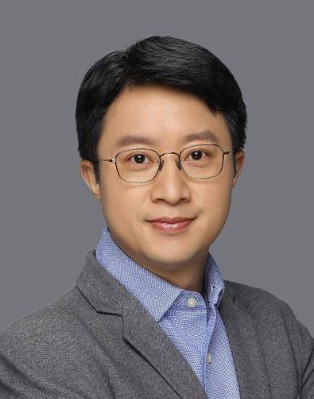 Tao Mei (梅涛)合作论文数HiDream.ai170
 Yingwei Pan (潘滢炜)合作论文数HiDream.ai138
 Zhaofan Qiu (邱钊凡)合作论文数JD AI Research;Microsoft Research Asia;HiDream.ai75
 Yehao Li (李业豪)合作论文数Jd Explore Academy65
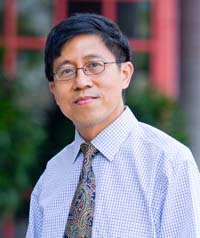 Chong-Wah Ngo合作论文数School of Computing and Information Systems, Singapore Management University41
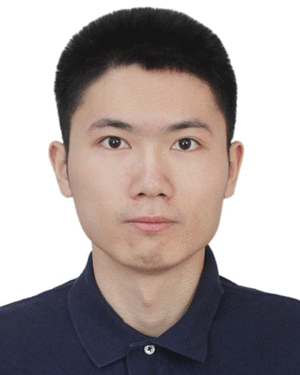 Fuchen Long合作论文数Vision and Multimedia Laboratory, JD Explore Academy30Qi Cai合作论文数JD22
 Yiheng Zhang合作论文数HiDream.ai20Jingwen Chen合作论文数Sun Yat-sen University17
 Hongyang Chao (朝红阳)合作论文数School of Computer Science and Engineering, Sun Yat-sen University;School of Software, Sun Yat-sen University17
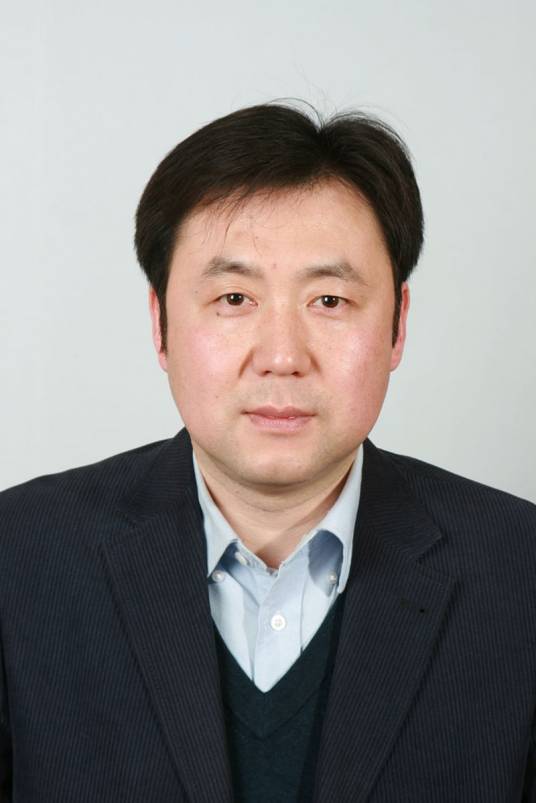 Houqiang Li (李厚强)合作论文数Department of Electronic Engineering and Information Science, University of Science and Technology of China;School of Information Science and Technology, University of Science and Technology of China16
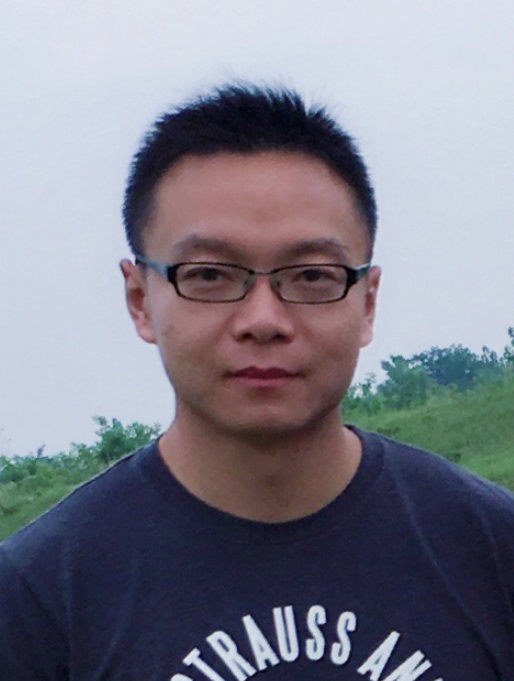 Wei Zhang合作论文数JD Explore Academy16
 Jiebo Luo (罗杰波)合作论文数Department of Computer Science, Hajim School of Engineering & Applied Sciences, University of Rochester15
 Yang Chen合作论文数University of Science and Technology of China14
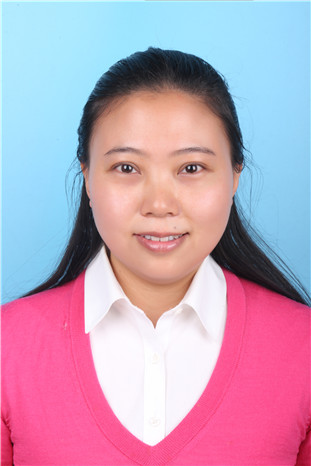 Xinmei Tian (田新梅)合作论文数Dept. of Electronic Engineering and Information Science, University of Science and Technology of China13
 Yong Rui (芮勇)合作论文数Lenovo12Bingning Wang (王炳宁)合作论文数Baichuan Inc.10
 Shiai Zhu合作论文数City University of Hong Kong9
 Jianjie Luo (罗剑杰)合作论文数School of Computer Science and Engineering, Sun Yat-Sen University8Dong Li合作论文数University of Science and Technology of China8
 Wengang Zhou (周文罡)合作论文数MCC Lab, Department of Electronic Engineering and Information Science, School of Information Science and Technology, University of Science and Technology of China8
 Yalong Bai (白亚龙)合作论文数CV Lab, JD AI Research8Jingfang Xu (许静芳)合作论文数8
 Yongdong Zhang (张勇东)合作论文数Laboratory for Future Networks, University of Science and Technology of China;Department of Electronic Engineering and Information Science, School of Information Science and Technology, University of Science and Technology of China8chunchet tan合作论文数7Zhikai Chen合作论文数6
 Jingyang Lin合作论文数6
 Yu Wang (王钰)合作论文数School of Artificial Intelligence, Shanghai Jiao Tong University;Shanghai AI Laboratory, Shanghai Jiao Tong University6
 Chang-Wen Chen (陳長汶)合作论文数Department of Computing, The Hong Kong Polytechnic University;Department of Electronic Engineering and Information Science, University of Science and Technology of China;School of Artificial Intelligence, Xidian University6
 Dong Liu (刘东)合作论文数Department of Electronic Engineering and Information Science, School of Information Science and Technology, University of Science and Technology of China6
 Zhineng Chen (陈智能)合作论文数Institute of Automation, Chinese Academy of Sciences;Fudan University;University of Chinese Academy of Sciences6
 Jingen Liu合作论文数Disney Streaming5
 Lei Pang合作论文数Department of Computer Science, City University of Hong Kong5Haibo Yang合作论文数Shanghai Collaborative Innovation Center of Intelligent Visual Computing, School of Computer Science, Fudan University4
 Zhongwei Zhang合作论文数University of Science and Technology of China4
 Jun Xu合作论文数JD4
 Rui Huang (黄锐)合作论文数School of Science and Engineering, The Chinese University of Hong Kong, Shenzhen4
 Tiejun Zhao (赵铁军)合作论文数Faculty of Computing, Harbin Institute of Technology4Mohan Zhou合作论文数Harbin Institute of Technology4
 Yu-Gang Jiang (姜育刚)合作论文数College of Intelligent Robotics and Advanced Manufacturing, Fudan University;Institute of Trustworthy Embodied Al, Fudan University4
 Wu Liu (刘武)合作论文数Department of Electronic Engineering and Information Science, School of Information Science and Technology, The Division of Information and Intelligence, University of Science and Technology of China4
 Yong Zhang合作论文数School of Science and Engineering, The Chinese University of Hong Kong, Shenzhen4
 Qi Zhang (张奇)合作论文数Shanghai Key Laboratory of Data Science, School of Computer Science, Fudan University;Natural Language Processing Group, Fudan University4
 Hongtao Xie (谢洪涛)合作论文数Intelligent Multimedia Content Computing Lab, University of Science and Technology of China4Haijin Liang合作论文数3
 Jingjing Zou合作论文数Division of Biostatistics and Bioinformatics, University of California San Diego3
 Qing Li (李庆)合作论文数Beijing Institute for General Artificial Intelligence3
 Jianlin Feng (冯剑琳)合作论文数School of Computer Science and Engineering, Sun Yat-sen University3