Roughly 3% of the human genome is composed of variable-number tandem repeats (VNTRs): arrays of motifs at least six bases. These loci are highly polymorphic, yet current approaches that define and merge variants based on alignment breakpoints do not capture their full diversity. Here we present a method vamos: V NTR A nnotation using efficient Mo tif S ets that instead annotates VNTR using repeat composition under different levels of motif diversity. Using vamos we estimate 7.4–16.7 alleles per locus when applied to 74 haplotype-resolved human assemblies, compared to breakpoint-based approaches that estimate 4.0–5.5 alleles per locus.
Motivation Roughly 3% of the human genome is composed of variable-number tandem repeats (VNTRs): tandemly repeated arrays of motifs at least six bases. These loci are highly polymorphic: over 61% of insertion and deletion variants at least 50 bases found from long-read assemblies are inside VNTRs. Furthermore, long-read assemblies reveal that VNTR loci are multiallelic, and can vary by both motif composition and copy number. Current approaches that define and merge variants based on alignment breakpoints do not capture this complexity of variation. A natural alternative approach is to instead define the motif composition of VNTR sequences from samples, and to detect differences based on comparisons of repeat composition. However, due to the complexity of VNTR sequences, it is difficult to establish a common reference set of motif sequences that may be used to describe variation in large sequencing studies. Results Here we present a method vamos: V NTR A nnotation using efficient Mo tif S ets that for any VNTR locus selects a set of representative motifs from all motifs observed at that locus that may be used to encode VNTR sequences within a bounded edit distance of the original sequence. We use our method to characterize VNTR variation in 32 haplotype-resolved human genomes. In contrast to current studies that merge multi-allelic calls, we estimate an average of 3.1-4.0 alleles per locus. Availability github.com/chaissonlab/vamos , zenodo.org/record/7158427 Contact mchaisso@usc.edu
Long-read and strand-specific sequencing technologies together facilitate the de novo assembly of high-quality haplotype-resolved human genomes without parent-child trio data. We present 64 assembled haplotypes from 32 diverse human genomes. These highly contiguous haplotype assemblies (average minimum contig length needed to cover 50% of the genome: 26 million base pairs) integrate all forms of genetic variation, even across complex loci. We identified 107,590 structural variants (SVs), of which 68% were not discovered with short-read sequencing, and 278 SV hotspots (spanning megabases of gene-rich sequence). We characterized 130 of the most active mobile element source elements and found that 63% of all SVs arise through homology-mediated mechanisms. This resource enables reliable graph-based genotyping from short reads of up to 50,340 SVs, resulting in the identification of 1526 expression quantitative trait loci as well as SV candidates for adaptive selection within the human population.
In October 2020, 62 scientists from nine nations worked together remotely in the Second Baylor College of Medicine & DNAnexus hackathon, focusing on different related topics on Structural Variation, Pan-genomes, and SARS-CoV-2 related research. The overarching focus was to assess the current status of the field and identify the remaining challenges. Furthermore, how to combine the strengths of the different interests to drive research and method development forward. Over the four days, eight groups each designed and developed new open-source methods to improve the identification and analysis of variations among species, including humans and SARS-CoV-2. These included improvements in SV calling, genotyping, annotations and filtering. Together with advancements in benchmarking existing methods. Furthermore, groups focused on the diversity of SARS-CoV-2. Daily discussion summary and methods are available publicly at https://github.com/collaborativebioinformatics provides valuable insights for both participants and the research community.
In October 2020, 62 scientists from nine nations worked together remotely in the Second Baylor College of Medicine & DNAnexus hackathon, focusing on different related topics on Structural Variation, Pan-genomes, and SARS-CoV-2 related research. The overarching focus was to assess the current status of the field and identify the remaining challenges. Furthermore, how to combine the strengths of the different interests to drive research and method development forward. Over the four days, eight groups each designed and developed new open-source methods to improve the identification and analysis of variations among species, including humans and SARS-CoV-2. These included improvements in SV calling, genotyping, annotations and filtering. Together with advancements in benchmarking existing methods. Furthermore, groups focused on the diversity of SARS-CoV-2. Daily discussion summary and methods are available publicly at https://github.com/collaborativebioinformatics provides valuable insights for both participants and the research community.
It is computationally challenging to detect variation by aligning single-molecule sequencing (SMS) reads, or contigs from SMS assemblies. One approach to efficiently align SMS reads is sparse dynamic programming (SDP), where optimal chains of exact matches are found between the sequence and the genome. While straightforward implementations of SDP penalize gaps with a cost that is a linear function of gap length, biological variation is more accurately represented when gap cost is a concave function of gap length. We have developed a method, lra, that uses SDP with a concave-cost gap penalty, and used lra to align long-read sequences from PacBio and Oxford Nanopore (ONT) instruments as well as de novo assembly contigs. This alignment approach increases sensitivity and specificity for SV discovery, particularly for variants above 1kb and when discovering variation from ONT reads, while having runtime that are comparable (1.05-3.76×) to current methods. When applied to calling variation from de novo assembly contigs, there is a 3.2% increase in Truvari F1 score compared to minimap2+htsbox. lra is available in bioconda (https://anaconda.org/bioconda/lra) and github (https://github.com/ChaissonLab/LRA).
Long-read and strand-specific sequencing technologies together facilitate the de novo assembly of high-quality haplotype-resolved human genomes without parent–child trio data. We present 64 assembled haplotypes from 32 diverse human genomes. These highly contiguous haplotype assemblies (average contig N50: 26 Mbp) integrate all forms of genetic variation across even complex loci such as the major histocompatibility complex. We focus on 107,590 structural variants (SVs), of which 68% are inaccessible by short-read sequencing. We identify new SV hotspots (spanning megabases of gene-rich sequence), characterize 130 of the most active mobile element source elements, and find that 63% of all SVs arise by homology-mediated mechanisms—a twofold increase from previous studies. Our resource now enables reliable graph-based genotyping from short reads of up to 50,340 SVs, resulting in the identification of 1,525 expression quantitative trait loci (SV-eQTLs) as well as SV candidates for adaptive selection within the human population.
 Mark Chaisson合作论文数Dana and David Domsife College of Letters, Arts and Sciences, University of Southern California7
 Tsung-Yu Lu合作论文数3Eric T. Dawson合作论文数2Barry Zorman合作论文数2Timothy Hefferon合作论文数2Bida Gu合作论文数2Joyjit Daw合作论文数2Rocio Esteban合作论文数2Hakeem Almabrazi合作论文数2Gaojianyong Wang合作论文数2Evan Biederstedt合作论文数2
 Feyza Yilmaz合作论文数2Hufsah Ashraf合作论文数2Michael E. Talkowski合作论文数2Rebecca Serra Mari合作论文数2
 Arun Subramaniyan合作论文数2Neha Tadimeti合作论文数2
 Ann Mc Cartney合作论文数2Sagayamary Sagayaradj合作论文数2
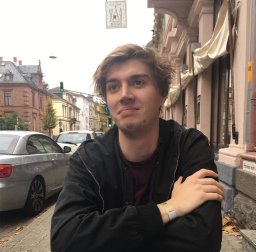 Wolfram Höps合作论文数2Alexandra P Lewis合作论文数2
 Fawaz Dabbaghie合作论文数Center for Digital Medicine, Heinrich Heine University2Nelson T Chuang合作论文数2Martin Santamarina合作论文数2Angad Jolly合作论文数Dept Mol & Human Genet, Baylor Coll Med2Patrick Hasenfeld合作论文数2Maximillian Marin合作论文数Dept Syst Biol, Harvard Med Sch2
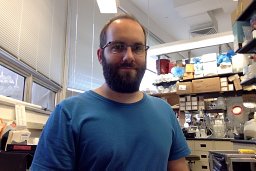 Daniel Paiva Agustinho合作论文数Washington University in St. Louis2
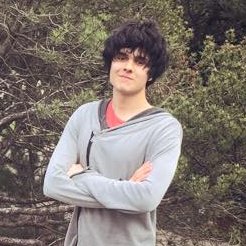 Moritz Smolka合作论文数Baylor College of Medicine Human Genome Sequencing Center2
 Alejandro Gener合作论文数2
 Najeeb Syed合作论文数Sidra Medicine2
 Bryce Kille合作论文数Rice Univ, Dept Comp Sci, Houston, TX 77005 USA2Divya Kalra合作论文数2
 Rupesh Kumar Kesharwani合作论文数Human Genome Sequencing Center2
 Advait Balaji合作论文数Department of Computer Science, Rice University, Houston, TX, USA.2
 Allison A Regier合作论文数Washington Univ, Sch Med, McDonnell Genome Inst, St Louis, MO 63108 USA2Aaron M Wenger合作论文数Pacific Biosci, Menlo Pk, CA USA2
 Marta Byrska-Bishop合作论文数<institution>New York Genome Center</institution>, New York, NY 10013, <country>USA</country>2Maryam Ghareghani合作论文数Saarland Univ, Ctr Bioinformat, Saarland Informat Campus E2-1, D-66123 Saarbrucken, Germany2André Corvelo合作论文数New York Genome Ctr, New York, NY 10013 USA2
 Haowei Du合作论文数2
 Peter A Audano合作论文数Univ Washington, Sch Med, Dept Genome Sci, Seattle, WA 98195 USA2
 Ahmed Arslan合作论文数School of Medicine, Stanford University2
 Jana Ebler合作论文数2
 PingHsun Hsieh合作论文数Univ Washington, Sch Med, Dept Genome Sci, Seattle, WA 98195 USA2Chunxiao Liao合作论文数Rice University2
 Haley Abel合作论文数Washington University School of Medicine;2
 Dreycey Albin合作论文数Rice Univ, Syst Synthet & Phys Biol SSPB Grad Program, Houston, TX 77005 USA2
 Bernardo Rodriguez-Martin合作论文数Mobile Genomes and Disease, Molecular Medicine and Chronic Diseases Centre (CIMUS), Universidade de Santiago de Compostela, Santiago de Compostela 15706, Spain; Department of Zoology, Genetics and Physical Anthropology, Universidade de Santiago de Compostela, Santiago de Compostela 15706, Spain; The Biomedical Research Centre (CINBIO), Universidade de Vigo, Vigo 36310, Spain.2




