从过去看现在,回顾成绩筑牢信心。从现在看未来,前瞻思考谋划战略。中国科技与经济社会的未来发展,取决于我们现在的认识、反思和行动。新中国成立70年来,在党的领导下,科技事业发生了历史性变革,取得了历史性成就。从过去遥望科学文明的源头,到逐步走近世界科学舞台的中央,中国科技界坚定了创新自信。70年来,党中央提出的"向科学进军""科学技术是第一生产力""科教兴
尊敬的各位嘉宾,女士们、先生们、朋友们: 大家好! 刚才,我们共同见证了大会开幕.中国领导人和政府高度重视这次大会,国务院孙春兰副总理莅临大会并致辞,强调要着力将国家智慧教育平台打造成教育领域重要的公共服务产品,促进数字技术与传统教育融合发展,呼吁各国携手推动守正创新,使数字教育成果更多惠及各国人民,传递出中国政府对推动数字教育高质量发展,促进入的全面发展、社会文明进步的高度重视和殷切期望.
Fine-Grained entity typing is complicated by the fact that type labels form a hierarchical structure, and those training examples usually contain noisy type labels. This paper addresses these two issues by proposing a novel framework that simultaneously models the correlation among hierarchical types and the noise within the training data. Additionally, the framework contains an innovative training approach during which the noise in the training data is progressively removed. Experiments on standard benchmarking datasets validate the proposed framework and establish it as a new state of the art for this problem.
《中小学法治副校长聘任与管理办法》已经2021年12月10日教育部第3次部务会议审议通过,并经最高人民法院、最高人民检察院、公安部、司法部同意,现予公布,自2022年5月1日起施行.
Fine-grained entity typing (FET) aims to annotate the entity mentions in a sentence with fine-grained type labels. It brings plentiful semantic information for many natural language processing tasks. Existing FET approaches apply hard attention to learn on the noisy labels, and ignore that those noises have structured hierarchical dependency. Despite their successes, these FET models are insufficient in modeling type hierarchy dependencies and handling label noises. In this paper, we directly tackle the structured noisy labels by combining a forward tree module and a backward tree module. Specifically, the forward tree formulates the informative walk that hierarchically represents the type distributions. The backward tree models the erroneous walk that learns the noise confusion matrix. Empirical studies on several benchmark data sets confirm the effectiveness of the proposed framework.
科技期刊传承人类文明,荟萃科学发现,引领科技发展,彰显国家科技竞争力和文化软实力.在人类文明演进中,印刷术改变了过去的世界,数字化正在塑造世界,网络化、智能化传播扑面而来,我们正迎来科技期刊变革重塑的新时代.新发展阶段的科技期刊,在推动学术交流、汇聚创新成果、策源创新思想、培育创新人才等方面,责任更艰巨,使命更光荣.
This study investigates name disambiguation for scholarly data. We propose a collective approach, which considers the connections of different ambiguous names, such that it initially treats each author reference as a unique author entity and reformulates the bibliography data as a heterogeneous multipartite network. Disambiguation results of one author name propagate to the others in the network. To further deal with the sparsity problem caused by limited available information, we also introduce word-word and venue-venue similarities and measure author similarities by assembling similarities from multiple perspectives. Using three real-life datasets, we experimentally show that our approach is both effective and efficient.
在全球与新冠肺炎疫情持续斗争的背景下,我们克服各种困难,在盛夏北京举办第三届世界科技期刊论坛,与各位新老朋友线上线下相聚一堂,意义非同寻常. 2020年以来,疫情严重冲击世界经济,使全人类面临严峻挑战.中国作为最先迎击新冠病毒大爆发的国家,付出巨大努力和代价,疫情防控取得重大战略成果.在与世界各国相关机构包括在座的科技期刊同仁携手战"疫"的进程中,我们更加深切感受到,开放交流是探索前沿的关键路径,团结合作是应对挑战的人间正道;更加深切感受到,共同建设健康的学术交流生态圈,对建立信任、弥合分歧、削除误解、合作发展极端重要;也更加深切感受到科技期刊荟萃科学发现、促进知识传播、引领科技发展、服务人类福祉的重要使命和广阔前景.
金秋十月,很高兴与大家相聚在东海之滨的温州,参加2020世界青年科学家峰会.我谨代表中国科协,对峰会召开表示热烈祝贺!向现场和云参会的各位嘉宾、各界人士以及媒体朋友表示诚挚欢迎!对长期以来与中国开展友好交流合作的国际、国别科技组织的朋友特别是青年朋友们表示衷心感谢!
An iterative procedure introduced in MacKay’s evidence framework is often used for estimating the hyperparameter in empirical Bayes. Together with the use of a particular form of prior, the estimation of the hyperparameter reduces to an automatic relevance determination model, which provides a soft way of pruning model parameters. Despite the effectiveness of this estimation procedure, it has stayed primarily as a heuristic to date and its application to deep neural network has not yet been explored. This paper formally investigates the mathematical nature of this procedure and justifies it as a well-principled algorithm framework, which we call the MacKay algorithm. As an application, we demonstrate its use in deep neural networks, which have typically complicated structure with millions of parameters and can be pruned to reduce the memory requirement and boost computational efficiency. In experiments, we adopt MacKay algorithm to prune the parameters of both simple networks such as LeNet, deep convolution VGG-like networks, and residual netowrks for large image classification task. Experimental results show that the algorithm can compress neural networks to a high level of sparsity with little loss of prediction accuracy, which is comparable with the state-of-the-art.
Entity linking, which maps named entity mentions in a document into the proper entities in a given knowledge graph, has been shown to be able to significantly benefit from modeling the entity relatedness through Graph Convolutional Networks (GCN). Nevertheless, existing GCN entity linking models fail to take into account the fact that the structured graph for a set of entities not only depends on the contextual information of the given document but also adaptively changes on different aggregation layers of the GCN, resulting in insufficiency in terms of capturing the structural information among entities. In this paper, we propose a dynamic GCN architecture to effectively cope with this challenge. The graph structure in our model is dynamically computed and modified during training. Through aggregating knowledge from dynamically linked nodes, our GCN model can collectively identify the entity mappings between the document and the knowledge graph, and efficiently capture the topical coherence among various entity mentions in the entire document. Empirical studies on benchmark entity linking data sets confirm the superior performance of our proposed strategy and the benefits of the dynamic graph structure.
Scholarly search systems greatly aid the deep understanding of scholarly data and facilitate the research activities of scholars for scientific studies. Though a number of such systems have been developed, most of them either support rankings of limited search of entities or provide only basic ranking metrics. These existing systems also mainly adopt RDBMSs as their storage such that the linked feature of scholarly data is not fully exploited. In this study, we design and develop a novel scholarly search system Athena. (1) It supports four types of scholarly entity searches: articles, authors, venues and affiliations, and is equipped with five ranking metrics, including three traditional metrics and two comprehensive importance ranking metrics. (2) It also provides profiling of scholarly entities. (3) It further utilizes a graph storage to directly leverage the linked feature for speeding up the processing of complex queries. We demonstrate the advantages of Athena at scholarly search, profiling, graph storage and ranking quality.
上海深秋,智者云集,很荣幸参加第三届世界顶尖科学家论坛.我代表中国科协向论坛举办表示热烈祝贺!向现场和云参会的各位嘉宾、各界人士以及媒体朋友们表示诚挚欢迎!特别对长期支持开展科技交流合作的世界各国科学家表示衷心感谢和崇高敬意!
Scholarly search systems greatly aid the deep understanding of scholarly data and facilitate the research activities of scholars for scientific studies. Though a number of such systems have been developed, most of them either support rankings of limited search of entities or provide only basic ranking metrics. These existing systems also mainly adopt RDBMSs as their storage such that the linked feature of scholarly data is not fully exploited. In this study, we design and develop a novel scholarly search system Athena. (1) It supports four types of scholarly entity searches: articles, authors, venues and affiliations, and is equipped with five ranking metrics, including three traditional metrics and two comprehensive importance ranking metrics. (2) It also provides profiling of scholarly entities. (3) It further utilizes a graph storage to directly leverage the linked feature for speeding up the processing of complex queries. We demonstrate the advantages of Athena at scholarly search, profiling, graph storage and ranking quality.
Fine-grained entity typing (FET), which annotates the entities in a sentence with a set of finely specified type labels, often serves as the first and critical step towards many natural language processing tasks. Despite great processes have been made, current FET methods have difficulty to cope with the noisy labels which naturally come with the data acquisition processes. Existing FET approaches either pre-process to clean the noise or simply focus on one of the noisy labels, sidestepping the fact that those noises are related and content dependent. In this paper, we directly model the structured, noisy labels with a novel content-sensitive weighting schema. Coupled with a newly devised cost function and a hierarchical type embedding strategy, our method leverages a random walk process to effectively weight out noisy labels during training. Experiments on several benchmark datasets validate the effectiveness of the proposed framework and establish it as a new state of the art strategy for noisy entity typing problem.
Named Entity Recognition (NER) for open domain data is a critical task for the natural language process applications and attracts many research attention. However, the complexity of semantic dependencies and the sparsity of the context information make it difficult for identifying correct entities from the corpus. In addition, the lack of annotated training data makes impossible the prediction of fine-grained entity types for detected entities. To solve the above-mentioned problems in NER, we propose an extractor which takes both the near arguments and long dependencies of relations into consideration for the entities and relations mention discovery. We then employ distant-supervision methods to automatically label mention types of training data sets and a neural network model is proposed for learning the type classifier. Empirical studies on two real-world raw text corpus, NYT and YELP, demonstrate that our proposed NER approach outperforms the existing models.
Dense subgraph discovery has proven useful in various applications of temporal networks. We focus on a special class of temporal networks whose nodes and edges are kept fixed, but edge weights regularly vary with timestamps. However, finding dense subgraphs in temporal networks is non-trivial, and its state of the art solution uses a filter-and-verification framework that is not scalable on large temporal networks. In this study, we propose a highly efficient approach to finding dense subgraphs in large temporal networks with $T$T timestamps. (1) We first develop a statistics-driven approach that employs hidden statistics to identifying $k$k time intervals, instead of $T(T+1)/2$T(T+1)/2 ones ($k$k is typically much smaller than $T$T), which strikes a balance between quality and efficiency. (2) After proving that the problem has no constant factor approximation algorithms, we design better heuristic algorithms to attack the problem, by connecting finding dense subgraphs with a variant of the Prize Collecting Steiner Tree problem. (3) Finally, we have conducted an extensive experimental study to verify that our approach is both effective and efficient.
As networks are ubiquitous in the modern era, point anomalies have been changed to graph anomalies in terms of anomaly shapes. However, the specific-shape priors about anomalous subgraphs of interest are seldom considered by the traditional approaches when detecting the subgraphs in attributed graphs (e.g., computer networks, Bitcoin networks, and etc.). This paper proposes a nonlinear approach to specific-shape graph anomaly detection. The nonlinear approach focuses on optimizing a broad class of nonlinear cost functions via specific-shape constraints in attributed graphs. Our approach can be used to many different graph anomaly settings. The traditional approaches can only support linear cost functions (e.g., an aggregation function for the summation of node weights). However, our approach can employ more powerful nonlinear cost functions, and enjoys a rigorous theoretical guarantee on the near-optimal solution with the geometrical convergence rate.
We consider the problem of writing on a Hopfield network. We cast the problem as a supervised learning problem by observing a simple link between the update equations of Hopfield network and recurrent neural networks. We compare the new writing protocol to existing ones and experimentally verify its effectiveness. Our method not only has a better ability of noise recovery, but also has a bigger capacity compared to the other existing writing protocols.
Many existing relation extraction (RE) models make decisions globally using integer linear programming (ILP). However, it is nontrivial to make use of integer linear programming as a blackbox solver for RE. Its cost of time and memory may become unacceptable with the increase of data scale, and redundant information needs to be encoded cautiously for ILP. In this paper, we propose an easy first approach for relation extraction with information redundancies, embedded in the results produced by local sentence level extractors, during which conflict decisions are resolved with domain and uniqueness constraints. Information redundancies are leveraged to support both easy first collective inference for easy decisions in the first stage and ILP for hard decisions in a subsequent stage. Experimental study shows that our approach improves the efficiency and accuracy of RE, and outperforms both ILP and neural network-based methods.
 Jianxin Li (李建欣)合作论文数School of Computer Science & Engineering, Beihang University;Beijing Advanced Innovation Center of Big data and Brain Computing, Beihang University44
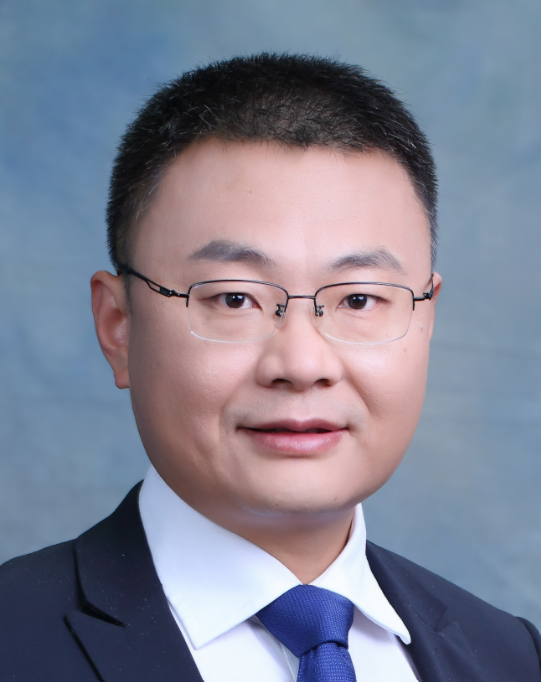 Hailong Sun (孙海龙)合作论文数School of Software, Beihang University42
 Chunming Hu (胡春明)合作论文数School of Software, Beihang University;Department of Computer Science & Engineering, Beihang University38
 Tianyu Wo (沃天宇)合作论文数School of Software, Beihang University31
 Shuai Ma (马帅)合作论文数The Institute of Advanced Computing Technology, School of Computer Science and Engineering, Beihang University;School of Artificial Intelligence, Nanchang University27
 Xianxian Li (李先贤)合作论文数School of Computer Science and Engineering, Guangxi Normal University27
 Richong Zhang (张日崇)合作论文数School of Computer Science and Engineering, Beihang University26
 Yunhao Liu (刘云浩)合作论文数Department of Automation, Tsinghua University;Global Innovation Exchange, Tsinghua University18
 Ting Deng (邓婷)合作论文数School of Computer Science and Engineering, Beihang University18
 Zongxia Du合作论文数14Huipeng Guo合作论文数13
 Xiaohui Guo合作论文数China Software Testing Center11
 Bo Li (李博)合作论文数School of Computer Science and Engineering, Beihang University9Qin Li (李沁)合作论文数9
 Xuelian Lin (林学练)合作论文数School of Computer Science and Engineering, Beihang University9
 Yongyi Mao合作论文数School of Electrical Engineering and Computer Science, University of Ottawa9Yu Zhang合作论文数8
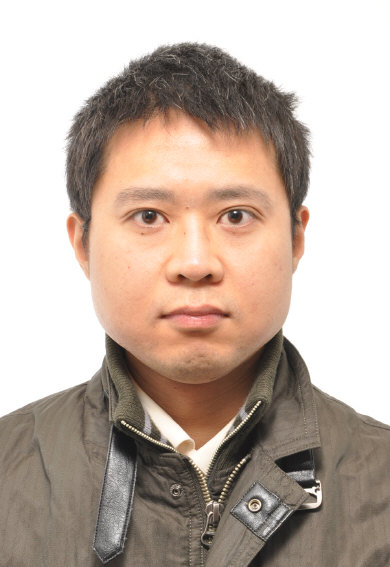 Da-Zhi Sun (孙达志)合作论文数School of Computer Science and Technology, Tianjin University8
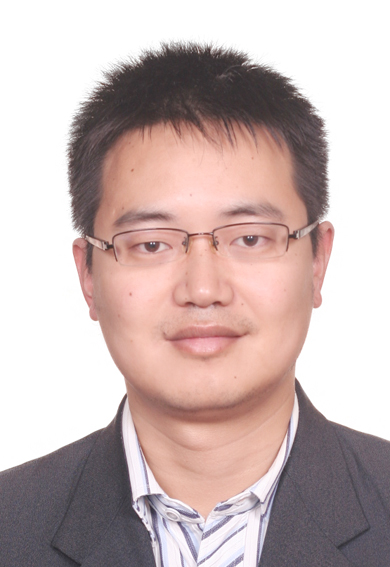 Yanmin Zhu (朱燕民)合作论文数Department of Computer Science and Engineering, School of Electronic Information and Electrical Engineering, Shanghai Jiao Tong University8
 Renjun Hu (胡仁君)合作论文数School of Data Science & Engineering, East China Normal University7
 Yili Fang合作论文数School of Computer and Information Engineering, Zhejiang Gongshang University6Jin Zeng合作论文数6
 Jizhou Sun (孙济洲)合作论文数Tianjin University6
 Junshuang Wu合作论文数5
 Sheng Ge (葛声)合作论文数School of Computer Science and Engineering, Beihang University5
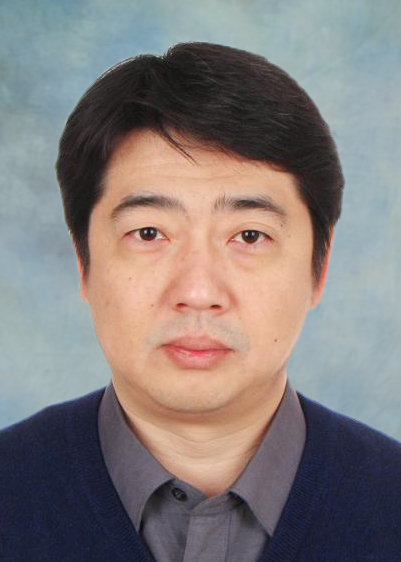 Jun Han (韩军)合作论文数School of Computer Science and Engineering, Beihang University5Yong Wang (王勇)合作论文数Information Department, Beijing University of Technology5Liang Zhong合作论文数5Chune Li合作论文数5
 Xudong Liu (刘旭东)合作论文数School of Chemistry and Biological Engineering, University of Science and Technology Beijing5
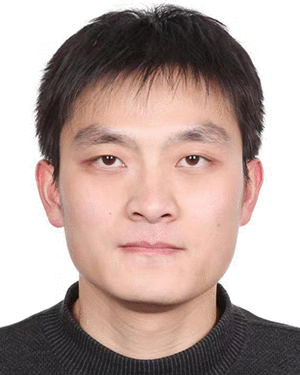 Lei Cui (崔磊)合作论文数Institute of Information Engineering, Chinese Academy of Sciences;Zhongguancun Laboratory4Zicheng Huang合作论文数4
 Xu Wang (王旭)合作论文数School of Software, Beihang University;School of Computer Science and Engineering, Beihang University4
 Lin Li (李林)合作论文数4
 Jie Xu (徐杰)合作论文数School of Computing, University of Leeds4
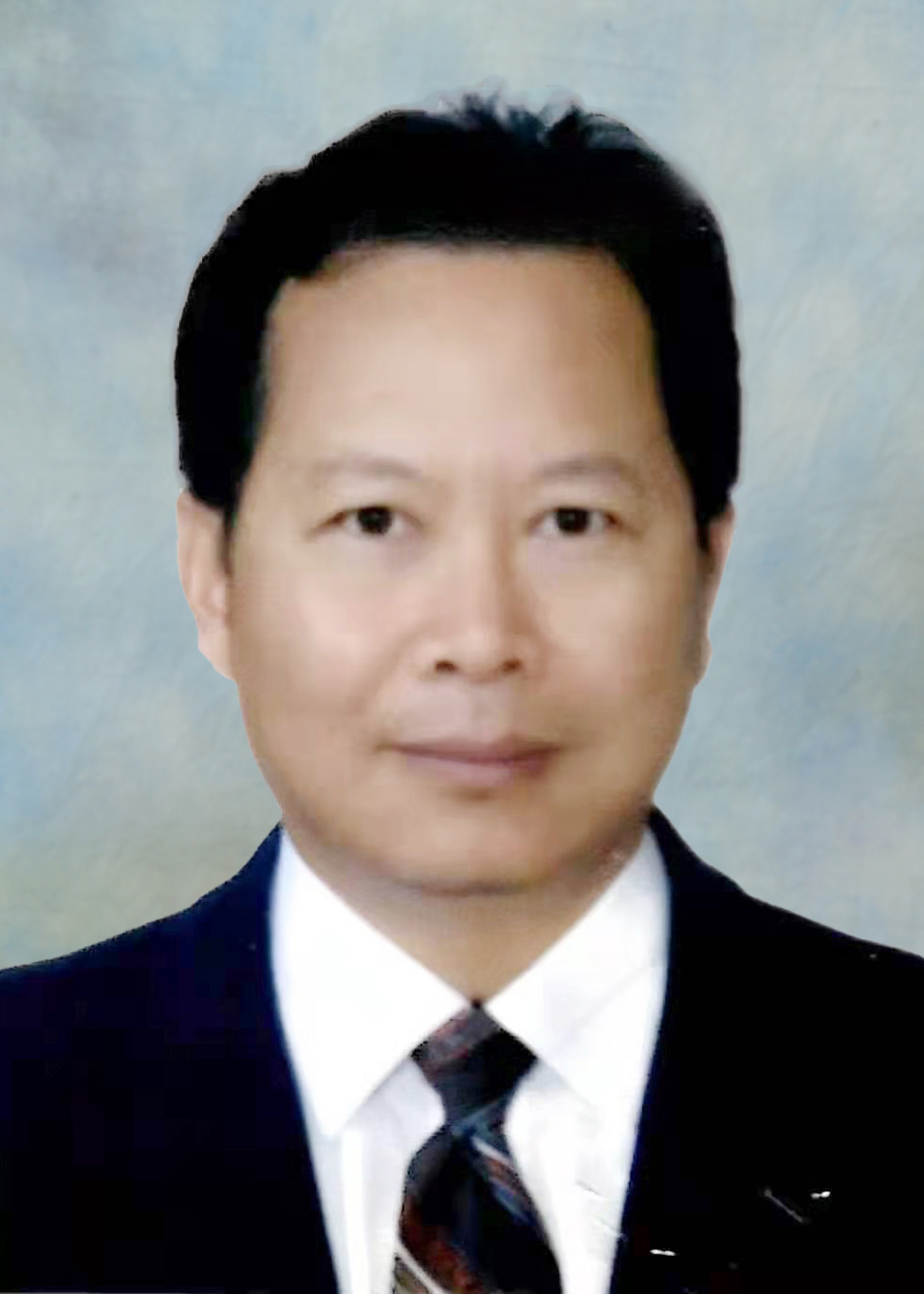 Qin Yang (杨钦)合作论文数School of Computer Science and Engineering, Beihang University4
 Lionel M. Ni (倪明选)合作论文数Department of Computer Science and Engineering, School of Engineering, Hong Kong University of Science and Technology;Fok Ying Tung Graduate School, Hong Kong University of Science and Technology4
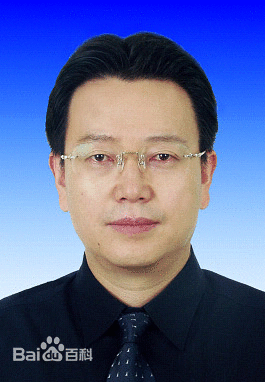 Zhe Wu (武哲)合作论文数Dongguan University of Technology4
 Feng Chen合作论文数University of Texas at Dallas4
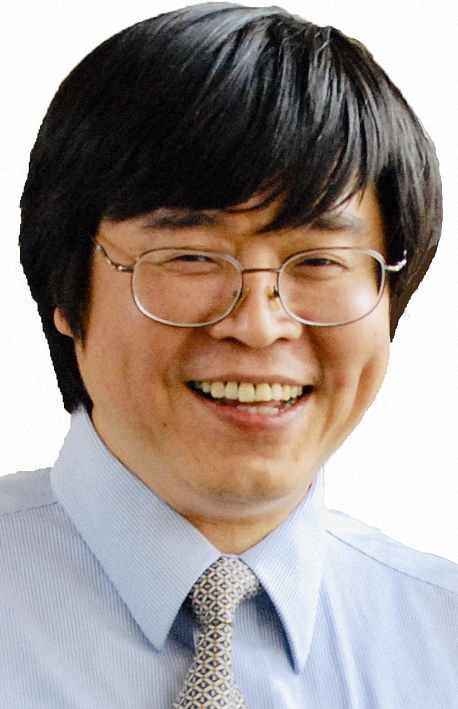 Wenfei Fan (樊文飞)合作论文数Laboratory for Foundations of Computer Science, School of Informatics, The University of Edinburgh4
 Charu Aggarwal合作论文数IBM T. J. Watson Research Center4Junbin Kang合作论文数4Yinglie Cao合作论文数3Liangjun Wan合作论文数3
 Lu Liu合作论文数Univ Leicester, Sch Informat, Leicester LE1 7RH, Leics, England3Xiaoxuan Ma (马晓轩)合作论文数3Yong-an XU (徐永安)合作论文数3
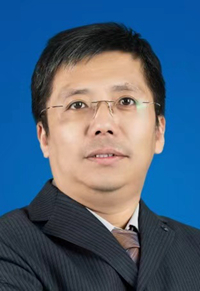 Dacheng Zhang (张大成)合作论文数School of Optoeletronic Engineering, Xidian University3




