The magnitude of future emissions of greenhouse gases from the northern permafrost region depends crucially on the mineralization of soil organic carbon (SOC) that has accumulated over millennia in these perennially frozen soils. Many recent studies have used radiocarbon ( 14 C) to quantify the release of this “old” SOC as CO 2 or CH 4 to the atmosphere or as dissolved and particulate organic carbon (DOC and POC) to surface waters. We compiled ~1,900 14 C measurements from 51 sites in the northern permafrost region to assess the vulnerability of thawing SOC in tundra, forest, peatland, lake, and river ecosystems. We found that growing season soil 14 C‐CO 2 emissions generally had a modern (post‐1950s) signature, but that well‐drained, oxic soils had increased CO 2 emissions derived from older sources following recent thaw. The age of CO 2 and CH 4 emitted from lakes depended primarily on the age and quantity of SOC in sediments and on the mode of emission, and indicated substantial losses of previously frozen SOC from actively expanding thermokarst lakes. Increased fluvial export of aged DOC and POC occurred from sites where permafrost thaw caused soil thermal erosion. There was limited evidence supporting release of previously frozen SOC as CO 2 , CH 4 , and DOC from thawing peatlands with anoxic soils. This synthesis thus suggests widespread but not universal release of permafrost SOC following thaw. We show that different definitions of “old” sources among studies hamper the comparison of vulnerability of permafrost SOC across ecosystems and disturbances. We also highlight opportunities for future 14 C studies in the permafrost region.
Earth system scientists working with radiocarbon in organic samples use a stable carbon isotope (δ13C) correction to account for mass-dependent fractionation, but it has not been evaluated for the soil gas environment, wherein both diffusive gas transport and diffusive mixing are important. Using theory and an analytical soil gas transport model, we demonstrate that the conventional correction is inappropriate for interpreting the radioisotopic composition of CO2 from biological production because it does not account for important gas transport mechanisms. Based on theory used to interpret δ13C of soil production from soil CO2, we propose a new solution for radiocarbon applications in the soil gas environment that fully accounts for both mass-dependent diffusion and mass-independent diffusive mixing.
Egan et al. correctly state that radiocarbon corrections based on 13C cannot be used to interpret radiocarbon data if there are processes involved that involve process that are not mass-dependent, like mixing. They use simple 1D models to show the potential biases in estimating the radiocarbon signature of source gases if gases in soil air space are interpreted without understanding that soil air both mixes and diffuses. The main advance here is that the authors use information on 13CO2 in pore space to estimate the mixing, which in turn allows a better way to estimate the 14C of CO2 sources.
Recent warming in the Arctic, which has been amplified during the winter1-3, greatly enhances microbial decomposition of soil organic matter and subsequent release of carbon dioxide (CO2)4. However, the amount of CO2 released in winter is highly uncertain and has not been well represented by ecosystem models or by empirically-based estimates5,6. Here we synthesize regional in situ observations of CO2 flux from arctic and boreal soils to assess current and future winter carbon losses from the northern permafrost domain. We estimate a contemporary loss of 1662 Tg C yr-1 from the permafrost region during the winter season (October through April). This loss is greater than the average growing season carbon uptake for this region estimated from process models (-1032 Tg C yr-1). Extending model predictions to warmer conditions in 2100 indicates that winter CO2 emissions will increase 17% under a moderate mitigation scenario-Representative Concentration Pathway (RCP) 4.5-and 41% under business-as-usual emissions scenario-RCP 8.5. Our results provide a new baseline for winter CO2 emissions from northern terrestrial regions and indicate that enhanced soil CO2 loss due to winter warming may offset growing season carbon uptake under future climatic conditions.
Abstract. Earth system scientists working with radiocarbon in organic samples use a stable carbon isotope (δ 13 C) correction to account for mass-dependent fractionation caused primarily by photosynthesis. Although researchers apply this correction routinely, it has not been evaluated for the soil gas environment, where both diffusive gas transport and diffusive mixing are important. Towards this end we applied an analytical soil gas transport model across a range of soil diffusivities and biological CO 2 production rates, allowing us to control the radiocarbon (Δ 14 C) and stable isotope (δ 13 C) compositions of modeled soil CO 2 production and atmospheric CO 2 . This approach allowed us to assess the bias that results from using the conventional correction method for estimating Δ 14 C of soil production. We found that the conventional correction is inappropriate for interpreting the radio-isotopic composition of CO 2 from biological production, because it does not account for diffusion and diffusive mixing. The resultant Δ 14 C bias associated with the traditional correction is highest (up to 150 ‰) in soils with low biological production and/or high soil diffusion rates. We propose a new solution for radiocarbon applications in the soil gas environment that fully accounts for diffusion and diffusive mixing.
Manuscript bg-2018-451 Title: Isotopic fractionation corrections for the radiocarbon composition of CO2 in the soil gas environment must include diffusion and mixing Authors: Jocelyn Egan et al. Thanks to the referees and the editor for helpful comments that have led to a muchimproved manuscript. Referee comments are listed below, and our responses follow each line numbers refer to those in the revised version. Sincerely, Jocelyn Egan (for all authors)
Recent studies have examined temporal fluctuations in the amount and carbon isotope content (δ13C) of CO2 produced by the respiration of roots and soil organisms. These changes have been correlated with diel cycles of environmental forcing (e.g., sunlight and soil temperature) and with synoptic-scale atmospheric motion (e.g., rain events and pressure-induced ventilation). We used an extensive suite of measurements to examine soil respiration over 2 months in a subalpine forest in Colorado, USA (the Niwot Ridge AmeriFlux forest). Observations included automated measurements of CO2 and δ13C of CO2 in the soil efflux, the soil gas profile, and forest air. There was strong diel variability in soil efflux but no diel change in the δ13C of the soil efflux (δR) or the CO2 produced by biological activity in the soil (δJ). Following rain, soil efflux increased significantly, but δR and δJ did not change. Temporal variation in the δ13C of the soil efflux was unrelated to measured environmental variables, and we failed to find an explanation for this unexpected result. Measurements of the δ13C of the soil efflux with chambers agreed closely with independent observations of the isotopic composition of soil CO2 production derived from soil gas well measurements. Deeper in the soil profile and at the soil surface, results confirmed established theory regarding diffusive soil gas transport and isotopic fractionation. Deviation from best-fit diffusion model results at the shallower depths illuminated a pump-induced ventilation artifact that should be anticipated and avoided in future studies. There was no evidence of natural pressure-induced ventilation of the deep soil. However, higher variability in δ13C of the soil efflux relative to δ13C of production derived from soil profile measurements was likely caused by transient pressure-induced transport with small horizontal length scales.
Recent studies have highlighted fluctuations in the carbon isotope content ( 13C) of CO2 produced by soil respiration. These have been correlated with diel cycles of environmental forcing (e.g., soil temperature), or with synoptic weather events (e.g., rain events and pressure-induced ventilation). We used an extensive suite of observations to examine these phenomena over two months in a subalpine forest in Colorado, USA (the Niwot Ridge AmeriFlux site). Measurements included automated soil respiration chambers and automated measurements of the soil gas profile. We found 1) no diel change in the 13C of the soil surface flux or the CO2 produced in the soil (despite strong diel change in surface flux rate), 2) no change in 13C following wetting (despite a significant increase in soil flux rate), and 3) no evidence of pressure-induced ventilation of the soil. Measurements of the 13C of surface CO2 flux agreed closely with the isotopic composition of soil CO2 production calculated using soil profile measurements. Temporal variation in the 13C of surface flux was relatively minor and unrelated to measured environmental variables. Deep in the soil profile, results conform to established theory regarding diffusive soil gas transport and isotopic fractionation, and suggest that sampling soil gas at a depth of several tens of centimeters is a simple and effective way to assess the mean 13C of the surface flux.
Radiocarbon is an exceptionally useful tool for studying soil-respired CO2, providing information about soil carbon turnover rates, depths of production, and the biological sources of production through partitioning. Unfortunately, little work has been done to thoroughly investigate the possibility of inherent biases present in current measurement techniques, like those present in delta(CO2)-C-13 methodologies, caused by disturbances to the soil's natural diffusive regime. This study investigates the degree of bias present in four C-14 sampling chamber methods using a three-dimensional numerical soil-atmosphere CO2 diffusion model. The four chambers were tested in an idealized, surrogate reality by assessing measurement bias with varying Delta C-14 and delta C-13 signatures of production, collar lengths, soil biological productivity rates, and soil diffusivities. The static and Iso-FD chambers showed almost no isotopic measurement bias, significantly outperforming dynamic chambers, which demonstrated biases up to 200% in some modeled scenarios. The study also showed that C-13 and C-14 diffusive fractionation are not a constant multiple of one another, but that the delta C-13 correction still works in diffusive scenarios because the change in fractionation is not large enough to impact measured Delta C-14 values during chamber equilibration.
Radiocarbon is an exceptionally useful tool for studying soil-respired CO2, providing information about soil carbon turnover rates, depths of production, and the biological sources of production through partitioning. Unfortunately, little work has been done to thoroughly investigate the possibility of inherent biases present in current measurement techniques, like those present in δCO2 methodologies, caused by disturbances to the soil’s natural diffusive regime. This study investigates the degree of bias present in four 14C sampling chamber methods using a three-dimensional numerical soil-atmosphere CO2 diffusion model. The four chambers were tested in an idealized, surrogate reality by assessing measurement bias with varying Δ14C and δ13C signatures of production, collar lengths, soil biological productivity rates, and soil diffusivities. The static and Iso-FD chambers showed almost no isotopic measurement bias, significantly outperforming dynamic chambers, which demonstrated biases up to 200‰ in some modeled scenarios. The study also showed that 13C and 14C diffusive fractionation are not a constant multiple of one another, but that the δ13C correction still works in diffusive scenarios because the change in fractionation is not large enough to impact measured Δ14C values during chamber equilibration. INTRODUCTION The radioactive isotope of carbon (14C) is an exceptionally useful tool for studying soil-respired CO2, providing information about the biological sources of production through partitioning (Gaudinski et al. 2000; Trumbore 2000; Hahn et al. 2006; Schuur and Trumbore 2006; Hicks Pries et al. 2013). In recent years, many studies have utilized partitioning techniques, both physical and isotopic, as tools for separating sources of soil respiration, to understand how soil respiration sources may be affected by the future changing climate (Hanson et al. 2000; Högberg et al. 2001; Singh et al. 2003; Lee et al. 2003; Kuzyakov 2006; Moyes et al. 2010; Bond-Lamberty et al. 2011; Drake et al. 2012; Gomez-Casanovas et al. 2012; Risk et al. 2012). Source partitioning with isotopes has an advantage over physical partitioning as it is typically involves less disturbance than physical partitioning. However, in natural abundance isotopic partitioning studies, 14C can be a more sensitive tool than δ13C. The difference between autotrophic and heterotrophic δ13C signatures of soil-respired CO2 is only a few permil (‰) (except in C3-C4 vegetation shifted studies), whereas there can be a much larger separation between Δ14C source signatures, especially in systems where slow decomposition or long-term storage accentuate isotopic differences (Trumbore 2006). A peak in atmospheric Δ14C signatures in 1963 caused by nuclear weapons testing has allowed researchers to utilize 14C as a tracer to distinguish whether carbon substrates were utilized preor post-bomb, because post-bomb signatures are distinctive given their relative 14C enrichment (Levin and Hesshaimer 2000). Autotrophic respiration consumes new carbon, so its 14C signature will reflect current atmospheric CO2 signatures, whereas heterotrophic signatures will reflect the age of the substrates that the heterotrophs consume, which can be very new or quite old (Gaudinski et al. 2000; Phillips et al. 2013). Despite the potential utility of CO2 as a tool for investigating soil-respired CO2, little work has been done to thoroughly investigate the possibility of biases inherent to existing measurement techniques, because the high cost of analysis naturally drives researchers to focus effort on the ecological aspect of studies, rather than error or uncertainty testing. In the case of δ13C, Cerling et al. (1991) demonstrated that although mass differences in 12C and 13C isotopologues cause 12C to diffuse 1.0044 times faster through the soil, if the soil is at a diffusive steady-state, the δ13C of production should match the δ13C of surface flux. Soils are, however, rarely at a diffusive steady-state, and 1. Dept. of Earth Sciences, St. Francis Xavier University, 1 West Street, Antigonish, Nova Scotia B2G 2W5, Canada. Corresponding author. Email: jegan@stfx.ca. 2. Dept. of Earth Sciences, Dalhousie University, 1459 Oxford Street, Halifax, Nova Scotia B3H 4R2, Canada. 3. Dept. of Crop and Soil Science, Oregon State University, Corvallis, Oregon 97331, USA. Radiocarbon, Vol 56, Nr 3, 2014, p 1175–1188 DOI: 10.2458/56.17771 © 2014 by the Arizona Board of Regents on behalf of the University of Arizona
Measurements of the stable isotope composition of soil flux have many uses, from separating autotrophic and heterotrophic components of respiration to teasing apart information about gas transport physics. While soil flux chambers are typically used for these measurements, subsurface approaches are becoming more accessible with the introduction of field-deployable isotope analyzers. These subsurface measurements have the unique benefit of offering depth-resolved isotopologue flux data, which can help to disentangle the many soil respiration processes that occur throughout the soil profile. These methods are likely to grow in popularity in the coming years and a solid methodological basis needs to be formed in order for data collected in these subsurface studies to be interpreted properly. Here we explore the range of possible techniques that could be used for subsurface isotopologue gas interpretation and rigorously test the assumptions and application of each approach using a combination of numerical modeling, laboratory experiments, and field studies. Our results suggest that methodological uncertainties arise due to poor assumptions and mathematical instabilities but certain methods, particularly those based on diffusion physics, are able to cope with these uncertainties well and produce excellent depth-resolved isotopologue flux data.
Radiocarbon is an exceptionally useful tool for studying soil-respired CO2, providing information about soil carbon turnover rates, depths of production, and the biological sources of production through partitioning. Unfortunately, little work has been done to thoroughly investigate the possibility of inherent biases present in current measurement techniques, like those present in δ13CO2 methodologies, caused by disturbances to the soil's natural diffusive regime. This study investigates the degree of bias present in four 14C sampling chamber methods using a three-dimensional numerical soil-atmosphere CO2 diffusion model. The four chambers were tested in an idealized, surrogate reality by assessing measurement bias with varying Δ14C and δ13C signatures of production, collar lengths, soil biological productivity rates, and soil diffusivities. The static and Iso-FD chambers showed almost no isotopic measurement bias, significantly outperforming dynamic chambers, which demonstrated biases up to 200‰ in some modeled scenarios. The study also showed that 13C and 14C diffusive fractionation are not a constant multiple of one another, but that the δ13C correction still works in diffusive scenarios because the change in fractionation is not large enough to impact measured Δ14C values during chamber equilibration.
 David Risk合作论文数Department of Earth Sciences;Francis Xavier University;Department of Earth Sciences, Francis Xavier University18
 Nicholas Reid Nickerson合作论文数Environmental Sciences Research Centre, St. Francis Xavier University10
 David R. Bowling合作论文数School of Biological Sciences, College of Science, The University of Utah;Biogeosciences Research Group, Department of Biology, The University of Utah6
 Benjamin W. Abbott合作论文数Brigham Young University5
 Massimo Lupascu合作论文数Department of Geography, Faculty of Arts and Social Sciences, National University of Singapore5
 David Olefeldt合作论文数Dept Renewable Resources, Univ Alberta5
 Edward (Ted) Schuur合作论文数Center for Ecosystem Sciences and Society, Department of Biological Sciences, College of the Environment, Forestry, and Natural Sciences, Northern Arizona University;University of Alaska5
 Michael M. Loranty合作论文数Department of Geography, State University of New York at Buffalo5
 Claire L. Phillips合作论文数Department of Forest Science;Oregon State University;Department of Forest Science, Oregon State University5
 Patrick F Sullivan合作论文数4Avni Malhotra合作论文数4
 Klaus Steenberg Larsen合作论文数Department of Geosciences and Natural Resource Management, Faculty of Science, University of Copenhagen4
 Thomas Friborg合作论文数Department of Geosciences and Natural Resource Management, Faculty of Science, University of Copenhagen4Jordan Goodrich合作论文数School of Science, University of Waikato4
 Kyle Arndt合作论文数Woodwell Climate Research Center4Aram Kalhori合作论文数4
 Elchin Jafarov合作论文数Div Earth & Environm Sci, Los Alamos Natl Lab4Sarah M. Ludwig合作论文数Department of Earth and Environmental Science, Columbia University4
 Donatella Zona合作论文数Global Change Research Group, San Diego State University;Department of Animal and Plant Sciences, University of Sheffield;San Diego State University, University of Sheffield4
 Anders Michelsen合作论文数Department of Biology, Faculty of Science, University of Copenhagen4
 Philipp Semenchuk合作论文数4
 Walter Oechel合作论文数Coastal and Marine Institute, San Diego State University;Department of Biology, San Diego State University4
 Casper Tai Christiansen合作论文数Department of Biology, Queen's University4
 Gerardo Celis合作论文数Department of Anthropology, University of Arkansas4
 Bo Elberling合作论文数Department of Geosciences and Natural Resource Management, Faculty of Science, University of Copenhagen4
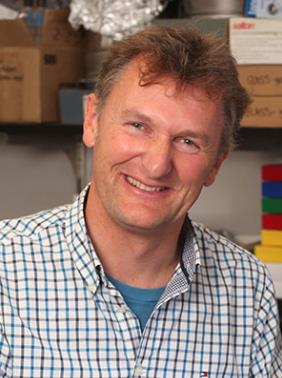 Paul Grogan合作论文数Department of Biology, Queen's University4
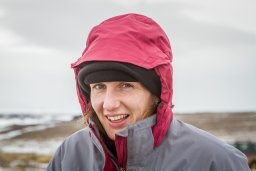 Claudia I. Czimczik合作论文数Department of Earth System Science, University of California4
 Patrick Crill合作论文数Department of Geological Sciences, Stockholm University4
 Julie D. Jastrow合作论文数Environmental Science Division, Argonne National Laboratory4
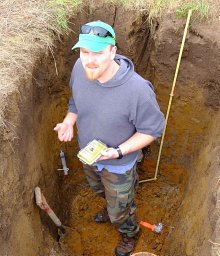 Jack W. Mcfarland合作论文数Department of Biology and Wildlife, University of Alaska4
 F. Rezanezhad合作论文数Cold Regions Research Centre;Wilfrid Laurier University;Cold Regions Research Centre, Wilfrid Laurier University4Elisabeth J. Cooper合作论文数4
 Mark P Waldrop合作论文数Geology, Minerals, Energy, and Geophysics Science Center, U.S. Geological Survey4
 Eugenie Euskirchen合作论文数Department of Biology and Wildlife, College of Natural Science & Mathematics, University of Alaska Fairbanks;Institute of Arctic Biology, University of Alaska Fairbanks;Department of Veterinary Medicine, University of Alaska Fairbanks4
 Claire Treat合作论文数Department of Agroecology, Center for Landscape Research in Sustainable Agricultural Futures, Aarhus University4
 Niels M. Schmidt合作论文数Centre for Integrated Population Ecology, www.cipe.dk4Dave Risk合作论文数4A. K. Selbmann合作论文数3gordon mcarthur合作论文数3s natali合作论文数3
 Norbert Pirk合作论文数Department of Geosciences, University of Oslo3
 Manuel Helbig合作论文数McMaster Univ, Sch Geog & Earth Sci, Hamilton, ON, Canada3Torsten Sachs合作论文数3
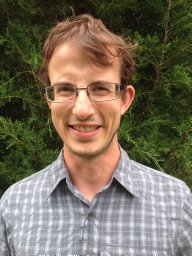 Hall Steven J合作论文数Department of Environmental Science, Policy and Management, University of California3
 Genet Helene合作论文数3
 Sergei Davydov合作论文数3Christian Wille合作论文数3
 Madani Nima合作论文数3
 Róisín Commane合作论文数Department of Earth and Environmental Science, Lamont-Doherty Earth Observatory, Columbia University3




