Learning by conceptual modeling is seeing uptake in secondary and higher education. However, assessment of conceptual models is underdeveloped. This paper proposes an assessment method for conceptual models. The method is based on a metric that includes 36 types of issues that diminish model features. The approach was applied by educators and positively evaluated. It was considered useful and the derived grades corresponded with their intuitions about the models quality.
Learning by creating models is an active form of learning, which is well suited to induce deep understanding of phenomena. But how to evaluated such models, and apply feedback accordingly? What makes a learner created model a good model? We present two methods to assess and grade conceptual models and report on the application of these to model-data obtained from learners in a summer science class.
This paper presents a domain independent question generation and interaction procedure that automatically generates multiple-choice questions for conceptual models created with Qualitative Reasoning vocabulary. A Bayesian Network is deployed that captures the learning progress based on the answers provided by the learner. The likelihood of concepts being known or unknown on behalf of the learner determines the focus, and the question generator adjusts the contents of its questions accordingly. As a use case, the Quiz mode is introduced.
Research has shown that even students educated in science at prestigious universities have misconceptions about the systems underlying climate change, sustainability and government spending. Interactive conceptual modelling and simulation tools, which are based on Artificial Intelligence techniques, offer a potential solution to this problem. Such tools have proven to be useful means for scientists to develop their knowledge about systems such as those mentioned before. However, they have also turned out to be difficult to use. In this thesis, instruments and methods are proposed that simplify learning by modelling, to turn this approach into a valuable asset for students from secondary school onwards.
Articulating thought in computer‐based media is a powerful means for humans to develop their understanding of phenomena. We have created DynaLearn, an intelligent learning environment that allows learners to acquire conceptual knowledge by constructing and simulating qualitative models of how systems behave. DynaLearn uses diagrammatic representations for learners to express their ideas. The environment is equipped with semantic technology components that are capable of generating knowledge‐based feedback and virtual characters that enhance the interaction with learners. Teachers have created course material, and successful evaluation studies have been performed. This article presents an overview of the DynaLearn system.
Motivation is a critical requirement for successful learning. Previous research has identified that animated pedagogical agents can increase motivation. Following these results, we present the cast of pedagogical agents in the DynaLearn Intelligent Learning Environment. Each of these agents is associated with one of the different support types available in the environment, giving each agent a clearly defined role. We describe the different character roles, how their knowledge is generated and related to the pedagogical purpose at hand, how they interact with the learners and finally how this interaction helps increasing the learners' motivation. To assess this, we conducted a preliminary evaluation with three of the characters and report our findings.
Although biology textbooks are still full of factual knowledge, the tendency to teach science using a systems perspective is emerging. Qualitative representations are well suited to express, reason and communicate systems knowledge, particularly for science education. This contribution shows how a systems perspective can be imposed on typical problems taken from biology textbooks. The presented approach is generic and can be transferred to other areas such as economics and physics. Moreover, the detailed and explicit representations inherent to the Qualitative Reasoning approach make it possible to build knowledgeable dialogue systems, all working on the same underlying domain independent representation.
Project title: DynaLearn - Engaging and informed tools for learning conceptual system knowledge.
DynaLearn (http://www.DynaLearn.eu) develops a cognitive artefact that engages learners in an active learning by modelling process to develop conceptual system knowledge. Learners create external representations using diagrams. The diagrams capture conceptual knowledge using the Garp3 Qualitative Reasoning (QR) formalism [2]. The expressions can be simulated, confronting learners with the logical consequences thereof. To further aid learners, DynaLearn employs a sequence of knowledge representations (Learning Spaces, LS), with increasing complexity in terms of the modelling ingredients a learner can use [1]. An online repository contains QR models created by experts/teachers and learners. The server runs semantic services [4] to generate feedback at the request of learners via the workbench. The feedback is communicated to the learner via a set of virtual characters, each having its own competence [3]. A specific feedback thus incorporates three aspects: content, character appearance, and a didactic setting (e.g. Quiz mode). In the interactive event we will demonstrate the latest achievements of the DynaLearn project. First, the 6 learning spaces for learners to work with. Second, the generation of feedback relevant to the individual needs of a learner using Semantic Web technology. Third, the verbalization of the feedback via different animated virtual characters, notably: Basic help, Critic, Recommender, Quizmaster & Teachable agent.
This deliverable presents the question generation module in the DynaLearn software. Its role is to provide question and answer sets in several contexts ranging from a multiple choice quiz to questions, answers, and explanations in response to queries from the learner. It has the following main features: A mechanism for scope setting, constraints analysis and the application of selection heuristics. A question and answer construction mechanism based on model simulation input. A multiple choice distractor generation mechanism. A flexible formal output OWL format. A mechanism for interpreting questions and answers in response to learner queries and recombining and analysing output to produce elaborate explanations. The final main feature is a mechanism to construct a teachable agent challenge matching questions from one model with answers from another model.
Conceptual modeling is a complex task that requires domain specific knowledge as well as a good command of modeling techniques. In this paper we propose an approach that aims to capture relevant knowledge from an online pool of conceptual models. This knowledge is brought to the user in order to assist the construction of new conceptual models. With our method, relevant feedback is generated based on knowledge extracted from the pool of models. Such feedback, tailored to the current modeling process of the user, allows the model to be improved based on shared knowledge.
In this paper we present the cast of pedagogical agents in the DynaLearn Intelligent Learning Environment. We describe the different character roles and how they interact with the learners. Our aim in using these characters is to increase the learners’ motivation.
In DynaLearn, learners, teachers and domain experts create Qualitative Reasoning (QR) conceptual models that may store in a common repository. These models represent a valuable source of knowledge that could be used to assist new users in the creation of models with related topics. However, finding the appropriate models for this knowledge reuse can be a difficult task as the amount of models in the repository increases. This document describes the task of recommending relevant models from the repository and its integration with the generation of semantic feedback. The recommendation process integrates both model-based and memory-based collaborative filtering algorithms. The recommended models are used as reference sources and are compared with the learner model. From the analysis of the differences between the models, a list of suggestions is generated and provided to the learner as feedback. Finally, the document includes an appendix describing the User Management System and how the models in the repository can be organized in courses. These courses play an important role in the recommendation of models.
In DynaLearn, semantics of the QR models ingredients is made explicit by representing them as terms in ontologies. That easies the task of exploring the knowledge contained in the models, enabling rich comparisons among them. The facts that the user explicitly represents in the model constitutes the asserted ontology. Nevertheless, logical rules can be applied to these facts in order to extract other knowledge (inferred facts) that was not made explicit by the modeller. Taxonomical reasoning techniques can make emerge these inferred facts. In the Semantic Technologies module in DynaLearn, the exploration of taxonomic structures and the application of taxonomical reasoning techniques play a major role. This document describes the task of integrating taxonomic reasoning in DynaLearn in order to enrich the results presented to users by discovering additional semantic information that is not explicit in the QR models initially. This enables: (1) a better identification of similar terms between models, which directly benefits feedback and collaborative filtering, (2) detection of inconsistencies between models, which enriches the information given to the user during semantic feedback, and (3) classification of instances during the grounding process. All these aspects are analysed in the document. As an addition, and to complete the cycle of WP4 deliverables, we annex in this document a description of the test plan that we created and applied regularly to the different components of the ST module.
This document describes the Ontology-Based Feedback process addressed to improve the quality of the models developed by learners. The core idea is to compare the knowledge contained in a learner model with the knowledge contained in a reference model (made by an expert) in order to get feedback on the quality of the former one. This is carried out by measuring how similar/dissimilar both models are and by identifying the ingredients and structures in which they differ. This information is used to construct suggestions of improvements which are shown to the user during the modelling process. Comparisons are performed by using ontology matching techniques, which allow the alignment between learner and reference models. Some additional techniques are also applied, like semantic reasoning and model structure comparison, thus allowing a richer analysis of the different knowledge contained in the compared models and leading to the generation of different types of feedback.
This document discusses the core Semantic Technologies in DynaLearn: i) The semantic repository, which supports the online storage and access of qualitative reasoning models, ii) the grounding process, which establishes semantic equivalences between the concepts in the models and the concepts in a background knowledge source, and iii) the use of ontology matching techniques for discovering similarities between the grounded models, in order to support knowledge-based feedback during the modelling process. The work described in this document constitutes the core of WP4. This follows the previous work done in WP2 (technical design and architecture) and it is in close relation with WP3 (workbench for conceptual modelling), which handles the interaction with the final user.
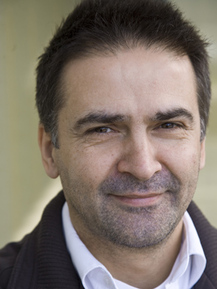 Bert Bredeweg合作论文数Informatics Institute, Faculty of Science, University of Amsterdam;Centre for Applied Research in Education, Amsterdam University of Applied Sciences76
 Floris Linnebank合作论文数29
 Anders Bouwer合作论文数University of Amsterdam25
 Wouter Gerardus Beek合作论文数Department of Computer Science, Vrije Universiteit Amsterdam;Triply19
 Jorge Gracia del Río合作论文数Departamento de Informática e Ingeniería de Sistemas, Universidad de Zaragoza19
 Paulo Salles合作论文数Institute of Biology, University of Brasilia15
 Esther Lozano合作论文数Ontology Engineering Group, Universidad Politécnica de Madrid15
 Michael Wissner合作论文数13
 Asunción Gómez Pérez合作论文数Ontology Engineering Group, Computer Science School, Universidad Politecnica de Madrid12
 René Bühling合作论文数Human Centered Multimedia, Augsburg University12
 Elisabeth André合作论文数Institute of Computer Science, Faculty of Applied Computer Science, University of Augsburg8
 Markus Haring合作论文数Geothermal Explorer Ltd7
 Oscar Corcho合作论文数Ontology Engineering Group, Departamento de Inteligencia Artificial, Universidad Politécnica de Madrid;LibrAIry_eu;DIH - AIR4S;LocaliData5
 Gregor Mehlmann合作论文数Universität Augsburg5e r bakker合作论文数4Michal Trna合作论文数4
 Tim Nuttle合作论文数Institute of Ecology, University of Jena4
 Andreas Zitek合作论文数Aus dem Pr. Hygienischen Institut Landsberg Warthe4
 R. A. A. Noble合作论文数Hull International Fisheries Institute;University of Hull;Hull International Fisheries Institute, University of Hull4Ana Luiza Rios Caldas合作论文数3
 Diego Collarana合作论文数Fraunhofer Institute for Intelligent Analysis and Information Systems3u milosevic合作论文数2c m van weelden合作论文数2Hylke Buisman合作论文数Artificial Intelligence Programme, University of Amsterdam2
 Eugenia Cioaca合作论文数2
 Christiana Th. Nicolaou合作论文数2
 Sander Latour合作论文数University of Amsterdam2Elena Nakova合作论文数2
 Emilia Varadinova合作论文数2
 Asuncion Gomez-Perez合作论文数2
 Yordan Ivanov Uzunov合作论文数2
 D. Mioduser合作论文数2Constantinos P. Constantinou合作论文数1
 Michael Neumann合作论文数1
 Rinke Hoekstra合作论文数Leibniz Center for Law, University of Amsterdam1
 Joost Breuker合作论文数Leibniz Center for Law, Facuty of Law, University of Amsterdam;Facuty of Psycholoy, University of Amsterdam1
 Nikolaus Bee合作论文数Augsburg University1
 Covaliov Silviu合作论文数1
 Petya Borisova合作论文数1Stefan Schmutz合作论文数Department of Hydrobiology, University of Agricultural Sciences1Dirk Bertels合作论文数1Carsten Van Weelden合作论文数1Doctoral Thesis合作论文数1
 Monica M. P. Resende合作论文数1Gisele M. Feltrini合作论文数1Jose Manuel Gomez合作论文数Dpto . CC . de los Materiales e Ing|Universidad Complutense de Madrid1
 Moshe Leiba合作论文数1




