Sowohl beim Ausbau erneuerbarer Energien als auch im Bereich der Elektromobilität hat sich die Bundesregierung ambitionierte Ziele gesetzt. Im Kontext der Energiewende soll der Anteil fluktuierender erneuerbarer Energien an der Stromerzeugung weiter deutlich steigen. Dies erfordert tendenziell eine erhöhte Vorhaltung von Regelleistung. Gleichzeitig sinkt die Stromerzeugung aus thermischen Kraftwerken, die bisher einen großen Teil der Regelleistung vorgehalten haben. Vor diesem Hintergrund wird untersucht, welche Rolle eine angenommene Flotte von 4,4 Millionen Elektrofahrzeugen im Jahr 2035 bei der Bereitstellung von Regelleistung in Deutschland spielen könnte. Dabei werden zwei verschiedene Szenarien des Kraftwerksparks sowie unterschiedliche Möglichkeiten der Bereitstellung von Regelleistung mit und ohne Rückspeisung elektrischer Energie von den Fahrzeugbatterien in das Stromnetz untersucht. Berechnungen mit einem hierfür weiterentwickelten, quellenoffenen Simulationsmodell zeigen, dass die Elektrofahrzeugflotte einen nennenswerten Beitrag zu einer kostengünstigen Regelleistungsvorhaltung leisten kann. Dies gilt auch dann, wenn keine Rückspeisung von den Fahrzeugbatterien in das Stromnetz möglich ist. Unter Basisannahmen fallen hingegen die Arbitrageaktivitäten am Großhandelsmarkt sehr gering aus. Auch die Systemkosteneinsparungen sind im Vergleich zu einem rein kostenoptimalen Laden der Fahrzeugbatterien relativ niedrig. Unter alternativen Annahmen zur Zusammensetzung des Kraftwerksparks und zu den Batterieabnutzungskosten kann es dagegen zu nennenswerten Arbitrageaktivitäten am Großhandelsmarkt, zu einer noch höheren Regelleistungsbereitstellung und zu wesentlich größeren Systemkosteneinsparungen kommen.
In Germany and beyond, various capacity mechanisms are currently being discussed with a view to improving the security of electricity supply. One of these mechanisms is a strategic reserve that retains generation capacity for use in times of critical supply shortage. We argue that strategic reserves have specific advantages compared to other capacity mechanisms in the context of the European energy transition. To date, however, the debate on capacity mechanisms has largely been restricted to national contexts. Against this background, we discuss the feasibility and potential benefits of coordinated cross-border strategic reserves to safeguard electricity supply and aid the energy transition in Germany and neighboring countries at large. Setting aside strategic reserve capacity which is deployed only in the event of extreme supply shortages could improve the security of electricity supply without distorting the EU’s internal electricity market. In addition, overall costs may decrease when reserve procurement and activation are coordinated among countries, particularly if combined with flow-based market coupling.
The German energy transition makes it necessary to increase flexibility in the electricity system. Different forms of power storage may play a part in this, yet there is competition with other options on the production or demand side. In the short term, the further expansion of electricity generation from fluctuating renewables will be possible in Germany without additional power storage facilities. In the longer term, however, storage requirements will depend strongly on specific circumstances and are therefore difficult to predict. A model-based analysis shows that requirements for power storage rise sharply when the share of renewable energies is very high, particularly if other potential sources of flexibility are less developed. If options such as flexible generation of electricity from biomass, the enhancement of demandside flexibility, or cross-border contributions to integrating renewable energies develop less favorably than is frequently assumed today, then additional electricity storage facilities will be required and economically beneficial in the long term. For this reason, supporting the development of power storage will be a useful component of a policy designed to safeguard the energy transition for the future. Policy-makers should aim for technological progress and cost reduction in power storage, primarily by means of continued and broadbased support for research and development. At the same time, it should enable a level playing field for competition among the flexibility options in the various areas of application, for example on the control reserve market. Die Energiewende erfordert eine hohere Flexibilitat im Stromsystem. Unterschiedliche Arten von Stromspeichern konnen hierzu beitragen, wobei sie in Konkurrenz zu anderen erzeugungs- und nachfrageseitigen Optionen stehen. Kurzfristig ist der weitere Ausbau der Stromerzeugung aus volatilen erneuerbaren Energien in Deutschland ohne groseren Zubau von Stromspeichern moglich. Der langerfristige Speicherbedarf ist jedoch stark kontextabhangig und deshalb schwer prognostizierbar. Eine modellbasierte Analyse zeigt, dass der Stromspeicherbedarf bei sehr hohen Anteilen erneuerbarer Energien stark ansteigt, insbesondere wenn andere Flexibilitatspotenziale nur in geringerem Mase erschlossen werden. Falls Optionen wie die bedarfsgerechte Verstromung von Biomasse, die Flexibilisierung der Nachfrageseite oder die Beitrage des Auslands zur Integration erneuerbarer Energien sich ungunstiger entwickeln als heute haufig angenommen, sind zusatzliche Stromspeicher langerfristig erforderlich und wirtschaftlich vorteilhaft. Daher ist die Unterstutzung der Entwicklung von Stromspeichern ein sinnvolles Element einer vorsorgenden Politik zur Absicherung der Energiewende. Die Politik sollte vor allem durch eine weiterhin breit angelegte Forschungsforderung auf technologische Fortschritte und Kostensenkungen bei Stromspeichern hinwirken. Gleichzeitig sollte ein unverzerrter Wettbewerb von Flexibilitatsoptionen in verschiedenen Anwendungsbereichen, wie zum Beispiel im Regelleistungsmarkt, ermoglicht werden.
The German energy transition makes it necessary to increase flexibility in the electricity system. Different forms of power storage may play a part in this, yet there is competition with other options on the production or demand side. In the short term, the further expansion of electricity generation from fluctuating renewables will be possible in Germany without additional power storage facilities. In the longer term, however, storage requirements will depend strongly on specific circumstances and are therefore difficult to predict. A model-based analysis shows that requirements for power storage rise sharply when the share of renewable energies is very high, particularly if other potential sources of flexibility are less developed. If options such as flexible generation of electricity from biomass, the enhancement of demand-side flexibility, or crossborder contributions to integrating renewable energies develop less favorably than is frequently assumed today, then additional electricity storage facilities will be required and economically beneficial in the long term. For this reason, supporting the development of power storage will be a useful component of a policy designed to safeguard the energy transition for the future. Policy-makers should aim for technological progress and cost reduction in power storage, primarily by means of continued and broad-based support for research and development. At the same time, policy should enable a level playing field for competition among the flexibility options in the various areas of application, for example on the control reserve market.
Kurz vor der Bundestagswahl 2013 schwimmt Deutschland in den Augen der Okonomen auf einer Welle der Euphorie: Kaum ein anderes Euroland hat die Finanz- und Schuldenkrise so gut gemeistert. Das deutsche Bruttoinlandsprodukt ist seit 2009 um mehr als acht Prozent gewachsen, es entstanden rund 1,2 Millionen neue Arbeitsplatze. Die offentlichen Haushalte wurden konsolidiert, im Jahr 2012 gab es einen fiskalischen Uberschuss von 0,2 Prozent des Bruttoinlandsprodukts. Eine glanzende Bilanz fur ein Land, das vor zehn Jahren noch als der kranke Mann Europas galt - aber auch eine einseitige. Setzt man andere Vergleichsgrosen an, trubt sich das Bild erheblich ein: Seit 1999 hat Deutschland im Vergleich zum Euroraum ein niedrigeres Wirtschaftswachstum erzielt. Die Reallohne sind seit 1999 kaum gestiegen, und die realen Konsumausgaben haben im Eurozonen-Durchschnitt deutlich kraftiger zugenommen als in Deutschland. Stark geschrumpft ist das deutsche Staatsvermogen: Lag es 1999 noch bei etwa 20 Prozent des Bruttoinlandsprodukts, so ist es bis 2011 auf 0,5 Prozent des Bruttoinlandsprodukts zusammengeschmolzen und steht damit fur kunftige Generationen nicht mehr zur Verfugung. In vielen Bereichen ist Deutschland nicht wirklich vorangekommen, in einigen deutlich hinter andere Lander zuruckgefallen. Diese Ruckstande sind durch die zuletzt gute Entwicklung nicht wieder aufgeholt worden.
Shortly before the parliamentary election in 2013, Germany is riding on a wave of euphoria: hardly any other euro country has weathered the financial and debt crisis so well. Since 2009, GDP has grown by over eight percent and 1.2 million new jobs have been created. Public finances were consolidated and, in 2012, there was a fiscal surplus of 0.2 percent of GDP. An impressive financial position indeed for a country that, only ten years ago, was considered the "sick man of Europe." But it is also a deceptive one. If one substitutes these for other comparative figures, then this image is seriously tarnished. Since 1999, Germany has achieved lower economic growth than the rest of the euro area. Real wages have barely increased since 1999 and real consumer spending has grown much more in the euro area on average than in Germany. In addition, German net public assets have contracted significantly. In 1999, net state assets were about 20 percent of GDP and, by 2011, they had declined to 0.5 percent of GDP and are, therefore, no longer available for future generations. In many areas, Germany has not really progressed at all and in some areas it has fallen significantly behind other countries. These arrears have not been balanced out by recent positive developments.
The discussion of the support for renewable energy must consider the distributional impact of cost allocation. The public is sensitive to social imbalances caused by rising power prices that might jeopardize the acceptance of energy transformation. By the end of 2012 about 19 percent of German power is produced with renewables other than hydropower. As a result, German consumers will pay for global learning investment through their electricity bill. We explore the distributional implications for households using household micro data. In 2013 households will allocate 2.5% of consumption expenditure to electricity. The increase to previous years was much debated in fall of 2012, but is not without precedent. In the mid-1980s the share was 2.3%. The effect is more significant for poor households, which allocate 4.5% of expenditure for power. We propose three options how to address this distributional impact: adjusted transfers, reduced electricity taxes, and, most effectively, support to improve energy efficiency.
 Hans-Joachim Ziesing合作论文数28
 Claudia Kemfert合作论文数Department of Energy, Transportation and Environment, German Institute for Economic Research24
 Wolf-Peter Schill合作论文数Department of Energy, Transportation, Environment, DIW Berlin21
 Karsten Neuhoff合作论文数German Institute for Economic Research16
 Joachim Schleich合作论文数Department Management & Technology, Grenoble Ecole de Management11dipl volkswirtin heilwig rieke合作论文数10
 Barbara Schlomann合作论文数Fraunhofer Institute for Systems and Innovation Research10
 Wolfgang Eichhammer合作论文数Fraunhofer Institute for Systems and Innovation Research10dipl physikerin anja neubert合作论文数9
 Rainer Walz合作论文数9
 Eberhard Prof. Dr. Jochem合作论文数8michael kohlhaas合作论文数6
 Thure Traber合作论文数6felix groba合作论文数5Alexander Zerrahn合作论文数German Institute for Economic Research (DIW Berlin), Mohrenstraße 58, 10117 Berlin, Germany5Jürgen Blazejczak合作论文数5antje vogelsperl合作论文数5
 Stefan Bach合作论文数Deutsches Institut für Wirtschaftsforschung5
 Dietmar Edler合作论文数5Frauke G. Braun合作论文数4andreas puttner合作论文数4dipl volksw michael kohlhaas合作论文数4dipl volksw katrin ostertag合作论文数4
 Barbara Breitschopf合作论文数4Uwe Kunert合作论文数German Institute for Economic Research4Katrin Ostertag合作论文数4b farkas合作论文数3
 Bjorn Bremer合作论文数Max Planck Inst Study Soc, Cologne, Germany3
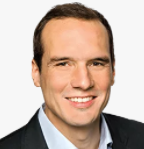 Sebastian Schwenen合作论文数School of Management, Technische Universität München3
 Heike Link合作论文数Tel.: +49 30 89789312;fax: +49 30 89789113;Tel.: +49 30 89789312; fax: +49 30 897891133
 Kerstin Bernoth合作论文数Indiana University, University of, Bonn3
 Ole Langniß合作论文数3
 Martin Gornig合作论文数3Ulrike Lehr合作论文数3C. Katharina Spieß合作论文数3
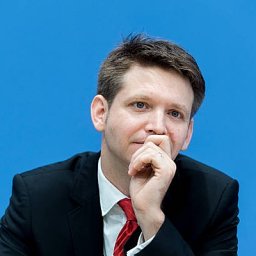 Ferdinand Fichtner合作论文数3
 Uwe Leprich合作论文数3Friedrich Kunz合作论文数3janine schmidt合作论文数2
 Martin Beznoska合作论文数2guido baldi合作论文数Dept Econ, Univ Bern2Clemens Gerbaulet合作论文数2
 Christian Von Hirschhausen合作论文数Workgroup for Economic and Infrastructure
Policy, Berlin University of Technology2Felix Christian Matthes合作论文数2
Christian Von Hirschhausen合作论文数Workgroup for Economic and Infrastructure
Policy, Berlin University of Technology2Felix Christian Matthes合作论文数2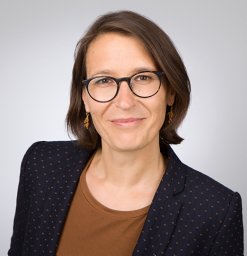 Karoline S. Rogge合作论文数Fraunhofer Institute Systems and Innovation Research2
 Marian Klobasa合作论文数2
 Martin Cames合作论文数Institute for Applied Ecology2
 Katja Schumacher合作论文数Environmental Energy;Technologies Division2manfred horn合作论文数1




