2,5-Bisvinyl-1,4-benzoquinones 1 and 2-vinyl-1,4-benzoquinones 2 substituted with aryl or ester end groups have been synthesized. The 2,5-bisstyryl-1,4-benzoquinones 1 (R=phenyl, p-tolyl, o-tolyl) crystallize with a 7 Angstrom-stacking axis. But only for the o-tolyl derivative the contacts between the vinyl groups are close enough to allow a four-center type photopolymerization. The ester derivative 1 (R=COOEt) has a layer structure and can be photooligomerized in the crystal. The generated cyclobutane subgroups have twofold symmetry. The vinylquinones 2 (R=aryl) may be dimerized photochemically in the crystal at the vinyl groups to centrosymmetric cyclobutanes. Crystals with 4 Angstrom stacking axis are also photoreactive.
The methoxy groups of the title compounds 3,3,6,6-tetramethoxy-1,4-distyrylcyclohexa-1,4-diene, C 26 H 28 O 4 (I), 1,4-bis[2-(4-chlorophenyl)vinyl]-3,3,6,6-tetramethoxycyclohexa-1,4-diene, C 26 H 26 Cl 2 O 4 (II), and 3,3,6,6-tetramethoxy-1,4-bis[2-(4-methylphenyl)vinyl]cyclohexa-1,4-diene, C 28 H 32 O 4 (III), adopt either an anti-anti or a gauche-anti orientation. In the anti-anti conformation the O-C-O bond angle is reduced to 99.2-99.3 o because of intramolecular repulsive interactions between the methyl groups. The stacking of the molecules in the crystal is defined by an interlocking pattern
The 2,5-bis(2-arylvinyl)-1,4-benzoquinones 1a-1e are formed from hydrolysis of their corresponding ketals 5 which are generated by anodic oxidation of the corresponding 1,4-dimethoxybenzene derivatives 4. The crystal structures of the quinone compounds 1a, 1d and 1e have been determined by X-ray analyses. The bond lengths of the quinone system are influenced by polar resonance structures. An alpha-type packing mode is observed for the three crystal structures of compounds 1. The vinylic double bonds have short intermolecular distances (1a: 4.417(5), 1d: 3.653(2), 1e: 4.224(5) angstrom). Only the crystals of 1d with the shortest contacts are photoreactive.
The 2,5-bis(2-arylvinyl)-1,4-benzoquinones 1a-1e are formed from hydrolysis of their corresponding ketals 5 which are generated by anodic oxidation of the corresponding 1,4-dimethoxybenzene derivatives 4. The crystal structures of the quinone compounds 1a, 1d and 1e have been determined by X-ray analyses. The bond lengths of the quinone system are influenced by polar resonance structures. An α-type packing mode is observed for the three crystal structures of compounds 1. The vinylic double bonds have short intermolecular distances (1a: 4.417(5), 1d: 3.653(2), 1e: 4.224(5) Å). Only the crystals of 1d with the shortest contacts are photoreactive
The preparation of two 1-thia-6-azacyclodeca-3,8-diynes is reported together with their spectroscopic and structural properties (X-ray structure).
The preparation of four 1,6-diazacyclodeca-3,8-diynes is reported together with spectroscopic and structural properties (X-ray structure).
AbstractAcetylation of the title extract leads to the seven novel crystalline acetates (I)‐(V) (space group P212121 with Z=4) and three known catalpol derivatives.
AbstractAus dem sodaalkalischen Extrakt von Picrorhiza kurrooa wurden zehn Verbindungen als Acetate kristallin isoliert. Während das Pentaacetyl‐6′‐cinnamoylcatalpol, Hexaacetyl‐6‐vanilloylcatalpol und Hexaacetylcatalpol direkt mit authentischen Proben identifiziert werden konnten, wurden die Strukturen der Verbindungen 1–6 und 8 durch Röntgenstrukturanalyse bzw. spektroskopisch ermittelt. Die acetylierten Cucurbitacin‐glucoside 3–5 weisen gegenüber den natürlichen Cucurbitacinen eine verkürzte Seitenkette auf. Da sie im Neutralextrakt chromatographisch nicht nachgewiesen werden konnten, müssen 3–5 erst bei Extraktion bzw. Aufarbeitung entstehen und Artefakte darstellen. Als einziges acetyliertes C30‐Cucurbitacin‐glucosid konnte (20R)‐3β,16α,20,25‐Tetrahydroxy‐2β‐(β‐D‐tetraacetylglucopyranosyloxy)‐10α‐cucurbit‐5‐en‐22‐on (8a) kristallin erhalten werden.
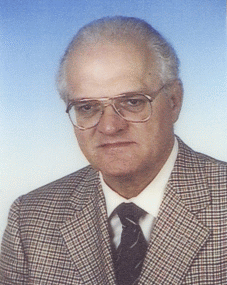 Hermann Irngartinger合作论文数University of Heidelberg Institute of Organic Chemistry9
 Gerhard Baum合作论文数3Joachim Ritter合作论文数2
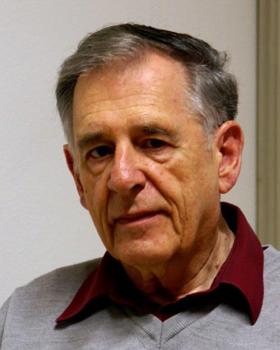 R. Gleiter合作论文数Institute of Organic Chemistry, Fakultät für Chemie und Geowissenschaften, Universität Heidelberg2Klaus Weinges合作论文数2Hj Ziegler合作论文数1K Neuberger合作论文数1
 Dieter Fenske合作论文数Sun-Yat-sen-University;University of Oxford1Birgit Stadler合作论文数1
 Hartmut Schick合作论文数School of Arts Sciences, Faculty of History and the Arts, Ludwig-Maximilians-Universitat Munchen1Rüdiger Herpich合作论文数1Karl Neuberger合作论文数1Hans Jürgen Ziegler合作论文数1




