The identification and quantification of prey ingested is a limiting factor in trophic ecology studies and is fundamental for assessing the impact of a predator on prey populations. Vendace (Coregonus albula) and whitefish (C. lavaretus) are two congeneric species, which are commonly preyed on by Baltic ringed seals (Pusa hispida). The otoliths of these two species are, however, very similar and distinguishing between them in the seal diet using visual inspection has so far been challenging. Here, otolith shape outline analyses were used in combination with machine learning techniques to discriminate between eroded vendace and whitefish otoliths from ringed seal diet samples. An experiment of in vitro digestion of the otoliths was performed to train a machine learning model. Our model is able to self-assign known digested otoliths back to their species of origin with >90% accuracy. Furthermore, 89% (N = 690) of the otoliths collected from digestive tract samples could be successfully assigned to species level, i.e. vendace or whitefish. This method is readily applicable for improved understanding of ringed seal feeding habits and predator-prey interactions, as well as large-scale applications to generate seal-predation matrix inputs for stock assessments of vendace and whitefish. Further development of the machine learning techniques to discriminate between prey species in seal and other piscivorous diets is strongly encouraged.
Growth and maximum age are two key parameters that inform resilience of fish populations to exploitation. Existing information on those for greater weever inhabiting the eastern North Sea is based on the analysis of whole otoliths. Here, we present a reanalysis using sectioned otoliths. The results reveal a different growth pattern and a higher maximum age than that previously reported. The higher maximum age makes greater weever populations more vulnerable to exploitation. Such information can serve as a basis for the estimation of the growth curve that can be used for future assessment of the species.
Det råder kunskapsbrist om storskarvens ekologi i svenska akvatiska ekosystem och hur fiskpopulationer och ekosystem påverkas av storskarv i olika områden. Framförallt behövs bättre underlag om skarvarnas födoval, födosöksbeteende, antal och migrationer för att kunna bedöma påverkan på fiskpopulationer och ekosystem. Grundläggande underlag om storskarvens biologi, för bättre förståelse av dess ekologiska roll, bör samlas in genom standardiserad och internationellt samordnad övervakning. Akvatiska ekosystem är komplexa och sammanlänkade, med flera arter och ekologiska processer som samverkar med varandra. Fiskpopulationer påverkas även av en rad andra faktorer än predation från storskarv, både biologiska och icke-biologiska. Det kan därför vara svårt att separera effekter från storskarv från annan påverkan. Att dra generella slutsatser om storskarvens påverkan på olika fiskpopulationer i olika områden och under olika tidsperioder är därför svårt. Generellt verkar påverkan från storskarv på fiskpopulationer vara liten i friska ekosystem. Dock verkar skarvpredation kunna ha negativ påverkan på specifika fiskpopulationer, i synnerhet svaga populationer som även påverkas negativt av andra faktorer. För att förbättra kunskapsläget är det viktigt att förvaltningsåtgärder som syftar till att minska storskarvens påverkan på fiskpopulationer följs upp vetenskapligt. Dessa förvaltningsåtgärder bör om möjligt samordnas med andra åtgärder för att öka förståelsen av vilka påverkansfaktorer som har störst betydelse för olika fiskpopulationer.
To supplement catch and effort regulations with the purpose to rebuild the cod (Gadus morhua) stock in Kattegat, Sweden and Denmark established a large (426 km(2)) year-round no-take zone (NTZ) surrounded by partially protected areas (PPAs) in 2009. The purpose of these spatial regulations was to prohibit cod fishing on the spawning grounds and to displace fisheries bycatch of cod from areas where mature cod aggregate in the Kattegat. The aim of this study is to evaluate the effects of the established NTZ and PPAs on the local fish assemblage, including cod. Based on a spatially high-resolution bottom trawl survey in the Kattegat (covering 2008-2021), multivariate analyses revealed significant shifts in the fish assemblage. A closer analysis indicated that six to seven fish species, including cod increased in the NTZ relative to control areas depending on if abundance or biomass was used as dependent variable. Univariate analysis showed that two flatfish species dab (Limanda limanda) and lemon sole (Microstomus kitt), and Norway lobster (Nephrops norvegicus) significantly increased in biomass in the NTZ, and turbot (Scophthalmus maximus) in the PPA relative to the control areas. These results suggest that the NTZ protected even relatively mobile species in an open sea system, such as the Kattegat. However, neither cod abundance nor biomass showed a significant increase as an effect of the NTZ and PPA despite two relatively strong year classes in 2012 and 2013, which possibly would have helped the recovery of the cod stock. As assessed by the International Council for the Exploration of the Sea in 2022, Kattegat cod continuously suffer from being severely overfished with low recruitment, and high discard rates in the mixed N. norvegicus fishery, is considered the major driver behind the reinforced depletion of the stock.
Knowledge of the movement patterns and area utilisation of commercially important fish stocks is critical to management. The Eastern Baltic cod Gadus morhua, one of the most commercially and ecologically important stocks in the Baltic Sea, is currently one of the most severely impacted fish stocks in Europe. During the last 2 decades, this stock has experienced drastic decreases in population size, distributional range, individual growth and body condition, all of which may have affected the movements between different areas of the Baltic Sea. In this study, we investigated the seasonal movement patterns of Eastern Baltic cod by re-analysing historical tagging data collected by the countries surrounding the Baltic Sea (1955-1988) and compared historical patterns with contemporary data from a recent international tagging experiment (2016-2019). Our re-analyses of historical data showed the presence of different movement behaviours, i.e. resident or seasonally migratory, with larger distances moved by cod released in the northern and central Baltic areas compared to cod released in the southern Baltic areas. Furthermore, trends from the recent tagging experiment indicate a persistent resident strategy in the southern Baltic area. These findings present additional information on general movement patterns and area utilisation of Eastern Baltic cod that could inform future management actions and aid stock recovery.
The assessment for the Gulf of Bothnia herring (SD 3031) in 2019 was not accepted by the Advice Drafting Group and was changed from category 1 to 3. The assessment was not accepted based on the poor retrospective diagnostics where the Mohn’s rho values were above 20% for SSB, F and recruitment. The aim for the Benchmark was to evaluate a new model, Stock Synthesis (SS3) as a candidate for the assessment of Gulf of Bothnia Herring SD30–31 in order to minimize the retrospective pattern previously observed. Following the path of the Benchmark data related issues were revealed. This led to a situation that the benchmark was prolonged one year in order to correct the data related issues. Apart from a misspecification in the model about how the trapnet index was used (abundance index vs. biomass index), the data problem had been related to the acoustic survey. The acoustic survey index used in the assessment was thoroughly examined by the Baltic international fish survey working group (WGBIFS) in a meeting in December 2020. A number of model runs (six prior to meeting, and an additional 16 during the benchmark) were conducted for evaluation at this benchmark. The analysis presented extensive diagnostic tests including the standard ICES criterion related to retrospective patterns. This was considered an enhancement over using one method for accepting or rejecting an assessment. It was noted that the final retrospective pattern had low and acceptable values of Mohn’s rho. In general, the benchmark using the stock synthesis platform with the settings specified during the benchmark are considered acceptable for assessment and advice and have features that should ensure stability as new data are added (e.g. selectivity is assumed to be constant over time).
Fisken i havet ar en resurs som ror sig fritt over nationella granser. EU har darfor en gemensam fiskeripolitik (GFP). Manga arter som ar viktiga for Sverige regleras inte i GFP och forvaltas darfo ...
Pa uppdrag av Havs- och vattenmyndigheten (HaV), som har ansvarat for regeringsuppdraget selektivt fiske, upprattade SLU Aqua ett Sekretariat for selektivt fiske mellan 2014 och 2017. Sekretariatets huvuduppgift har varit att samla in ideer tillsammans med naringen, for att stimulera utvecklingen av selektiva fiskemetoder i syfte att minska mangden oonskad fangst. Naringens initiativ och engagemang har varit helt avgorande for en framgangsrik utveckling av nya ideer. Under projektperioden har sekretariatet tillsammans med naringen drivit 34 projekt inom selektivt fiske. Samtliga projekt ar vetenskapligt utvarderade och redovisade i arliga verksamhetsrapporter. I denna syntesrapport sammanstalls resultaten fran projekt med liknande problemstallningar, malarter och fiskemetoder, till olika fisken. De olika fiskena ar uppdelade mellan aktiva och passiva redskap. I sammanstallningen har alla projekten bedomts efter en 5-gradig skala som sammanfattar resultatet av den vetenskapliga utvarderingen, redskapets tillampbarhet i verkligt fiske samt behov av forvaltningsatgarder och/eller andra incitament for att redskapen verkligen skall komma till bred anvandning i fisket.
The ICES Baltic Fisheries Assessment Working Group (WGBFAS) met 19-26 April 2017(Chair: Tomas Grohsler, Germany and Co-chair: Michele Casini, Sweden), with 41 participants and 9 countries represent ...
Monotonous size selection curves have traditionally been sufficient to describe the size selection in the aft end of a bottom trawl. Such modelling is a good approximation when the size selective system consists of a single selective device. However, in some fisheries the demands for species and size selectivity have motivated the development of selective systems in trawl fisheries that utilize more than one selective device simultaneously. An example can be found in the Swedish demersal trawl fishery targeting Norway lobster (Nephrops norvegicus), which simultaneously aims at avoiding catches of Atlantic cod (Gadhus morhua). In this fishery, the selective system consists of a Nordmøre type sorting grid followed by a size selective square mesh codend. The size selection curve for this system has a characteristic bell-shaped curvature, which cannot be sufficiently described by a monotonous selection curve. An approach that can handle a bell shaped curvature is to use a more flexible empirical size selection model. However, such models primarily use a curve fitting procedure, and do not allow the possibility to investigate the contribution of the individual parts of the selection system. Therefore, we choose to use a structural-based model that directly models the contributions of the individual selectivity devices to the overall performance of the system. We demonstrate that this approach can appropriately describe the experimental size selection data for both Nephrops and cod in a system composed of a sorting grid followed by a size selective codend. Furthermore, this approach provides a direct quantification of the selective processes of the individual parts of the system to the overall size selection in the fishing gear. In addition, we demonstrate how this approach can provide fisheries managers with a new tool when trying to develop more sustainable fisheries through improving fishing gear size and species selectivity.
The inclusion of biological and ecological aspects in the assessment of fish population status is one of the bases for an ecosystem-based fisheries management. During the past two decades the Eastern Baltic cod has experienced a drastic reduction in growth and body condition that may have affected its survival. We used results from published experimental literature linking cod condition to starvation and mortality, to estimate the annual proportion of cod close to the lethal condition level in the Eastern Baltic cod stock. Thereafter we applied these results to adjust the natural mortality (M) assumed in the analytical stock assessment model. The results in terms of Spawning Stock Biomass (SSB), Fishing mortality (F) and Recruitment (R) in the final year from the stock assessment using M values adjusted for low condition were up to 40% different compared with the assessment assuming a constant M = 0.2. This method could be used for adjusting natural mortalities for other cod stocks where changes in condition are observed.
The European Common Fisheries Policy has in its 2013 reform increased in complexity, such as a call for coherence with the Marine Strategy Framework Directive and a landing obligation, posing new requirements and challenges to managers, scientists and the fishing industry. Therefore, re-evaluations of current practice are important as a basis for management actions. The Swedish fishery for Norway lobster (Nephrops norvegicus) in the Kattegat–Skagerrak area provides an interesting case study of relevance to emerging policies. Sprung from an unbalance in available fish- and Nephrops quotas and an ambition to protect coastal areas, the current fishery has been directed towards three separate fisheries (mixed trawling, directed trawling using a sorting grid and creeling). Studying direct and indirect effects from alternative Swedish quota allocations among gear types is therefore interesting. Accordingly, a screening study was conducted, taking into consideration area-gear interactions in catch rates, to compare the three different fisheries regarding quantified pressures on the target species, the by-catch species, and on the seafloor, as well as to qualitatively discuss social and economic dimensions. In the next step, alternative quota allocations were studied. In Swedish fisheries, we show that creeling offers a substantial reduction of fishing mortality of both undersized Nephrops and fish and a reduced seafloor pressure per landed kilo of Nephrops. Given that the fishing areas in many cases may be interchangeable between gears, allocating a larger quota share to creels in the Swedish fishery would therefore contribute to the integration of fisheries- and environmental management as called for in the new policies.
Under hosten/vintern 2015/2016 genomforde sekretariatet for selektivt fiske,vid institutionen for akvatiska resurser (SLU-Aqua) tillsammans med svenskt yrkesfiske, nio projekt inom ramen for regeringsuppdraget selektivt fiske. Den overgripande malsattningen for alla projekt inom selektivt fiske ar att underlatta inforandet av den landningsskyldighet som beslutats i och med reformen av EU:s gemensamma fiskeripolitik. Projekten syftade darfor till att minska oonskad fangst i svenskt fiske antingen genom att utveckla befintliga fiskemetoder (framforallt inom tralfiske) eller genom att utveckla alternativa fiskemetoder (framst passiva redskap sasom fallor och burar). 1. Kombinationsrist for utsortering av fisk och sma rakor (HaV Dnr 1718-15) 2. ”Selektivitet anpassad for sma raktralare” (HaV Dnr 1488-16) 3. Rakburar” (HaV Dnr 1892-15) 4. ”Vidareutveckling av storleksselektiv kraftrist Halland” (HaV Dnr 1717-15) 5. ”Tral for fangst av plattfisk och stor torsk-rist/stormaskig tral” (HaV Dnr 1716-15) 6. Forbattrad selektivitet i torsktralar i Ostersjon (HaV Dnr 2384-15) 7. Utsortering av grasej i pelagiska tralar (HaV Dnr 1715-15) 8. Selektiv laxfalla (HaV Dnr 1713-15) 9. Multifunktionsburar (HaV Dnr 1712-15) Projekten genomfordes genom att forslag togs fram gemensamt av SLU-Aqua och naringen utifran fiskets uttryckliga behov och ideer. Projektforslagen prioriterades och beslutades av en sarskild styrgrupp pa Havs- och vattenmyndigheten (HaV), varefter SLU-Aqua upphandlade utforare och agerade projektledare. Vinnande part ansvarade sedan for att anskaffa och utveckla respektive projektide enligt projektplanen med stod fran sekretariatet. Projekten avslutades genom en vetenskaplig utvardering dar personal fran SLUAqua deltog i ett experimentellt fiske dar det nyutvecklade redskapets fangstegenskaper dokumenterades och analyserades under kommersiella fiskeforhallanden.
13 One of the most effective ways to alter catch and length compositions in trawls is to change the 14 selectivity of the gear, either by adjusting the mesh size or the addition of selective devices such as 15 sorting grids and selective netting panels. These changes are often introduced into the fishery in a top 16 down manner whereby fishermen are forced to comply with specific legislation. However, fishermen 17 have also introduced gear modifications that have contributed to improving species selectivity in trawls. 18 One of the simplest and most effective modifications that came from industry was the development and 19 introduction of twin and multi-rig trawls. Here we analyse catch rates of four target species, Norway 20 lobster (Nephrops norvegicus), cod (Gadus morhua), plaice (Pleuronectes platessa) and haddock 21 (Melanogrammus aeglefinus), to try and understand how the above mentioned change in gear design has 22 altered catch rates within the Danish demersal trawl fishery over the last 16 years (1997-2012). Results 23 showed that catch rates of Nephrops in twin trawls were significantly higher (1.89-2.03) than those in 24 single trawls. For cod, haddock and plaice there was no significant effect of gear type. The results are 25 discussed in relation to the CFP reform and the increasing importance of industry introduced gear 26 modifications. 27
In order to maintain a viable inshore fishing industry, it is important to limit the incidence of seal-inflicted damage to static fishing gear and additional catch losses. Studies in the Baltic Sea have shown that this could be achieved by implementing alternative fishing methods, e.g. by using fish pots instead of lines or gillnets. However, as in net and line fisheries, a pot fishery could also result in bycatch of seals. In order to prevent these bycatches, pot entrances were equipped with seal exclusion devices (SEDs) of various sizes and shapes. A field study was conducted to investigate what effect different types of SEDs had on the bycatch of seals as well as on the pot's catchability. When pots where equipped with SEDs the bycatch of seals was reduced to zero without negatively affecting the pot's catchability. The shape and size of the entrance did have a significant effect on the pot's catchability and the size of the fish. Using symmetrical oval shaped entrances along with larger rectangular entrances divided into two smaller openings increased the pot's catchability.
The ICES Baltic Fisheries Assessment Working Group (WGBFAS) met 14-21 April 2015 (Chair: Mare Storr-Paulsen, Denmark), with 28 participants and 9 countries represented. The objective of WGBFAS was ...
The ICES Benchmark Workshop on Baltic Cod Stocks (WKBALTCOD), chaired by External Chair Jean-Jacques Maguire, Canada and ICES Chair Marie Storr-Paulsen, Denmark, and attended by two invited externa ...
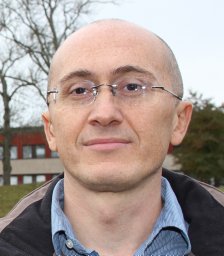 Michele Casini合作论文数Swedish Board of Fisheries;Institute of Marine Research13
 Joakim Hjelm合作论文数Swedish Board of Fisheries;Institute of Marine Research;Swedish Board of Fisheries, Institute of Marine Research13
 Noel M A Holmgren合作论文数11
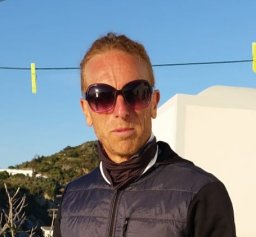 Massimiliano Cardinale合作论文数ENEA, Italian Agency for New Technology, Energy and Environment10
 Margit Eero合作论文数10
 Uwe Krumme合作论文数10Georgs Kornilovs合作论文数9Jan Horbowy合作论文数Sea Fisheries Institute;Dept . of Fishery Resources;Dept . of Fishery Resources, Sea Fisheries Institute9Jukka Pönni合作论文数8Bergenius Mikaela A J合作论文数8Marie Storr-Paulsen合作论文数8Niclas Norrström合作论文数Department of Life Sciences;University of Skovde;Department of Life Sciences, University of Skovde8anna luzenczyk合作论文数7Jari Raitaniemi合作论文数7Olavi Kaljuste合作论文数7pavel gasyukov合作论文数6Rainer Oeberst合作论文数6
 Tomas Grohsler合作论文数6
 Jordan Feekings合作论文数National Institute of Aquatic Resources, Technical University of Denmark6
 Lennart Persson合作论文数Department of Ecology and Environmental Sciences, Umea University6Casper Willestofte Berg合作论文数National Institute of Aquatic Resources, Technical University of Denmark6Tiit Raid合作论文数Estonian Marine Institute, University of Tartu Marja6
 Harry Vincent Strehlow合作论文数6Mats Ulmestrand合作论文数6
 Valerio Bartolino合作论文数6Sven Stoetera合作论文数5stanislovas jonusas合作论文数5Katja Ringdahl合作论文数5
 Alessandro Orio合作论文数Dept Aquat Resources, Swedish Univ Agr Sci5
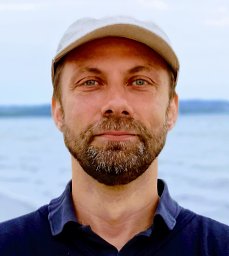 Anders Nielsen合作论文数Natl Inst Aquat Resources, Tech Univ Denmark5Jesper Boje合作论文数5
 Andreas Sundelof合作论文数Department of Marine Ecology, University of Gothenburg5Didzis Ustups合作论文数5
 Maris Plikshs合作论文数Latvian Fisheries Research Institute5Yvonne Walther合作论文数4anastasiia karpushevskaia合作论文数4igor karpushevskiy合作论文数4Henrik Mosegaard合作论文数4
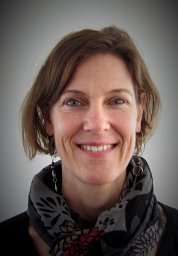 Karin Hussy合作论文数Natl Inst Aquat Resources, Tech Univ Denmark4
 Juan Carlos Molinero合作论文数Institut de Recherche Pour le Développement4Henrik Degel合作论文数4michael i andersen合作论文数3
 Monica Mion合作论文数3
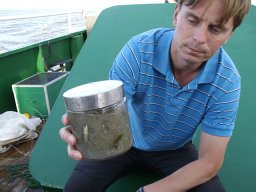 T. Arula合作论文数Estonian Marine Institute, University of Tartu3
 Stefan Neuenfeldt合作论文数Technical University of Denmark;National Institute of Aquatic Resources;National Institute of Aquatic Resources, Technical University of Denmark3Verena M. Trenkel合作论文数3
 Andrea Belgrano合作论文数National Center for Genome Resources3
 Sara Konigson合作论文数Institute of Coastal Research, Swedish Board of Fisheries3
 Daniel Valentinsson合作论文数3




