Schon in den 1990er Jahren sparte künstliche Intelligenz der Industrie Geld und der Forschung Nerven. Der Autor des ersten Lehrbuchs zu neuronalen Netzen in der Chemie zeigt: Mit acht Inhaltsstoffen von Olivenöl lässt sich eine Karte Italiens zeichnen.
This paper gives an overview of the lectures and posters presented at the 8th Autumn School in Chemoinformatics held in Nara, Japan on 28th - 30th November 2023. The topics ranged from the study of chemical reactions through drug design and the use of Chemical Language Models and electronic structure informatics to the modeling of materials. In addition, a brief overview of the 50 years of work in chemoinformatics by Johann Gasteiger is given with an emphasis on the essential decisions during his scientific career.
We report the main conclusions of the first Chemoinformatics and Artificial Intelligence Colloquium, Mexico City, June 15-17, 2022. Fifteen lectures were presented during a virtual public event with speakers from industry, academia, and non-for-profit organizations. Twelve hundred and ninety students and academics from more than 60 countries. During the meeting, applications, challenges, and opportunities in drug discovery, de novo drug design, ADME-Tox (absorption, distribution, metabolism, excretion and toxicity) property predictions, organic chemistry, peptides, and antibiotic resistance were discussed. The program along with the recordings of all sessions are freely available at https://www.difacquim.com/english/events/2022-colloquium/
Aim: This letter investigates the role of radial distribution function-based descriptors for in silico design of new drugs. Methodology: The multiple linear regression models for HIV-1 protease and its complexes with a series of inhibitors were constructed. A detailed analysis of major atomic contributions to the radial distribution function descriptor weighted by the number of valence shell electrons identified residues Arg8, Asp29 and residues of the catalytic triad as crucial for the correlation with the inhibition constant, together with residues Asp30 and Ile50, whose mutations are known to cause an emergence of drug resistant variants. Conclusion: This study demonstrates an easy and fast assessment of the activity of potential drugs and the derivation of structural information of their complexes with the receptor or enzyme.
Chemists have to a large extent gained their knowledge by doing experiments and thus gather data. By putting various data together and then analyzing them, chemists have fostered their understanding of chemistry. Since the 1960s, computer methods have been developed to perform this process from data to information to knowledge. Simultaneously, methods were developed for assisting chemists in solving their fundamental questions such as the prediction of chemical, physical, or biological properties, the design of organic syntheses, and the elucidation of the structure of molecules. This eventually led to a discipline of its own: chemoinformatics. Chemoinformatics has found important applications in the fields of drug discovery, analytical chemistry, organic chemistry, agrichemical research, food science, regulatory science, material science, and process control. From its inception, chemoinformatics has utilized methods from artificial intelligence, an approach that has recently gained more momentum.
The achievements of Professor Kimito Funatsu for the development of chemoinformatics in Japan are briefly summarized. Furthermore, some aspects of the collaboration of this author with Kimito Funatsu are discussed.
The achievements of Professor Kimito Funatsu for the development of chemoinformatics in Japan are briefly summarized Furthermore, some aspects of the collaboration of this author with Kimito Funatsu are discussed.
Background: Potency is the broadest available biological activity data type. In turn, Ligand Efficiency (LE) is a molecular descriptor that probes the ratio of potency vs Heavy Atom Count (HAC), which emphasizes low HAC more than potency and thus has drawbacks as an estimator of drug candidates. The objective was to design a novel transform to probe potency and HAC interaction in which potency and HAC would be balanced more evenly. Methods: In this study, potency data of ChEMBL, PubChem, FDA approvals and drug (fragments) were analysed. A novel descriptor, a product of the pAC(50) value with HAC, multiplicative or Product Ligand Efficiency (PLE) was designed and tested. Results: In particular PLE was compared with pAC(50) and LE vs the HAC statistics for different series of ligands. This indicated that PLE is an informative estimator that can be used to recognize the potential of drugs. PLE has a maximum value in the range around 30-50 HAC. Conclusion: Drug design is a complex problem. Similarly, to drug-likeness, LE prefers small molecules. This makes LE a tool serendipitously improving drug likeness. In this context, LE performs unexpectedly well even despite the uncertainty of its physical meaning. PLE is a more evenly balanced estimator whose physical meaning is the Minimum Inhibitory Concentration (MIC).
Ligand efficiency (LE) is a molecular descriptor that probes the ratio of potency vs. heavy atom count (HAC). As an estimator of drug candidates, LE emphasizes a low heavy atom count more than potency. The objective was to design a novel transform where potency and the HAC would be balanced more evenly. A series of novel descriptors SCORE were defined to evaluate the co-influence of potency and the HAC. In particular, the product ligand efficiency (PLE) was designed and tested using the data of the ChEMBL, PubChem as well as the selected series of drugs and drug-fragments.
Ligand efficiency (LE) is a molecular descriptor that probes the ratio of potency vs. heavy atom count (HAC). As an estimator of drug candidates, LE emphasizes a low heavy atom count more than potency. The objective was to design a novel transform where potency and the HAC would be balanced more evenly. A series of novel descriptors SCORE were defined to evaluate the co-influence of potency and the HAC. In particular, the product ligand efficiency (PLE) was designed and tested using the data of the ChEMBL, PubChem as well as the selected series of drugs and drug-fragments.
Chapter 3 Representation of Chemical Reactions Prof. Dr. Johann Gasteiger, Prof. Dr. Johann Gasteiger Computer-Chemie-Centrum and Institute of Organic Chemistry, Friedrich-Alexander-University of Erlangen-Nuernberg, Naegelsbachstrasse 25, 91052 Erlangen, GermanySearch for more papers by this author Prof. Dr. Johann Gasteiger, Prof. Dr. Johann Gasteiger Computer-Chemie-Centrum and Institute of Organic Chemistry, Friedrich-Alexander-University of Erlangen-Nuernberg, Naegelsbachstrasse 25, 91052 Erlangen, GermanySearch for more papers by this author Book Editor(s):Prof. Dr. Johann Gasteiger, Prof. Dr. Johann Gasteiger Computer-Chemie-Centrum and Institute of Organic Chemistry, Friedrich-Alexander-University of Erlangen-Nuernberg, Naegelsbachstrasse 25, 91052 Erlangen, GermanySearch for more papers by this authorDr. Thomas Engel, Dr. Thomas Engel Computer-Chemie-Centrum and Institute of Organic Chemistry, Friedrich-Alexander-University of Erlangen-Nuernberg, Naegelsbachstrasse 25, 91052 Erlangen, GermanySearch for more papers by this author First published: 25 September 2003 https://doi.org/10.1002/3527601643.ch3Citations: 2 AboutPDF ToolsRequest permissionExport citationAdd to favoritesTrack citation ShareShare Give accessShare full text accessShare full-text accessPlease review our Terms and Conditions of Use and check box below to share full-text version of article.I have read and accept the Wiley Online Library Terms and Conditions of UseShareable LinkUse the link below to share a full-text version of this article with your friends and colleagues. Learn more.Copy URL Share a linkShare onFacebookTwitterLinked InRedditWechat Summary This chapter contains sections titled: Introduction Reaction Types Reaction Center Chemical Reactivity Physicochemical Effects Simple Approaches to Quantifying Chemical Reactivity Reaction Classification Model-Driven Approaches Data-Driven Approaches Stereochemistry of Reactions Tutorial: Stereochemistry of Reactions Citing Literature Chemoinformatics: A Textbook RelatedInformation
The knowledge of physical and chemical properties of a compound is required for understanding and modeling the action of a compound in drug discovery, environmental chemistry, and other chemical industries. This chapter first provides an overview of typical methods for the prediction of physicochemical properties and gives a more detailed analysis of several physicochemical properties important for drug discovery and chemical industry in general. It then exemplifies the modeling of several properties, that is, octanol/water partition and distribution coefficients, water solubility, melting point (MP), pKa value, and thermochemical properties. Many physicochemical properties of compounds are strongly interconnected. The relationships between physicochemical properties can be derived based on a theoretical analysis or/and found empirically. The chapter helps the readers to derive quantitative relationships between a property and a structure, and also it summarizes the limitations of different modeling techniques.
David Weininger’s career, accomplishments, genius, and friendship are warmly remembered by several of his colleagues, friends, and admirers.
Chapter 4.1 Chemical Reactions – An Introduction Johann Gasteiger, Computer-Chemie-Centrum, Universität Erlangen-Nürnberg, Nägelsbachstr. 25, 91052 Erlangen, GermanySearch for more papers by this author Johann Gasteiger, Computer-Chemie-Centrum, Universität Erlangen-Nürnberg, Nägelsbachstr. 25, 91052 Erlangen, GermanySearch for more papers by this author Book Editor(s):Thomas Engel, LMU Munich, Department of Chemistry, Butenandtstraße 5-13, 81377 München, GermanySearch for more papers by this authorJohann Gasteiger, University of Erlangen-Nürnberg, Computer-Chemie-Centrum, Nägelsbachstr. 25, 91052 Erlangen, GermanySearch for more papers by this author First published: 20 April 2018 https://doi.org/10.1002/9783527806539.ch4a AboutPDF ToolsRequest permissionExport citationAdd to favoritesTrack citation ShareShare Give accessShare full text accessShare full-text accessPlease review our Terms and Conditions of Use and check box below to share full-text version of article.I have read and accept the Wiley Online Library Terms and Conditions of UseShareable LinkUse the link below to share a full-text version of this article with your friends and colleagues. Learn more.Copy URL Share a linkShare onEmailFacebookTwitterLinked InRedditWechat No abstract is available for this article. Applied Chemoinformatics: Achievements and Future Opportunities RelatedInformation
Representation of Chemical Compounds Book Editor(s):Prof. Dr. Johann Gasteiger, Prof. Dr. Johann Gasteiger Computer-Chemie-Centrum and Institute, of Organic Chemistry, University of Erlangen-Nürnberg, Nägelsbachstraße 25, 91052 Erlangen, GermanySearch for more papers by this author First published: 08 August 2003 https://doi.org/10.1002/9783527618279.part2 AboutPDFPDF ToolsRequest permissionExport citationAdd to favoritesTrack citation ShareShareShare a linkShare onFacebookTwitterLinked InRedditWechat Handbook of Chemoinformatics: From Data to Knowledge in 4 Volumes RelatedInformation
 Lothar Terfloth合作论文数Computer-Chemie-Centrum und Institut fur Organische Chemie Nagelsbachstrasse26
 Wd Ihlenfeldt合作论文数25Jens Sadowski合作论文数24Oliver Sacher合作论文数22M Wagener合作论文数20Christof Schwab合作论文数20
 Clemens Jochum合作论文数Department of Business Administration, House of Finance, Goethe-University;Viewpoint Capital Partners18Michael G. Hutchings合作论文数16Ivar Ugi合作论文数15christian herzig合作论文数12Dimitar Hristozov合作论文数Department of Analytical Chemistry, University of Plovdiv12
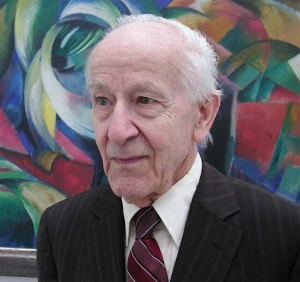 Rolf Huisgen合作论文数University of Munich11
 Jaroslaw Polanski合作论文数Department of Organic Chemistry, University of Silesia in Katowice11Bruno Bienfait合作论文数11
 Jure Zupan合作论文数National Institut of Chemistry10
 Aixia Yan (阎爱侠)合作论文数College of Life Science and Technology, Beijing University of Chemical Technology9K.‐P. Schulz合作论文数8Aleksey Tarkhov合作论文数8Ulrich Strauß合作论文数7Wolfgang Schubert合作论文数7
 Soheila Anzali合作论文数7
 Andreas Zell合作论文数Mathematisch-Naturwissenschaftliche Fakultät, Eberhard Karls Universität Tübingen;Wilhelm-Schickard-Institute for Computer Science, University of Tübingen;Computer Science Department, Faculty of Science, University of Tübingen7V Steinhauer合作论文数6M. Marsili合作论文数6R. FICK合作论文数6MC Hemmer合作论文数6H SALLER合作论文数6Mark Cronin合作论文数School of Pharmacy and Biomolecular Sciences, Faculty of Science, Liverpool John Moores University6Markus Wagener合作论文数6
 Simon Spycher合作论文数6Wolfgang Hanebeck合作论文数6Andreas Teckentrup合作论文数6Chihae Yang合作论文数Leadscope, Inc.6Jan H. Schuur合作论文数6John R. Rose合作论文数Department of Computer Science, University of South Carolina6Christian M. Weiske合作论文数5S Handschuh合作论文数5
 Josef Brandt合作论文数Leibniz-Institut für Polymerforschung, Dresden e.V., Technische Universität Dresden5
 Fernando Batista Da Costa合作论文数Faculdade de Ciências Farmacêuticas de Ribeirão Preto, Universidade de São Paulo5Heinz Saller合作论文数5Robert Höllering合作论文数5Paul M. Selzer合作论文数5Martin Reitz合作论文数5T Kostka合作论文数4L Steinhauer合作论文数4T Kleinoder合作论文数4axel parlow合作论文数4i suryanarayana合作论文数4Lingran Chen合作论文数4




