Early studies led to the identification of 11β-aryl-4',5'-dihydrospiro[estra-4,9-diene-17β,4'-oxazole] analogs with potent and more selective antiprogestational activity compared to antiglucocorticoid activity than mifepristone. In the present study, we replaced the 4'-dimethylaminophenyl group of mifepristone with the benzoxazol group to give 5a-d. We also prepared the 17β-formamido analogs 6a,b using a new synthetic strategy via the intermediate epoxide 21. These compounds were evaluated for their antagonist hormonal properties using the T47D cell-based alkaline phosphatase assay and the A549 cell-based functional assay. Compound 5c showed potent antagonist activity at GR with better selectivity for GR versus PR than mifepristone and is a promising lead for further development.
Many 17-substituted androstan-3α-ol analogs act as positive allosteric modulators of GABAA receptors and exert anticonvulsant and anxiolytic-like activity actions in animal models. The endogenous neurosteroid allopregnanolone (17β-acetyl; 1) is among the most potent of these. Here we demonstrate that 3α-hydroxy-17β-nitro-5α-androstane (2b) and its 3β-methyl analog (3α-hydroxy-3β-methyl-17β-nitro-5α-androstane; 2c) modulate GABAA receptors as assessed by [35S]t-butylbicyclo-phosphorothionate and [3H]flunitrazepam binding with potencies equivalent to or greater than 1. These compounds also had potencies equivalent to or greater than 1 in the pentylenetetrazol and 6Hz seizure models in the mouse. Furthermore, 2b exhibited anxiolytic-like activity in the elevated zero maze. The 3β-hydroxy, 3α-desmethyl analog (2a) was devoid of activity on GABAA receptors in vitro but had moderate activity in the seizure models, possibly as a result of epimerization in vivo at the 3-position. This conclusion was supported by the lack of in vivo activity of the 3β-hydroxy, 3α-methyl analog (2d), which is not expected to undergo epimerization. We conclude that nitro can serve as a bioisostere for acetyl at the 17β-position of 5α-androstan-3α-ol, such that the nitro analog fully retains the bioactivity of the endogenous neurosteroid at GABAA receptors.
AbstractChemInform is a weekly Abstracting Service, delivering concise information at a glance that was extracted from about 200 leading journals. To access a ChemInform Abstract of an article which was published elsewhere, please select a “Full Text” option. The original article is trackable via the “References” option.
A variety of novel 11beta-aryl-17,17-spiro[(4'H,5'-methylene)oxazol]-substituted steroids have been synthesized in moderate to good yields via copper-catalyzed cyclization of acylaminoacetylenes. The best result was obtained with a catalytic amount of CuI in 1:1 benzene-Et3N at 90 degrees C for 30 min (Ar = 3,4-difluorophenyl; R = ethyl; 97% yield).
A series of novel 11beta-aryl-4',5'-dihydrospiro[estra-4,9-diene-17beta,4'-oxazole] analogs have been evaluated for their antagonist hormonal properties using the T47D cell-based alkaline phosphatase assay and the A549 cell-based functional assay. Some of the compounds showed highly potent, and more selective antiprogestational activity against antiglucocorticoid activity than mifepristone (RU 486).
Replacing the 17 alpha -acetoxy substituent in an antiprogestational 17 beta -acetyl-11 beta -arylestra-4,9-dien-3-one by 9-hydroxypropyl significantly diminished glucocorticoid receptor binding with little effect on progestin receptor binding.
[structure: see text]. Replacing the 17alpha-acetoxy substituent in an antiprogestational 17beta-acetyl-11beta-arylestra-4,9-dien-3-one by 3-hydroxypropyl significantly diminished glucocorticoid receptor binding with little effect on progestin receptor binding.
A WIN 35,065-2 analog, 3β-(4-iodophenyl)tropane-2β-pyrrolidine carboxamide (RTI-229), has been radiolabelled with iodine-125 by radioiododestannylation of the corresponding trimethyltin derivative using carrier-free sodium iodide-125 as the isotope source. Purification by reversed-phase HPLC gives [125I]RTI-229 in good yield (89·4%) with high radiochemical purity (>99%) and high specific activity (2125 mCi/μmol, 78·6 GBq/μmol, based on the specific activity of the Na125I used). Copyright © 1999 John Wiley & Sons, Ltd.
[14C]Azodicarbonamide, a potent inhibitor of HIV-1 and HIV-2 was prepared by reaction of hydrazine sulfate with potassium [14C]cyanate, followed by oxidation of the resulting biurea. The overall radiochemical yield was 57% and the specific activity of the product was 1.48 GBq/mmol (39.9 mCi/mmol). Copyright © 1999 John Wiley & Sons, Ltd.
: This report summarized work carried out on contract DAMD17-93-C-3001 during the period November 15, 1995 to November 14, 1996. The purpose of the work on this contract is to prepare and fully characterize radiolabeled samples of compounds which are of current interest to the U.S. Army Medical Research and Materiel Command (USAMRMC) and to provide these compounds along with some commercially prepared compounds to investigators designated by the USAMRMC. The syntheses of carbon-14 labeled nitrogen mustard (WR-1439), 14Chalofantrine (WR-171669), 14Cdesbutylhalofantrine (WR-178460), 14Cartemether (WR-254986), and 14Cartelinic acid (WR-255663) were completed during this report period. The synthesis of high specific activity tritium labeled artemisinin, and an alternate synthesis of carbon-14 labeled artemisinin were investigated. Resyntheses of 14Cmefloquin (WR-142490) and 3Hpyridostigmine bromide (WR-250710) were initiated. A total of nine shipments were made, three of which required purification prior to shipment.
: This report summarizes work carried out on contract DAMD17-89-C-9062 during the period March 23, 1991 to March 22, 1992. The purpose of the work on this contract was to prepare and fully characterize radiolabeled samples of compounds which are of current interest to the U.S. Amy Medical Research and Development Command (USARMDC) and to provide these compounds along with some commercially prepared compounds to investigators designated by the USARMDC. The procedure followed for preparing the compounds involved first designing a synthetic scheme and then optimizing the individual reactions in the synthetic scheme using nonlabeled chemicals. When all of the reactions had been optimized, a tracer run was done where a small amount of the radiolabeled starting material was diluted with nonlabeled starting material, and the reaction sequence performed from beginning to end on the exact scale that was planned for the master run. Any problems which were discovered in the tracer run were worked out, and then the tracer run was repeated, if necessary, or the master run was done. The final products were analyzed for chemical and radiochemical purity, and specific activity. Procedures used for the analyses included TLC-radio-scan, autoradiography, HPLC, UV, and NMR and mass spectrometry where required. In addition to analyzing the compounds when they were first prepared, they were also analyzed prior to shipment to approved investigators. Antimalarial, carbon- 14, tritium, synthesis, radiolabel, chemical warfare protective agents RAD 5, 1.
 C. EDGAR COOK合作论文数14Chunyang Jin合作论文数5Richard G. Hiskey合作论文数4Brantley D. Thomas合作论文数4David Y.-W. Lee合作论文数3Rupa S. Shetty合作论文数3Scott P. Runyon合作论文数2BARTLEY GARY S合作论文数2Prasad Raje合作论文数2matthew orr合作论文数2
 Michael A. Rogawski合作论文数Department of Neurology, School of Medicine, University of California, Davis2Scott Lundeen合作论文数2George F. Taylor合作论文数2Sheela Bhattacharjee合作论文数2
 George Allan合作论文数2
 Jason P Burgess合作论文数2Yue-Wei Lee合作论文数2Hernán A. Navarro合作论文数2Govindarajan Manikumar合作论文数2Olivia Linton合作论文数2Margaret Kiddoe合作论文数2Kahveh Zamani合作论文数2Zhihua Sui合作论文数2
 Rafal M. Kaminski合作论文数Epilepsy Research Section, NIH2Maria K. Hristova-Kazmierski合作论文数1Elena R. Speidel合作论文数1Mc Wani合作论文数1Rg Hiskey合作论文数1
 Michael Kuhar合作论文数Department of Pharmacology and Chemical Biology, School of Medicine, Emory University;Yerkes National Primate Research Center, Emory University;Division of Behavioral Neuroscience and Psychiatric Disorders, Emory University1
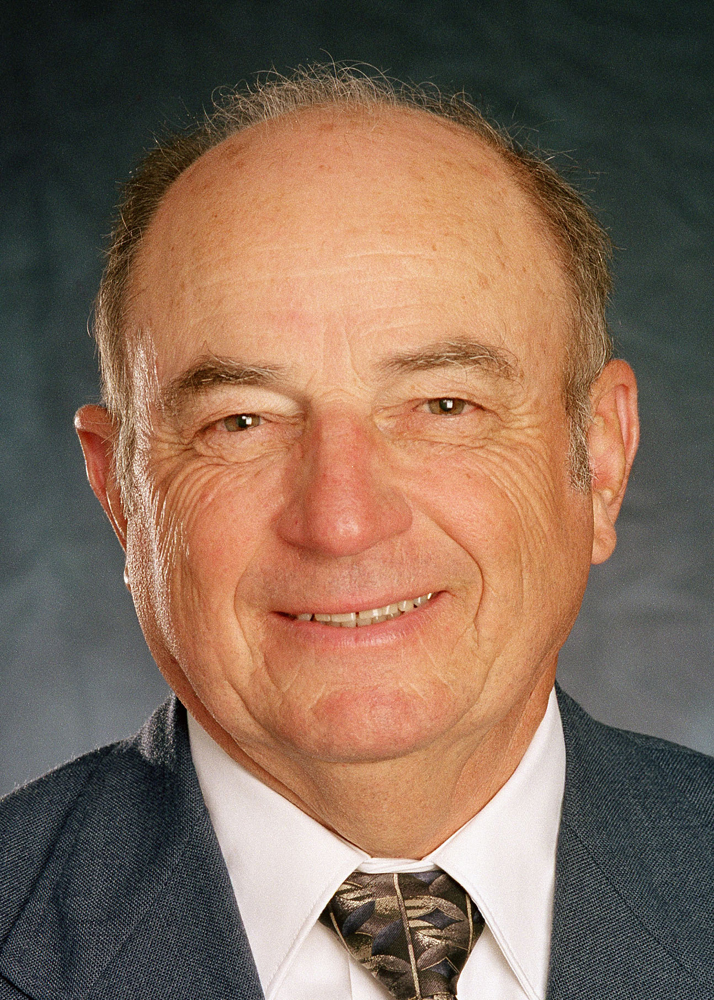 F. Ivy Carroll合作论文数Research Triangle Institute1
 Mansukh C. Wani合作论文数Research Triangle Institute1Herbert H. Seltzman合作论文数1Samuel G. Levine合作论文数1Desong Zhong合作论文数1
 Pravin L Kotian合作论文数1Scott E. Fix合作论文数1Pingsheng Zhang合作论文数1C. Ray Tallent合作论文数1David Yue-Wei Lee合作论文数1John W. Boja合作论文数1KT ROGERS合作论文数1Christopher D. Wyrick合作论文数1Carol R. Kepler合作论文数1Harry Campbell合作论文数1George a Brine合作论文数1




