Purpose A small group of pioneering founders led the creation and early evolution of the service research field. Decades later, this article shares timeless service wisdom from ten of those pioneering founders. Design/methodology/approach Bowen and Fisk specified three criteria by which to identify a pioneering founder. In total, 11 founders met the criteria (Bateson, Berry, Bitner, Brown, Chase, Edvardsson, Grönroos, Gummesson, Parasuraman, Schneider and Zeithaml) and were invited to join Bowen and Fisk – founders that also met the criteria as coauthors. Ten founders then answered a set of questions regarding their careers as service scholars and the state of the field. Findings Insightful reflections were provided by each of the ten pioneering founders. In addition, based on their synthesis of the reflections, Bowen and Fisk developed nine wisdom themes for service researchers to consider and to possibly act upon. Originality/value The service research field is in its fifth decade. This article offers a unique way to learn directly from the pioneering founders about the still-relevant history of the field, the founders' lives and contributions as service scholars and the founders' hopes and concerns for the service research field.
Purpose – Service employees in subordinate service roles are crucial for operational efficiency and service quality. However, the stressful nature of these roles, inappropriate hire selection, and the proliferation of job boards have created massive recruitment problems for HR departments. The purpose of this paper is to highlights the growing costs of recruiting the right candidates for service roles while offering an alternative approach to recruitment that is more efficient and effective than the traditional approach. Design/methodology/approach – The study offers empirical evidence of five instances in which the use of psychometric sifting procedures reduced recruitment costs, while improving the quality of the resultant hires. Findings – By standing the traditional recruitment process “on its head” and using psychometric tests at the start of the selection process, the recruitment process can be significantly improved. Such tests efficiently weed out unsuitable candidates before they even enter the recruitment process, leaving a smaller, better-qualified pool for possible recruitment. Practical implications – Firms can safely use the psychometric sifts to select applicants according to their operational efficiency, customer orientation, and overall performance. This paper illustrates the use of both traditional questionnaire measures and situational judgment tests to remove unsuitable applicants at the start of the selection process. A real-life case study suggests that such an approach increases the hiring success rate from 6:1 to 2:1. In the opening of a new supermarket by a UK group, this process saved 73,000 hours of managers’ time, representing $1.8 million savings in opening costs. Originality/value – The paper offers a viable cost-saving alternative to a growing problem for HR departments in service firms and provides directions for further research.
A letter to the editor is presented in response to the article When Hiring, First Test, and Then Interview, by John Bateson, Jochen Wirtz, Eugene Burke, and Carly Vaughn from the November 2013 issue, on companies conducting web-based psychometric tests before interviews in the hiring process
Russell’s model of affect, with its two dimensions of pleasure and arousal, has been used increasingly to model the experiential nature of services. The outcome variable used in this stream of research is still the original approach/avoidance response behavior as developed by environmental psychologists. This is in contrast to much of the research in consumer behavior, which uses satisfaction to evaluate consumption experiences. In this study, a conceptual model is proposed that integrates the research on the environmental perspective of service experiences with the standard satisfaction model. An experiment was conducted to test a part of this model. It was found that, as hypothesized, confirmation/disconfirmation has a direct and positive effect on pleasure, and both, in turn, have direct and positive effects on satisfaction. The hypothesized role of arousal could not be confirmed.
Research on perceived risk and multiattribute models with uncertain attributes has shown that consumers are familiar with unit-to-unit variability of products and services, and can expect some kind of performance level distribution. This has led to the modelling of expectations along two dimensions - expected mean performance and some measure of its variance. This perspective is in accordance with theories on decision making in economics, finance and decision science. Satisfaction models, however, implicitly assume that expectations are unidimensional, and so far no research has examined the impact of expected performance heterogeneity on the satisfaction processes. This is surprising, Particularly in services marketing, as a high degree of performance heterogeneity is a frequently cited feature of service encounters. In this study, different levels of expected performance heterogeneity were manipulated using a unique laboratory simulator. The results clearly show that expected performance heterogeneity can have impact on the satisfaction process. In particular, at small levels of actual disconfirmation the presence of uncertainty in expectations improves the level of disconfirmation, shifting it towards "better than expected", and improving overall satisfaction. At higher levels of disconfirmation uncertainty in expectations did not show any effect on disconfirmation levels.
 Jochen Wirtz合作论文数Business School, National University of Singapore4
 carly vaughan合作论文数2eugene burke合作论文数2christopher h lovelock合作论文数1Eric Langeard合作论文数1
 Benjamin Schneider合作论文数University of Maryland1
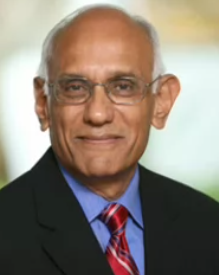 A. Parasuraman合作论文数Department of Marketing, Miami Business School, University of Miami;Vijaybhoomi University;AIM-Parasuraman Center for Service Excellence, Jagdish Sheth School of Management1
 Richard B. Chase合作论文数Marshall School of Business, University of Southern California1Mary Jo Bitner合作论文数W. P. Carey School of Business, Arizona State University1
 Leonard L. Berry合作论文数The Arch H. Aplin III ’80 Department of Marketing, Mays Business School, Texas A&M University1
 Valarie Zeithaml合作论文数Marketing Department, University of North Carolina at Chapel Hill;The University of North Carolina Kenan-Flagler Business School1
 Christian Grönroos合作论文数Department of Marketing, Hanken School of Economics;Nankai University;Tianjin Normal University;Oslo School of Management1
 Michael Hui合作论文数Department of Marketing Shatin N.T. Hong Kong Shatin N.T., The Chinese University of Hong Kong1
 Bo Edvardsson合作论文数Service Research Centre, Karlstads Universitet;Effect Management Development AB;Hanken School of Economics1Stephen Brown合作论文数Department of Management, Leadership & Marketing, Ulster University1
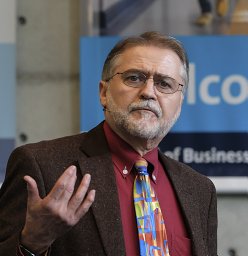 Raymond P. Fisk合作论文数available - click to provide one
No description available of Raymond P. Fisk1
Raymond P. Fisk合作论文数available - click to provide one
No description available of Raymond P. Fisk1 Pierre Eiglier合作论文数1




