The NASA GSFC Filter Radiometer Monitoring System (FRMS) was used to compare lamp-based and detector-based spectral radiance calibration of an integrating sphere. The FRMS is a telecentric, filter radiometer employing two apertures, a filter wheel, and a detector. The FRMS uses nine filters at specific wavelengths from 360 to 2400 nm. The lamp-based calibration used a National Institute of Standards and Technology (NIST) calibrated irradiance standard lamp to calibrate the irradiance responsivity of a scanning spectroradiometer. The spectroradiometer was then used to transfer its irradiance calibration to an integrating sphere. The lamp-based spectral radiance calibration of the sphere was calculated using the sphere irradiance, the sizes of the sphere exit and spectroradiometer entrance apertures, and the distance between those apertures. The detector-based calibration of the sphere used NIST calibrated absolute radiance Si photodiode detector to determine the absolute spectral radiance responsivity of the FRMS with the NASA GSFC Automated Laser Tuned Advanced Radiometry (ALTAR) laser system as the source. The absolute spectral radiance responsivity of the FRMS was measured at the following channels: 380, 410, 640, and 840, nm. The FRMS measured the integrating sphere to make a direct determination of its absolute radiance at those channels. Analysis of lamp-based and detector-based radiance measurements of the integrating sphere at four wavelength bands will be presented.
With the advent of spaceborne spectroradiometers in a geostationary constellation, measuring high spectral resolution ultraviolet–visible (UV-VIS) and selected near-/shortwave-infrared (NIR/SWIR) radiances can enable the probing of the life cycle of key atmospheric trace gases and aerosols at higher temporal resolutions over the globe. The UV-VIS measurements are important for retrieving several key trace gases (e.g., O3, SO2, NO2, and HCHO) and particularly for deriving aerosol characteristics (e.g., aerosol absorption and vertical profile). This study examines the merit of simultaneous retrievals of trace gases and aerosols using a ground-based spectroradiometer covering the UV-NIR to monitor their physicochemical processes and to obtain reliable aerosol information for various applications. During the 2019 pre-monsoon season over northern Thailand, we deployed a ground-based SMART–s (Spectral Measurements for Atmospheric Radiative Transfer–spectroradiometer) instrument, which is an extended-range Pandora with reliable radiometric calibration in the 330–820 nm range, to retrieve remotely sensed chemical and aerosol properties for the first time near biomass burning sources. The high spectral resolution (∼ 1.0 nm full width half maximum with ∼ 3.7 × oversampling) of sun and sky measurements from SMART–s provides several key trace gases (e.g., O3, NO2, and H2O) and aerosol properties covering the UV where significant light absorption occurs by the carbonaceous particles. During the measurement period, highly correlated total column amounts of NO2 and aerosol optical thickness (τaer) retrieved from SMART–s (correlation coefficient, R=0.74) indicated their common emissions from biomass burning events. The SMART–s retrievals of the spectral single scattering albedo (ω0) of smoke aerosols showed an abrupt decrease in the UV, which is an important parameter dictating photochemical processes in the atmosphere. The values of ω0 and column precipitable water vapor (H2O) gradually increase with the mixing of biomass burning smoke particles and higher water vapor concentrations when approaching the monsoon season. The retrieved ω0 and weighted mean radius of fine-mode aerosols from SMART–s showed positive correlations with the H2O (R=0.81 for ω0 at 330 nm and 0.56 for the volume-weighted mean radius), whereas the real part of the refractive index of fine-mode aerosol (nf) showed negative correlations (R=-0.61 at 330 nm), which suggest that aerosol aging processes including hygroscopic growth (e.g., humidification and cloud processing) can be a major factor affecting the temporal trends of aerosol optical properties. Retrieved nf and ω0 were closer to those of the water droplet (i.e., nf of about 1.33 and ω0 of about 1.0) under lower amounts of NO2 during the measurement period; considering that the NO2 amounts in the smoke may indicate the aging of the plume after emission due to its short lifetime, the tendency is also consistent with active hygroscopic processes of the aerosols over this area. Retrieved UV aerosol properties from SMART–s generally support the assumed smoke aerosol models (i.e., the spectral shape of aerosol absorption) used in NASA's current satellite algorithms, and their spectral ω0 retrievals from ground and satellites showed good agreements (R = 0.73–0.79). However, temporal and spectral variabilities in the aerosol absorption properties in the UV emphasize the importance of a realistic optical model of aerosols for further improvements in satellite retrievals.
Methods to radiometrically calibrate a non-imaging airborne visible-to-shortwave infrared (VSWIR) spectrometer to measure the Greenland ice sheet surface are presented. Airborne VSWIR measurement performance for bright Greenland ice and dark bare rock/soil targets is compared against the MODerate resolution atmospheric TRANsmission (MODTRAN®) radiative transfer code (version 6.0), and a coincident Landsat 8 Operational Land Imager (OLI) acquisition on 29 July 2015 during an in-flight radiometric calibration experiment. Airborne remote sensing flights were carried out in northwestern Greenland in preparation for the Ice, Cloud, and land Elevation Satellite 2 (ICESat-2) laser altimeter mission. A total of nine science flights were conducted over the Greenland ice sheet, sea ice, and open-ocean water. The campaign's primary purpose was to correlate green laser pulse penetration into snow and ice with spectroscopic-derived surface properties. An experimental airborne instrument configuration that included a nadir-viewing (looking downward at the surface) non-imaging Analytical Spectral Devices (ASD) Inc. spectrometer that measured upwelling VSWIR (0.35 to 2.5 µm) spectral radiance (Wm-2sr-1µm-1) in the two-color Slope Imaging Multi-polarization Photon-Counting Lidar's (SIMPL) ground instantaneous field of view, and a zenith-viewing (looking upward at the sky) ASD spectrometer that measured VSWIR spectral irradiance (W m−2 nm−1) was flown. National Institute of Standards and Technology (NIST) traceable radiometric calibration procedures for laboratory, in-flight, and field environments are described in detail to achieve a targeted VSWIR measurement requirement of within 5 % to support calibration/validation efforts and remote sensing algorithm development. Our MODTRAN predictions for the 29 July flight line over dark and bright targets indicate that the airborne nadir-viewing spectrometer spectral radiance measurement uncertainty was between 0.6 % and 4.7 % for VSWIR wavelengths (0.4 to 2.0 µm) with atmospheric transmittance greater than 80 %. MODTRAN predictions for Landsat 8 OLI relative spectral response functions suggest that OLI is measuring 6 % to 16 % more top-of-atmosphere (TOA) spectral radiance from the Greenland ice sheet surface than was predicted using apparent reflectance spectra from the nadir-viewing spectrometer. While more investigation is required to convert airborne VSWIR spectral radiance into atmospherically corrected airborne surface reflectance, it is expected that airborne science flight data products will contribute to spectroscopic determination of Greenland ice sheet surface optical properties to improve understanding of their potential influence on ICESat-2 measurements.
A Light-Emitting Diode (LED)-driven integrating sphere light source has been fabricated and assembled in the NASA Goddard Space Flight Center (GSFC) Code 618 Biospheric Sciences Laboratory's Calibration Facility. This light source is a 30.5 cm diameter integrating sphere lined with Spectralon. A set of four LEDs of different wavelengths are mounted on the integrating sphere's wall ports. A National Institute of Standards and Technology (NIST) characterized Si detector is mounted on a port to provide real-time monitoring data for reference. The measurement results presented here include the short-term and long-term stability and polarization characterization of the output from this LED-driven integrating sphere light source. As an initial application, this light source is used to characterize detector/pre-amplifier gain linearity in light detection systems. The measurement results will be presented and discussed.
The NASA Goddard Space Flight Center (GSFC) Radiometric Calibration Laboratory (RCL) maintains several large integrating sphere sources covering the visible to the shortwave infrared wavelength range. Two critical, functional requirements of an integrating sphere source are short- and long-term operational stability and repeatability. Monitoring the source is essential in determining the origin of systemic errors, thus increasing confidence in source performance and quantifying repeatability. If monitor data falls outside the established parameters, this could be an indication that the source requires maintenance or recalibration against the National Institute of Science and Technology irradiance standard. The GSFC RCL has developed a Filter Radiometer Monitoring System (FRMS) to continuously monitor the performance of its integrating sphere calibration sources in the 400 to 2400 nm region. Sphere output change mechanisms include lamp aging, coating (e.g., BaSO4) deterioration, and ambient water vapor level. The FRMS wavelength bands are selected to quantify changes caused by these mechanisms. The FRMS design and operation are presented, as well as data from monitoring four of the RCL's integrating sphere sources.
Laboratory measurements were performed to characterize the geometrical effects in the calibration of the NASA's cloud absorption radiometer (CAR). The measurements involved three integrating sphere sources (ISSs) operated at different light levels and experimental setups to determine radiance variability. The radiance gradients across the three ISS apertures were 0.2%-2.6% for different visible, near-infrared, and shortwave infrared illumination levels but <15% in the UV. Change in radiance with distance was determined to be 2%-20%, being highest in the UV. Radiance variability due to the edge effects was found to be significant; as much as 70% due to the sphere aperture and <10% due to the CAR telescope's secondary mirror.
The National Aeronautics and Space Administration's (NASA's) Ames Research Center's Airborne Sensor Facility (ASF) is responsible for the calibration of several airborne Earth-viewing sensor systems in support of NASA Earth Observing System (EOS) investigations. The primary artifact used to calibrate these sensors in the reflective solar region from 400 to 2500 nm is a lamp-illuminated integrating sphere source. In September 1999, a measurement comparison was made at the Ames ASF Sensor Calibration Facility to validate the radiometric scale, establish the uncertainties assigned to the radiance of this source, and examine its day-to-day repeatability. The comparison was one of a series of validation activities overseen by the EOS Calibration Program to ensure the radiometric calibration accuracy of sensors used in long-term, global, remote-sensing studies. Results of the comparison, including an evaluation of the Ames Sensor Calibration Laboratory (SCL) measurement procedures and assigned radiometric uncertainties, provide a validation of their radiometric scale at the time of the comparison. Additionally, the maintenance of the radiance scale was evaluated by use of independent, long-term, multiyear radiance validation measurements of the Ames sphere source. This series of measurements provided an independent assessment of the radiance values assigned to integrating sphere sources by the Ames SCF. Together, the measurements validate the SCF radiometric scale and assigned uncertainties over the time period from September 1999 through July 2003.
Two critical requirements of any calibration source are short and long-term operational stability and repeatability. Source monitoring is necessary in quantifying overall source performance including stability and repeatability. The NASA GSFC Code 920.1 Radiance Calibration Facility (RCF) developed a Filter Radiometer Monitoring System (FRMS) to continuously monitor the performance of its integrating sphere calibration sources. FRMS bands are in the 0.4-2.4 mum region, with several bands selected to coincide with common remote sensing bands. The FRMS was designed and fabricated in the year 2000. Early in 2001, the FRMS was reconfigured prior to being deployed on the RCF 180cm integrating sphere. This paper describes the instrument modifications resulting from the FRMS reconfiguration and presents FRMS monitor data for three RCF integrating sphere sources.
The second SIMBIOS (Sensor Intercomparison and Merger for Biological and Interdisciplinary Oceanic Studies) Radiometric Intercomparison (SIMRIC-2) was carried out in 2002. The purpose of the SIMRICs is to ensure a common radiometric scale among the calibration facilities that are engaged in calibrating in-situ radiometers used for ocean color related research and to document the calibration procedures and protocols. The SeaWiFS Transfer Radiometer (SXR-II) measured the calibration radiances at six wavelengths from 411nm to 777nm in the ten laboratories participating in the SIMRIC-2. The measured radiances were compared with the radiances expected by the laboratories. The agreement is within the combined uncertainties for all but two laboratories. Likely error sources were identified in these two laboratories and corrective measures were implemented. NIST calibrations in December 2001 and January 2003 showed changes ranging from -0.6% to +0.7% for the six SXR-II channels. Two independent light sources were used to monitor changes in the SXR-II responsivity between the NIST calibrations. A 2% variation of the responsivity of channel 1 of the SXR-II was detected, and the SXR-II responsivity was corrected using the monitoring data. This report also presents a comparison of directional reflectance calibrations of a Spectralon plaque by different calibration facilities.
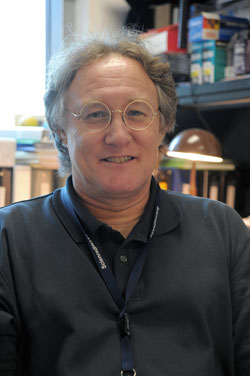 James J. Butler合作论文数NASA Goddard Space Flight Center8
 gilbert r smith合作论文数3Leibo Ding合作论文数3Robert A. Barnes合作论文数3Peter Abel合作论文数2
 Giulietta Fargion合作论文数2
 Matthew Kowalewski合作论文数2
 Daniel Korwan合作论文数2
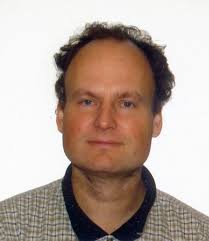 Gerhard Meister合作论文数NASA Goddard Space Flight Center2Christopher J. Crawford合作论文数1pavel hajek合作论文数1john e marketon合作论文数1M. G. Hom合作论文数1Edward Hildum合作论文数1James Robertson合作论文数1Donghee Kim合作论文数1
 georgi t georgiev合作论文数1Nathan Kelley合作论文数1David Menzies合作论文数1peter abel合作论文数1Jennifer Sherman合作论文数1Jaehwa Lee合作论文数NASA, Goddard Space Flight Ctr1
 jeannette van den bosch合作论文数1
 Ukkyo Jeong合作论文数Dept. of Atmospheric Sciences, Yonsei University1
 Kenneth J Voss合作论文数Department of Physics, College of Arts and Sciences, University of Miami1
 Charles R. McClain合作论文数NASA Goddard Space Flight Center1
 Curtiss O. Davis合作论文数College of Oceanic and Atmospheric Sciences, Oregon State University1
 Robert Frouin合作论文数Scripps Institution of Oceanography, University of California, San Diego1
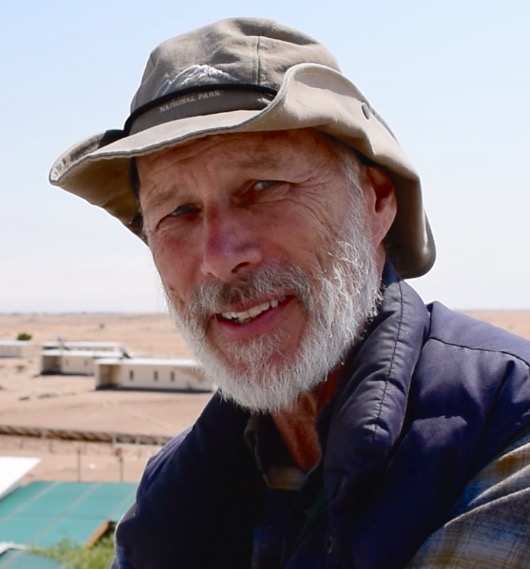 Brent N Holben合作论文数Goddard Space Flight Center, National Aeronautics and Space Administration1
 Kendall L. Carder合作论文数College of Marine Science, University of South Florida1Hyunkee Hong合作论文数1
 Dennis K. Clark合作论文数1
 Si-Chee Tsay合作论文数NASA Goddard Space Flight Center1
 David Matthew Giles合作论文数Science Systems and Applications, Inc1
 Patrick Grant合作论文数Department of Materials, University of Oxford1
 David J Harding合作论文数University of Michigan1
 Michael King合作论文数Laboratory for Atmospheric and Space Physics, Department of Atmospheric and Oceanic Sciences, College of Arts and Sciences, University of Colorado Boulder1
 Robert Swap合作论文数Goddard Space Flight Centre, National Aeronautics and Space Administration1Edward F. Zalewski合作论文数1Robert Maffione合作论文数1
 Charles K. Gatebe合作论文数Goddard Earth Sciences and Technology Center, University of Maryland Baltimore County1
 Thorsten Markus合作论文数NASA Goddard Space Flight Center1
 Thomas Allen Neumann合作论文数Earth Sciences Division, NASA Goddard Space Flight Center1
 Eugene Waluschka合作论文数1Albert L. Chapin合作论文数1
 Curtis Davis合作论文数1
 Kelly M. Brunt合作论文数Department of Geophysical Sciences;University of Chicago;Department of Geophysical Sciences, University of Chicago1
 B. Carol Johnson合作论文数1
 Nai-Yung Christina Hsu (N. Christina Hsu)合作论文数Climate and Radiation Laboratory, Goddard Space Flight Center, National Aeronautics and Space Administration1




