To provide methods for effectively producing 1,4-butanediol (BOD) and chemical precursors thereof in commercial quantities.SOLUTION: Disclosed herein is a non-naturally occurring microorganism comprising at least one exogenous nucleic acid encoding an enzyme in BOD production pathway to express the exogenous enzyme with a disrupted gene encoding an aerobic respiratory control regulatory system. The exogenous enzymes are succinyl-CoA synthetase, alpha-ketoglutarate decarboxylase, succinate semialdehyde dehydrogenase and 4-hydroxybutyrate dehydrogenase and optionally 4-hydroxybutyryl-CoA/acetyl-CoA transferase, butyrate kinase and phosphotransbutyrase, 4-hydroxybutyryl-CoA reductase, 4-hydroxybutanal reductase, pyruvate dehydrogenase, NADH-insensitive citrate synthetase and phosphoenolpyruvate carboxykinase.SELECTED DRAWING: Figure 46
Genomatica has established an integrated computational/experimental metabolic engineering platform to design, create, and optimize novel high performance organisms and bioprocesses. Here we present our platform and its use to develop E. coli strains for production of the industrial chemical 1,4-butanediol (BDO) from sugars. A series of examples are given to demonstrate how a rational approach to strain engineering, including carefully designed diagnostic experiments, provided critical insights about pathway bottlenecks, byproducts, expression balancing, and commercial robustness, leading to a superior BDO production strain and process.
L'invention concerne des organismes microbiens d'origine non naturelle qui presentent une voie de production de 4-hydroxybutyrate, 1,4-butanediol ou d'un autre produit et qui sont aptes a produire du 4-hydroxybutyrate, 1,4-butanediol, ou un autre produit, l'organisme microbien comportant une ou plusieurs modifications genetiques. L'invention concerne egalement des procedes de production de 4-hydroxybutyrate, 1,4-butanediol ou d'un autre produit ou de produits associes a l'aide des organismes microbiens.
1,4-Butanediol (BDO) is an important commodity chemical used to manufacture over 2.5 million tons annually of valuable polymers, and it is currently produced exclusively through feedstocks derived from oil and natural gas. Herein we report what are to our knowledge the first direct biocatalytic routes to BDO from renewable carbohydrate feedstocks, leading to a strain of Escherichia coli capable of producing 18 g l(-1) of this highly reduced, non-natural chemical. A pathway-identification algorithm elucidated multiple pathways for the biosynthesis of BDO from common metabolic intermediates. Guided by a genome-scale metabolic model, we engineered the E. coli host to enhance anaerobic operation of the oxidative tricarboxylic acid cycle, thereby generating reducing power to drive the BDO pathway. The organism produced BDO from glucose, xylose, sucrose and biomass-derived mixed sugar streams. This work demonstrates a systems-based metabolic engineering approach to strain design and development that can enable new bioprocesses for commodity chemicals that are not naturally produced by living cells.
L'invention concerne des organismes microbiens d'origine non naturelle comprenant une voie 1,4- butanediol (BDO), 4-hydroxybutyryl-CoA, 4-hydroxybutanal ou putrescine comprenant au moins un acide nucleique exogene codant pour une enzyme de la voie BDO, 4-hydroxybutyryl-CoA, 4-hydroxybutanal ou putrescine en quantite suffisante pour produire BDO, 4-hydroxybutyryl-CoA, 4-hydroxybutanal ou putrescine et optimiser encore l'expression de BDO. L'invention porte egalement sur des methodes d'utilisation desdits organismes microbiens pour produire BDO, 4-hydroxybutyryl-CoA, 4-hydroxybutanal ou putrescine.
The widespread emergence of antibiotic-resistant bacteria and a lack of new pharmaceutical development have catalyzed a need for new and innovative approaches for antibiotic drug discovery. One bottleneck in antibiotic discovery is the lack of a rapid and comprehensive method to identify compound mode of action (MOA). Since a hallmark of antibiotic action is as an inhibitor of essential cellular targets and processes, we identify a set of 308 essential genes in the clinically important pathogen Staphylococcus aureus. A total of 446 strains differentially expressing these genes were constructed in a comprehensive platform of sensitized and resistant strains. A subset of strains allows either target underexpression or target overexpression by heterologous promoter replacements with a suite of tetracycline-regulatable promoters. A further subset of 236 antisense RNA-expressing clones allows knockdown expression of cognate targets. Knockdown expression confers selective antibiotic hypersensitivity, while target overexpression confers resistance. The antisense strains were configured into a TargetArray in which pools of sensitized strains were challenged in fitness tests. A rapid detection method measures strain responses toward antibiotics. The TargetArray antibiotic fitness test results show mechanistically informative biological fingerprints that allow MOA elucidation.
Cette invention concerne des organismes microbiens non naturels comprenant une voie du 1,4-butanediol (BDO) et comprenant au moins un acide nucleique exogene codant pour une enzyme de la voie du BDO exprimee en une quantite suffisante pour produire du BDO et, en outre, optimise pour l'expression du BDO. Cette invention concerne, en plus, des procedes d'utilisation de ces organismes microbiens pour produire du BDO.
Mitochondrial-nuclear communication is taking on increased importance in models of oxygen sensing, oxidative stress, aging, and disease. The deletion of the mitochondrial genome (mtDNA) and, hence, the ability to respire, affects expression of several nuclear genes through at least two different mitochondrial-nuclear communication pathways. One of the pathways, retrograde regulation, is activated by a reduction in respiration, while another, intergenomic signaling, is unaffected by respiration but requires mtDNA. Using DNA microarrays, we identify here a set of nuclear genes in Saccharomyces cerevisiae that are targets of intergenomic signaling. These nuclear genes are down-regulated in rho degrees cells that lack mtDNA but not in nuclear pet mutant rho(+)cells that possess mtDNA but lack respiration. Many of these nuclear genes encode mitochondrial proteins, implying that intergenomic signaling functions in coordinating mitochondrial and nuclear gene expression. In addition, analyses of deletion and linker scanning mutations in the promoter of the COX6 gene, a nuclear gene affected by intergenomic signaling, suggest an involvement of Abf1p transcription factor in intergenomic signaling. Together, these findings indicate that intergenomic signaling is distinct from retrograde regulation both in the nuclear genes that it regulates and in the way in which it affects their expression.
The overall process of antimicrobial drug discovery and development seems simple, to cure infectious disease by identifying suitable antibiotic drugs. However, this goal has been difficult to fulfill in recent years. Despite the promise of the high-throughput innovations sparked by the genomics revolution, discovery, and development of new antibiotics has lagged in recent years exacerbating the already serious problem of evolution of antibiotic resistance. Therefore, both new antimicrobials are desperately needed as are improvements to speed up or improve nearly all steps in the process of discovering novel antibiotics and bringing these to clinical use. Another product of the genomic revolution is the modeling of metabolism using computational methodologies. Genomic-scale networks of metabolic reactions based on stoichiometry, thermodynamics and other physico-chemical constraints that emulate microbial metabolism have been developed into valuable research tools in metabolic engineering and other fields. This constraint-based modeling is predictive in identifying critical reactions, metabolites, and genes in metabolism. This is extremely useful in determining and rationalizing cellular metabolic requirements. In turn, these methods can be used to predict potential metabolic targets for antimicrobial research especially if used to increase the confidence in prioritization of metabolic targets. The many different capacities of constraint-based modeling also enable prediction of cellular response to specific inhibitors such as antibiotics and this may, ultimately find a role in drug discovery and development. Herein, we describe the principles of metabolic modeling and how they might initially be applied to antimicrobial research.
 Anthony P. Burgard合作论文数Department of Chemical Engineering;Pennsylvania State University;Department of Chemical Engineering, Pennsylvania State University11
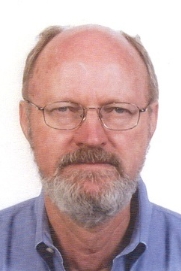 Robert H. Grubbs (罗伯特·格拉布斯)合作论文数Division of Chemistry and Chemical Engineering, California Institute of Technology10
 Mark Burk合作论文数9robin e osterhout合作论文数8Wei Niu (牛伟)合作论文数7Stephen Van Dien合作论文数Genomatica Inc, San Diego, California, United States of America7Harry Yim合作论文数5Robert Yamamoto合作论文数5Grant Carr合作论文数4H Howard Xu合作论文数4Kari L. Ohlsen合作论文数4Judith W. Zyskind合作论文数4Daniel W. Kung合作论文数4
 Roger Forsyth合作论文数3
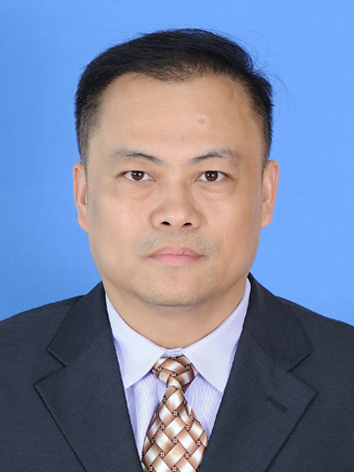 Jun Sun (孙俊)合作论文数School of Artificial Intelligence and Computer Science, Jiangnan University3Carlos Zamudio合作论文数3B C Kline合作论文数2Cheryl L Malone合作论文数2Robert O Poyton合作论文数Colorado Clinical And Translational Sciences Institute, University of Colorado Boulder2Bruce C. Kline合作论文数2Jamie M. Froelich合作论文数2Liangsu Wang合作论文数2Terry Roemer合作论文数2Tae Hoon Yang合作论文数2
 Ralph Seelke合作论文数2
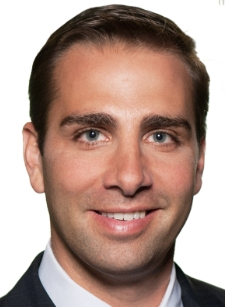 Christophe Schilling合作论文数Genomatica, Inc.2Priti Pharkya合作论文数2Robert J. Haselbeck合作论文数1T E Patterson合作论文数1nelson r barton合作论文数1stefan andrae合作论文数1b o jiang合作论文数1Brian Steer合作论文数1David Robbins合作论文数1
 Tzu L Phang合作论文数1Woo Dong Kyun合作论文数1Trueblood C E合作论文数1Estadilla Jazell合作论文数1
 Sang Yup Lee (李相烨)合作论文数Department of Chemical and Biomolecular Engineering, College of Engineering, Korea Advanced Institute of Science and Technology;BioProcess Engineering Research Center, Korea Advanced Institute of Science and Technology;Center for Synthetic Biology, Korea Advanced Institute of Science and Technology1J. Patterson合作论文数1M. Mccarthy合作论文数1D. Nakaji合作论文数1Philip J. Youngman合作论文数1Vickie Brown-Driver合作论文数1Howard Bussey合作论文数Department of Biology, McGill University1Paula King合作论文数1M Pilcher合作论文数1Susan Sillaots合作论文数1




