In today's military environment vast amounts of disparate information are available. To aid situational awareness it is vital to have some way to judge information importance. Recent research has developed a fuzzy-based system to assign a Value of Information (VoI) determination for individual pieces of information. This paper presents an investigation of the effect of integrating subsequent complementary and/or contradictory information into the VoI process. Specifically, the idea of using complementary and/or contradictory new information to impact the previously used fuzzy membership values for the information content characteristic applied in the VoI calculations is shown to be a particularly suitable approach.
This paper presents the concept development and demonstration of the Human Terrain Exploitation Suite (HTES) under development at the U.S. Army Research Laboratory’s Tactical Information Fusion Branch. The HTES is an amalgamation of four complementary visual analytic capabilities that target the exploitation of open source information. Open source information, specifically news feeds, blogs and other social media, provide a unique opportunity to collect and examine salient topics and trends. Analysis of open source information provides valuable insights into determining opinions, values, cultural nuances and other socio-political aspects within a military area of interest. The early results of the HTES field study indicate that the tools greatly increased the analysts’ ability to exploit open source information, but improvement through greater cross-tool integration and correlation of their results is necessary for further advances.
A major tenet of the US Army's data-to-decision initiative and a primary challenge for military commanders and their staff is the ability to shorten the cycle time from data gathering to making decisions. Paramount to this process is the ability to better assess the applicability and relevance of information for decisions in complex military environments. Towards this end, the Army Research Laboratory, in collaboration with Towson University, has embarked on a research initiative to experimentally characterize how analysts perceive the value of information (VoI) and subsequently model and test solutions. This paper presents the process used to extend the current fuzzy VoI system to allow user-defined membership functions that consider various domain decompositions using both triangular and trapezoidal fuzzy sets, and the assessment of their efficacy to current military operations.
A major tenet of the US Army's data-to-decision initiative and a primary challenge for military commanders and their staff is the ability to shorten the cycle time from data gathering to decisions. Today, military operations require information from an unprecedented number of sources resulting in an unprecedented volume of collected data. Required are decision support technologies to improve the synthesis of data to decisions. Paramount to this process is the ability to better assess the applicability and relevance of information for decisions in complex military environments. Towards this end, this paper presents a soft computing approach and early results for calculating the Value of Information (VoI) in complex military environments using fuzzy associative memory as an effectively framework for contextually tuning its value based on content, reliability and latency.
From Wall Street to the streets of Baghdad, information drives action. Confounding this edict for the military is not only the unprecedented increase in the types and amount of information available, but the ability to separate the important information from the routine. Termed the value of information (VOI), the modern military commander and his staff require improved methodologies for assessing the applicability and relevance of information to a particular operation. This paper presents the approach used to elicit the knowledge necessary to value information for military analysis and enable the construction of a fuzzy-based prototype system for automating this valuation.
Proactive information sharing is a challenging issue faced by intelligence agencies in effectively making critical decisions under time pressure in areas related to homeland security. Motivated by psychological studies on human teams, a team-oriented agent architecture, Collaborative Agents for Simulating Teamwork (CAST), was implemented to allow agents in a team to anticipate the information needs of teammates and help them with their information needs proactively and effectively. In this paper, we extend CAST with a decision-making module. Through two sets of experiments in a simulated battlefield, we evaluate the effectiveness of the decision-theoretic proactive communication strategy in improving team performance, and the effectiveness of information fusion as an approach to alleviating the information overload problem faced by distributed decision makers.
The information age has given way to what many military experts are describing as the next major military advancement – Network Centric Warfare (NCW). At its core, NCW has as its objective the translation of information superiority to supreme combat power; providing unprecedented lethality, survivability, and situational awareness to battle commanders and battle staff. One of the challenges associated with effective NCW is the development of environments that provide accurate, relevant and timely information exchange to the right entities at the right time. Studies have shown that one of the keys to effective information exchange is the ability of teammates to anticipate the needs of other teammates and proactively take appropriate action. Outlined in this paper is an on-going research program between the US Army Research Laboratory (ARL) and Pennsylvania State University aimed at combating the battle command information exchange problem by combining the use of shared mental models with software agent technology.
ABSTRACT Today’s modern battlespace can generally be defined as any and all aspects of the region of time and space surrounding a battle. Most see dominating the battlespace through digitization as the key force multiplier and primary focus for future success. Hampering this effort are the tremendous amounts of data and information that threaten to overload commanders and staff. Needed are integrated approaches that will improve collection, analysis, exchange and presentation of timely information tailored to specific users, allowing each an accurate view of the battlespace. Software agent technologies are one candidate offered to address the information overload problem and the topic of this paper. Outlined in this paper is an on-going program between the US Army Research Laboratory (ARL), Texas A&M University (TAMU) and University of Maryland (UM) aimed at coupling disparate software agent architectures across a tactical and logistical military decision support system.
This paper describes the establishment of a real-time link of engine status information between the M1 Abrams tank and logistics maintainers at the battalion and brigade level. The system in the tank is called TED On-Board (TOB) and is an extension of a currently fielded (off board) diagnostic system called TED (Turbine Engine Diagnostics).
Developers of expert system technologies often struggle with the problem of how best to couple the art of knowledge acquisition and knowledge engineering into a useable system. When combined properly, the results obtained are outstanding (as evidenced by the numerous successful systems produced in medicine, finance, and other disciplines). On the other hand, when uniting these processes does not occur properly, no amount of money or time can stay the ultimate outcome-a system whose results fall short of the expected benefits and trigger the dreaded trying-and-failing syndrome. For a team of scientists from the US Army Research Laboratory (ARL) and the US Army Ordnance Center and School (OC&S), trying and failing was never an option. The Ordnance School's Directorate of Combat Development assigned the team the task of developing an expert diagnostic system to troubleshoot and repair the Army's Abrams main battle tank. The system, known as TED (turbine engine diagnostics), gives Army tank mechanics the ability to effectively and efficiently diagnose faults, perform necessary repairs, order parts, validate serviceability, and maintain necessary maintenance records. It also provides a comprehensive online tutorial suite. The TED program became the first successful Army program to combine technologies from artificial intelligence with maintenance doctrine into a fielded Army system.
Turbine Engine Diagnostics (TED) is a diagnostic expert system to aid the M1 Abrams tank mechanic find and fix problems in the AGT-1500 turbine engine. TED was designed to provide the apprentice mechanic the ability to diagnose and repair the turbine engine like an expert mechanic. The expert system was designed and built by the U.S. Army Research Laboratory (ARL) and the U.S. Army Ordnance Center and School (OC&S). This paper discusses the relevant background, development issues, reasoning method, system overview, test results, return on investment, and fielding history of the project. Limited fielding began in 1994 to select Army National Guard units, and complete fielding to all M1 Abrams tank maintenance units started in 1997 and will finish by the end of 1998. The Army estimates that TED will save roughly $10 million per year through improved diagnostic accuracy and reduced waste. The development and fielding of the TED program represents the Army's first successful fielded maintenance system in the area of AI. There are several reasons associated with the success of the TED program: an appropriate domain with proper scope, a close relationship with the expert, extensive user involvement, plus others that are discussed in this paper.
Summary form only given. To achieve superior video compression performance it is generally necessary to base the encoding decisions on a local scale, instead of the traditional frame-by-frame approach. Partitioning schemes for optimal frame subdivision have been proposed. Unfortunately, a full local approach that leads to inhomogeneous partitioning of the frame encounters the serious problem of dealing with an increase of side information, particularly in the area of very low bit-rate compression where a relatively large overhead can possibly erode the benefits of the local analysis. Our approach adopts a moderate position, which can still retain some of the advantages of variable block size while keeping the overhead to a bare minimum. The idea is to subdivide a frame in a fixed number of square panels that we call “megablocks.” All decisions relative to intra (I) or inter (P) coding are made at the megablock level. These decisions pertain to motion block size and degree of error quantization in the P-mode as well as vector and scalar quantization of subbands in the I-mode. The key to the improved performance of the megablock partitioning scheme is the joint cost minimization of motion field and quantized error information. In very low bit rate video coding, the cost of transmitting motion vectors consumes a significant fraction of the total bit budget. The megablock structure permits the use of variable size motion blocks without incurring the cost associated with motion segmentation or a full quadtree approach
TED (Turbine Engine Diagnostics) is a diagnostic expert system to aid an M1 Abrams tank mechanic in finding and fixing problems in an AGT-1500 turbine engine. TED was designed to provide apprentice mechanics with the ability to diagnose and repair a turbine engine like an expert mechanic. This paper discusses the reasoning method used in TED, called the Procedural Reasoning System (PRS), as well as various design considerations throughout the life of the project. The expert system was designed and built by the US Army Research Laboratory and the US Army Ordnance Center. TED has been fielded to both the active Army and the National Guard.
The U.S. Army holds title to one of the most envied weapon systems developed—the Abrams main battle tank (MBT). Militarily, this weapon represents the epitome of lethality and survivability on today's modern battlefield. To combat difficulties associated with maintaining this sophisticated weapon, the U.S. Army Research Laboratory (ARL) and the U.S. Army Ordnance Center and School (OC&S) combined technologies from artificial intelligence with Army tank maintenance doctrine to develop an expert diagnostic system to assist Abrams' mechanics. The system, known as turbine engine diagnostics (TED), targets the mechanic's ability to effectively and efficiently diagnose and repair the Abram's engine and transmission. The OC&S estimates that TED will save over $8 million annually by enhancing the Abrams mechanic's troubleshooting capabilities. Limited fielding of TED began in July 1994 to 60 National Guard units in 30 states. Active units of the U.S. Army will receive TED in fiscal year 1996. This paper examines the relevant background, development issues, system overview, test results, and future efforts surrounding the TED project.
: TED (turbine engine diagnostics) is a diagnostic expert system to help the MI Abrams' mechanic find and fix problems in the AGT15OO turbine engine. ThD was designed and built by the U.S. Army Research Laboratory and the U.S. Army Ordnance Center. Limited fielding was begun in July 1994 to selected National Guard units, with eventual fielding to 28 National Guard units. Active units of the U.S. Army will receive ThD in January 1996. Several foreign countries are expected to use TED for their M1 tank maintenance. TED was designed to provide the apprentice mechanic the ability to diagnose and repair the turbine engine like an expert mechanic. The U.S. Army Ordnance Center has estimated that TED will save more than $8 million annually by enhancing the Ml mechanic's diagnostic capabilities. (MM)
TED (Turbine Engine Diagnostics) is a diagnostic expert system to aid the M1 Abrams' mechanic find and fix problems in the AGT1500 turbine engine. TED was designed and built by the US Army Research Laboratory and the US Army Ordnance Center. Limited fielding was begun in July 1994 to selected National Guard Units, with eventual fielding to 28 National Guard units. Active units of the US Army will receive TED in January 1996. Several foreign countries are expected to use TED for their M1 tank maintenance. TED was designed to provide the apprentice mechanic the ability to diagnose and repair the turbine engine like an expert mechanic. The US Army Ordnance center has estimated that TED will save over $8 million annually by enhancing the M1 mechanic's diagnostic capabilities.< >
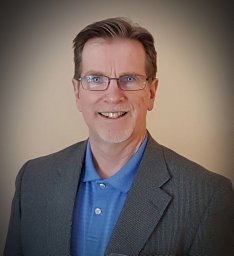 Timothy Hanratty合作论文数US Army Research Laboratory26
 Richard Helfman合作论文数8Holly Ingham合作论文数6
 Xiaocong Fan合作论文数California State University, San Marcos4
 Sheng Miao合作论文数Faculty of Environmental Engineering, The University of Kitakyushu3
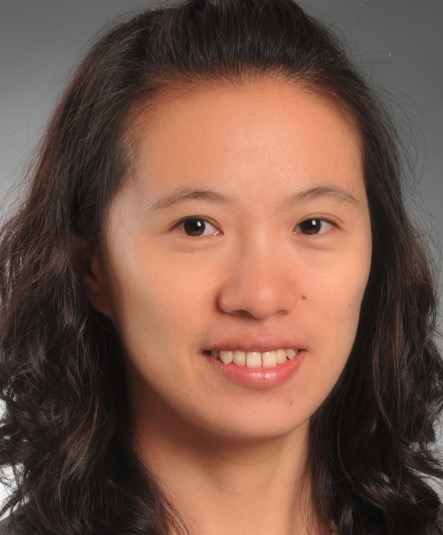 Ziying Tang (汤姿英)合作论文数Department of Computer & Information Sciences, Jess & Mildred Fisher College of Science & Mathematics, Towson University3Ed Baur合作论文数3Eric Heilman合作论文数3
 Robert J. Hammell II合作论文数3
 John Richardson合作论文数Department of Forest and Conservation Sciences, Faculty of Forestry, The University of British Columbia2
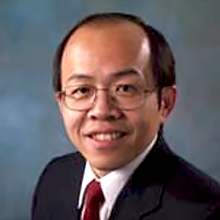 John Yen合作论文数The Penn State University, University Park, PA2Bingjun Sun合作论文数The Pennsylvania State University2
 Barry Bodt合作论文数2Shuang Sun合作论文数2
 Michael D. Mcneese合作论文数College of Information Sciences and Technology, Pennsylvania State University2Guruprasad Airy合作论文数2
 bala kishore Nadella合作论文数1Mark Mittrick合作论文数1
 Sharon Anne Carmody合作论文数1m rajan合作论文数1Hanne M. Saarinen合作论文数1Rg Wright合作论文数1Weijie Zhu合作论文数1
 Zheng Li合作论文数University of Pittsburgh1
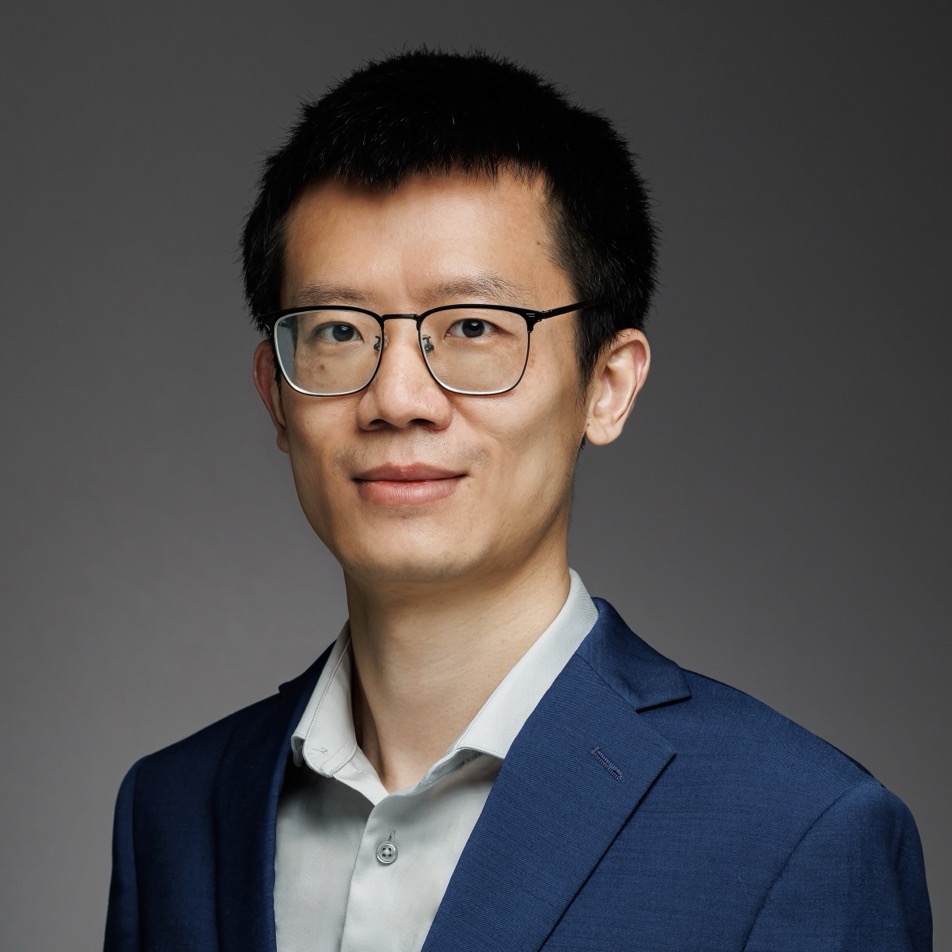 Linghao Song (宋凌皓)合作论文数Department of Electrical & Computer Engineering, Yale University1
 Chaofei Yang合作论文数University of Pittsburgh1
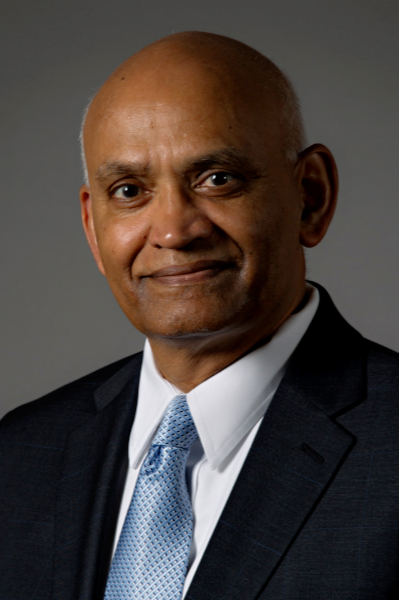 Krishna R. Pattipati合作论文数Department of Electrical and Computer Engineering, University of Connecticut1Robert J Hammell合作论文数1
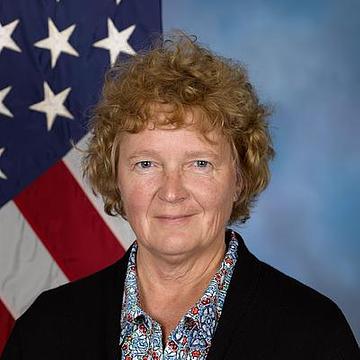 Sue Kase合作论文数Army Research Laboratory1Eray Balkanli合作论文数1
 Bonan Yan (燕博南)合作论文数Institute for Artificial Intelligence, Peking University;School of Integrated Circuits, Peking University1
 Chenchen Liu (刘晨晨)合作论文数School of Integrated Circuit Science and Engineering, Beihang University1
 Qing Wu合作论文数Air Force Research Laboratory1
 Lingyi Zhang合作论文数1
 Andrew L. Drozd合作论文数Marconi-Rosenblatt Innovation Laboratory1Frederick S. Brundick合作论文数1
 Alireza Shabani合作论文数Department of Electrical Engineering;University of Southern California;Department of Electrical Engineering, University of Southern California1Edmund H. Baur合作论文数1P. Tanenbaum合作论文数1
 Dwi H. Widyantoro合作论文数Department of Computer Science;Texas A&M University;Department of Computer Science, Texas A&M University1H.Mitchell Perry合作论文数1
 Heather Roy合作论文数Department of Biology;Geological and Environmental Sciences;Hope College;Department of Biology, Hope College1M. Mannucci合作论文数1Edward L. Keenan合作论文数1
 Manisha Mishra合作论文数Faculty of Science, Banaras Hindu University1M. S. Taylor合作论文数1
 Yiran Chen (陈怡然)合作论文数Pierre R. Lamond Department of Electrical and Computer Engineering, Pratt School of Engineering, Duke University1




