For over a century, researchers and educators have called for the integration of psychological science into medical school curricula, but such efforts have been impeded by barriers within medicine and psychology. In addressing these barriers, Psychology has re-examined its relationship to Medicine, incorporated psychological practices into health care, and redefined its parameters as a science. In response to interdisciplinary research into the mechanisms of bio-behavioral interaction, Psychology evolved from an ancillary social science to a bio-behavioral science that is fundamental to medicine and health care. However, in recent medical school curriculum innovations, psychological science is being reduced to a set of "clinical skills," and once again viewed as an ancillary social science. These developments warrant concern and consideration of new approaches to integrating psychological science in medical education.
Research advances in behavioral medicine have prompted increasing recognition of the importance of behavioral and social science factors in healthcare, resulting in calls for the greater incorporation of the behavioral sciences in medical education and of behavioral interventions in healthcare. These developments have underscored the need for research on the mechanisms of bio-behavioral interaction and the conceptual limitations of the traditional biomedical model. The evolution of a bio-behavioral model of medicine and increasing multidisciplinary translational research in bio-behavioral medicine, have significant implications for information technology (IT). Consumers of IT must be assured that the “best evidence” incorporates relevant information on behavioral as well as biological factors, especially, information on the complex processes and mechanisms of bio-behavioral interaction that contribute to medical conditions and their treatment.
Liquid chromatography (LC) remains the technique of choice for analytical separations of pharmaceutical compounds. Still today, new detector and column technologies are taking liquid chromatography to lower quantitation levels and improved selectivity. While known throughout the chemical, environmental and pharmaceutical industries as the stalwart technique for metals analysis, recent trade publications substantiate inductively coupled plasma mass spectrometry (ICP-MS) is making significant inroads in nonmetal testing for pharmaceutical analysis as well. Coupling ICP-MS to liquid chromatography is not only providing new and enhanced sensitivity and selectivity for pharmaceutical separations but also eliminates the need for internal standards for each analyte in order to obtain accurate quantitative results. Both inductively coupled plasma atomic emission spectrometry (ICP-AES) and inductively coupled plasma mass spectrometry rely on sample decomposition to convert analytes to atomic forms; such drawbacks can be minimized or eliminated. Nonmetal sensitivity and selectivity for pharmaceutical compounds is of particular interest for genotoxic impurity determinations and difficult clinical matrices. The performance of coupling LC systems to ICP-MS will be reviewed; the separation of several pharmaceutical compounds containing sulfur, phosphorous, chlorine and fluorine will be presented to illustrate the capabilities of this technique and point to future directions for pharmaceutical analysis. The effects on sensitivity of various mobile phases and gradients, and the correlation between this study and earlier studies with direct sample nebulization will be discussed.
The behavioral sciences are taught in medical curricula around the world. In the current paper psychologists teaching in medical schools in Australia, Mexico, Saudi Arabia, Thailand, the United Kingdom and the United States share their experience and reflections. Whilst direct comparisons between countries are not made, the themes that are evident within and between accounts are instructive. As behavioral scientists around the globe are struggling to maintain a presence in medical education many of the reasons behind this are shared, regardless of the country. Challenges discussed include those related to the impact of unrealized potential contributions of psychologists as health care professionals, teaching of behavioral sciences by other professions, domination of the biomedical model without a corresponding recognition of psychology as science, and modern medical pedagogies such as problem-based learning, which favor biomedicine. Systemic and political barriers over which we as a discipline may have little control are also highlighted.
Concerns for the integrity of psychology as an independent discipline have caused some psychologists to object to introducing any knowledge from the biological sciences into the training of psychologists. However, calls for the greater incorporation of the behavioral sciences in medical education, increased attention to research on the mechanisms of bio-behavioral interaction, and initiatives in translational medical research and clinical care, have prompted increased interest in interdisciplinary research, health care, and teaching. These changes, in turn, are resulting in a re-conceptualization of the structure of academic medicine with increasing emphasis upon multidisciplinary knowledge and interdisciplinary collaboration, and less emphasis upon disciplinary insularity and competitiveness. If clinical health psychology is to play a role in this evolving concept of academic health care, it must adequately prepare its trainees to function in interdisciplinary academic health care settings. This will require not only expertise in the role of behavioral factors relevant to medical disorders, but also some basic familiarity with the biological processes to which those behavioral factors relate. With the evolution of its fund of knowledge, clinical health psychology has the potential to utilize its science to discover, describe, interpret, teach and clinically apply knowledge of the mechanisms of interaction between biological functions and behavioral, learning, cognitive, socio-cultural and environmental processes. By failing to seize this initiative, clinical health psychology risks becoming irrelevant to the evolving model of medical research, education and health care.
Atomic spectrometry, specifically inductively coupled plasma atomic emission spectrometry (ICP-AES) and mass spectrometry (ICP-MS) show promise for heteroatom-based detection of pharmaceutical compounds. The combination of ultrasonic nebulization (USN) with membrane desolvation (MD) greatly enhances detection limits with these approaches. Because pharmaceutical analyses often incorporate liquid chromatography, the study herein was performed to examine the effects of solvent composition on the analytical behaviors of these approaches. The target analyte was phosphorus, introduced as phosphomycin. AES response was examined at the 253.7 nm atom line and mass 31 ions were monitored for the MS experiments. With pure aqueous solutions, detection limits of 5 ppb (0.5 ng in 0.1 mL injection volumes) were obtained with ICP-MS. The ICP-AES detection limit was 150 ppb. Solvent compositions were varied from 0 to 80% organic (acetonitrile and methanol) with nine buffers at concentrations typically used in liquid chromatography. In general, solvents and buffers had statistically significant, albeit small, effects on ICP-AES sensitivities. A few exceptions occurred in cases where typical liquid chromatography buffer concentrations produced higher mass loadings on the plasma. Indications are that isocratic separations can be reliably performed. Within reasonable accuracy tolerances, it appears that gradient chromatography can be performed without the need for signal response normalization. Organic solvent and buffer effects were more significant with ICP-MS. Sensitivities varied significantly with different buffers and organic solvent content. In these cases, gradient chromatography will require careful analytical calibration as solvent and buffer content is varied. However, for most buffer and solvent combinations, signal and detection limits are only moderately affected. Isocratic separations and detection are feasible.
This paper presents a brief history of the Association of Medical School Psychologists (AMSP) from the Association’s beginning in 1982 to the present day. Prior to 1982, there had been several unsuccessful efforts to form an association that would represent psychologists in academic medical centers. Attempts by psychiatry to limit the growing number and influence of psychologists in medical schools created a sense of threat among psychologists that catalyzed the formation of the Association. Membership was initially restricted to one senior psychologist from each medical school, a restriction that limited AMSP’s development, but AMSP later opened its doors to all academic medical center psychologists. The Association was rebuffed in initial efforts to join the Association of American Medical Colleges, and at a later date, to become a Division of the American Psychological Association (APA). In time, however, AMSP did establish formal ties to both of those organizations, and it has collaborated with APA in important surveys of academic medical center psychologists. Following a period in the late 1990’s when AMSP seemed likely to lose its way, the Association rebounded. AMSP now has an Administrative Director, a stable home base, and revised bylaws that assure greater stability and continuity of leadership. These developments, in conjunction with a strong working relationship with the Journal of Clinical Psychology in Medical Settings, have positioned AMSP to grow and more effectively serve the community of psychologists who work in academic medical centers.
 Townes Brenda D合作论文数3
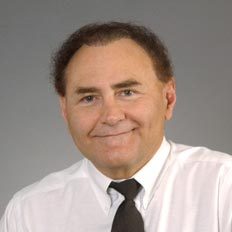 Peter P Vitaliano合作论文数Departments of Psychiatry, University of Washington3K Kwok合作论文数2
 Joan Russo合作论文数Department of Psychiatry and Behavioral Sciences, School of Medicine, University of Washington2
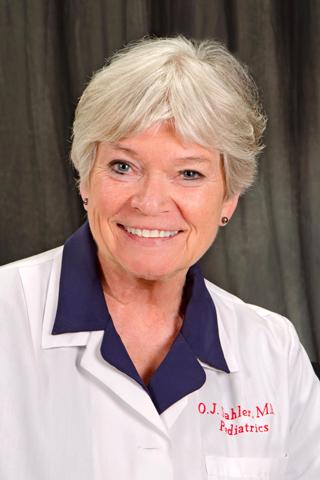 Olle J. Sahler合作论文数Department of Pediatrics, Hematology and Oncology, University of Rochester Medical Center2
 Gregory K Webster合作论文数2D. Daniel Hunt合作论文数2r w paulson合作论文数1d w moody合作论文数1Reuben J. Silver合作论文数1Edith B. Chase合作论文数1John Whittenbaugh合作论文数1Brownsbe.Cn合作论文数1Jw Carnahan合作论文数1Mafojane N A合作论文数1
 Juan Jose Sanchez-Sosa合作论文数1Kruger A J合作论文数1Benjamin G Andrew H合作论文数1
 Suzanne Bennett Johnson合作论文数Department of Behavioral Sciences and Social Medicine, College of Medicine, Florida State University1
 Jon W. Carnahan合作论文数1R Eastman合作论文数1C.H. Van Der Meyden合作论文数1
 Roland Maiuro合作论文数1Gerald Leventhal合作论文数1Adam E. Dill合作论文数1Mary Mcdermed Daly合作论文数1
 Ellen S. Mitchell合作论文数School of Nursing, University of Washington1Martha Davis合作论文数1
 Eugene K. Emory合作论文数Departments of Psychology, and Psychiatry and Behavioral Sciences, Emory University1Karen L Syrjala合作论文数1
 Sombat Tapanya合作论文数1Gary W. Donaldson合作论文数1Gopal P. Mathur合作论文数1
 Allan Posthuma合作论文数1
 Christine Bundy合作论文数School of Medicine, University of Manchester1
 Anna Chur-Hansen合作论文数University of Adelaide Discipline of Psychiatry, Royal Adelaide Hospital1Kelly J. Egan合作论文数1VU FRITZ合作论文数1R. F. Gledhill合作论文数1Edward A. Walker合作论文数1




