This report offers an overview of the availability of intellectual property rights for plants, focusing upon the seed industry. It initially offers an introduction to seed innovation. The report then reviews the three intellectual property regimes applicable to plant innovation: utility patents, plant patents and plant variety protection certificates. It then details a 2001 decision of the U.S. Supreme Court, J.E.M. Ag Supply, Inc. v. Pioneer Hi-Bred International, Inc., which held that sexually reproducing plants may be subject to utility patents.
BackgroundCRISPR-Cas9 technology has revolutionised genetic screens and can inform on gene essentiality and chemo-genetic interactions. It is easily deployed and widely supported with many pooled CRISPR libraries available commercially. However, discrepancies between the reference genomes used in the design of those CRISPR libraries and the cell line under investigation can lead to loss of signal or introduction of bias. The problem is particularly acute when dealing with variant cell lines such as cancer cell lines.ResultsHere, we present an algorithm, EXOme-guided Re-annotation of nuCleotIde SEquences (Exorcise), which uses sequence search to detect and correct mis-annotations in CRISPR libraries. Exorcise verifies the presence of CRISPR targets in the target genome and applies corrections to CRISPR libraries using existing exome annotations. We applied Exorcise to re-annotate guides in pooled CRISPR libraries available on Addgene and found that libraries designed on a more permissive reference sequence had more mis-annotations. In simulated CRISPR screens, we modelled common mis-annotations and found that they adversely affect discovery of hits in the intermediate range. We then confirmed this by applying Exorcise on datasets from Dependency Map (DepMap) and the DNA Damage Response CRISPR Screen Viewer (DDRcs), where we found improved discovery power upon Exorcise while retaining the strongest hits.ConclusionsPooled CRISPR libraries map guide sequences to genes and these mappings might not be ready to use due to permissive library design or investigating a variant cell line. By re-annotating CRISPR guides, Exorcise focuses CRISPR experiments towards the genome of the cell line under investigation. Exorcise can be applied at the library design stage or the analysis stage and allows post hoc re-analysis of completed screens. It is available under a Creative Commons Zero v1.0 Universal licence at https://github.com/SimonLammmm/exorcise.
In 2019, symptoms typical of infection by iris yellow spot virus (IYSV; family Tospoviridae, genus Orthotospovirus) were observed on shallot (A. cepa var. aggregatum) grown at the Gatton Research Facility, Department of Agriculture and Fisheries, Queensland. Initial testing by DAS-ELISA was positive for IYSV, and subsequent specific RT-PCR amplifying part of the RdRp (L-segment) and sequencing of amplicons confirmed the IYSV infection. This is the first record of IYSV infection of shallot in Australia.
Members of the genus Cilevirus are causative agents of citrus leprosis, an economically important disease of citrus in the Americas. Using high-throughput sequencing, we detected the hibiscus strain of citrus leprosis virus C2 (CiLV-C2H) infecting a cultivated Hoya macgillivrayi plant in Brisbane, Australia. The infection was not systemic, and presumably resulted from the feeding action of false spider mites (Brevipalpus spp.) that acquired the virus from an unidentified source of inoculum. Capsicum chlorosis virus, an orthotospovirus, was also present as a mixed infection, preventing the attribution of symptoms to CiLV-C2H.
The catalytic cycle of topoisomerase 2 (TOP2) enzymes proceeds via a transient DNA double-strand break (DSB) intermediate termed the TOP2 cleavage complex (TOP2cc), in which the TOP2 protein is covalently bound to DNA. Anticancer agents such as etoposide operate by stabilizing TOP2ccs, ultimately generating genotoxic TOP2-DNA protein cross-links that require processing and repair. Here, we identify RAD54 like 2 (RAD54L2) as a factor promoting TOP2cc resolution. We demonstrate that RAD54L2 acts through a novel mechanism together with zinc finger protein associated with tyrosyl-DNA phosphodiesterase 2 (TDP2) and TOP2 (ZATT/ZNF451) and independent of TDP2. Our work suggests a model wherein RAD54L2 recognizes sumoylated TOP2 and, using its ATPase activity, promotes TOP2cc resolution and prevents DSB exposure. These findings suggest RAD54L2-mediated TOP2cc resolution as a potential mechanism for cancer therapy resistance and highlight RAD54L2 as an attractive candidate for drug discovery.
All organisms possess molecular mechanisms that govern DNA repair and associated DNA damage response (DDR) processes. Owing to their relevance to human disease, most notably cancer, these mechanisms have been studied extensively, yet new DNA repair and/or DDR factors and functional interactions between them are still being uncovered. The emergence of CRISPR technologies and CRISPR-based genetic screens has enabled genome-scale analyses of gene-gene and gene-drug interactions, thereby providing new insights into cellular processes in distinct DDR-deficiency genetic backgrounds and conditions. In this Review, we discuss the mechanistic basis of CRISPR-Cas genetic screening approaches and describe how they have contributed to our understanding of DNA repair and DDR pathways. We discuss how DNA repair pathways are regulated, and identify and characterize crosstalk between them. We also highlight the impacts of CRISPR-based studies in identifying novel strategies for cancer therapy, and in understanding, overcoming and even exploiting cancer-drug resistance, for example in the contexts of PARP inhibition, homologous recombination deficiencies and/or replication stress. Lastly, we present the DDR CRISPR screen (DDRcs) portal, in which we have collected and reanalysed data from CRISPR screen studies and provide a tool for systematically exploring them.
Banana bunchy top disease (BBTD) is caused by banana bunchy top virus (BBTV), the most important virus affecting banana. Currently, no cultivar or accession of banana has complete resistance to BBTD. A total of 36 wild Musa spp. accessions, including 34 Musa balbisiana and 2 M. acuminata subsp. errans (“Agutay”), were screened for resistance against BBTV. In greenhouse tests using viruliferous banana aphids (Pentalonia nigronervosa), all M. balbisiana accessions remained symptomless, and BBTV was not detected in any of these plants by PCR at 3 and 6 months postinoculation. In contrast, 100% disease incidence was recorded in M. acuminata subsp. errans and in cv. Lakatan susceptible control plants. The PCR-negative M. balbisiana plants were then transferred to a field with high BBTV inoculum pressure where they remained symptomless and PCR-negative for up to 5 years, while all cv. Lakatan developed BBTD. Wild M. balbisiana accessions showed a high level of resistance and possibly immunity to BBTV and are expected to provide a resource for conventional and marker-assisted breeding. [Formula: see text] Copyright © 2023 The Author(s). This is an open access article distributed under the CC BY-NC-ND 4.0 International license .
Bermuda grass latent virus (BGLV; genus Panicovirus) is identified for the first time in Australia and in only the second country after the USA. A full-length genome sequence was obtained, which has 97% nucleotide sequence identity to that of the species exemplar isolate. Surveys for BGLV, utilising a newly designed universal panicovirus RT-PCR assay for diagnosis, demonstrated widespread infection by this virus in a broad variety of Bermuda grass cultivars (Cynodon dactylon and C. dactylon × C. transvaalensis) grown in both New South Wales and Queensland. The virus was also detected in Rhodes grass (Chloris gayana) and Kikuyu grass (Cenchrus clandestinus), which are both important pasture grasses in subtropical Australia, and the latter is also grown as turf. Furthermore, the Rhodes grass plant, which had strong mosaic symptoms, was also infected with sugarcane mosaic virus, warranting further investigations as to whether synergistic interactions occur between these two viruses.
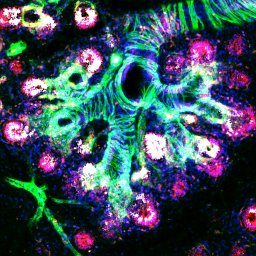
The balance between self-renewal and differentiation in human foetal lung epithelial progenitors controls the size and function of the adult organ. Moreover, progenitor cell gene regulation networks are employed by both regenerating and malignant lung cells, where modulators of their effects could potentially be of therapeutic value. Details of the molecular networks controlling human lung progenitor self-renewal remain unknown. We performed the first CRISPRi screen in primary human lung organoids to identify transcription factors controlling progenitor self-renewal. We show that SOX9 promotes proliferation of lung progenitors and inhibits precocious airway differentiation. Moreover, by identifying direct transcriptional targets using Targeted DamID, we place SOX9 at the centre of a transcriptional network, which amplifies WNT and RTK signalling to stabilise the progenitor cell state. In addition, the proof-of-principle CRISPRi screen and Targeted DamID tools establish a new workflow for using primary human organoids to elucidate detailed functional mechanisms underlying normal development and disease.
ABSTRACTThe balance between self-renewal and differentiation in human fetal lung epithelial progenitors controls the size and function of the adult organ. Moreover, progenitor cell gene regulation networks are employed by both regenerating and malignant lung cells, where modulators of their effects could potentially be of therapeutic value. Details of the molecular networks controlling human lung progenitor self-renewal remain unknown. We performed the first CRISPRi screen in primary human lung organoids to identify transcription factors controlling progenitor self-renewal. We show that SOX9 promotes proliferation of lung progenitors and inhibits precocious airway differentiation. Moreover, by identifying direct transcriptional targets using Targeted DamID we place SOX9 at the centre of a transcriptional network which amplifies WNT and RTK signalling to stabilise the progenitor cell state. In addition, the proof-of-principle CRISPRi screen and Targeted DamID tools establish a new approach for using primary human organoids to elucidate detailed functional mechanisms underlying normal development and disease.HighlightsA pooled CRISPRi screen in human fetal lung organoids identified transcription factors controlling progenitor cell self-renewal.SOX9 promotes tip progenitor cell proliferation and supresses precocious airway differentiation.Targeted DamID (TaDa) identified SOX9 direct binding targets, revealing that SOX9 lies at the intersection of WNT and RTK signalling.SOX9 and ETVs co-regulate the human fetal lung progenitor self-renewal programme.
Two near complete polerovirus genomes were assembled using high throughput sequencing (HTS) data from two separate samples of garlic cultivar ‘Glenlarge’ grown in Gatton, Queensland, Australia. Whole genome sequence comparisons showed that one contig shared 96.7% nucleotide identity with phasey bean mild yellows virus (MT966032.1) and the other, 99.8% nucleotide identity with turnip yellows virus (MT586581.1). Phylogenetic analyses further revealed that the isolates fell within the PBMYV group 2 and TuYV group 2 clades, respectively. This is the first report of these poleroviruses infecting garlic.
Banana bunchy top virus is reported for the first time in Laos. Infected plants showed typical disease symptoms and the two complete genome sequences reported place the isolates in the Southeast Asian subgroup.
Accurate information on the presence and distribution of plant pathogens in Australia is fundamental to the operation of the nation's plant biosecurity system. It has been more than thirty years since the last attempt to compile a list of plant viruses and viroids for the whole of Australia, during which time many changes have occurred due to the widespread adoption of PCR and DNA sequencing technologies for diagnosis. In this paper, an updated register of plant viruses and viroids occurring in ornamental, turfgrass and native plant species in Australia is provided. A conservative approach has been taken when undertaking this study, and for the most part only records that can be substantiated by a specific diagnostic test such as PCR, ELISA or DNA sequencing are included. Furthermore, we have limited the register to published records.
The Australasian biogeographic realm is a major centre of diversity for orchids, with every subfamily of the Orchidaceae represented and high levels of endemism at the species rank. It is hypothesised that there is a commensurate diversity of viruses infecting this group of plants. In this study, we have utilised high-throughput sequencing to survey for viruses infecting greenhood orchids (Pterostylidinae) in New South Wales and the Australian Capital Territory. The main aim of this study was to characterise Pterostylis blotch virus (PtBV), a previously reported but uncharacterised virus that had been tentatively classified in the genus Orthotospovirus. This classification was confirmed by genome sequencing, and phylogenetic analyses suggested that PtBV is representative of a new species that is possibly indigenous to Australia as it does not belong to either the American or Eurasian clades of orthotospoviruses. Apart from PtBV, putative new viruses in the genera Alphaendornavirus, Amalgavirus, Polerovirus and Totivirus were discovered, and complete genome sequences were obtained for each virus. It is concluded that the polerovirus is likely an example of an introduced virus infecting a native plant species in its natural habitat, as this virus is probably vectored by an aphid, and Australia has a depauperate native aphid fauna that does not include any species that are host-adapted to orchids.
The complete genome sequence of pineapple secovirus B (PSV-B), a new virus infecting pineapple (Ananas comosus) on the island of Oahu, Hawaii, was determined by high-throughput sequencing (HTS). The genome comprises two RNAs that are 5,956 and 3,808 nt long, excluding the 3'-end poly-A tails, both coding for a single large polyprotein. The RNA1 polyprotein contains five conserved domains associated with replication, while the RNA2 polyprotein is cleaved into the movement protein and coat protein. PSV-B is representative of a new species in the subgenus Cholivirus (genus Sadwavirus; family Secoviridae), as the level of amino acid sequence identity to recognized members of this subgenus in the Pro-Pol and coat protein regions is below currently valid species demarcation thresholds.
The genome sequence of a new subgroup C nepovirus from Stenotaphrum secundatum in Australia is described. This virus, tentatively named Stenotaphrum nepovirus (SteNV), was present in separate plants as a mixed infection with either sugarcane mosaic virus or Panicum mosaic virus. The virus genome was divided between two RNA segments, 7,824 and 7,104 nucleotides (nt) in length, which each encode a single long polyprotein with putative 3C-like cysteine protease sites of the type H/G, H/S or L/S. The 3' untranslated region of RNA2, at 2,155 nt, is the longest observed for any subgroup C nepovirus. Phylogenetic analyses using protease-polymerase and coat protein amino acid alignments suggest that SteNV is most closely related to cherry leaf roll virus. Using a newly developed RT-PCR assay, this virus was detected at multiple localities in New South Wales, Queensland and Western Australia, and in a second host species, Digitaria didactyla. No consistent association between virus infection and symptoms could be established. The economic importance, pathogenicity and transmission of this novel virus species warrant further investigation.
Alphasatellites (family Alphasatellitidae) are circular, single-stranded DNA molecules (~1–1.4 kb) that encode a replication-associated protein and have commonly been associated with some members of the families Geminiviridae, Nanoviridae, and Metaxyviridae (recently established). Here, we provide a taxonomy update for the family Alphasatellitidae following the International Committee on Taxonomy of Viruses (ICTV) Ratification Vote held in March 2021. The taxonomic update includes the establishment of the new subfamily Petromoalphasatellitinae. This new subfamily includes three new genera as well as the genus Babusatellite, which previously belonged to the subfamily Nanoalphasatellitinae. Additionally, three new genera and 14 new species have been established in the subfamily Geminialphasatellitinae, as well as five new species in the subfamily Nanoalphasatellitinae.
Full genome sequences are presented for two isolates of Spartina mottle virus (SpMoV) from two accessions of the hybrid turf grass Cynodon dactylon × C. transvaalensis (Bermuda grass, green couch), originally from the USA but detected during post-entry quarantine in Australia. Both isolates had a genome of 9,346 nucleotides, encoding a single polyprotein of 3,029 amino acids and predicted to be cleaved into 10 mature proteins. Phylogenetic analysis strongly supported placement in a new genus within the family Potyviridae. The isolates possess 715–780 × 11–12 nm flexuous virions and produce cylindrical (pinwheel) inclusions in infected cells. They were mechanically transmitted to several species in the Poaceae including Zea mays (maize, sweet corn), Chloris gayana (Rhodes grass), and Echinochloa colona (awnless barnyard grass).
Background The presence of geminivirus sequences in a preliminary analysis of sRNA sequences from the leaves of macadamia trees with abnormal vertical growth (AVG) syndrome was investigated. Results A locus of endogenous geminiviral elements (EGE) in the macadamia genome was analysed, and the sequences revealed a high level of deletions and/or partial integrations, thus rendering the EGE transcriptionally inactive. The replication defective EGE in the macadamia genome indicates its inability to be the source of new viral infections and thus cause AVG or any other disease in macadamia. The EGE sequences were detected in two edible Macadamia species that constitute commercial cultivars and the wild germplasm of edible and inedible species of Macadamia . This strongly suggests that the integration preceded speciation of the genus Macadamia . A draft genome of a locus of EGE in Macadamia was developed. The findings of this study provide evidence to suggest the endogenization of the geminiviral sequences in the macadamia genome and the ancestral relationship of EGE with Macadamia in the Proteaceae family. Random mutations accumulating in the EGE inform that the sequence is evolving. Conclusions The EGE in Macadamia is inactive and thus not a direct cause of any diseases or syndromes including AVG in macadamia. The insertion of the EGE in the macadamia genome preceded speciation of the genus Macadamia .
Disease outbreaks caused by turnip yellows virus (TuYV), a member of the genus Polerovirus, family Luteoviridae, regularly occur in canola and pulse crops throughout Australia. To understand the genetic diversity of TuYV for resistance breeding and management, genome sequences of 28 TuYV isolates from different hosts and locations were determined using high-throughput sequencing (HTS). We aimed to identify the parts of the genome that were most variable and clarify the taxonomy of viruses related to TuYV. Poleroviruses contain seven open reading frames (ORFs): ORF 0–2, 3a, and 3–5. Phylogenetic analysis based on the genome sequences, including isolates of TuYV and brassica yellows virus (BrYV) from the GenBank database, showed that most genetic variation among isolates occurred in ORF 5, followed by ORF 0 and ORF 3a. Phylogenetic analysis of ORF 5 revealed three TuYV groups; P5 group 1 and group 3 shared 45–49% amino acid sequence identity, and group 2 is a recombinant between the other two. Phylogenomic analysis of the concatenated ORFs showed that TuYV is paraphyletic with respect to BrYV, and together these taxa form a well-supported monophyletic group. Our results support the hypothesis that TuYV and BrYV belong to the same species and that the phylogenetic topologies of ORF 0, 3a and 5 are incongruent and may not be informative for species demarcation. A number of beet western yellow virus (BWYV)- and TuYV-associated RNAs (aRNA) were also identified by HTS for the first time in Australia.
 Andrewd W Geering合作论文数Department of Primary Industries and Fisheries Queensland Australia17
 Murray Sharman合作论文数Department of Employment, Economic Development and Innovation, Ecosciences Precinct10
 Kathleen S Crew合作论文数9
 Darren Martin合作论文数Division of Computational Biology, Department of Integrative Biomedical Sciences, Institute of Infectious Disease and Molecular Medicine, Faculty of Health Sciences, University of Cape Town9
 Simona Kraberger合作论文数Biodesign Center for Fundamental & Applied Microbiomics, Arizona State University;Biodesign Institute, Arizona State University7
 Arvind Varsani合作论文数The Biodesign Institute and School of Life Sciences, Arizona State University6
 Steve Jackson合作论文数Cancer Research UK Gurdon Institute, University of Cambridge;Department of Biochemistry, University of Cambrige5
 David A Collings合作论文数Department of Botany, North Carolina State University5
 Daisy Stainton合作论文数School of Biological Sciences, University of Canterbury5Stephen M Harper合作论文数4Ai Chin Teo合作论文数4
 sari nurulita合作论文数The University of Queensland4
 Nga T Tran合作论文数The University of Queensland4
 Dayaram Anisha合作论文数School of Biological Sciences, University of Canterbury4Lolohea Samiuela合作论文数4
 Harkins Gordon W合作论文数S African Natl Bioinformat Inst, Univ Western Cape4Khonesavane Chittarath合作论文数3
 Safaa G. Kumari合作论文数3Preyapan Pongsapich合作论文数3Schwinghamer Mark W合作论文数3
 Matthew Walters合作论文数3Fiona Filardo合作论文数3Paul R. Campbell合作论文数2Mana'ia Halafihi合作论文数2Daniel C Hand合作论文数2Ines van den Houwe合作论文数2GARY KONG合作论文数2
 Sarah K Thompson合作论文数2Sian Davies合作论文数2Denis M Persley合作论文数2
 Fe M. Dela Cueva合作论文数2Chu-Fan Xu合作论文数2
 Kerstin B Meyer合作论文数Wellcome Sanger Institute2
 James Hadfield合作论文数Wellcome Trust Sanger Institute, Hinxton, UK.2
 Almudena Serrano-Benitez合作论文数2Dawei Sun合作论文数Department of Physiology, Development and Neuroscience, University of Cambridge2
 Oriol Llora-Batlle合作论文数University of Cambridge2Alasdair T M Hubbard合作论文数Univ Liverpool Liverpool Sch Trop Med, Dept Trop Dis Biol, Liverpool L3 5QA, Merseyside, England2
 Andrew Geering合作论文数Queensland Alliance for Agriculture and Food Innovation, The University of Queensland2
 Ralf Dietzgen合作论文数School of Chemistry and Molecular Biosciences, Faculty of Science, The University of Queensland2
 Moir J W合作论文数Department of Biochemistry, University of Oxford2
 Emma L Rawlins合作论文数Wellcome - MRC Cambridge Stem Cell Institute, University of Cambridge2
 Monica A Kehoe合作论文数School of Plant Biology, University of Western Australia2
 Muhire Brejnev M合作论文数Institute of Infectious Diseases and Molecular Medicine, University of Cape Town2
 Peng He合作论文数2
 Walfred W.C. Tang合作论文数Wellcome Trust Cancer Research UK Gurdon Institute, University of Cambridge;Department of Physiology, Development and Neuroscience, University of Cambridge;Wellcome Trust-Medical Research Council Stem Cell Institute, University of Cambridge;University of Cambridge, University of Cambridge2
 Kyungtae Lim合作论文数Departments of Stem Cell Biology and., the2
 Andrea H. Brand合作论文数Department of Cell Biology, Grossman School of Medicine, New York University2
 Sharon L van Brunschot合作论文数Plant Biosecurity Cooperative Research Centre;School of Agriculture and Food Sciences, The University of Queensland;School of Agriculture and Food Sciences, The University of Queensland2




