Purpose: People use self-talk (verbalized cognitions) to monitor and evaluate their performance, making it a vital construct in the self-regulation process. Research Methods/Approach: We coded 1,092 self-talk responses from 177 undergraduates for two types of self-talks, constructive and dysfunctional. Findings: We found constructive self-talk positively related to satisfaction, self-efficacy, and academic performance, whereas dysfunctional self-talk negatively related to satisfaction and self-efficacy but was not significantly related to performance. Constructive self-talk explained incremental variance in self-efficacy and performance beyond that explained by related psychological constructs: self-regulation skills, conscientiousness, and neuroticism. Dysfunctional self-talk only explained incremental variance in self-efficacy. Implications: This study shows that self-talk is a unique and influential construct that should be of interest to academics and practitioners across the disciplines of psychology and education.
Burnout is a major psychological and physical health-related problem for workers in all fields, but especially for those in the fast-paced and rapidly changing world of healthcare. Burnout has severe consequences for patients, including medical error, and is a leading contributing cause of depression and suicide among healthcare workers. Organizational science is just beginning to be applied in earnest to physician burnout and patient safety, and holds several potential keys to addressing these concerns. The Burned Out Physician is for two groups: healthcare workers (especially physicians) and patients. Physicians will use this book to get an accurate picture of what they are experiencing and how to change it, and patients will use this book to see what their healthcare providers are experiencing and learn how to help and/or protect themselves. The volume includes a checklist of burnout symptoms, and crucially a list of solutions as part of an active effort to solve the burnout crisis.
Previous research on workplace meetings identified critical design features, leader behaviors, group dynamics, post-meeting actions, and other factors which help determine the effectiveness of the meeting. But as much as the authors acknowledge that meetings may differ from each other, much of the research appears to assume that it is meaningful to talk about "the meeting" as a single, generic entity (most commonly, the regularly scheduled staff or department meeting). In fact, though, there are several common types of meetings which vary among themselves in terms of a number of measurable parameters such as structure, meeting members, meeting leader, timing and duration, and scope. It is a gratuitous assumption that what the authors know about workplace meetings based on one especially common type applies to all workplace meetings. This chapter offers a historical review of previous attempts to classify meeting types; it then overviews several common types which deviate from the standard staff meeting paradigm, including project team meetings, debrief meetings, committee meetings, site-wide meetings, shift change meetings, and crew formation meetings. In comparing these types to the staff meeting, the authors identify some of the critical differences, thereby providing a first step toward a true taxonomy of meetings.
Recent evidence suggests that surface acting occurs in workplace meetings. Even in light of these findings, it remains unknown why employees would choose to surface act in meetings with their colleagues and supervisors, and how this form of emotion regulation affects employees in the short term. A sample of working adults were asked to report their levels of surface acting during multiple workplace meetings. Results indicate that employees engage in surface acting during meetings, and that their surface acting is positively related to the presence of higher status attendees in these meetings. In addition, surface acting during meetings is negatively related to perceptions of both meeting psychological safety and meeting effectiveness. We also highlight the important role of one’s job level as a moderating condition when examining the relationship between surface acting and perceived meeting effectiveness. Our results suggest that individuals who are higher up in an organization’s hierarchy may perceive meetings as less effective when they surface act when compared with individuals who are in lower levels of the organization.
This series of studies drew on the expectation states theory of status and socioemotional behavior and conservation of resources theory to explain why individuals might engage in emotional labor outside of customer-facing interactions and how variability in emotional labor across these situations may be detrimental to employees. Three samples of working adults were asked to report on their levels of emotional labor during workplace meetings. Results indicated that participants engaged in emotional labor during their workplace meetings and that their surface acting was positively related to the presence of higher-status attendees in these meetings. Additionally, increased variability in surface acting across workplace meetings was positively related to reported levels of post-meeting emotional exhaustion above and beyond the effect of within-meeting emotional labor.
Meetings are salient sites of temporal behaviour in organizations. They consume large amounts of time, punctuate and interrupt the temporal flow of work, provide venues of time coordination and allocation, and mark time in organizations (e.g., the weekly staff meeting). In this article, we seek to answer the question, "Should organizational scientists and temporality scholars care about meeting lateness?" Across two studies, we find that meeting lateness is a high base rate and seemingly consequential workplace event, with both objective and subjective elements, and potential implications for individuals, relationships, groups, and the organization more broadly. Meeting lateness correlates include job satisfaction, intent to quit, satisfaction with meetings in general, age, and conscientiousness. In light of the frequency, consequences, and conceptual complexity of meeting lateness, along with the dearth of extant research on the topic, it is a phenomenon primed for further study.
Meetings are a central fact of organizational life. As a vehicle for communication, they can be extremely valuable mechanisms for disseminating vision, crafting strategic plans, and developing responses to challenges and opportunities. They can also be helpful for gathering ideas, brainstorming, and generating higher levels of employee involvement. But too many meetings are seen as a waste of time - as a source of frustration rather than enlightenment. The authors explore some basic questions: How much time do people really spend in meetings? Are employees burning out from meeting overload? To what extent do people consider their time in meetings unproductive? And how can companies use meeting time better? To answer these questions, they look at a variety of sources: research and application literature; their own experiences working with clients; and data from two multinational studies of employees (including one that provided the basis of an article titled "'Not Another Meeting!'Are Meeting Time Demands Related to Employee Well-Being?" Journal of Applied Psychology 91, no. 1 (2006): 86-96, by Rogelberg, Leach, Warr and Burnfield). Based on these inquiries, they offer insights into the world of meetings and how organizations can use them more effectively.
Employees at an industrial plant (n = 141) participated in 40-minute safety belt "awareness sessions," which for some groups included opportunities to sign buckle up pledge cards. The duration of the pledge period was one week, one month, or three months for different groups of approximately 35 employees each. The awareness sessions, alone or with pledge cards, yielded a three-fold increase in safety belt use (from approximately 20% to 60%), which was sustained over the 13 weeks of post-session observation. While most employees signed pledge cards regardless of the pledge duration, pledging did not produce greater increases in safetey belt use than the awareness sessions without pledge cards. Further, pledge duration had no differential effect on likelihood of signing, or subsequent compliance. The usual white/blue-collar difference was found, with white-collar employees showing higher rates of safety belt use throughout the study. The results suggest strongly that an "intrinsic control" strategy of raising awareness and increasing personal commitment to buckle up can substantially increase safety belt use. The application of this approach as a cost-effective component of an overall program to increase safety belt use is discussed.
Pigeons were exposed to a series of cyclic-interval food reinforcement schedules in which each cycle comprised 12 1-min intervals followed by 2 2-min intervals, 2 6-min intervals, or 6 6-min intervals. Response rate was higher and postfood pause shorter in the long (2- or 6-min) than in the short (1-min) intervals. Response rate decreased and pause generally increased across successive 2-min intervals, but response rate increased and pause generally decreased across successive 6-min intervals. Performance in the 2-min intervals is consistent with a temporal discrimination account, but performance in the 6-min intervals supports earlier suggestions that some other factor (response “momentum”) may be involved when the long intervals are sufficiently longer than the short.
 Steven G. Rogelberg合作论文数University of North Carolina at Charlotte6
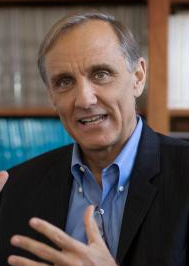 Joseph P. Allen合作论文数Department of Psychology, College and Graduate School of Arts & Sciences, University of Virginia3
 Jessie L. Olien合作论文数2
 Jane Shumski Thomas合作论文数Coll Business, Purdue Univ Northwest2
 E. Scott Geller合作论文数Department of Psychology, College of Science, Virginia Polytechnic Institute and State University2
 Joseph A. Allen合作论文数Dept Psychol, Univ Nebraska2Eleanor B. Williams合作论文数1
 Tracy C McCausland合作论文数1Miles Moffit合作论文数1
 Shahar Gur合作论文数1brett agypt合作论文数1Sandra L. Rogelberg合作论文数1Caudill Leann合作论文数1
 Cliff W. Scott合作论文数Boston1
 Nale Lehmann-Willenbrock合作论文数Organisations-und Sozialpsychologie Institut für Psychologie, TU Braunschweig1
 Clifton Scott合作论文数1
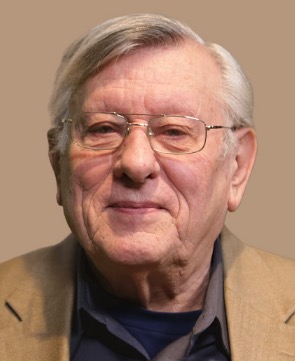 John E. R. Staddon合作论文数Department of Psychology & Neuroscience, Trinity College of Arts & Sciences, Duke University1




