Many biological objects possess approximate bilateral symmetry about a midplane. This paper uses landmark-based methods to measure departures from bilateral symmetry. The landmarks for each object come in pairs either side of a midplane or as solos on or near the midplane. After registration, a vector of unsigned elementary features is constructed to describe the asymmetry of each object. Two approaches are proposed to compare the level of asymmetry between two groups of objects. In the first approach the elementary features are combined into a scalar composite asymmetry score for each object; then standard univariate tests are used on the composite asymmetry score to assess asymmetry. In the second approach a univariate test statistic is constructed for each elementary feature; then the maximum of these statistics is used for a union-intersection test. The methodology is illustrated on two data sets collected to assess the success of two types of surgery: (1) cleft lip surgery, where the level of asymmetry is compared between a group of cleft lip subjects and a group of normal subjects and (2) orthognathic surgery, where for each patient, the level of asymmetry after surgery is compared to that before surgery.
The method of Cartesian transformations introduced by D’Arcy Thompson a century ago in his celebrated book On Growth and Form precipitated an important development in 20th-century biometrics: a fusion of the geometrical and biological approaches to morphology. Some decades later this fusion, in turn, spun off another multidisciplinary focus, statistical shape analysis, that bridges between biostatistics and biomedical imaging. Our article is intended to seed a complementary focus: a bridge between biostatistics and medical anatomy, a field that has to this day remained mainly verbal rather than quantitative. Specifically, we are proposing a novel methodology for arriving at anatomical interpretations of statistical findings about large-scale contrasts of organismal morphology or its dynamics by combining two toolkits hitherto separate in their notation and their disciplinary housing: morphometrics and psychometrics. A contemporary morphometric analysis deals with patterns of shape coordinate covariation in terms of their geometric adjacency; psychometric factor analysis, the same patterns of covariation in terms of simplicity of interpretation. By combining these tools we account for the dynamics of a facial expression in terms of the actions of the underlying muscles, thereby realizing Thompson’s original metaphor, the “origins of form in force,” for systems that “vary in a more or less uniform manner.”This paper reviews the history of Thompson’s metaphor and then the current literature quantifying smiles, in order to set the stage for the combination of scaling analysis and factor analysis that we are putting forward. We demonstrate the new approach by reanalyzing a data set of ten landmarks around the vermilion borders of the human lip contrasting the dynamics of two socially stereotyped physiological cycles, the open-lip smile and the closed-lip smile, over a sample of 14 normal faces. Our analysis centers on just two dimensions of statistical shape space, those of largest geometrical scale, which can be identified with the action of two different muscles, orbicularis oris and zygomaticus major. The two smiles differ radically in their achieved deformations. Furthermore, while the closed-lip smiles arrived at their final forms along similar shape trajectories, the open-lip smiles did not. Our closing discussion explores some aspects of morphodynamics that are illuminated by the example here.### Competing Interest StatementThe authors have declared no competing interest.
The restricted polynomially-tilted pairwise interaction (RPPI) distribution gives a flexible model for compositional data. It is particularly well-suited to situations where some of the marginal distributions of the components of a composition are concentrated near zero, possibly with right skewness. This article develops a method of tractable robust estimation for the model by combining two ideas. The first idea is to use score matching estimation after an additive log-ratio transformation. The resulting estimator is automatically insensitive to zeros in the data compositions. The second idea is to incorporate suitable weights in the estimating equations. The resulting estimator is additionally resistant to outliers. These properties are confirmed in simulation studies where we further also demonstrate that our new outlier-robust estimator is efficient in high concentration settings, even in the case when there is no model contamination. An example is given using microbiome data. A user-friendly R package accompanies the article.
Free Access References and Author Index Kanti Mardia, Kanti Mardia University of Leeds, UKSearch for more papers by this authorJohn Kent, John Kent University of Leeds, University of Oxford, UKSearch for more papers by this author Book Author(s):Kanti Mardia, Kanti Mardia University of Leeds, UKSearch for more papers by this authorJohn Kent, John Kent University of Leeds, University of Oxford, UKSearch for more papers by this author First published: 05 July 2022 https://doi.org/10.1002/9781118763551.refBook Series:Wiley Series in Probability and Statistics AboutPDFPDF ToolsRequest permissionExport citationAdd to favoritesTrack citation ShareShareShare a linkShare onFacebookTwitterLinked InRedditWechat References Abend , K. , Hartley , T.J. , and Kanal , L.N. ( 1965 ). Classification of binary random patterns . IEEE Transactions on Information Theory IT-11 : 538 – 544 . Abramowitz , M. and Stegun , I.A. ( 1964 ). Handbook of Mathematical Functions . New York : Dover . Adler , R.J. ( 1981 ). The Geometry of Random Fields . New York : Wiley . Adler , R.J. and Taylor , J. ( 2007 ). Random Fields and Geometry . New York : Springer . Agterberg , F.P. ( 2004 ). Georges Matheron — Founder of Spatial Statistics . Earth Sciences History 23 : 325 – 334 . Anselin , L. ( 1988 ). Spatial Econometrics: Methods and Models . Dordrecht : Kluwer Academic Publishers . Araujo , A. and Giné , E. ( 1980 ). The Central Limit Theorem for Banach Valued Random Variables . New York : Wiley . Baddeley , A. ( 2001 ). Georges Matheron (1930–2000) . Bulletin of the International Statistical Institute, 53rd Session Proceedings, Tome LIX, Book 1 , pp. 529 – 532 . Banerjee , S. and Gelfand , A.E. ( 2010 ). Multivariate spatial process models . In: Handbook of Spatial Statistics (ed. A.E. Gelfand , P.J. Diggle , M. Fuentes , and P. Guttorp ), 495 – 515 . Boca Raton, FL : CRC Press . S. Banerjee , B.P. Carlin , and A.E. Gelfand (eds.) ( 2015 ). Hierarchical Modeling and Analysis for Spatial Data . 2e . New York : Chapman and Hall/CRC . Beran , J. ( 1994 ). Statistics for Long-Memory Processes . New York : Chapman and Hall . Berger , J.O. , De Oliveira , V. , and Sansó , B. ( 2001 ). Objective Bayesian analysis of spatially correlated data . Journal of the American Statistical Association 96 ( 456 ): 1361 – 1374 . Berlinet , A. and Thomas-Agnan , C. ( 2004 ). Reproducing Kernel Hilbert Spaces in Probability and Statistics . Boston, MA : Kluwer . Besag , J.E. ( 1972 ). Nearest-neighbour systems and the auto-logistic model for binary data . Journal of the Royal Statistical Society, Series B 34 : 538 – 544 . Besag , J.E. ( 1974 ). Spatial interaction and the statistical analysis of lattice systems (with discussion) . Journal of the Royal Statistical Society, Series B 36 : 192 – 236 . Besag , J. ( 1975 ). Statistical analysis of non-lattice data . Journal of the Royal Statistical Society. Series D (The Statistician) 24 : 179 – 195 . Besag , J. ( 1981 ). On a system of two-dimensional recurrence equations . Journal of the Royal Statistical Society, Series B 43 : 302 – 309 . Besag , J. and Kooperberg , C. ( 1995 ). On conditional and intrinsic autoregressions . Biometrika 82 : 733 – 746 . Besag , J. and Mondal , D. ( 2005 ). First order intrinsic autoregressions and the de Wijs process . Biometrika 92 : 909 – 920 . Besag , J.E. and Moran , P.A.P. ( 1975 ). On the estimation and testing of spatial interaction in Gaussian lattice processes . Biometrika 62 : 555 – 562 . Boggio , T. ( 1905 ). Sur la funzioni di Green d'ordine m . Rendiconti — Circolo Matematico di Palermo 20 : 97 – 135 . Bookstein , F.L. ( 1989 ). Principal warps: thin-plate splines and the decomposition of deformations . IEEE Transactions on Pattern Analysis and Machine Intelligence PAMI-11 : 567 – 585 . Bookstein , F.L. ( 1992 ). Morphometric Tools for Landmark Data: Geometry and Biology . Cambridge University Press . Brook , D. ( 1964 ). On the distinction between the conditional probability and the joint probability approaches in the specification of nearest-neighbour systems . Biometrika 51 : 481 – 483 . Caragea , P.C. and Smith , R.L. ( 2007 ). Asymptotic properties of computationally efficient alternative estimators for a class of multivariate normal models . Journal of Multivariate Analysis 98 : 1417 – 1440 . Chilés , J.-P. and Delfiner , P. ( 2012 ). Geostatistics: Modeling Spatial Uncertainty , 2e . Hoboken, NJ : Wiley . Christakos , G. ( 1992 ). Random Field Models in Earth Sciences . San Diego, CA : Academic Press . Cliff , A.D. and Ord , J.K. ( 1981 ). Spatial Processes — Models and Applications . London : Pion . Clifford , P. ( 1990 ). Markov random fields in statistics . In: Disorder in Physical Systems. A Volume in Honour of John M. Hammersley (ed. G.R. Grimmett and D.J.A. Welsh ), 19 – 32 . Oxford : Clarendon Press . Cordeiro , G.M. and Klein , R. ( 1994 ). Bias correction in ARMA models . Statistics and Probability Letters 19 : 169 – 176 . Cox , D.R. ( 2006 ). Principles of Statistical Inference . Cambridge University Press . Cox , D.R. and Miller , H.D. ( 1965 ). The Theory of Stochastic Processes . London : Methuen . Cox , D.R. and Snell , E.J. ( 1968 ). A general definition of residuals . Journal of the Royal Statistical Society, Series B 30 : 248 – 275 . Cramér , H. and Leadbetter , M.R. ( 1967 ). Stationary and Related Stochastic Processes . New York : Wiley . Cressie , N. ( 1989 ). Geostatisti cs . American Statistician 43 : 197 – 202 . Cressie , N. ( 1990 ). The origins of kriging . Mathematical Geology 22 : 239 – 252 . Cressie , N.A.C. ( 1993 ). Statistics for Spatial Data , revised edition . New York : Wiley . Cressie , N. and Burden , S. ( 2015 ). Evaluation of diagnostics for hierarchical spatial statistical models . In: Geometry Driven Statistics (ed. I.L. Dryden and J.T. Kent ), 241 – 259 . Chichester : Wiley . Cressie , N. and Lahiri , S.N. ( 1993 ). The asymptotic distribution of REML estimators . Journal of Multivariate Analysis 45 : 217 – 233 . Cressie , N. and Moores , M.T. ( 2021 ). Spatial statistics , arXiv. Cressie , N. and Wikle , C.K. ( 2011 ). Statistics for Spatio-Temporal Data . Hoboken, NJ : Wiley . Cressie , N.A. , Gotway , C. , and Grondona , M. ( 1990 ). Spatial prediction from networks . Chemometrics and Intelligent Laboratory Systems 7 : 251 – 271 . Davies , S. and Hall , P. ( 1999 ). Fractal analysis of surface roughness by using spatial data (with discussion) . Journal of the Royal Statistical Society, Series B 61 : 3 – 37 . Davies , R. , Twining , C. , and Taylor , C. ( 2008 ). Statistical Models of Shape . London : Springer . Davis , J.C. ( 1973 ). Statistics and Data Analysis in Geology . New York : Wiley . de Wijs , H.J. ( 1951 ). Statistics of ore distributions, Part 1. Frequency distribution of assay values . Geologie en Mijnbouw 13 : 365 – 375 . Diggle , P.J. ( 1997 ). Spatial and longitudinal data analysis: two histories with a common future? In: Modelling Longitudinal and Spatially Correlated Data (ed. T.G. Gregoire , D.R. Brillinger , P.J. Diggle et al.), 387 – 402 . New York : Springer-Verlag . Diggle , P.J. ( 2010 ). Historical introduction . In: Handbook of Spatial Statistics (ed. A.E. Gelfand , P.J. Diggle , M. Fuentes , and P. Guttorp ), 3 – 14 . Boca Raton, FL : CRC Press . Diggle , P.J. and Giorgi , E. ( 2019 ). Model-based Geostatistics for Global Public Health: Methods and Applications . London : Chapman and Hall/CRC Press . Diggle , P.J. and Ribeiro , P.J. Jr. ( 2007 ). Model-Based Geostatistics . New York : Springer . Diggle , P.J. , Tawn , J.A. , and Moyeed , R.A. ( 1998 ). Model based geostatistics (with discussion) . Applied Statistics 47 : 299 – 350 . Dowd , P.A. ( 1982 ). Lognormal kriging — the general case . Mathematical Geology 14 : 475 – 499 . Dryden , I.L. and Mardia , K.V. ( 2016 ). Statistical Shape Analysis, with Applications in R , 2e . Chichester : Wiley . Einstein , A. and Infeld , L. ( 1938 ). The Evolution of Physics . Cambridge University Press . Emery , X. , Arroyo , D. , and Por cu , E. ( 2016 ). An improved spectral turning-bands algorithm for simulating stationary vector Gaussian random fields . Stochastic Environmental Research and Risk Assessment 30 : 1863 – 1873 . A. Erdelyi (ed.) ( 1954 ). Tables of Integral Transforms , vol. II . New York : McGraw-Hill . Feller , W. ( 1966 ). An Introduction to Probability Theory and Its Applications , vol. II . New York : Wiley . Feller , W. ( 1968 ). An Introduction to Probability Theory and Its Applications , vol. I , 3e . New York : Wiley . Fernique , X. ( 1978 ). Continuité et théorème centrale limite pour les transformées de Fourier des mesures aléatoires du second ordre . Zeitschrift für Wahrscheinlichkeitstheorie un verwandte Gebiete 42 : 57 – 66 . B. Finkenstadt , L. Held , and V. Isham (eds.) ( 2007 ). Statistical Methods for Spatial-Temporal Systems . Boca Raton, FL : Chapman and Hall/CRC . Fonanella , L. Ippoliti , L. and Mardia , K.V. ( 2005 ). Exploring Spatio-Temporal Variability by Eigen-Decomposition Techniques. Proceeding of Italian Statistical Society, CLEUP scarl, Padova, 85–96 . (p. 291) Fraser , G. ( 1957 ). A problem in the analysis of geophysical data . Geophysics 22 : 309 – 344 . Fuller , W.A. ( 1996 ). Introduction to Statistical Time Series , 2e . New York : Wiley . Gaetan , C. and Guyon , X. ( 2010 ). Spatial Statistics and Modeling . New York : Springer . Gelfand , A.E. and Ghosh , S. ( 2013 ). Hierarchical modeling . In: Bayesian Theory and Applications (ed. P. Damien , P. Dellaportas , N.G. Polson , and D.A. Stephens ), pp. 33 – 49 Oxford : Oxford University Press ,. Gel'fand , I.M. and Shilov , G.E. ( 1964 ). Generalized Functions: Properties and Operations , vol. 1 . New York : Academic Press . Gel'fand , I.M. and Shilov , G.E. ( 1968 ). Generalized Functions: Spaces of Fundamental and Generalized Functions , vol. 2 . New York : Academic Press . Gel'fand , I.M. and Vilenkin , N.Y. ( 1964 ). Generalized Functions: Applications of Harmonic Analysis , vol. 4 . New York : Academic Press . A.E. Gelfand , P.J. Diggle , M. Fuentes , and P. Guttorp (eds.) ( 2010 ). Handbook of Spatial Statistics . Boca Raton, FL : CRC Press . Georgii , H.O. ( 1988 ). Gibbs Measures and Phase Transitions , de Gruyter Studies in Mathematics 9 . Berlin : Walter de Gruyter . Gneiting , T. ( 2002 ). Nonseparable, stationary covariance functions for space-time data . Journal of the American Statistical Association 97 : 590 – 600 . Gneiting , T. and Guttorp , P. ( 2010 ). Continuous parameter spatio-temporal processes . In: Handbook of Spatial Statistics (ed. A.E. Gelfand , P.J. Diggle , M. Fuentes , and P. Guttorp ), 427 – 436 . Boca Raton, FL : CRC Press . Gneiting , T. , Genton , M.G. , and Guttorp , P. ( 2007 ). Geostatistical space-time models, stationarity, separability and full symmetry . In: Statistical Methods for Spatial-Temporal Systems (ed. B. Finkenstadt , L. Held , and V. Isham ), 151 – 175 . Boca Raton, FL : Chapman and Hall/CRC . Golub , G.H. and Van Loan , C.F. ( 1989 ). Matrix Computations , 2e . Baltimore, MD : Johns Hopkins University Press . Goodall , C. and Mardia , K.V. ( 1994 ). Challenges in Multivariate Spatio-temporal Modelling. Invited Session “Spatial-Temporal Model in Environmental Statistics” Proceedings XVII International Biometric Conference , Hamilton, Ontario, Canada , Vol. 1 , 1 – 17 . Gradshteyn , I.S. and Ryzhik , I.M. ( 1980 ). Table of Integrals, Series, and Products , 2e . London : Academic Press . Green , P.J. and Silverman , B.W. ( 1994 ). Nonparametric Regression and Generalized Linear Models: A Roughness Penalty Approach . London : Chapman and Hall . Grenander , U. and Miller , M.I. ( 2007 ). Pattern Theory: From Representation to Inference . Oxford : Oxford University Press . Gu , C. ( 2002 ). Smoothing Spline ANOVA Models . New York : Springer-Verlag . Guttorp , P. and Gneiting , T. ( 2006 ). Studies in the history of probability and statistics XLIX on the matérn correlation . Biometrika 93 989 – 995 . Guyon , X. ( 1982 ). Parameter estimation for a stationary process on a d -dimensional lattice . Biometrika 69 : 95 – 105 . Handcock , M.S. ( 1989 ). Inference for spatial Gaussian random fields when the objective is prediction . PhD thesis. Department of Statistics, University of Chicago . Handcock , M.S. and Stein , M.L. ( 1993 ). A Bayesian analysis of kriging . Technometrics 35 : 403 – 410 . Harville , D.A. ( 1977 ). Maximum likelihood approaches to variance component estimation and to related problems . Journal of the American Statistical Association 72 : 320 – 340 . Hastie , T. , Tibshirani , R. , and Friedman , J. ( 2009 ). The Elements of Statistical Learning: Data Mining, Inference, and Prediction , 2e. New York : Springer-Verlag . Helson , H. and Lowdenslager , D. ( 1958 ). Prediction theory and Fourier series in several variables . Acta Mathematica 99 : 165 – 202 . Huang , C. , Yao , Y. , Cressie , N. , and Hsing , T. ( 2009 ). Multivariate intrinsic random functions for cokriging . Mathematical Geosciences 41 : 887 – 904 . Isaaks , E.H. and Srivastava , R.M. ( 1989 ). An Introduction to Applied Geostatistics . Oxford University Press . Istas , J. and Lang , G. ( 1997 ). Quadratic variations and estimation of the local Hölder index of a gaussian process . Annales de l'institut Henri Poincaré (B) Probabilités et Statistiques 33 : 407 – 436 . Joshi , S.C. and Miller , M.I. ( 2000 . Landmark matching via large deformation diffeomorphisms . IEEE Transactions on Image Processing 9 : 1357 – 1370 . Journel , A.G. and Huijbregts , C.J. ( 1978 ). Mining Geostatistics . London : Academic Press . Kalaitzis , A.A. and Lawr ence , N.D. ( 2011 ). A simple approach to ranking differentially expressed gene expression time courses through Gaussian process regression . BMC Bioinformatics 12 : 180 . Kanevski , M. and Maignan , M. ( 2004 ). Analysis and Modelling of Spatial Environmental Data . Lausanne : EPFL Press . Kaufman , C. and Shaby , B. ( 2013 ). The role of the range parameter for estimation and prediction in geostatistics . Biometrika 100 : 473 – 484 . Kent , J.T. ( 1989 ). Continuity properties for random fields . Annals of Probability 17 : 1432 – 1440 . Kent , J.T. and Mardia , K.V. ( 1988 ). Spatial classification using fuzzy membership models . IEEE Transactions on Pattern Analysis and Machine Intelligence PAMI-10 : 659 – 671 . Kent , J.T. and Mardia , K.V. ( 1994 ). The link between kriging and thin plate splines . In: Probability, Statistics and Optimization: A Tribute to Peter Whittle (ed. F.P. Kelly ), 325 – 339 . Chichester : Wiley . Kent , J.T. and Mardia , K.V. ( 1996 ). Spectral and circulant approximations to the likelihood for stationary Gaussian randomfields . Journal of Statistical Inference and Planning 50 : 379 – 394 . Kent , J.T. and Mardia , K.V. ( 2002 ). Modelling strategies for spatial-temporal data . In: Spatial Cluster Modelling (ed. A.B. Lawson and D.G.T. Denison ), 213 – 226 . Chapman and Hall/CRC . Kent , J.T. and Wood , A.T.A. ( 1995 ). Estimating the Fractal Dimension of a Locally Self-Similar Gaussian Process Using Increments . Statistics Research Report SSR 034-95 . Australian National University . Kent , J.T. and Wood , A.T.A. ( 1997 ). Estimating the fractal dimension of a locally self-similar Gaussian process using increments . Journal of the Royal Statistical Society, Series B 59 : 679 – 699 . Kent , J.T. , Mardia , K.V. , Morris , R.J. , and Aykroyd , R.G. ( 2001 ). Functional models of growth for landmark data . In: Proceedings in Functional and Spatial Data Analysis (ed. K.V. Mardia and R.G. Aykroyd ), 109 – 115 . Leeds University Press . Kent , J.T. , Mohammadzadeh , M. , and Mosammam , A.M. ( 2011 ). The dimple in Gneiting's spatial-temporal covariance model . Biometrika 98 : 489 – 494 . Kingman , J.F.C. ( 1963 ). Random walks with spherical symmetry . Acta Mathematica 109 : 11 – 53 . Kitandis , P.K. ( 1983 ). Statistical estimation of polynomial generalized covariance functions and hydrologic applications . Water Resources Research 19 : 909 – 921 . Kitandis , P.K. ( 1986 ). Parameter uncertainty in estimation of spatial functions: Bayesian analysis . Water Resources Research 22 : 499 – 507 . Kitandis , P.K. ( 1991 ). Orthonormal residuals in geostatistics: model criticism and parameter estimation . Mathematical Geology 23 : 741 – 758 . Kotz , S. and Nadarajah , S. ( 2004 ). Multivariate t Distributions and their applications . Cambridge : Cambridge University Press . Krige , D.G. ( 1951 ). A statistical approach to some basic mine valuation problems on the Witwatersrand . Journal of the Chemical, Metallurgical and Mining Society of South Africa 52 : 119 – 139 . Krige , D.J. ( 1976 ). Some basic considerations in the application of geostatistics to the valuation of ore in South African gold mines . Journal of the South African Institute of Mining and Metallurgy 76 : 383 – 391 . Künsch , H. ( 1987 ). Intrinsic autoregressions and related models on the two-dimensional lattice . Biometrika 74 : 517 – 524 . Laslett , G.M. , McBratney , A.B. , Pahl , P.J. , and Hutchinson , M.F. ( 1987 ). Comparison of several spatial prediction methods for soil PH . Journal of Soil Science 38 : 325 – 341 . A.B. Lawson and D.G.T. Denison (eds.) ( 2002 ). Spatial Cluster Modelling . Chapman and Hall/CRC . Le , N.D. and Zidek , J.V. ( 1992 ). Interpolation with uncertain spatial covariances: a Bayesian alternative to kriging . Journal of Multivariate Analysis 43 : 351 – 374 . Lindgren , F. , Rue , H. , and Lindström , J. ( 2011 ). An explicit link between Gaussian fields and Gaussian Markov random fields: the stochastic partial differential equation approach (with discussion) . Journal of the Royal Statistical Society, Series B 73 : 423 – 498 . Ma , C. ( 2003 ). Families of spatio-temporal stationary covariance models . Journal of Statistical Planning and Inference 116 : 489 – 501 . Mandelbrot , B.B. ( 1982 ). The Fractal Geometry of Nature . New York : W.H. Freeman and Co. Mandelbrot , B.B. and van Ness , J.W. ( 1968 ). Fractional Brownian motion, fractional noises and applications 10 : 422 – 437 . Mantoglue , A. and Wilson , J.L. ( 1982 ). The turning bands method for simulation of random fields using line generation by a spectral method . Water Resources Research 18 : 1379 – 1394 . Mardia , K.V. ( 1980 ). Some statistical inference problems in Kriging II: theory . Proceedings 26th International Geology Congress Sciences de la Terre: Advances in Automatic Processing and Mathematical Models in Geology, Series “Informatique Geologie” , Volume 15, Paris , pp. 113 – 131 . Mardia , K.V. ( 1988 ). Multi-dimensional multivariate Gaussian Markov random fields with application to image processing . Journal of Multivariate Analysis 24 : 265 – 284 . Mardia , K.V. ( 1990 ). Maximum likelihood estimation for spatial models . In: Proceedings Spatial Statistics: Past, Present and Future, Institute of Mathematical Geology (ed. D.A. Griffith ), 203 – 225 . Michigan Document Service . K.V. Mardia (ed.) ( 1991 ). The Art of Statistical Science: A Tribute to G.S. Watson . Wiley . K.V. Mardia (ed.) ( 1994 ). Statistics and Images , Volume 2 . Oxford : Carfax . Mardia , K.V. ( 2007 ). Should geostatistics be model-based? Proceedings of the IAMG 2007 Conference: Geomathematics and GIS Analysis of Resources, Environment and Hazards , Beijing, China , pp. 4 – 9 . Mardia , K.V. ( 2011 ). Discussion to an explicit link between Gaussian fields and Gaussian Markov random fields: the stochastic partial differential equation approach by F. Lindgren, H. Rue and J. Lindstrom . Journal of the Royal Statistical Society, Series B 73 : 481 – 482 . Mardia , K.V. and G ilks , W. ( 2005 ). Meeting the statistical needs of 21st-century science . Significance 2 : 162 – 165 . Mardia , K.V. and Gill , C.A. ( 1982 ). Some statistical inference problems in kriging I: numerical applications . Journal of the Geological Society, Computer Applications in Geology 14 56 – 72 . Mardia , K.V. and Goodall , C. ( 1993 ). Spatio-temporal analyses of multivariate environmental monitoring data . In: Multivariate Environmental Statistics (ed. G.P. Patil and C.R. Rao ), 347 – 386 . Amsterdam : Elsevier . Mardia , K.V. and Jupp , P.E. ( 2000 ). Directional Statistics . Chichester : Wiley . K.V. Mardia and G.K. Kanji (eds) ( 1993 ). Statistics and Images , Volume 1 . Oxford : Carfax . Mardia , K.V. and Marshall , R.J. ( 1982 ). Maximum Likelihood Fitting of a Spatial Covariance in the Linear Model . Department of Statistics Research Report . University of Leeds . Mardia , K.V. and Marshall , R.J. ( 1984 ). Maximum likelihood estimation of models for residual covariance in spatial regression . Biometrika 71 : 135 – 146 . Mardia , K.V. and Pardo-Iguzquiza , E. ( 2006 ). Numerical Results on Vecchia (1988) Approximated MLE for Large Spatial Data Sets . Department of Statistics Research Report 2 . University of Leeds . Mardia , K.V. and Watkins , A.J. ( 1989 ). On multimodality of the likelihood in the spatial linear model . Biometrika 76 : 289 – 295 . Mardia , K.V. , Kent , J.T. , and Bibby , J.M. ( 1979 ). Multivariate Analysis . London : Academic Press . Mardia , K.V. , Kent , J.T. , Hughes , G. , and Taylor , C.C. ( 2010 ). Maximum likelihood estimation using composite likelihoods for closed exponential families . Biometrika 96 : 975 – 982 . Mardia , K.V. , Kent , J.T. , and Walder , A.N. ( 1991 ). Statistical shape models in image analysis . In: Computing Science and Statistics: Proceedings of the 23rd Symposium on the Interface (ed. E.M. Keramidas ), 550 – 555 . Fairfax Station, VA : Interface Foundation of North America . Mardia , K.V. , Kent , J.T. , Little , J. , and Goodall , C.R. ( 1996 ). Kriging and splines with derivative information . Biometrika 83 : 207 – 221 . Mardia , K.V. , Goodall , C. , Redfern , E.J. , and Alonso , F.J. ( 1998 ). The Kriged Kalman filter (with discussion) . Test 7 : 217 – 252 . Mardia , K.V. , Angulo , J.M. , and Goitía , A. ( 2006a ). Synthesis of image deformation strategies . Image and Vision Computing 24 : 1 – 12 . Mardia , K.V. , Bookstein , F.L. , Kent , J.T. , and Meyer , C.R. ( 2006b ). Intrinsic random fields and image deformations . Journal of Mathematical Imaging and Vision 26 : 59 – 71 . Marechal , A. and Serra , J. ( 1970 ). Random kriging . In: Geostatistics, A Colloquium (ed. D.F. Merriam ), 91 – 112 . New York : Plenum Press . Marshall , R.J. a nd Mardia , K.V. ( 1985 ). Minimum norm quadratic estimation of components of spatial covariance . Mathematical Geology 17 : 517 – 525 . Martin , R. ( 1979 ). A subclass of lattice processes applied to a problem in planar sampling . Biometrika 66 : 209 – 217 . Matérn , B. ( 1960 ). Spatial Variation . Technical Report . Stockholm : Statens Skogsforskningsinstitut . Matérn , B. ( 1986 ). Spatial Variation . Berlin : Springer-Verlag . Matheron , G. ( 1962 ). Precision of exploring a stratified formation by boreholes by boreholes with rigid spacing — application to a bauxite deposit . In: International Symposium on Mining Research , vol. 1 (ed. G.B. Clark ), 407 – 423 . Oxford : Pergamon Press . Matheron , G. ( 1963 ). Principles of geostatistics . Economic Geology 58 : 1246 – 1266 . Matheron , G. ( 1965 ). Les Variables Régionalisées et leur Estimation. Une Application de la Théorie des Fonctions Aléatoires aux Sciences de la Nature . Paris : Masson . Matheron , G. ( 1971 ). The Theory of Regionalized Variables, and its Applications , Vol. Fasc. No. 5. Fontainebleau: Cahiers du Centre de Morphologie Mathématique. Matheron , G. ( 1973 ). The intrinsic random functions and their applications . Advances in Applied Probability 5 : 439 – 468 . Matheron , G. ( 1975 ). Random Sets and Integral Geometry . New York : Wiley . McBratney , A.B. , Webster , R. , and Burgess , T.M. ( 1981 ). The design of optimal sampling schemes for local estimation and mapping of of regionalized variables—I: theory and method . Computers & Geosciences 7 : 331 – 334 . Mercer , W.B. and Hall , A.D. ( 1911 ). The experimental error of field trials . Journal of Agricultural Science 4 : 123 – 456 . Mondal , D. ( 2018 ). On edge correction of conditional and intrinsic autoregressions . Biometrika 105 : 447 – 454 . Mosamam , A. and Kent , J.T. ( 2010 ). Semi-reproducing kernel Hilbert spaces, splines and increment kriging . Journal of Nonparametric Statistics 22 : 711 – 722 . Mukhopadhyay , N. ( 2015a ). A conversation with Kanti Mardia . In: Geometry Driven Statistics (ed. I.L. Dryden and J.T. Kent ), 3 – 58 . Chichester : Wiley . Mukhopadhyay , N. ( 2015b ). A conversation with Kanti Mardia: Part 2 . In: Geometry Driven Statistics (ed. I.L. Dryden and J.T. Kent ), 59 – 85 . Chichester : Wiley . Pardo-Igúzquiza , E. and Dowd , P.A. ( 1997 ). AMLE3D: A computer program for the statistical inference of covariance parameters by approximate maximum likelihood estimation . Computers & Geosciences 7 : 793 – 905 . Pardo-Igúzquiza , E. , Mardia , K.V. , and Chica-Olmo , M. ( 2008 ). MLMATERN: A computer program for maximum likelihood inference with the spatial Matérn covariance model . Computers & Geosciences 35 : 1139 – 1150 . Rao , C.R. ( 1973 ). Linear Statistical Inference and its Applications , 2e . New York : Wiley . Rasmussen , C.E. a nd Williams , C.K.I. ( 2006 ). Gaussian Processes for Machine Learning . Cambridge, MA : The MIT Press . Rathbun , S. ( 1998 ). Spatial modelling in irregularly shaped regions: kriging estuaries . Environmetrics 9 : 109 – 129 . Ribeiro , P.J. Jr. and Diggle , P.J. ( 2001 ). geoR: A package for geostatistical analysis . R-News 1 ( 2 ): 15 – 18 . Ripley , B.D. ( 1981 ). Spatial Statistics . New York : Wiley . Ripley , B.D. ( 1988 ). Statistical Inference for Spatial Processes . New York : Wiley . Rue , H. ( 2001 ). Fast sampling of Gaussian Markov random fields . Journal of the Royal Statistical Society, Series B 63 : 325 – 338 . Rue , H. and Held , L. ( 2005 ). Gaussian Markov Random Fields . Boca Raton, FL : Chapman and Hall/CRC . Rue , H. and Held , L. ( 2010 ). Discrete spatial varation . In: A. E. Gelfand , P. J. Diggle , M. Fuentes , and P. Guttorp (eds). Handbook of Spatial Statistics . Boca Raton : CRC Press , pp. 171 – 200 . Sahu , S.K. ( 2022 ). Bayesian Modeling of Spatio-Temporal Data with R . New York : Chapman and Hall/CRC . Sahu , S.K. and Mardia , K.V. ( 2005 ). A Bayesian kriged Kalman model for short-term forecasting of air pollution levels . Applied Statistics 54 : 223 – 244 . Sahu , S.K. , Jona Lasini , G. , Orasi , A. and Mardia , K.V. ( 2005 ). A Comparison of Spatio-Temporal Bayesian Models for Reconstruction of Rainfall Fields in a Cloud Seeding Experiment . Journal of Mathematics and Statistics 1 : 273 – 281 . (p. 291) Sambasivan , R. , Das , S. , and Sahu , S.K. ( 2020 ). A Bayesian perspective of statistical machine learning for big data . Computational Statistics 35 : 893 – 930 . Schabenberger , O. and Gotway , C.A. ( 2005 ). Statistical Methods for Spatial Data Analysis . Boca Raton, FL : Chapman and Hall/CRC . Schoenberg , I.J. ( 1938 ). Metric spaces and completely monotone functions . Annals of Mathematics 39 : 811 – 841 . Schölkopf , B. and Smola , A. ( 2002 ). Learning with Kernels: Support Vector Machines, Regularization, Optimization, and Beyond . Cambridge : MIT Press . Sherman , M. ( 2011 ). Spatial Statistics and Spatio-Temporal Data . Chichester : Wiley . Smith , H.F. ( 1938 ). An empirical law describing heterogeneity in the yields of agricultural crops . Journal of Agricultural Science 28 : 1 – 23 . Smith , R.L. ( 2001 ). Environmental statistics . version 5. unpublished. https://rls.sites.oasis.unc.edu/postscript/rs/envnotes.pdf (accessed 7 September 2021). Sonka , M. , Hlavac , V. , and Boyle , R. ( 2013 ). Image Processing, Analysis and Machine Vision , 4e . Springer . Speed , T. ( 2007 ). Terence's stuff: model skeptics . IMS Bulletin 36 : 11 . Srivastava , A. and Klassen , E.P. ( 2016 ). Functional and Shape Data Analysis . Springer . Steel , M.F.J. and Fu entes , M. ( 2010 ). Non-Gaussian and nonparametric models for continuous spatial data . In: Handbook of Spatial Statistics (ed. A.E. Gelfand , P.J. Diggle , M. Fuentes , and P. Guttorp ), 149 – 167 . Boca Raton, FL : CRC Press . Stein , M.L. ( 1999 ). Interpolation of Spatial Data: Some Theory for Kriging . New York : Springer . Stein , M.L. ( 2005 ). Statistical methods for regular monitoring data . Journal of the Royal Statistical Society, Series B 67 : 667 – 687 . Stein , M.L. , Chi , Z. , and Welty , L.J. ( 2004 ). Approximating likelihoods for large spatial data sets . Journal of the Royal Statistical Society, Series B 66 : 275 – 296 . Taylor , G.I. ( 1938 ). The spectrum of turbulence . Proceedings of the Royal Society of London, Series A 164 : 476 – 490 . Upton , G.J.G. and Fingleton , B. ( 1985 ). Spatial Data Analysis by Example: Point Pattern and Quantitative Data , vol. 1 . Chichester : Wiley . Upton , G.J.G. and Fingleton , B. ( 1989 ). Spatial Data Analysis by Example: Categorical and Directional Data , vol. 2 . Chichester : Wiley . van Lieshout , M.-C. ( 2019 ). Theory of Spatial Statistics: A Concise Introduction . Boca Raton, FL : Chapman and Hall/CRC . Vecchia , A.V. ( 1988 ). Estimation and model identification for continuous spatial processes . Journal of the Royal Statistical Society, Series B 50 : 297 – 312 . Wackernagel , H. ( 2003 ). Multivariate Geostatistics , 3e . Berlin : Springer-Verlag . Wahba , G. ( 1990 ). Spline Models for Observational Data . Philadelphia, PA : Society for Industrial and Applied Mathematics . Warnes , J.J. and Ripley , B.D. ( 1987 ). Problems with likelihood estimation of covariance functions of spatial Gaussian processes . Biometrika 74 : 640 – 642 . Watkins , A.J. ( 1987 ). Some aspects of statistical inference in the spatial linear model . PhD thesis. University of Leeds . Watkins , A.J. and Mardia , K.V. ( 1992 ). Maximum likelihood estimation and prediction mean square error in the spatial linear model . Journal of Applied Statistics 19 : 49 – 59 . Watson , G.S. ( 1969 ). Trend Surface Analysis and Spatial Correlation . Technical report . Department of Statistics, John Hopkins University . https://apps.dtic.mil/sti/pdfs/AD0699163.pdf (accessed 7 September 2021). Watson , G.S. ( 1972 ). Trend surface analysis and spatial correlation . Geological Society of America Special Paper 146 : 39 – 46 . Watson , G.S. ( 1984 ). Smoothing and interpolating by kriging and with splines . Mathematical Geology 16 : 601 – 615 . Watson , G.S. ( 1986 ). A boy from the bush . In: The Craft of Statistical Modelling (ed. J.M. Gani ), 43 – 60 . New York : Springer . Also reprinted in: K.V. Mardia (ed.) The Art of Statistical Science, xxix – lii . New York : Wiley . Webster , R. and Oliver , M.A. ( 2001 ). Geostatistics for Environmental Scientists . Chichester : Wiley . Wendland , H. ( 2005 ). Scattered Data Approximation . Cambridge : Cambridge University Press . Whittle , P. ( 1954 ). On stationary processes in the plane . Biometrika 41 : 434 – 449 . Whittle , P. ( 1956 ). On the variation of yields variance with plot size . Biometrika 43 : 337 – 343 . Whittle , P. ( 1962 ). Topographic correlation, power-law covariance functions, and diffusion . Biometrika 49 : 305 – 314 . Whittle , P. ( 1963 ). Prediction and Regulation , 2e . Minneapolis, MN : University of Minnesota . Whittle , P. ( 1986 ). Systems in Stochastic Equilibrium . Chichester : Wiley . Wikle , C.K. and Cressie , N. ( 1999 ). A dimension-reduced approach to space-time Kalman filtering . Biometrika 86 : 815 – 829 . Wikle , C.K. , Zammit-Mangion , A. , and Cressie , N. ( 2019 ). Spatio-Temporal Statistics with R. Chapman & Hall/CRC , Boca Raton, FL . (p. 292 ) Wilson , A.G. ( 2000 ). Complex Spatial Systems: The Modelling Foundations of Urban and Regional Analysis . London : Routledge . Wood , A.T.A. and Chan , G. ( 1994 ). Simulation of stationary processes in [ 0 , 1 ] d . Journal of Computational and Graphical Statistics 3 : 409 – 432 . Zhang , H. ( 2004 ). Inconsistent estimation and asymptotically equal interpolations in model-based geostatistics . Journal of the American Statistical Association 99 : 250 – 261 . Zhang , H. and Zimmerman , D.L. ( 2005 ). Towards reconciling two asymptotic frameworks in spatial statistics . Biometrika 92 : 921 – 936 . Zidek , J.L. and Zimmerman , D.L. ( 2010 ). Monitoring network design . In: Handbook of Spatial Statistics (ed. A.E. Gelfand , P.J. Diggle , M. Fuentes , and P. Guttorp ), 131 – 148 . Boca Raton, FL : CRC Press . Zimmerman , D.L. ( 2010 ). Likelihood-based methods . In: Handbook of Spatial Statistics (ed. A.E. Gelfand , P.J. Diggle , M. Fuentes , and P. Guttorp ), 45 – 56 . Boca Raton, FL : CRC Press . Zimmerman , D.L. and Stein , M. ( 2010 ). Classical geostatistical methods . In: Handbook of Spatial Statistics (ed. A.E. Gelfand , P.J. Diggle , M. Fuentes , and P. Guttorp ), 29 – 44 . Boca Raton, FL : CRC Press . Spatial Analysis ReferencesRelatedInformation
Finite mixture models are fitted to spherical data. Kent distributions are used for the components of the mixture because they allow considerable flexibility. Previous work on such mixtures has used an approximate maximum likelihood estimator for the parameters of a single component. However, the approximation causes problems when using the EM algorithm to estimate the parameters in a mixture model. Hence the exact maximum likelihood estimator is used here for the individual components. This paper is motivated by a challenging prize problem in structural bioinformatics of how proteins fold. It is known that hydrogen bonds play a key role in the folding of a protein. We explore this hydrogen bond geometry using a data set describing bonds between two amino acids in proteins. An appropriate coordinate system to represent the hydrogen bond geometry is proposed, with each bond represented as a point on a sphere. We fit mixtures of Kent distributions to different subsets of the hydrogen bond data to gain insight into how the secondary structure elements bond together, since the distribution of hydrogen bonds depends on which secondary structure elements are involved.
Angle halving, or alternatively the reverse operation of angle doubling, is a useful tool when studying directional distributions. It is especially useful on the circle where, in particular, it yields an identification between the wrapped Cauchy distribution and the angular central Gaussian distributions, as well as a matching of their parameterizations. The operation of angle halving can be extended to higher dimensions, but its effect on distributions is more complicated than on the circle. In all dimensions angle halving provides a simple way to interpret stereographic projection from the sphere to Euclidean space.
A new two-parameter "full exponential cardioid" radial growth model for two-dimensional geometric objects is proposed and analyzed. The model depends additionally on two rotation parameters and on two seeds about which the growth is centered, plus a choice of three possible assumptions about statistical errors. If the seeds are assumed known, the remaining parameters can be estimated in closed form. Comparisons are given to earlier approaches. Two examples are given, one for a set of simulated data and one for a set of rat calvarial data.
One way to specify a model in directional statistics is to look for an exponential family which mimics the multivariate normal distribution under high concentration. However, in some important examples this strategy leads to an over-specified model, with a spare parameter. This paper revisits two standard distributions, the Fisher-Bingham distribution on the sphere and the bivariate von Mises distribution on the torus, and takes a fresh look at guidelines to specify this parameter.
Consider an object in orbit about the earth for which a sequence of angles-only measurements is made. This paper looks in detail at a one-step update for the filtering problem. Although the problem appears very nonlinear at first sight, it can be almost reduced to the standard linear Kalman filter by a careful formulation. The key features of this formulation are (1) the use of a local or adapted basis rather than a fixed basis for three-dimensional Euclidean space and the use of structural rather than ambient coordinates to represent the state, (2) the development of a novel "normal:conditional- normal" distribution to described the propagated position of the state, and (3) the development of a novel "Observation- Centered" Kalman filter to update the state distribution.A major advantage of this unified approach is that it gives a closed form filter which is highly accurate under a wide range of conditions, including high initial uncertainty, high eccentricity and long propagation times.
Consider a space object in an orbit about the earth. An uncertain initial state can be represented as a point cloud which can be propagated to later times by the laws of Newtonian motion. If the state of the object is represented in Cartesian earth centered inertial (Cartesian-ECI) coordinates, then even if initial uncertainty is Gaussian in this coordinate system, the distribution quickly becomes non-Gaussian as the propagation time increases. Similar problems arise in other standard fixed coordinate systems in astrodynamics, e.g. Keplerian and to some extent equinoctial. To address these problems, a local Adapted STructural (AST)'' coordinate system has been developed in which uncertainty is represented in terms of deviations from a central state. Given a sequence of angles-only measurements, the iterated nonlinear extended (IEKF) and unscented (IUKF) Kalman filters are often the most appropriate variants to use. In particular, they can be much more accurate than the more commonly used non-iterated versions, the extended (EKF) and unscented (UKF) Kalman filters, especially under high eccentricity. In addition, iterated Kalman filters can often be well-approximated by two new closed form filters, the observation-centered extended (OCEKF) and unscented (OCUKF) Kalman filters.
Various methods have been proposed for the nonlinear filtering problem, including the extended Kalman filter (EKF), iterated extended Kalman filter (IEKF), unscented Kalman filter (UKF) and iterated unscented Kalman filter (IUKF). In this paper two new nonlinear Kalman filters are proposed and investigated, namely the observation-centered extended Kalman filter (OCEKF) and observation-centered unscented Kalman filter (OCUKF). Although the UKF and EKF are common default choices for nonlinear filtering, there are situations where they are bad choices. Examples are given where the EKF and UKF perform very poorly, and the IEKF and OCEKF perform well. In addition the IUKF and OCUKF are generally similar to the IEKF and OCEKF, and also perform well, though care is needed in the choice of tuning parameters when the observation error is small. The reasons for this behaviour are explored in detail.
The Fisher-Bingham-Kent (FBK) distribution was developed to describe uncertainty in angles-only observations when the distribution is concentrated near an arc of a great circle. It is a suitable model to describe the angular position of a propagated space object when the initial position and velocity are known up to small errors. However, in settings where the initial conditions are less constrained, e.g. when the maneuvering capabilities of the object are uncertain, it is of interest to fit a mixture of FBK distributions. In this paper we investigate how to fit such models using the expectation-maximization (EM) algorithm and and discuss a variety of space situational awareness applications.
Consider a space object in an orbit about the earth. An uncertain initial state can be represented as a point cloud which can be propagated to later times by the laws of Newtonian motion. However, even if the initial uncertainty is Gaussian in ECI coordinates, the distribution quickly becomes non-Gaussian as the propagation time increases. Similar problems arise in other standard fixed coordinate systems in astrodynamics, e.g. Keplerian and to some extent equinoctial. To address this problem, a local “Adapted Structural (AST)” coordinate system has been developed in which uncertainty is represented in terms of deviations from a “central state”. In AST coordinates, the propagated uncertainty is nearly Gaussian under a wide range of conditions (e.g. LEO vs. GEO; varying eccentricity, varying initial uncertainty). Most of the assessment has been carried out so far in Keplerian dynamics. In this paper, we explore the behavior of AST coordinates when perturbation effects are incorporated, namely atmospheric drag and oblateness. The behavior of AST is assessed visually through pairs plots and statistically through tests of Gaussianity
In Space Situational Awareness (SSA), one may encounter scenarios where the measurements received at a certain time do not correlate to a known Resident Space Object (RSO). Without information that uniquely assigns the measurement to a particular RSO there can be no certainty on the identity of the object. It could be that the measurement was produced by clutter or perhaps a newly birthed RSO. It is also a possibility that the measurement came from a previously known object that maneuvered away from its predicted location. Typically, tracking methods tend to associate uncorrelated measurements to new objects and wait for more information to determine the true RSO population. This can lead to the loss of object custody. The goal of this paper is to utilize a multiple hypothesis framework coupled with some knowledge of RSO maneuvers that allows the user to maintain object custody in scenarios with uncorrelated optical measurement returns. This is achieved by fitting a Fisher-Bingham-Kent type distribution to the hypothesized maneuvers for accurate data association using directional discriminant analysis.
In this paper we consider the space object tracking problem to predict the state of an orbiting object from a sequence of angles-only measurements. Using ideas from directional statistics, an “Adapted STructural (AST)” coordinate system has been developed to represent the state vector, and in this coordinate system, the solution to the tracking problem effectively reduces to the standard Kalman filter. In this paper we investigate the filter in more detail, both to consider a wider variety of orbital regimes and to incorporate perturbation effects
Filtering involves predicting the future state of a space object in orbit about the earth given observations (e.g. angles-only or radar measurements) about its current and past states. The task is simplest when the identity of the object is known. A recently developed “Adapted STructural (AST)” coordinate system enables the task to be carried out in a computationally efficient manner. Propagation for a single state (or a small number of sigma points) can be carried out using Keplerian dynamics or using a numerically more expensive propagator to accommodate perturbation effects. In either case, the uncertainty can be represented in AST coordinates as Gaussian to a high level of accuracy. An Unscented Kalman Filter (UKF) has been developed in this situation; in particular, there is no need to use particle filters. However, when object custody is uncertain, i.e. when the latest observation might correspond to two or more objects in a catalog, the filtering task is more complicated. In this case we propose a mixture of Gaussians in AST coordinates to represent the state. The paper will demonstrate the feasibility of this approach.
Consider a helix in three-dimensional space along which a sequence of equally spaced points is observed, subject to statistical noise. For data coming from a single helix, a two-stage algorithm based on a profile likelihood is developed to compute the maximum likelihood estimate of the helix parameters. Statistical properties of the estimator are studied and comparisons are made to other estimators found in the literature. Next a likelihood ratio test is developed to test if there is a change point in the helix, splitting the data into two sub-helices. The shapes of protein α-helices are used to illustrate the methodology.
For noisy two-dimensional data, which are approximately uniformly distributed near the circumference of an ellipse, Mardia and Holmes (1980) developed a model to fit the ellipse. In this paper we adapt their methodology to the analysis of helix data in three dimensions. If the helix axis is known, then the Mardia-Holmes model for the circular case can be fitted after projecting the helix data onto the plane normal to the helix axis. If the axis is unknown, an iterative algorithm has been developed to estimate the axis. The methodology is illustrated using simulated protein alpha-helices. We also give a multivariate version of the Mardia-Holmes model which will be applicable for fitting an ellipsoid and in particular a cylinder.
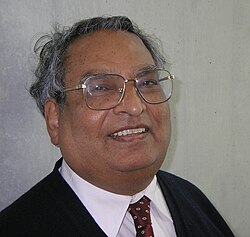 Kanti Mardia合作论文数School of Mathematics, Faculty of Engineering and Physical Sciences, University of Leeds51
 Islam I Hussein合作论文数14
 Shambo Bhattacharjee合作论文数13
 Moriba K. Jah合作论文数Department of Aerospace Engineering and Engineering Mechanics, Cockrell School of Engineering, University of Texas at Austin11Faber Weston R.合作论文数7
 Thomas Hamelryck合作论文数Department of Biology, University of Copenhagen;Department of Computer Science, University of Copenhagen7
 Charles Taylor合作论文数Department of Statistics;University of Leeds;Department of Statistics, University of Leeds7
 Ian L. Dryden合作论文数Horizon Digital Economy Research, Faculty of Science, The University of Nottingham6
 Asaad M. Ganeiber合作论文数4David E. Tyler合作论文数4
 Robert G. Aykroyd合作论文数Department of Statistics;University of Leeds;Department of Statistics, University of Leeds4An Walder合作论文数3
 Olcay Arslan合作论文数3
 Mosammam Ali M合作论文数3
 Fred L. Bookstein合作论文数Department of Statistics, University of Washington;Department of Evolutionary Anthropology, University of Vienna3Patrick D. L. Constable合作论文数3
 Sunny Khambay合作论文数Institute of Clinical Sciences, College of Medical and Dental Sciences, University of Birmingham3
 Stuart Barber合作论文数Department of Statistics;University of Leeds;Department of Statistics, University of Leeds3zhengzheng zhang合作论文数2Mai F Alfahad合作论文数2Florian Kelma合作论文数2F CRITCHLEY合作论文数2
 Robert Christian P.合作论文数Centre de Recherche en Mathématiques de la Décision, Université Paris Dauphine - PSL2
 Andrew Gelman合作论文数Department of Statistics, Columbia University;Department of Political Science, Columbia University2John Bibby合作论文数Open University2
 D. M. Titterington合作论文数Department of Statistics2Mark S. Gilthorpe合作论文数2
 Mohsen Mohammadzadeh合作论文数Department of Statistics, Tarbiat Modares University2Delman Lee合作论文数Presently at Codemasters2Rebecca E. Walls合作论文数2
 Thomas Hotz合作论文数Institute for Mathematical Stochastics, University of Göttingen2Ruwanthi R. Kolamunnage合作论文数2Alf Linney合作论文数2Fikret Er合作论文数2AP GRIEVE合作论文数1C. G. Khatri合作论文数1M. S. Srivastava合作论文数1b s mendes合作论文数1O. Guba合作论文数1GO Roberts合作论文数1Ma Tanner合作论文数1a b hansen合作论文数1H. Barjat合作论文数1judith a pyle合作论文数1AC Davison合作论文数1Ole Chr Lingjaerde合作论文数1Jack C. Lee合作论文数1f m oconnor合作论文数1paul e green合作论文数1




