While standard Next-Token Prediction (NTP) lays the foundation of language model pre- training, its teacher-forced training paradigm may not be optimal for long-horizon reasoning and planning. Recent works such as Multi-Token Prediction (MTP) and Next-Latent prediction (NextLat) try to mitigate the problem through predicting multiple future tokens and self-supervised prediction in the latent space. However, those auxiliary objectives either have a limited horizon or suffer from compounding error from multi-step rollout. We introduce Hierarchical Latent Prediction (HiLP), which introduces an auxiliary higher-level abstract latent to help reduce the error accumulation effect in latent-space rollouts. Experiments show that HiLP can lead to longer-horizon coherent belief state representation and demonstrate the effectiveness of our method across coding and multi-step reasoning benchmarks, and offers more speculative decoding efficiency.
Behavior cloning (BC) is a practical offline imitation learning method, but it often fails when expert demonstrations are limited. Recent works have introduced a class of architectures named predictive inverse dynamics models (PIDM) that combine a future state predictor with an inverse dynamics model (IDM). While PIDM often outperforms BC, the reasons behind its benefits remain unclear. In this paper, we provide a theoretical explanation: PIDM introduces a bias-variance tradeoff. While predicting the future state introduces bias, conditioning the IDM on the prediction can significantly reduce variance. We establish conditions on the state predictor bias for PIDM to achieve lower prediction error and higher sample efficiency than BC, with the gap widening when additional data sources are available. We validate the theoretical insights empirically in 2D navigation tasks, where BC requires up to five times (three times on average) more demonstrations than PIDM to reach comparable performance; and in a complex 3D environment in a modern video game with high-dimensional visual inputs and stochastic transitions, where BC requires over 66\% more samples than PIDM.
With Large Language Models (LLMs) rapidly approaching and potentially surpassing human-level performance, it has become imperative to develop approaches capable of effectively supervising and enhancing these powerful models using smaller, human-level models exposed to only human-level data. We address this critical weak-to-strong (W2S) generalization challenge by proposing a novel method aimed at improving weak experts, by training on the same limited human-level data, enabling them to generalize to complex, super-human-level tasks. Our approach, called EnsemW2S, employs a token-level ensemble strategy that iteratively combines multiple weak experts, systematically addressing the shortcomings identified in preceding iterations. By continuously refining these weak models, we significantly enhance their collective ability to supervise stronger student models. We extensively evaluate the generalization performance of both the ensemble of weak experts and the subsequent strong student model across in-distribution (ID) and out-of-distribution (OOD) datasets. For OOD, we specifically introduce question difficulty as an additional dimension for defining distributional shifts. Our empirical results demonstrate notable improvements, achieving 4%, and 3.2% improvements on ID datasets and, upto 6% and 2.28% on OOD datasets for experts and student models respectively, underscoring the effectiveness of our proposed method in advancing W2S generalization.
A free pause token gives a language model extra compute to form each next-token prediction (as a pause, or thinking, token does) but carries that compute in a parallel prediction stream over a weight-shared backbone rather than as an extra token in the sequence. It improves next-token prediction by 2-3 centinats in practice on a 1B parameter model. Because the pause rides an existing position instead of adding one, it is free to use: at inference it adds no context length, no KV cache, and essentially no latency with the growth in inference flops typically irrelevant as it is not the active bottleneck on throughput. The only primary cost is in training, where additional training compute versus an optimized pretraining pipeline is reduced to as low as x1.14 while preserving most of the benefits. The result is an isoflop, isoparameter, and isotoken improvement over standard next token trained transformers.
Reasoning models think in long, unstructured streams with no mechanism for compressing or organizing their own intermediate state. We introduce MEMENTO: a method that teaches models to segment reasoning into blocks, compress each block into a memento, i.e., a dense state summary, and reason forward by attending only to mementos, reducing context, KV cache, and compute. To train MEMENTO models, we release OpenMementos, a public dataset of 228K reasoning traces derived from OpenThoughts-v3, segmented and annotated with intermediate summaries. We show that a two-stage SFT recipe on OpenMementos is effective across different model families (Qwen3, Phi-4, Olmo 3) and scales (8B–32B parameters). Trained models maintain strong accuracy on math, science, and coding benchmarks while achieving ∼2.5× peak KV cache reduction. We extend vLLM to support our inference method, achieving ∼1.75× throughput improvement while also enabling us to perform RL and further improve accuracy. Finally, we identify a dual information stream: information from each reasoning block is carried both by the memento text and by the corresponding KV states, which retain implicit information from the original block. Removing this channel drops accuracy by 15 pp on AIME24.
In this short report, we introduce joint multi-token prediction (JTP), a lightweight modification of standard next-token prediction designed to enrich hidden state representations by jointly predicting multiple future tokens. Unlike previous multi-token prediction approaches, JTP strategically employs teacher forcing of future-tokens through a carefully designed representation bottleneck, allowing the model to encode rich predictive information with minimal computational overhead during training. We show that the JTP approach achieves a short-horizon belief state representation, while popular alternatives for multi-token prediction fail to do so. We demonstrate the effectiveness of our method on the synthetic star graph navigation task from from Bachmann and Nagarajan [2024], highlighting a significant performance improvement over existing methods. This manuscript presents promising preliminary results intended to stimulate further research.
Inference-time scaling can enhance the reasoning capabilities of large language models (LLMs) on complex problems that benefit from step-by-step problem solving. Although lengthening generated scratchpads has proven effective for mathematical tasks, the broader impact of this approach on other tasks remains less clear. In this work, we investigate the benefits and limitations of scaling methods across nine state-of-the-art models and eight challenging tasks, including math and STEM reasoning, calendar planning, NP-hard problems, navigation, and spatial reasoning. We compare conventional models (e.g., GPT-4o) with models fine-tuned for inference-time scaling (e.g., o1) through evaluation protocols that involve repeated model calls, either independently or sequentially with feedback. These evaluations approximate lower and upper performance bounds and potential for future performance improvements for each model, whether through enhanced training or multi-model inference systems. Our extensive empirical analysis reveals that the advantages of inference-time scaling vary across tasks and diminish as problem complexity increases. In addition, simply using more tokens does not necessarily translate to higher accuracy in these challenging regimes. Results from multiple independent runs with conventional models using perfect verifiers show that, for some tasks, these models can achieve performance close to the average performance of today's most advanced reasoning models. However, for other tasks, a significant performance gap remains, even in very high scaling regimes. Encouragingly, all models demonstrate significant gains when inference is further scaled with perfect verifiers or strong feedback, suggesting ample potential for future improvements.
We introduce the "Belief State Transformer", a next-token predictor that takes both a prefix and suffix as inputs, with a novel objective of predicting both the next token for the prefix and the previous token for the suffix. The Belief State Transformer effectively learns to solve challenging problems that conventional forward-only transformers struggle with, in a domain-independent fashion. Key to this success is learning a compact belief state that captures all relevant information necessary for accurate predictions.Empirical ablations show that each component of the model is essential in difficult scenarios where standard Transformers fall short. For the task of story writing with known prefixes and suffixes, our approach outperforms the Fill-in-the-Middle method for reaching known goals and demonstrates improved performance even when the goals are unknown. Altogether, the Belief State Transformer enables more efficient goal-conditioned decoding, better test-time inference, and high-quality text representations on small scale problems. Website: https://sites.google.com/view/belief-state-transformer/
Orthonormalized updates accelerate training, improve stability, and enable robust hyperparameter transfer, but existing methods like Muon rely on dense matrix operations that clash with sharded weights in large-scale LLM training, causing high compute and communication cost. We introduce Dion (Distributed Orthonormalization), a scalable and efficient update rule that replaces Newton-Schulz iteration with amortized power iteration on a momentum buffer, avoiding full-matrix reconstruction and integrating cleanly with weight sharding. The rank-fraction parameter with error feedback enables low-rank updates that balance quality with significant cost savings. On language models from 160M to 3B parameters, Dion retains the benefits of orthonormalized updates, while markedly reducing wall-clock time at scale, making it a practical optimizer for next-generation foundation models. Code is available at: https://github.com/microsoft/dion/
Transformers replace recurrence with a memory that grows with sequence length and self-attention that enables ad-hoc lookups over past tokens. Consequently, they lack an inherent incentive to compress history into compact latent states with consistent transition rules. This often leads to learning solutions that generalize poorly. We introduce Next-Latent Prediction (NextLat), which extends standard next-token training with self-supervised predictions in the latent space. Specifically, NextLat trains a transformer to learn latent representations that are predictive of its next latent state given the next token. Theoretically, we show that these latents provably converge towards belief states, compressed information about the history necessary to predict the future. This simple auxiliary objective injects a recurrent inductive bias into transformers while leaving their architecture, parallel training efficiency, and inference unchanged. NextLat effectively encourages transformers to form compact internal world models with coherent belief states and transition dynamics – crucial properties not guaranteed by standard next-token prediction alone. Empirically, across benchmarks in world modeling, reasoning, planning, and language modeling, NextLat demonstrates significant gains over standard next-token prediction and other baselines in downstream accuracy, representation compression, and lookahead planning. Furthermore, NextLat enables variable-length self-speculative decoding, accelerating inference by up to 3.3x in language modeling. NextLat offers a simple yet effective paradigm for learning compact, predictive representations in transformers that generalize better Our code is available at https://github.com/microsoft/NextLat.
Gaze tracking devices have the potential to expand interactivity greatly, yet miscalibration remains a significant barrier to use. As devices miscalibrate, people tend to compensate by intentionally offsetting their gaze, which makes detecting miscalibration from eye signals difficult. To help address this problem, we propose a novel approach to seamless calibration based on the insight that the system's model of eye gaze can be updated during reading (user does not compensate) to improve calibration for typing (user might compensate). To explore this approach, we built an autocalibrating gaze typing prototype called EyeO and ran a user study with 20 participants. Our user study results suggest that seamless autocalibration can significantly improve typing efficiency and user experience.
Recent advancements in large foundation models have remarkably enhanced our understanding of sensory information in open-world environments. In leveraging the power of foundation models, it is crucial for AI research to pivot away from excessive reductionism and toward an emphasis on systems that function as cohesive wholes. Specifically, we emphasize developing Agent AI -- an embodied system that integrates large foundation models into agent actions. The emerging field of Agent AI spans a wide range of existing embodied and agent-based multimodal interactions, including robotics, gaming, and healthcare systems, etc. In this paper, we propose a novel large action model to achieve embodied intelligent behavior, the Agent Foundation Model. On top of this idea, we discuss how agent AI exhibits remarkable capabilities across a variety of domains and tasks, challenging our understanding of learning and cognition. Furthermore, we discuss the potential of Agent AI from an interdisciplinary perspective, underscoring AI cognition and consciousness within scientific discourse. We believe that those discussions serve as a basis for future research directions and encourage broader societal engagement.
In many sequential decision-making tasks, the agent is not able to model the full complexity of the world, which consists of multitudes of relevant and irrelevant information. For example, a person walking along a city street who tries to model all aspects of the world would quickly be overwhelmed by a multitude of shops, cars, and people moving in and out of view, each following their own complex and inscrutable dynamics. Is it possible to turn the agent's firehose of sensory information into a minimal latent state that is both necessary and sufficient for an agent to successfully act in the world? We formulate this question concretely, and propose the Agent Control-Endogenous State Discovery algorithm (AC-State), which has theoretical guarantees and is practically demonstrated to discover the minimal control-endogenous latent state which contains all of the information necessary for controlling the agent, while fully discarding all irrelevant information. This algorithm consists of a multi-step inverse model (predicting actions from distant observations) with an information bottleneck. AC-State enables localization, exploration, and navigation without reward or demonstrations. We demonstrate the discovery of the control-endogenous latent state in three domains: localizing a robot arm with distractions (e.g., changing lighting conditions and background), exploring a maze alongside other agents, and navigating in the Matterport house simulator.
We present Premier-TACO, a multitask feature representation learning approach designed to improve few-shot policy learning efficiency in sequential decision-making tasks. Premier-TACO leverages a subset of multitask offline datasets for pretraining a general feature representation, which captures critical environmental dynamics and is fine-tuned using minimal expert demonstrations. It advances the temporal action contrastive learning (TACO) objective, known for state-of-the-art results in visual control tasks, by incorporating a novel negative example sampling strategy. This strategy is crucial in significantly boosting TACO's computational efficiency, making large-scale multitask offline pretraining feasible. Our extensive empirical evaluation in a diverse set of continuous control benchmarks including Deepmind Control Suite, MetaWorld, and LIBERO demonstrate Premier-TACO's effectiveness in pretraining visual representations, significantly enhancing few-shot imitation learning of novel tasks. Our code, pretraining data, as well as pretrained model checkpoints will be released at https://github.com/PremierTACO/premier-taco.
While generalization over tasks from easy to hard is crucial to profile language models (LLMs), the datasets with fine-grained difficulty annotations for each problem across a broad range of complexity are still blank. Aiming to address this limitation, we present Easy2Hard-Bench, a consistently formatted collection of 6 benchmark datasets spanning various domains, such as mathematics and programming problems, chess puzzles, and reasoning questions. Each problem within these datasets is annotated with numerical difficulty scores. To systematically estimate problem difficulties, we collect abundant performance data on attempts to each problem by humans in the real world or LLMs on the prominent leaderboard. Leveraging the rich performance data, we apply well-established difficulty ranking systems, such as Item Response Theory (IRT) and Glicko-2 models, to uniformly assign numerical difficulty scores to problems. Moreover, datasets in Easy2Hard-Bench distinguish themselves from previous collections by a higher proportion of challenging problems. Through extensive experiments with six state-of-the-art LLMs, we provide a comprehensive analysis of their performance and generalization capabilities across varying levels of difficulty, with the aim of inspiring future research in LLM generalization. The datasets are available at https://huggingface.co/datasets/furonghuang-lab/Easy2Hard-Bench.
We study pre-training representations for decision-making using video data, which is abundantly available for tasks such as game agents and software testing. Even though significant empirical advances have been made on this problem, a theoretical understanding remains absent. We initiate the theoretical investigation into principled approaches for representation learning and focus on learning the latent state representations of the underlying MDP using video data. We study two types of settings: one where there is iid noise in the observation, and a more challenging setting where there is also the presence of exogenous noise, which is non-iid noise that is temporally correlated, such as the motion of people or cars in the background. We study three commonly used approaches: autoencoding, temporal contrastive learning, and forward modeling. We prove upper bounds for temporal contrastive learning and forward modeling in the presence of only iid noise. We show that these approaches can learn the latent state and use it to do efficient downstream RL with polynomial sample complexity. When exogenous noise is also present, we establish a lower bound result showing that the sample complexity of learning from video data can be exponentially worse than learning from action-labeled trajectory data. This partially explains why reinforcement learning with video pre-training is hard. We evaluate these representational learning methods in two visual domains, yielding results that are consistent with our theoretical findings.
Goal-conditioned planning benefits from learned low-dimensional representations of rich, high-dimensional observations. While compact latent representations, typically learned from variational autoencoders or inverse dynamics, enable goal-conditioned planning they ignore state affordances, thus hampering their sample-efficient planning capabilities. In this paper, we learn a representation that associates reachable states together for effective onward planning. We first learn a latent representation with multi-step inverse dynamics (to remove distracting information); and then transform this representation to associate reachable states together in $\ell_2$ space. Our proposals are rigorously tested in various simulation testbeds. Numerical results in reward-based and reward-free settings show significant improvements in sampling efficiency, and yields layered state abstractions that enable computationally efficient hierarchical planning.
We introduce a new family of video prediction models designed to support downstream control tasks. We call these models Video Occupancy models (VOCs). VOCs operate in a compact latent space, thus avoiding the need to make predictions about individual pixels. Unlike prior latent-space world models, VOCs directly predict the discounted distribution of future states in a single step, thus avoiding the need for multistep roll-outs. We show that both properties are beneficial when building predictive models of video for use in downstream control. Code is available at \href{https://github.com/manantomar/video-occupancy-models}{\texttt{github.com/manantomar/video-occupancy-models}}.
Learning to control an agent from offline data collected in a rich pixel-based visual observation space is vital for real-world applications of reinforcement learning (RL). A major challenge in this setting is the presence of input information that is hard to model and irrelevant to controlling the agent. This problem has been approached by the theoretical RL community through the lens of exogenous information , i.e., any control-irrelevant information contained in observations. For example, a robot navigating in busy streets needs to ignore irrelevant information, such as other people walking in the background, textures of objects, or birds in the sky. In this paper, we focus on the setting with visually detailed exogenous information and introduce new offline RL benchmarks that offer the ability to study this problem. We find that contemporary representation learning techniques can fail on datasets where the noise is a complex and time-dependent process, which is prevalent in practical applications. To address these, we propose to use multi-step inverse models to learn Agent-Centric Representations for Offline-RL (ACRO). Despite being simple and reward-free, we show theoretically and empirically that the representation created by this objective greatly outperforms baselines.
Learning to control an agent from data collected offline in a rich pixel-based visual observation space is vital for real-world applications of reinforcement learning (RL). A major challenge in this setting is the presence of input information that is hard to model and irrelevant to controlling the agent. This problem has been approached by the theoretical RL community through the lens of exogenous information, i.e, any control-irrelevant information contained in observations. For example, a robot navigating in busy streets needs to ignore irrelevant information, such as other people walking in the background, textures of objects, or birds in the sky. In this paper, we focus on the setting with visually detailed exogenous information, and introduce new offline RL benchmarks offering the ability to study this problem. We find that contemporary representation learning techniques can fail on datasets where the noise is a complex and time dependent process, which is prevalent in practical applications. To address these, we propose to use multi-step inverse models, which have seen a great deal of interest in the RL theory community, to learn Agent-Controller Representations for Offline-RL (ACRO). Despite being simple and requiring no reward, we show theoretically and empirically that the representation created by this objective greatly outperforms baselines.
 Alekh Agarwal合作论文数Google30
 Alina Beygelzimer合作论文数Yahoo28
 Akshay Krishnamurthy合作论文数Microsoft Research21
 Hal Daumé III合作论文数Department of Computer Science, University of Maryland16
 Miro Dudík合作论文数Microsoft Research Lab14
 Bianca Zadrozny合作论文数IBM Research Brazil14
 Lihong Li (李力鸿)合作论文数Meta Platforms, Inc.14
 Robert Schapire合作论文数Microsoft Research13
 Paul Mineiro合作论文数Microsoft12
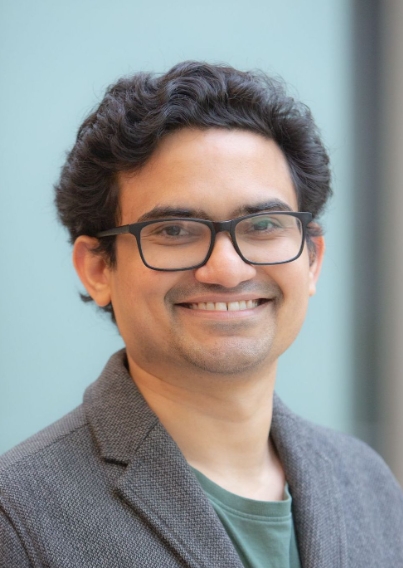 Dipendra Misra合作论文数Databricks11
 Alex Lamb合作论文数School of Artificial Intelligence, Tsinghua University11
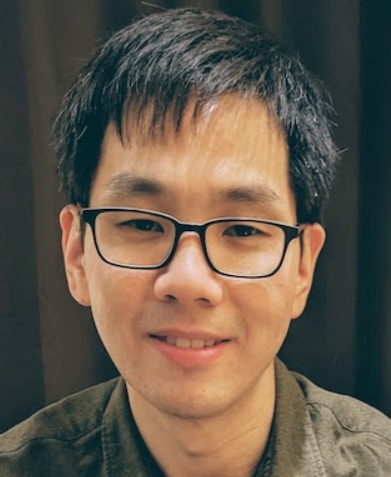 Daniel Hsu合作论文数Department of Computer Science, Columbia University;Data Science Institute, Columbia University10
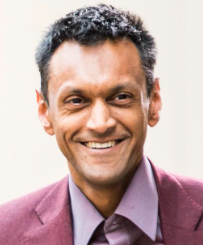 Sham M. Kakade合作论文数Kempner Institute, Harvard University10
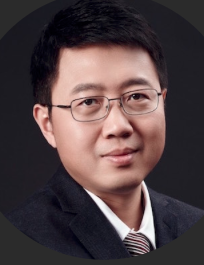 Tong Zhang (张潼)合作论文数Siebel School of Computing and Data Science, The Grainger College of Engineering, University of Illinois Urbana-Champaign9
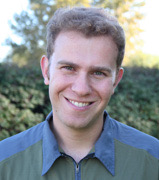 Misha Bilenko合作论文数Google DeepMind9
 Ron Bekkerman合作论文数Cherre9
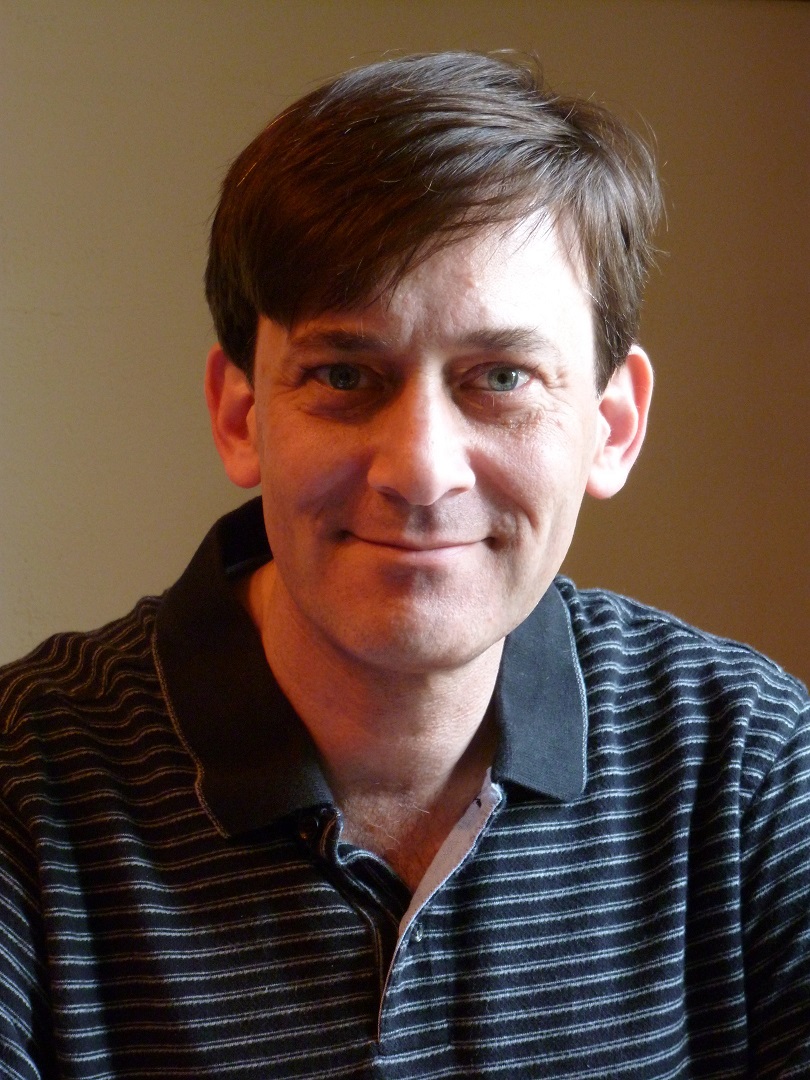 Avrim Blum合作论文数Toyota Technological Institute at Chicago8
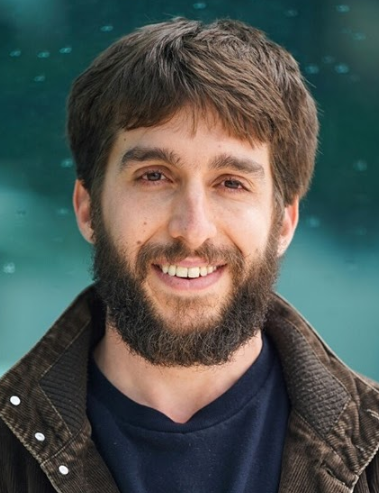 Yonathan Efroni合作论文数Meta7
 Nan Jiang (姜楠)合作论文数7
 Naoki Abe合作论文数Statistical Learning Group, Foundations of Trusted AI Department, IBM Research AI7
 Nikos Karampatziakis合作论文数Microsoft7
 Alexander L. Strehl合作论文数Department of Computer Science, Rutgers University7
 Riashat Islam合作论文数Microsoft Research6
 Manan Tomar合作论文数University of Alberta6
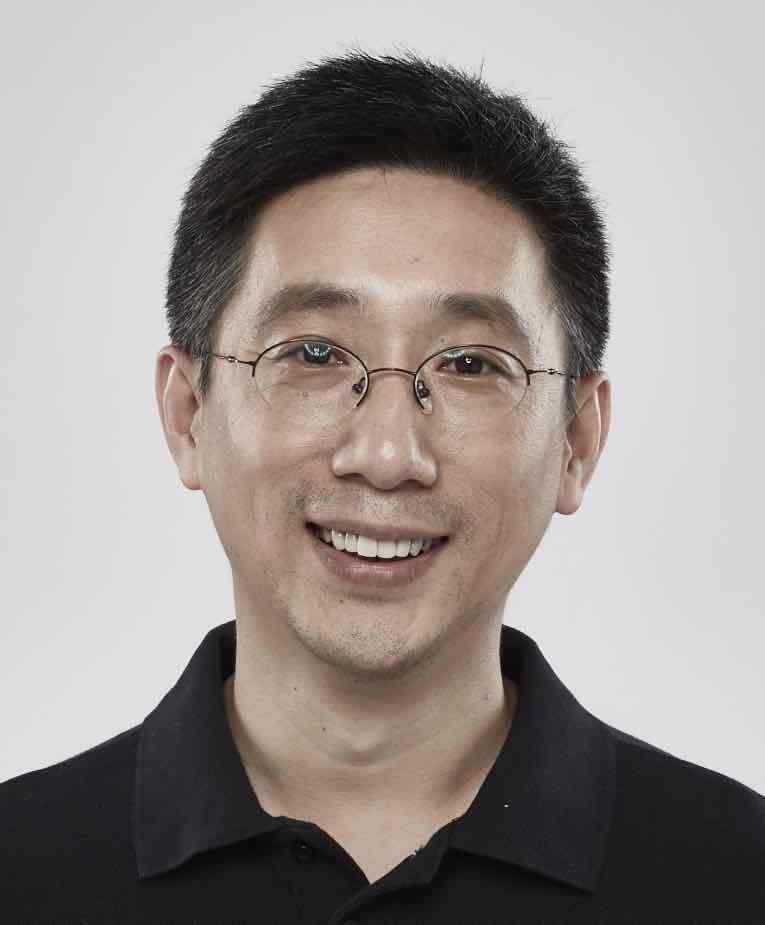 Wei Chu (褚崴)合作论文数INF Tech6
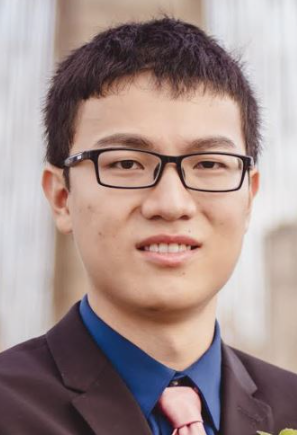 Chicheng Zhang (张驰丞)合作论文数Department of Computer Science, College of Science, University of Arizona6
 Alex Smola合作论文数Boson AI6
 Akanksha Saran合作论文数Reinforcement Learning Group, Microsoft Research5
 Jordan T. Ash合作论文数Microsoft Research5
 Luis Von Ahn合作论文数Duolingo;Carnegie Mellon University5
 Rich Caruana合作论文数Microsoft Research;Computer Science Department, Cornell University5
 Furong Huang合作论文数Department of Computer Science, University of Maryland;Center for Machine Learning, University of Maryland;Institute for Advanced Computer Studies, University of Maryland5
 Rajan Chari合作论文数Microsoft4
 Kwangjun Ahn合作论文数Microsoft Research4
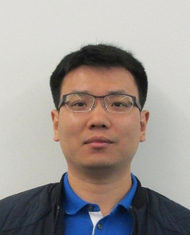 Xuanhui Wang合作论文数Google DeepMind4
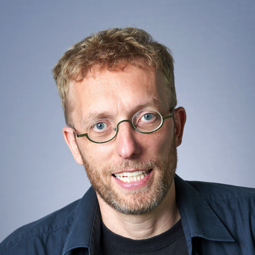 Kilian Q. Weinberger合作论文数Department of Computer Science, Cornell University4
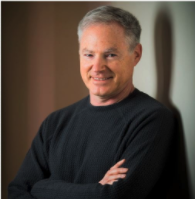 Eric Horvitz合作论文数Microsoft4
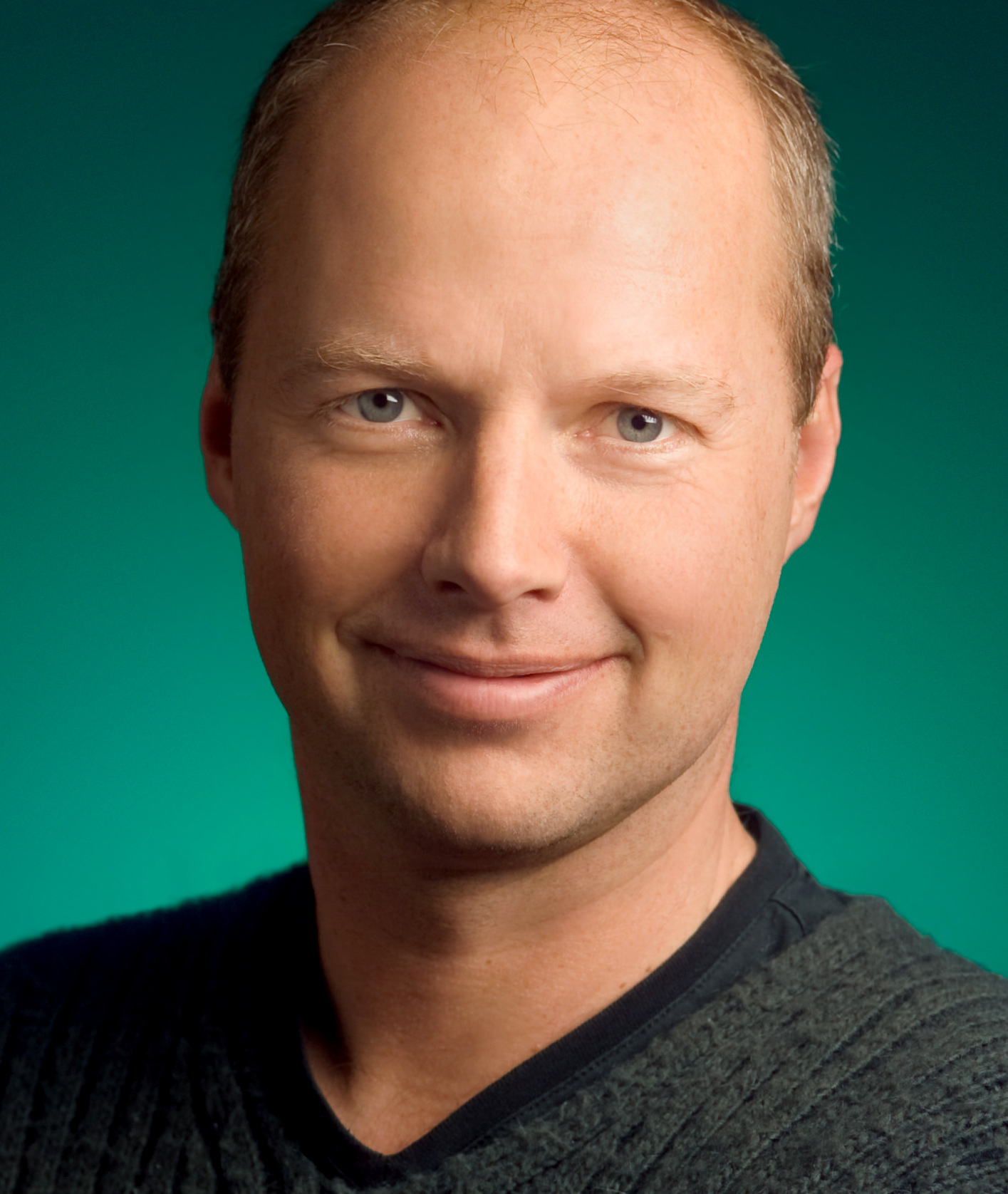 Sebastian Thrun合作论文数Stanford University;Kitty Hawk Corporation;Udacity4
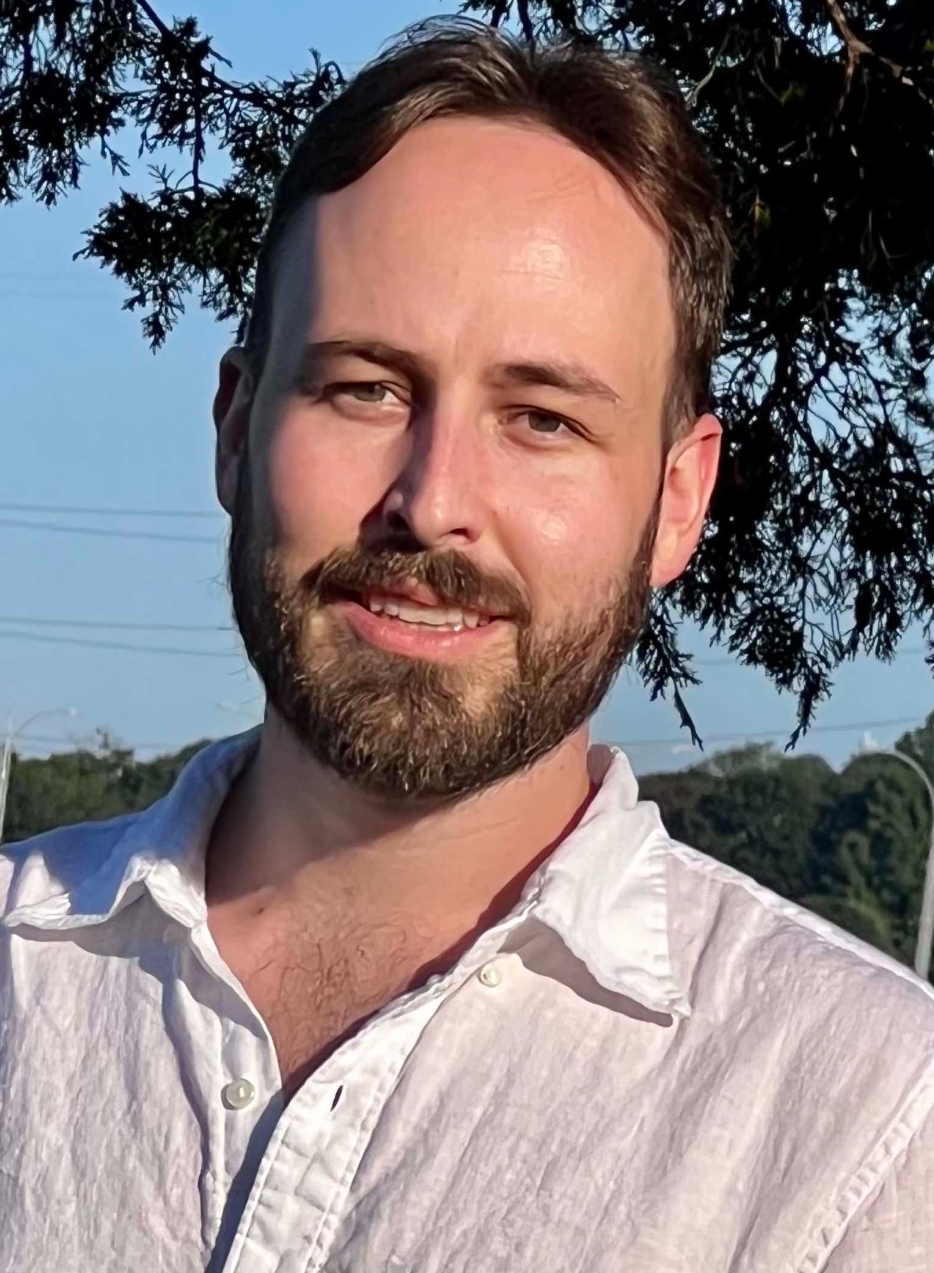 Dylan Foster合作论文数Microsoft Research4
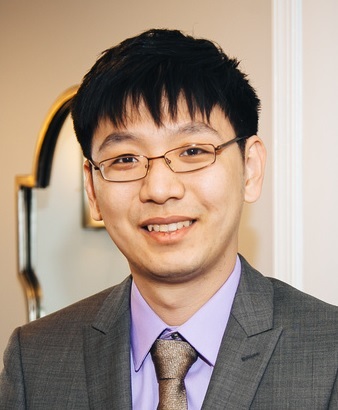 Kai-Wei Chang合作论文数Department of Computer Science, Samueli School of Engineering, University of California, Los Angeles4
 R. Preston McAfee合作论文数Google4M Blum合作论文数3Vin de Silva合作论文数3Lekan Molu合作论文数3
 Alex Slivkins合作论文数Microsoft Research3
 Sharad Goel合作论文数Harvard Kennedy School3
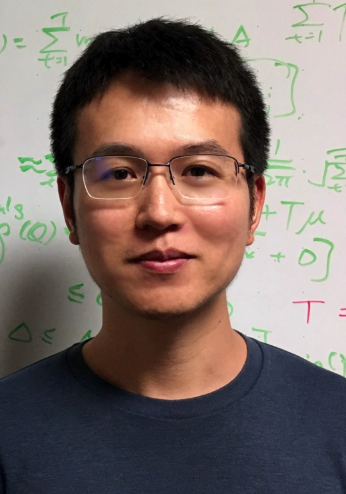 Haipeng Luo合作论文数Thomas Lord Department of Computer Science, Viterbi School of Engineering, University of Southern California;IBM3
 Alberto Bietti合作论文数Center for Computational Mathematics, Flatiron Institute, Simons Foundation3