Despite there is a general agreement of translation processes to support computing artefacts moving from university researchers to the right market, the success in industry is questionable. The aim of this article is to assess the commercialisation of research for computing artefacts to support the commercialisation objective. The analysis is proposed in universities as selective case studies to foresee the university capabilities to undertake the commercialisation venture. The selected case studies involved how external firms or venture capitalists from industry play their roles in the university commercialisation collaboration programme. The commercialisation computing artefacts from universities are investigated based on both market and technological and capabilities perspective. These findings offer a commercialisation model and practical handbook for successful commercialisation and licensing for the commercialisation of computing artefacts derive from academic research.
The commercialization of research by academic scientists is recognized as an important driving force for technology transfer and wealth creation. Due to the complexity of the process involved, the success of commercialization of inventions (innovations) from universities to industry is questionable. There is a paucity of general agreed commercialization in terms of execution processes to support inventions of prototypes and products moving from laboratories to the right market. This research aims to investigate the commercialization of research outcomes for IT products from the research centers to facilitate the commercialization objective. The analysis is carried out based on the comparative analysis based on different theories that underpinned technology commercialization. The analysis is expected to offer a research commercialization model and practical contribution for successful commercialization and licensing among academics.
In the style of a polemic discursive essay, Antiusability (also known as Schwierigkeit) is introduced as a radical design paradigm to reawaken dedicated awareness of the user-system interface through challenge. A philosophical work in flux, it is described as a kind of science (or logic) of difficulty with an underpinning that promotes the generic greater good in usability per se.
Based on a web based survey of 158 IT software development practitioners, mostly from different organizations, this paper examines the application of Software Configuration Management (SCM) process in adaptable software development environments. From the literature review six independent variables and five dependent variables were derived to answer the research question how does organization size impact on the usage of SCM process in adaptable software development environments? The six hypotheses confirmed that organization size does not impact on the usage of SCM process in adaptable software development environments. Also, all sizes of organizations consider SCM process valuable and have similar software traceability approaches with different process formalities and tools sophistications. This study helps SCM practitioners to build a better understanding of the relationships between adaptable software development environment, lean principles and practices, and the tools and technologies established to facilitate the coexistence of Agile and SCM practices.
The purpose of traceability is to ensure persistent alignment of product knowledge between stakeholders, artifacts, and traceability objects. On the other hand, process knowledge is equally important to ensure a systematic software development process with accurate specification and verifiable quality attributes. Previous studies lacks in presenting a consolidated view from product and process knowledge perspectives. This study has taken a systematic literature review approach to evaluate sixty one previously published papers on traceability in leading journals and conferences. Based on the findings, the authors propose to extend the definition of an existing traceability meta-model to combine both product and process knowledge perspectives. The scope of this paper is to define the extension of the traceability meta-model without violating any of its statements. This study aims to contribute by taking steps towards defining a holistic model of traceability that will provide practical guidelines to IT practitioners in general and to process engineers in particular.
Liminality is a transitional form of cultural existence in which orthodox customs and societal structures are deferred and replaced with novel ceremonies and rituals that often lack the impression of rigorous permanence. Taking inspiration from the anthropological analyses of Arnold Van Gennep and Victor Turner this paper reflects in a philosophical manner on the metaphor of blogging as a liminal space. Through interpretation of ongoing ethnographic analyses of music blogs the argument is raised that blogging can be viewed as a liminal process for those that actively contribute to these online forums as well as their anonymous readership. Since a liminal space may contain an unstructured social network then blogging could also lead to a credible emergence of the latter.
'Cloud Computing' is the latest IT buzzword representing the next generation of internet computing paradigm. Along with this paradigm shift came the new waves of opportunities and challenges and a need to explore more innovative ways to manage software development lifecycle. At present there is a lack of studies in the area of traceability in cloud computing environments. This research presents a longitudinal case study of a large Australian project, where Agile and Plan driven project teams, coexisted, and worked together to deliver a consolidated product with end-to-end traceability capabilities in a hybrid cloud computing environment. It will contribute by presenting a Software configuration through Lean and Agile Management 'SLAM' model used in the case study. From practical aspects, this study enhance the understanding of IT practitioners, and cloud service providers to establish management systems aligned with the standard software configuration management practices through the use of lean principles and tools.
There have been many studies and examples in the literature separately demonstrating the benefits of Agile software development and Software Configuration Management process to software development organizations. There is, however, a general misconception that these two practice domains cannot coexist in a single environment without compromising the values of each other, and there is little reporting on such phenomenon and/or how practitioners can benefit from it. The aim of this paper is to present the findings of phase 1 of our research and to identify Australian Agile Software Development Organizations having such coexistence. This study will use 'organization size as a lens to analyze implementation variations of Agile and SCM practices and the perceived importance of SCM process in the agile environment. This research as a whole will support SCM practitioners in particular and IT practitioners in general by providing better understanding of SCM Process in agile environments. It will also contribute knowledge towards theory of lean.
There is a general misconception on the coexistence of Agile and Software Configuration Management (SCM) practices, and a very little reporting exists about how practitioners can benefit from their coexistence or how such coexistence can improve the organizational capabilities. This paper represent phase one of the research study, with the aim to identify adaptable software configuration management process in Australian agile software development organizations. This as a result will facilitate later phases by identifying suitable candidate organization(s) for case study and providing the basis for validation and generalization of Adaptable Configuration Management Traceability Model (AcmTm) through additional quantitative study. This research as a whole will support SCM practitioners in particular and IT practitioners in general by providing better understanding of SCM Process in agile environments. It will also contribute knowledge towards theory of lean thinking.
With the shift of computing paradigm from standalone, to parallel, to distributed, to grid, and now “Cloud Computing”, came new waves of issues, concerns, and challenges and a need to explore more innovative ways to govern software development activities. At present there is a lack of studies in the area of governance in cloud computing and its impact on the software development activities. This paper presents an adaptable management systems model formulated for this purpose as a result of a longitudinal case study in a large Australian IT program. The case study environment involved various agile and plan driven software development teams collaborated with each other using various lean strategies, to develop and deliver a consolidated software system in a hybrid cloud computing environment. This paper will contribute an empirical study towards literature of lean thinking, governance, and traceability models and practical guidelines for process engineers to implement governance.
Liminality is a transitional form of cultural existence in which orthodox customs and societal structures are deferred and replaced with novel ceremonies and rituals that often lack the impression of rigorous permanence. Taking inspiration from the anthropological analyses of Arnold Van Gennep and Victor Turner this paper reflects in a philosophical manner on the metaphor of blogging as a liminal space. Through interpretation of ongoing ethnographic analyses of music blogs the argument is raised that blogging can be viewed as a liminal process for those that actively contribute to these online forums as well as their anonymous readership. Since a liminal space may contain an unstructured social network then blogging could also lead to a credible emergence of the latter.
 Joan Richardson合作论文数RMIT University24
 Usman K. Durrani合作论文数7
 Pradip Sarkar合作论文数5
 Zijad Pita合作论文数5
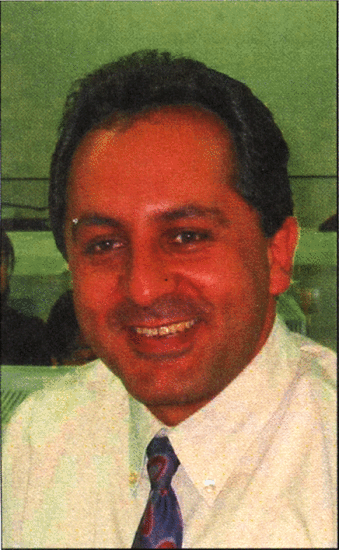 Hossein Seif Zadeh合作论文数4
 Elspeth Mckay合作论文数2002 School of Information Technology4
 Linda Wilkins合作论文数Portfolio: Division of Information Technology, Engineering and the Environment
School;Unit: School of Computer and Information Science;Division3Cameron Craig合作论文数2Tamrin Amboala合作论文数Universiti2
Linda Wilkins合作论文数Portfolio: Division of Information Technology, Engineering and the Environment
School;Unit: School of Computer and Information Science;Division3Cameron Craig合作论文数2Tamrin Amboala合作论文数Universiti2 Ian Storey合作论文数2Pradipta K. Sarkar合作论文数2Konrad J. Peszynski合作论文数2rod mccrohan合作论文数1ryan ohare合作论文数1Azwan Abdullah合作论文数1
 Brian J. Corbitt合作论文数School of Information Systems, Deakin University1Eric C. Mousset合作论文数1
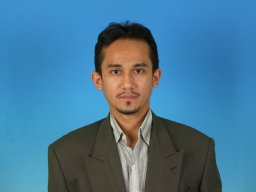 Mohd Zulkifli Muhammad合作论文数1Mary Paulette Kelly合作论文数1
 Ross Smith合作论文数Wearable Computer Laboratory, University of South Australia1John T. E. Richardson合作论文数1




