The James Webb Space Telescope, launched in 2021, is an infrared observatory of novel design: deployable, with active optics, fully open to space for radiative cooling and orbiting the Lagrange point no. 2. This article explains the rationale leading to this specific design and describes the various other architectures that were considered along the way: from a monolithic 10-meter telescope in geosynchronous orbit to a 6-meter one in High Earth Orbit, then a 16-meter observatory on the Moon, a 4- or 6-meter one in an elliptical heliocentric orbit, and a segmented 8-meter one passively cooled to 50 K at L2, which was finally descoped to 6.6 meters. It also addresses the optimization for scientific performance, the challenge of dealing with such an ultra-low operating temperature, cost issues, supporting technology, modifications made during final design and, finally, how the architecture performs on orbit.
The Hybrid Observatory for Earth-like Exoplanets (HOEE) was uniquely proposed to search for the extremely faint Earth-like exoplanets orbiting Sun-like stars with unprecedented sensitivity and exceptional angular resolution. This concept integrates an orbiting starshade with existing ground-based telescopes for the first time. We address the major optical challenges crucial for the success of HOEE and introduce the HOEE optical model of an orbiting 99-m-diameter starshade with the 39-m European Extremely Large Telescope (E-ELT), including the forecast sensitivity analysis. We examine the optical tolerance for the starshade's design, manufacture, deployment, and performance. The analysis includes several perturbations related to precise petal position, petal shape, petal clocking, segment position, formation flying alignment requirements, and proportional petal errors in width and length. We present a stability performance comparison with the 60-m starshade of the Habitable Worlds Observatory (HWO). We also explore the influence of the bright noise sources, including solar glint and earthshine that could potentially affect the detection of these faint habitable exoplanets. We finally discuss the effect of the Earth's atmospheric turbulence and demonstrate the E-ELT Adaptive Optics system in mitigating these effects. The analysis suggests insignificant changes in sensitivities with the presence of medium weather conditions. These findings are leading to the innovation of the HOEE concept and establishing it as a pioneering model for opening a new window of future hybrid space-ground observatory missions.
Abstract: Where did we come from, how did we get here, where are we going? We've measured the Big Bang and we've built telescopes to observe everything from the first stars and galaxies to the formation of stars nearby, to planets around other stars, to the planets, satellites, comets, and asteroids here in our own solar system. As a young postdoc, I led the proposal effort to build the Cosmic Background Explorer satellite, which measured the spectrum and anisotropy of the cosmic microwave background radiation, and also measured the cosmic infrared background radiation. Our work earned a Nobel Prize (2006). Then, as the head scientist for the James Webb Space Telescope, I led the science teams to work with the project management to build the most powerful space telescope ever. I summarize the key results of the JWST and discuss future telescopes.
Active galactic nuclei (AGN) are powerful sources of panchromatic radiation. All AGN emit in X-rays, contributing around 5%–10% of the AGN bolometric luminosity. The X-ray emitting region, popularly known as the corona, is geometrically and radiatively compact with a size typically ≲10RG (gravitational radii). The rapid and extreme variability in X-rays also suggest that the corona must be a dynamic structure. Decades of X-ray studies have shed much light on the topic, but the nature and origin of AGN corona are still not clearly understood. This is mostly due to the complexities involved in several physical processes at play in the high-gravity, high-density and high-temperature region in the vicinity of the supermassive black hole (SMBH). It is still not clear how exactly the corona is energetically and physically sustained near a SMBH. The ubiquity of coronal emission in AGN points to their fundamental role in black hole accretion processes. In this review we discuss the X-ray observational properties of corona in radio quiet AGN.
The CANDLE Engineering Demonstration Unit (EDU) was selected by the 2022 APRA program to develop and demonstrate the ability to reach the flux accuracy and range required for an artificial flux calibration star. A critical issue in producing accurate and reliable flux calibration is systematic effects; this EDU is providing a path to deploying an artificial star calibration payload outside Earth's atmosphere with SI-traceable calibration that enables accurate throughput characterization of astronomical and earth science observatories in space and on the ground. Such a payload could be carried independently on a dedicated platform such as an orbiting satellite, e.g. the Orbiting Configurable Artificial Star (ORCAS), by a star shade at L2, or some other independent platform to enable accurate end-to-end throughput vs. wavelength calibration that can be measured repeatedly throughout the operational lifetime of an observatory. Once calibrated, the observatory is enabled to carry out astrophysical programs whose science objectives demand high accuracy and/or high precision observations. One specific and immediate application is establishing SI-traceable standard stars beyond the current limited set. We show in this paper the progress made in developing this EDU.
The Orbiting Configurable Artificial Star (ORCAS) mission in collaboration with the W. M. Keck Observatory (WMKO) is poised to deliver near diffraction limited observations in visible light. The ability to conduct such observations will enable significant scientific discoveries in fields related to Active Galactic Nuclei (AGN), Dark Energy, Flux Calibration, the High Redshift Universe, Exoplanets, and the Solar System. The ORCAS team has successfully completed three primary mission development goals to enable such observations. The performance demonstration with the ORCAS Keck Instrument Demonstrator (ORKID) captured arguably the highest resolution image at visible wavelengths from a large (10 meter) segmented telescope on the ground to date. High resolution AO imaging of the galaxy UGC 4729 in Natural Guide Star (NGS) mode was performed by locking onto a foreground asteroid passing nearby, which simulated an observation with a moving guide star validating post processing capabilities and demonstrating how regions unreachable by NGS and LGS could be explored. Additionally, the ORCAS team has successfully locked onto a laser source onboard the Laser Communications Relay Demonstration (LCRD) and closed the adaptive optics loop to perform near diffraction limited imaging at 1550 nm with the Keck 10 meter, the first demonstration of such capability with a large segmented telescope. All of these results validate the feasibility of the ORCAS mission. Following these accomplishments, ORCAS will be strongly positioned to propose a full-scale mission to upcoming opportunities.
Abstract The expanding Universe is unstable, owing to the energy released in gravitational interactions, leading to the complexity we now observe, from astrophysics to biology and psychology and combat. In just the last century, we discovered relativity, quantum mechanics, the fundamental particles (quarks, leptons and force carriers), the expanding Universe and the density fluctuations in the primordial material, and the astounding complexity of self-organised chaos feeding from energy flows. While we have not detected signs of life elsewhere, we know that about 20% of stars have planets with the right temperature and size to be like Earth. If life is not a miracle but a thermodynamic imperative, then it could be detectable through measurements of exoplanet atmospheres containing oxygen.
The James Webb Space Telescope (Webb) is a large, infrared space telescope that recently completed its on-orbit commissioning activities and has now embarked on its first year of approved science. Its architecture includes many first-of-its kind innovations for space, including a segmented primary mirror that is 6.6 m in diameter and a 5-layer sunshield used to passively cool the telescope and its four science instruments. Although Webb had an extensive test program, the system-level performance often relied on predictions based on integrated modeling, using conservative factors for the model uncertainties and primarily focusing on evaluating the performance at the end of life. A set of commissioning activities were designed for a system-level characterization of the performance. This proceeding will provide the status of the mission, including a discussion of the major events, on-orbit system performance, and early science highlights.
We present the concept of using an orbiting laser as a coherent optical reference to phase a several kilometer diameter array of ground-based lasers designed to accelerate interstellar nano-spacecraft to 20% light-speed using laser propulsion. We investigate the geometrical and temporal constraints for the initial case of the target star Proxima b in the Alpha Centauri system using a laser ground site in the southern hemisphere. Based on these constraints, we detail requirements for the mission architecture for an orbiting laser to be used as an optical reference. We then present two orbits that can meet all given requirements and represent a range of engagement times and days between engagements. We also present a range of orbits with periods from 3 to 4 days and engagement times from 660 to 800 s. If desired, the orbit can be matched to the sidereal day, so each orbit period, the beacon can align with the ground station and the same target star without maneuvers. A discussion of the tradeoff between the Earth-based site latitude, time on engagement, and days between engagements is presented. (C) 2022 Society of Photo-Optical Instrumentation Engineers (SPIE)
Abstract. Ground-based observatories’ capabilities can be greatly enhanced by working with satellites in astrostationary orbits. Satellites inertially aligned with ground-based observatories can help mitigate atmospheric effects in astronomical, solar, and planetary observations. We present a method for developing and modeling the trajectory of potential astrostationary orbits as seen from the ground to understand whether they meet defined astrostationary conditions such as the location in the field of interest and the observation time. It discovers an L2 orbit family and shows that it can meet astrostationary conditions. It then presents an example mission, Orbiting Configurable Artificial Star (ORCAS), in which a satellite aligns with a ground-based observatory to provide near-diffraction limited observations in the visible wavelength. A highly elliptical orbit family which can meet the ORCAS requirements is studied, and we go on to show how multiple observations can be made during a single-orbit period and how specific configurations that increase the observation time can be found. Finally, other potential astrostationary families are presented, as well as additional applications that could benefit from spacecraft and ground-based observatories working together, and future work which can be done to move forward in the field is discussed.
We present the optical requirement-driven observational constraints of the Remote Occulter, an orbiting starshade designed to work with ground-based telescopes to produce visible-band images and spectra of temperate planets around Sun-like stars. We then utilize these constraints to develop and present numerical simulations of time-dependent observable sky regions along with each region's nightly available exposure duration and show that nearly the entire sky could be observed for up to 8 h a night. We further examine how changes introduced to our established constraints will impact such observational windows and discuss their implications, setting the ground for upcoming studies aiming to further investigate the Remote Occulter mission capabilities and architecture. (C) 2021 Society of Photo-Optical Instrumentation Engineers (SPIE)
We lay out the capabilities and limitations of starshade-based missions aiming to measure the reflected light spectra of temperate planets from an imaging perspective. We use the Starshade Imaging Simulation Toolkit for Exoplanet Reconnaissance to conduct high fidelity end-to-end optical simulations, taking a step forward from simplified analytical equations, exploring and quantifying the impact of an array of observational conditions, including natural parameters such as target star types, planet types, distances, planet phases, and exo-zodiacal dust, and starshade perturbations such as tilt, shift off line of sight, edge errors, and glint. We find that signal-to-noise ratio (SNR) requirements used for establishing detection and spectral characterization, is not suitable under realistic observation conditions for a wide range of targets. We show that even if we assume that the spatially distributed, time-varying background noise could be known and calibrated to a level of 1%, each target star will need its own SNR requirement based on its unique observation conditions, nearly always resulting in a higher threshold SNR, with values as high as X5 from currently established requirement, and in some cases impossible to detect. We conduct statistical analysis using end-to-end optical simulations, taking into account observationally based priors and update previously established completeness values for an array of target stars and mission configurations, accounting for starshade perturbations, and background knowledge at a level of one percent and find that completeness values are negatively impacted and reduced by up to 50% across targets even at ranges shorter than 10 pc. Finally, we utilize information from over hundreds of thousands of detailed imaging simulations to map accessible target stars for both optimistic and pessimistic scenarios, reassessing the expected capabilities of starshade-based high contrast direct imaging missions. (C) The Authors. Published by SPIE under a Creative Commons Attribution 4.0 Unported License.
This paper discusses the science case for a sensitive spectro-polarimetric survey of the microwave sky. Such a survey would provide a tomographic and dynamic census of the three-dimensional distribution of hot gas, velocity flows, early metals, dust, and mass distribution in the entire Hubble volume, exploit CMB temperature and polarisation anisotropies down to fundamental limits, and track energy injection and absorption into the radiation background across cosmic times by measuring spectral distortions of the CMB blackbody emission. In addition to its exceptional capability for cosmology and fundamental physics, such a survey would provide an unprecedented view of microwave emissions at sub-arcminute to few-arcminute angular resolution in hundreds of frequency channels, a data set that would be of immense legacy value for many branches of astrophysics. We propose that this survey be carried-out with a large space mission featuring a broad-band polarised imager and a moderate resolution spectro-imager at the focus of a 3.5m aperture telescope actively cooled to about 8K, complemented with absolutely-calibrated Fourier Transform Spectrometer modules observing at degree-scale angular resolution in the 10-2000 GHz frequency range. We propose two observing modes: a survey mode to map the entire sky as well as a few selected wide fields, and an observatory mode for deeper observations of regions of specific interest.
We’ve come a long way since 1609, from spectacle lenses to mirrors in space, from twitching frog legs to the Event Horizon Telescope observing a black hole. But far more is possible. On the ground, a new generation of optical telescopes is under construction, up to 39 m in diameter. Adaptive optics compensates for the turbulent atmosphere, but could work far better with an orbiting reference beacon in space. Bright chemiluminescent emission lines in the upper atmosphere interfere with observations, but could be blocked by fiber optic filters. Energy-resolving photon counting detectors promise far greater sensitivity. New ways of making mirrors offer far better resolution for space X-ray telescopes. Coronagraphs can suppress starlight enough to reveal exoplanets in direct imaging, or starshades can cast star shadows on telescopes to do the same thing. New generations of far IR detectors with large cryogenic telescopes in space can reveal the cool and cold universe. Radio telescopes on the quiet far side of the Moon can overcome the limits of the ionosphere and intense local interference to see events in the early universe as it heated up again after the Big Bang expansion cooled everything. Neutrino telescopes can see stars being shredded by black holes, and gravitational wave detectors see merging neutron stars and black holes. Atom wave gravimeters can measure the internal structure of planets and asteroids, and sample return missions are already bring back distant bits of the solar system. What will happen next? I don’t know but it will be glorious.
Abstract. The Origins Space Telescope will trace the history of our origins from the time dust and heavy elements permanently altered the cosmic landscape to present-day life. How did galaxies evolve from the earliest galactic systems to those found in the universe today? How do habitable planets form? How common are life-bearing worlds? We describe how Origins was designed to answer these alluring questions. We discuss the key decisions taken by the Origins mission concept study team, the rationale for those choices, and how they led through an exploratory design process to the Origins baseline mission concept. To understand the concept solution space, we studied two distinct mission concepts and descoped the second concept, aiming to maximize science per dollar and hit a self-imposed cost target. We report on the study approach and describe the concept evolution. The resulting baseline design includes a 5.9-m diameter telescope cryocooled to 4.5 K and equipped with three scientific instruments. The chosen architecture is similar to that of the Spitzer Space Telescope and requires very few deployments after launch. The cryo-thermal system design leverages James Webb Space Telescope technology and experience.
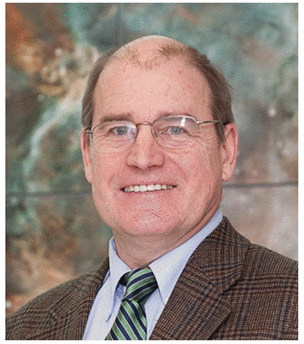 Samuel H. Moseley合作论文数Goddard Space Flight Center, National Aeronautics and Space Administration55
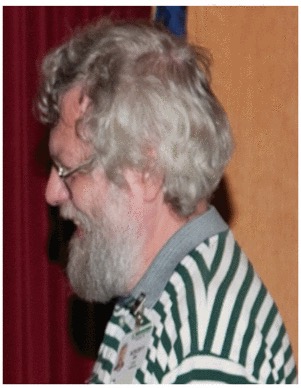 Dale J Fixsen合作论文数Goddard Space Flight Center, National Aeronautics and Space Administration;Department of Astronomy, College of Computer, Mathematical & Natural Sciences, University of Maryland46
 Edward L. (Ned) Wright合作论文数University of California, Los Angeles32
 Ra Shafer合作论文数31Rf Silverberg合作论文数29
 David T Leisawitz合作论文数NASA Goddard Space Flight Center29E. Cheng合作论文数28Alexander Kashlinsky合作论文数28Mg Hauser合作论文数27
 Eli Dwek合作论文数Observational Cosmology Laboratory, Goddard Space Flight center, National Aeronautics and Space Administration27T. Kelsall合作论文数27Hervey S. Stockman合作论文数26
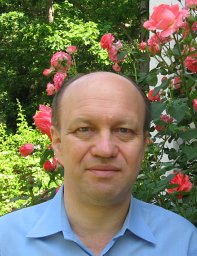 Sergei I. Ipatov合作论文数Vernadsky Institute of Geochemistry and Analytical Chemistry, RussiaSpace Research Institute24
 George Smoot (乔治・斯穆特)合作论文数The Hong Kong University of Science and Technology;Department of Physics, University of California, Berkeley;Lawrence Berkeley National Laboratory22
 Charles L. Bennett合作论文数Center for Astrophysical Science, Department of Physics and Astronomy, Krieger School of Arts and Sciences, Johns Hopkins University22N. Boggess合作论文数22Dt Wilkinson合作论文数21
 Stephan S. Meyer合作论文数Department of Astronomy and Astrophysics, University of Chicago;Enrico Fermi Institute, University of Chicago;Kavli Institute for Cosmological Physics, University of Chicago21Richard G. Arendt合作论文数19
 Dominic Benford合作论文数Astrophysics Division, National Aeronautics and Space Administration;Montgomery County Public Schools19Rainer Weiss合作论文数17
 Eliad Peretz合作论文数16
 Alan J. Kogut合作论文数Goddard Space Flight Center, National Aeronautics and Space Administration16
 Gary Hinshaw合作论文数Department of Physics & Astronomy, The University of British Columbia15Joel D. Offenberg合作论文数15thomas l murdock合作论文数14Leonid M. Ozernoy合作论文数14
 Samuel Gulkis合作论文数Jet Propulsion Laboratory, California Institute of Technology13
 Jonathan P Gardner合作论文数Goddard Space Flight Center, National Aeronautics and Space Administration13R. Sengupta合作论文数12
 Robert Hanisch合作论文数Material Measurement Laboratory, National Institute of Standards and Technology12Eric P. Smith合作论文数11
 Johannes Staguhn合作论文数William H. Miller III Department of Physics & Astronomy, Krieger School of Arts & Sciences, Johns Hopkins University;NASA Goddard Space Flight Center11
 Matthew Greenhouse合作论文数Laboratory for Observational Cosmology, Goddard Space Flight Center10Harold W. Yorke合作论文数10Richard A. Shafer合作论文数10
 James B West合作论文数9Michael a Janssen合作论文数9Harvey Moseley合作论文数9
 Alexander Kutyrev合作论文数Astronomy Department, University of Maryland;Astrophysics Science Division, University of Maryland;CRESST;NASA GSFC9
 Daniel Y. Gezari合作论文数goddard space flight center9Michael J. Dipirro合作论文数Cryogenics Technology Section, NASA Goddard Space Flight Center9
 H. Philip Stahl合作论文数NASA Marshall Space Flight Center9Rb Isaacman合作论文数8Kevin Hall合作论文数8
 Massimo Stiavelli合作论文数Space Telescope Science Institute8Gregory James Madsen合作论文数8Randy A. Kimble合作论文数8Sten F Odenwald合作论文数8




