The James Webb Space Telescope (JWST) launched on December 25, 2021, and its optical performance in orbit has been even better than predicted pre-flight. The static wavefront error (WFE) is less than half the value specified for the requirement of having diffraction-limited image quality at 2 microns in the NIRCam shortwave channel, enabling the observatory to deliver both sharper images and higher sensitivity than anticipated. In addition to the excellent image quality, the optical stability has also exceeded expectations, both in terms of high-frequency dynamic contributions (which would be perceived as part of "static WFE") and in terms of drifts over minutes, hours, and days. Stability over long timescales is critical for several important science cases, including exoplanet transit spectroscopy and coronagraphy. JWST's stability success was achieved through detailed design and testing, with several important lessons learned for future observatories, especially the Habitable Worlds Observatory that is expected to need even higher levels of stability. We review the stability architecture, how it was technologically demonstrated, the ground test results and improvements, the on-orbit results, and the lessons learned.
The Nancy Grace Roman Space Telescope project is NASA's next flagship a strophysics mission t o s tudy dark energy, dark matter, and exoplanets along with the innumerable topics that will be enabled by the infrared survey telescope's Wide Field Instrument and Coronagraph Instrument. The Wide Field Instrument contains a focal plane of 18 newly developed Teledyne H4RG-10 HgCdTe detectors. The focal plane along with Roman's ASIC for Control And Digitization of Imagers for Astronomy (ACADIA) and the focal plane electronics that power them comprise the focal plane system. Roman's focal plane completed its first s ystem l evel thermal vacuum test at NASA Goddard in 2022, when an increase in dark current compared to component level testing was observed for several detectors. Roman chartered an anomaly review board (ARB) and in collaboration with Teledyne undertook a testing program to help identify possible root cause and select from Roman's spare inventory suitable replacement detectors for devices that had significantly d egraded. A p ossible root c ause was determined by the ARB along with recommendations for how to prevent further degradation. Three detectors were replaced in Roman's focal plane, and results from the following focal plane system thermal vacuum test, implementing recommendations from the ARB, demonstrate improved dark current performance. We summarize the initial observation of the detector anomaly, present the detector testing strategy to find s uitable spares and provide evidence of root cause, share the general findings of the ARB, and show new data showing the improved dark current performance.
We describe the sources of stray light and thermal background that affect JWST observations, report actual backgrounds as measured from commissioning and early-science observations, compare these background levels to prelaunch predictions, estimate the impact of the backgrounds on science performance, and explore how the backgrounds probe the achieved configuration of the deployed observatory. We find that for almost all applications, the observatory is limited by the irreducible astrophysical backgrounds, rather than scattered stray light and thermal self-emission, for all wavelengths lambda < 12.5 micron, thus meeting the level 1 requirement. This result was not assured given the open architecture and thermal challenges of JWST, and it is the result of meticulous attention to stray light and thermal issues in the design, construction, integration, and test phases. From background considerations alone, JWST will require less integration time in the near-infrared compared to a system that just met the stray-light requirements; as such, JWST will be even more powerful than expected for deep imaging at 1-5 micron. In the mid-infrared, the measured thermal backgrounds closely match prelaunch predictions. The background near 10 micron is slightly higher than predicted before launch, but the impact on observations is mitigated by the excellent throughput of MIRI, such that instrument sensitivity will be as good as expected prelaunch. These measured background levels are fully compatible with JWST's science goals and the Cycle 1 science program currently underway.
The James Webb Space Telescope (Webb) is a large, infrared space telescope that recently completed its on-orbit commissioning activities and has now embarked on its first year of approved science. Its architecture includes many first-of-its kind innovations for space, including a segmented primary mirror that is 6.6 m in diameter and a 5-layer sunshield used to passively cool the telescope and its four science instruments. Although Webb had an extensive test program, the system-level performance often relied on predictions based on integrated modeling, using conservative factors for the model uncertainties and primarily focusing on evaluating the performance at the end of life. A set of commissioning activities were designed for a system-level characterization of the performance. This proceeding will provide the status of the mission, including a discussion of the major events, on-orbit system performance, and early science highlights.
Backgrounds observed by JWST will be a critical parameter for overall observatory sensitivity. JWST’s background, sensitivity and other performance requirements drove the observatory’s open architecture, sunshield geometry, orbit at L2 and other unique characteristics. These requirements were verified by analysis, to be measured for the first time on-orbit. Modeling JWSTs backgrounds is complex, as JWST backgrounds have multiple components including: backgrounds from in-field sources (such as Zodiacal Light) and stray light from scattering of sky sources outside the field; thermal selfemission of optical surfaces; and scattering of thermal self-emission from other Observatory surfaces. The unbaffled telescope design allows stray light paths from multiple directions. The 5-layer sunshield passively cools and shades the telescope and science instruments; however, there are thermal paths that may affect thermal performance. In-field backgrounds and stray light from sky sources can depend on the telescope’s pointing and observation date. The thermal emission contributions will depend on the Observatory’s sun orientation and recent history. The JWST Background Tool (JBT) uses the stray light models, in-field backgrounds, and thermal models to predict the expected backgrounds. Onorbit, several positions were measured at multiple wavelengths with NIRCam and MIRI to probe JWST’s backgrounds and validate model predictions. These results may be used to update the JWST Exposure Time Calculator in preparation for the Cycle 2 proposal call. This conference proceeding will provide a summary of the modeling backgrounds and report on the measured on-orbit backgrounds.
The long-awaited launch of the James Webb Space Telescope on December 25, 2021, initiated a complex commissioning campaign which successfully brought the observatory to readiness for carrying out its scientific observing program by early July, 2022. Commissioning began by bringing online the various spacecraft systems and executing a series of mission-critical deployments. The next few months involved a complex interplay of cooling toward the final cryogenic operating temperatures of the telescope and instruments, aligning the segmented, deployable telescope, bringing online Webb’s four scientific instruments (plus Fine Guidance Sensors), and beginning the process of preparing their many powerful observing modes for scientific use. We provide an overview of the process and timeline for executing the commissioning campaign and then focus on its final stages: for each instrument, acquiring the numerous pieces of performance data and carrying out the operational verifications that ultimately led to confirmation of each observing mode’s readiness for scientific operations.
The James Webb Space Telescope (JWST) is a large (6.5 m) near- and mid-infrared telescope scheduled for launch in 2021. JWST will be used to explore fundamental questions in astrophysics and planetary science, including the evolution of galaxies, the first light of stars, the formation of stars and planets as well as the characterization of exoplanets. To achieve these scientific goals, NASA and its international partners, the Canadian Space Agency (CSA) and the European Space Agency (ESA), have developed four science instruments for JWST and have prepared detailed commissioning plans for each. The NASA Project Science team has also outlined activities to characterize the performance of the Observatory as a whole. These activities include: 1) monitoring of the instrument and telescope cooldown for contamination mitigation; 2) measurements of straylight and other backgrounds for validation of the JWST stray light models as well as instrument background subtraction algorithms; 3) characterization of optical thermal distortion between its hot and cold telescope pointings within the observable field of regard and 4) trending of observatory performance parameters. Each of these activities has been planned in close collaboration with the observatory wavefront, commissioning planning, and science instrument teams. Here we present the plans for these activities, the expected results and how they will impact future guest observer (GO) proposals and JWST science community.
The James Webb Space Telescope features a powerful complement of focal-plane instruments: the Mid-Infrared Instrument (MIRI), the Near-Infrared Camera (NIRCam), the Near-Infrared Imager and Slitless Spectrograph (NIRISS), the Near-Infrared Spectrograph (NIRSpec), and the Fine Guidance Sensor (FGS). These instruments offer an exciting suite of scientific capabilities for imaging, high-contrast imaging, and spectroscopy. To bring these capabilities on-line after launch, a carefully scoped and sequenced set of commissioning activities has been developed. These activities will confirm the functionality of the instruments, characterize their performance (optimizing where possible), obtain initial calibrations at a level required to properly plan observations, and demonstrate essential operational sequences such as target acquisition. We present a high-level overview of these activities and the planned commissioning timeline to execute them.
The James Webb Space Telescope (JWST) is going through final integration and testing and is planned to launch in 2021. The last remaining optical challenge for JWST is to fully align the observatory in flight to meet the optical requirements but this effort involves many system considerations to do this safely and efficiently and the entire effort will take several months. This talk will cover what it takes to deploy and optically commission the telescope including the many interactions and constraints of deployment, thermal, optical, attitude control and contamination properties of the observatory. The talk will cover the final optical requirements that the telescope will need to meet and will provide the roadmap of timelines, cooldown profiles, Wavefront Sensing and Control steps, system constraint considerations, and implementation of lessons learned from the ground test campaign that will result in meeting those optical requirements.
In 2017, the James Webb Space Telescope Optical Telescope Element and Integrated Science Instrument Module (OTIS) underwent cryogenic optical testing at the Johnson Space Center. In this paper, we summarize the successful execution and results of this 100-day test, which was a major program milestone. We summarize the as-run test configuration and provide a top-level as-run timeline. We also provide the top-level functional, optical, thermal, and operational results from the test. We summarize the key technical issues encountered and the resolution of those issues. The results of the OTIS test indicate that the payload should be fully capable of delivering on JWST's exciting scientific potential.
The James Webb Space Telescope (JWST) is a NASA flagship mission that will address multiple science themes including our Universe’s first light, the assembly of galaxies, the birth of stars and planetary systems, and planets and the origins of life. The JWST is a large (6.5 m) segmented aperture telescope equipped with near- and mid-infrared instruments (0.6-28 microns), all of which are passively cooled to ~40 K by a 5-layer sunshield while the mid-infrared instrument is actively cooled to 7 K. The JWST will be launched to an L2 orbit aboard a European Space Agency (ESA) supplied Ariane 5 rocket, whose payload volume constraints require that the JWST structure is stowed for launch. The JWST telescope recently completed its cryogenic test program and the sunshield has been fully integrated and deployed. JWST is currently in the final stages of the test program at the Observatory level. The current estimated JWST performance metrics will be presented, such as the image quality, pointing stability, sensitivity, and stray light backgrounds. The JWST development status and future plans will be described for the final testing, launch, and commissioning. JWST is an international project with contributions from NASA, ESA, and the Canadian Space Agency (CSA). Northrop Grumman Aerospace Systems is the prime contractor for the JWST, and the Space Telescope Science Institute will serve as the science operations center.
Department of Physics and Astronomy, University of California, Riverside, CA 92521 Department of Physics and Astronomy, University of California, Davis, CA 92616 School of Earth and Space Exploration, Arizona State University, Tempe, AZ 85287-1404 Center for Cosmology and AstroParticle Physics, The Ohio State University, Columbus, OH 43210 Observatories of the Carnegie Institute of Washington, Pasadena, CA 91101, USA Department of Astronomy, University of Virginia, Charlottesville, VA 22904-4325 Space Telescope Science Institute, Baltimore, MD 21218 Department of Astronomy, University of Washington, Seattle, WA 98195-1580 Department of Astronomy, University of Massachusetts, Amherst, MA 01003 School of Physics and Astronomy, Cardiff University, Cardiff CF24 3AA, United Kingdom Research School of Astronomy & Astrophysics, The Australian National University, ACT 2611, Australia Association of Universities for Research in Astronomy, Washington, DC 20005 Institute for Astronomy, University of Hawaii, Honolulu, HI 96822 Department of Astronomy, New Mexico State University, Las Cruces, NM 88003 NASA–Goddard Space Flight Center, Greenbelt, MD 20771 Istituto di Astrofisica Spaziale e Fisica Cosmica, INAF, Via Gobetti 101, 40129 Bologna, Italy National Optical Astronomy Observatories, Tucson, AZ 85726-6732 Department of Physics, University of Oxford, Oxford OX1 3PU, United Kingdom NASA–Jet Propulsion Laboratory, Pasadena, CA 91109 Cerro Tololo Inter-American Observatory, La Serena, Chile NASA–Ames Research Center, Moffett Field, CA 94035
The James Webb Space Telescope (JWST) is a large (6.5 m) cryogenic segmented aperture telescope with science instruments that cover the near- and mid-infrared from 0.6-27 microns. The large aperture not only provides high photometric sensitivity, but it also enables high angular resolution across the bandpass, with a diffraction limited point spread function (PSF) at wavelengths longer than 2 microns. The JWST PSF quality and stability are intimately tied to the science capabilities as it is convolved with the astrophysical scene. However, the PSF evolves at a variety of timescales based on telescope jitter and thermal distortion as the observatory attitude is varied. We present the image quality and stability requirements, recent predictions from integrated modeling, measurements made during ground-based testing, and performance characterization activities that will be carried out as part of the commissioning process.
Data were obtained for the purpose of measuring the relative throughput of the Near-IR Science Instruments (SIs) of the James Webb Space Telescope (JWST) as part of the second and third cryogenic-vacuum tests (CV2CV3) of the Integrated Science Instrument Module (ISIM) conducted at the Goddard Space Flight Center (GSFC) in 2014 and 20152016, at the beginning and end of the environmental test program, respectively. This Poster focuses on data obtained as part of the Initial Optical Baseline and as part of the Final Performance test -- two epochs that roughly bracket the CV3 test. The purpose of the test is to trend relative throughput to monitor for any potential changes from gross problems such as contamination or degradation of an optical element. Point source data were taken at a variety of wavelengths for NIRCam Module A and Module B, NIRSpec, NIRISS, Guider 1 and Guider 2 using the Laser Diode (LD) 1.06 micron, LD 1.55 micron, 2.1 micron LED and 3.5 micron LED, as well as for NIRCam Mod A and B and NIRISS using a tungsten source and the F277W, and F480M filters. Spectra were taken using the G140M, G235M, and G395M gratings for NIRSpec, the GRISMR grism for NIRCam Mod A and B and the GR150C grism for NIRISS. The results of these measurements are compared to what would be expected given the efficiency of each of the optical elements in each SI. Although these data were taken as a check against gross problems, they can also be used to provide the first relative throughput estimate for each SI through the various filters source wavelengths measured in their flight-like configurations.
Following a major upgrade, the two advanced detectors of the Laser Interferometer Gravitational-wave Observatory (LIGO) held their first observation run between September 2015 and January 2016.The product of observable volume and measurement time exceeded that of all previous runs within the first 16 days of coincident observation.On September 14th, 2015 the Advanced LIGO detectors observed the transient gravitational-wave signal GW150914, determined to be the coalescence of two black holes, launching the era of gravitational-wave astronomy.We present the main features of the detectors that enabled this observation.At its core Advanced LIGO is a multi-kilometer long Michelson interferometer employing optical resonators to enhance its sensitivity.Four very pure and homogeneous fused silica optics with excellent figure quality serve as the test masses.The displacement produced by the event GW150914 was one 200th of a proton radius.It was observed with a combined signal-to-noise ratio of 24 in coincidence by the two detectors.At full sensitivity, the Advanced LIGO detectors are designed to deliver another factor of three improvement in the signal-to-noise ratio for binary black hole systems similar in masses to GW150914.
OSIM is a full field, cryogenic, optical simulator of the James Webb Space Telescope (JWST) Optical Telescope Element (OTE). It is the "Master Tool" for verifying the cryogenic alignment and optical performance of the JWST Integrated Science Instrument Module (ISIM) by providing simulated point source/star images individually or simultaneously to each of the four Science Instruments in ISIM. Additionally, each star image can be scanned in focus to support the evaluation of both image quality and best focus for each Science Instrument.OSIM has recently completed supporting the ISIM performance verification test campaign which spanned three separate cryogenic test campaigns over 3 years. In this paper, we describe the alignment to the JWST coordinate system at cryogenic temperatures, OSIM optical performance, repeatability, and its role in testing the cryogenic optical performance of the individual Science Instruments in addition to providing calibration data needed for flight operations.
 Charles W. Bowers合作论文数104
 Paul Feldman合作论文数William H. Miller III Department of Physics & Astronomy, Krieger School of Arts & Sciences, Johns Hopkins University78
 Bruce E. Woodgate合作论文数67
 H. Warren Moos合作论文数William H. Miller III Department of Physics & Astronomy, Krieger School of Arts & Sciences, Johns Hopkins University52Arthur F. Davidsen合作论文数52
 Holland Ford合作论文数William H. Miller III Department of Physics & Astronomy, Krieger School of Arts and Sciences, Johns Hopkins University48
 Knox S. Long合作论文数Space Science Telescope Institute47
 Garth D. Illingworth合作论文数Physical & Biological Sciences Division, University of California, Santa Cruz;Astronomy & Astrophysics Department, University of California, Santa Cruz46
 Marc Postman合作论文数Science Mission Office, Space Telescope Science Institute45
 Gerhardt R. Meurer合作论文数International Centre for Radio Astronomy Research, University of Western Australia43
 Bill Sparks合作论文数SETI Institute;Space Telescope Science Institute;University of Hertfordshire43
 Richard L. White合作论文数Space Telescope Science Institute42
 William P. Blair合作论文数Department of Physics and Astronomy, Johns Hopkins University41
 Michael Lesser合作论文数Department of Astronomy, The University of Arizona;Space Astronomy Concept Group, The University of Arizona;Steward Observatory, The University of Arizona41John E. Krist合作论文数41
 Henry C. Ferguson合作论文数Space Telescope Science Institute41
 John P. Blakeslee合作论文数National Optical-Infrared Astronomy Research Laboratory40George F Hartig合作论文数40
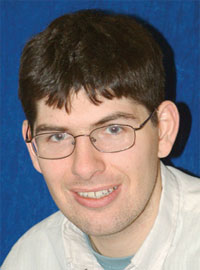 Nicholas Cross合作论文数Institute for Astronomy, School of Physics and Astronomy, The University of Edinburgh39
 Marijn Franx合作论文数Leiden University39
 Samuel T. Durrance合作论文数39
 Piero Rosati合作论文数Department of Physics and Earth Sciences, University of Ferrara38Hien D Tran合作论文数38
 Narciso Benitez合作论文数Instituto de Astrofisica de Andalucia, CSIC38
 Caryl Gronwall合作论文数Center for Theoretical and Observational Cosmology, Pennsylvania State University;Department of Astronomy and Astrophysics, Eberly College of Science, Pennsylvania State University38
 George Miley合作论文数University of Leiden37Mark C Clampin合作论文数36
 William Van Dyke Dixon合作论文数36
 Dick Henry合作论文数Department of Physics & Astronomy, Krieger School of Arts & Sciences, Johns Hopkins University;Applied Physics Laboratory, The Johns Hopkins University35
 Leopoldo Infante合作论文数Las Campanas Observatory, Carnegie Institution for Science;Centre for Astro-Engineering, Chilean University;Pontifica Universidad Católica34David Ruben Ardila合作论文数34M. Sirianni合作论文数33F. Bartko合作论文数33
 Felipe Menanteau合作论文数Department of Astronomy, College of Liberal Arts & Sciences, University of Illinois Urbana-Champaign;National Center for Supercomputing Applications, University of Illinois Urbana-Champaign33John W. Mackenty合作论文数Space Telescope Science Institute31
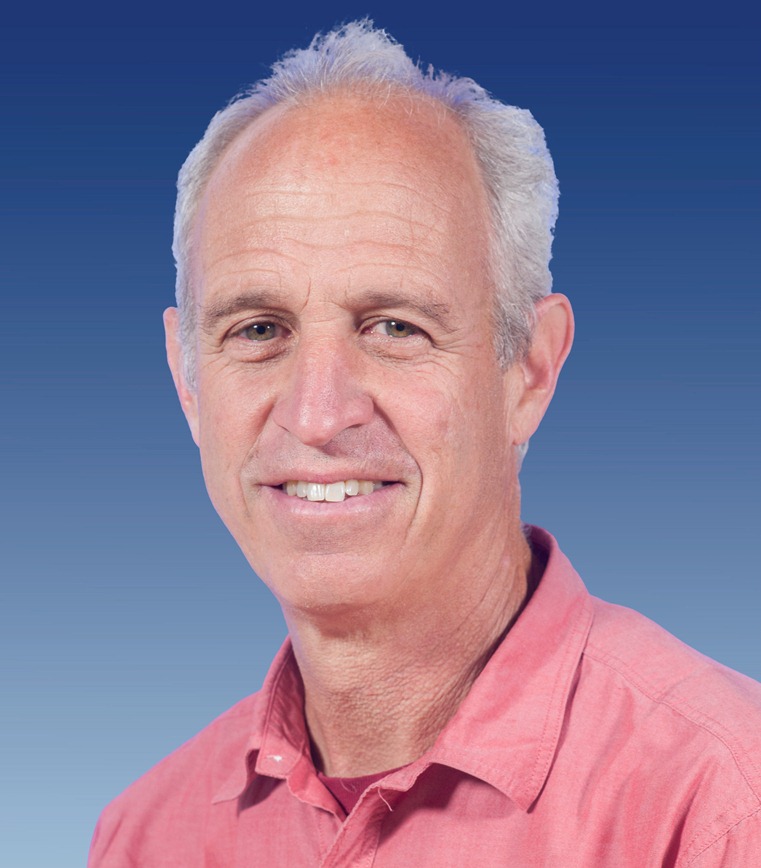 Jon Holtzman合作论文数Department of Astronomy, New Mexico State University30R. A. Brown合作论文数29Mark Clampin合作论文数29
 Robert West O'Connell合作论文数Department of Astronomy, University of Virginia28E. Cheng合作论文数27Eliot M. Malumuth合作论文数27
 Jeffrey Walter Kruk合作论文数Goddard Space Flight Center, NASA;Astrophysics Science Division, NASA26Gerard a Kriss合作论文数26tom broadhurst合作论文数25C. J. Burrows合作论文数25T. R. Gull合作论文数NASA / Goddard Space Flight Center25
 Howard E. Bond合作论文数Department of Astronomy & Astrophysics, Pennsylvania State University;Space Telescope Science Institute25
 Zlatan Tsvetanov合作论文数Space Telescope Science Institute25Steven B. Kraemer合作论文数Laboratory for Astronomy and Solar Physics, Catholic University of America;Goddard Space Flight Center;Goddard Space Flight Center, Catholic University of America25




