Recent direct measurements of the energy spectra of the charged cosmic ray have revealed unexpected spectral features, most notably the onset of a progressive hardening at few hundreds of GeV/n not only of proton and He spectra but also observable for heavier nuclei. Thus, the study of the spectra behavior of heavy elements may shed light on understanding propagation and acceleration phenomena in our Galaxy. In particular, Fe and Ni provide favorable conditions for observations thanks to the low background contamination from spallation of higher mass elements they are affected by. The CALorimetric Electron Telescope, CALET, has been measuring high-energy cosmic rays on the International Space Station since October 2015. The instrument consists of two layers of segmented plastic scintillators, a 3 radiation length thick tungsten-scintillating fiber imaging calorimeter and a 27 radiation length thick PWO calorimeter. It identifies the charge of individual elements up to Ni and beyond and it measures the energy of cosmic-ray nuclei providing a direct measurement of their spectra. In this contribution, the iron and nickel spectra, resulted after 5 years of data acquisition, are presented in the energy range between 10 and 2000 GeV/n and between 8.8 and 240 GeV/n, respectively. The analysis procedure and the assessment of systematic errors are detailed, in addition to the ratio between the two fluxes. Both spectra show similar shape and energy dependence.
This paper outlines the centralized design and production of the ultra-high-vacuum sidearm and laser-stabilization systems for the AION Ultra-Cold Strontium Laboratories. Commissioning data on the residual gas and steady-state pressures in the sidearm chambers, on magnetic field quality, on laser stabilization, and on the loading rate for the 3D magneto-optical trap are presented. Streamlining the design and production of the sidearm and laser stabilization systems enabled the AION Collaboration to build and equip in parallel five state-of-the-art Ultra-Cold Strontium Laboratories within 24 months by leveraging key expertise in the collaboration. This approach could serve as a model for the development and construction of other cold atom experiments, such as atomic clock experiments and neutral atom quantum computing systems, by establishing dedicated design and production units at national laboratories.
GRAMS (Gamma-Ray and AntiMatter Survey) is a next-generation proposed balloon-borne/satellite-based mission aimed at high sensitivity MeV gamma-ray astrophysical observations and background-free indirect dark matter search via hadronic antiparticles. The main detector of GRAMS is a meter-scale liquid argon time projection chamber (LArTPC). The adoption of liquid argon as detector material allows us to produce an unprecedentedly large effective area instrument both for cosmic MeV gamma rays of 0.5-20 MeV and antiparticles of dark matter origin. This large effective area, which will exceed 1000 cm2, is necessary for measuring faint gamma-ray signals of nuclear line emissions from energetic phenomena such as supernovae as well as for observing short-duration transient objects including gamma-ray bursts with high photon statistics. In this talk, we present the mission concept and design, the current proof-of-concept studies using prototype LArTPCs, and an engineering balloon flight conducted in 2023.
We searched for antideuterons (d over bar 's) in the 4.7 x 10⁹ cosmic-ray events observed during the BESS-Polar II flight at solar minimum in 2007-2008 but found no candidates. The resulting 95% C.L. upper limit on the d over bar flux is 6.7 x 10⁻⁵ om2 s sr GeV/n thorn -1 in an energy range from 0.163 to 1.100 GeV/n. The result has improved by more than a factor of 14 from the upper limit of BESS97, which had a potential comparable to that of BESS-Polar II in the search for cosmic-origin d over bar 's and was conducted during the former solar minimum. The upper limit of d over bar flux from BESS-Polar II is the first result achieving the sensitivity to constrain the latest theoretical predictions.
Iron and nickel cosmic ray nuclei play a key role in the understanding of the acceleration and propagation mechanisms of charged particles in our Galaxy. In fact, iron and nickel are the most abundant nuclei among the heavy elements and provide favorable conditions for a low background measurement thanks to the negligible contamination from spallation of higher mass elements. CALET, operating on the ISS since 2015, has excellent capabilities of charge discrimination up to nickel and can measure the energy of cosmic ray nuclei thanks to a lead tungstate calorimeter providing a direct and precise measurement of heavy charged nuclei spectra. In this contribution, a direct measurement of iron and nickel nuclei spectra in the energy range from 10 GeV/n to 2 TeV/n and from 8.8 GeV/n to 240 GeV/n, respectively is presented. More than five years of data collected by CALET were used. A detailed study of systematic uncertainties is also illustrated. The measured spectra are compared with the ones measured by other experiments and are compatible with a single power law fit in the energy region from 50 GeV/n to 2 TeV/n and from 20 GeV/n to 240 GeV/n for iron and nickel respectively. Also, the ratio between nickel and iron spectra is reported.
The Trans-Iron Galactic Element Recorder (TIGER) family of instruments is optimized to measure the relative abundances of the rare, ultra-heavy galactic cosmic rays (UHGCRs) with atomic number (Z) Z ≥ 30. Observing the UHGCRs places a premium on exposure that the balloon-borne SuperTIGER achieved with a large area detector (5.6 m2) and two Antarctic flights totaling 87 days, while the smaller (∼1 m2) TIGER for the International Space Station (TIGERISS) aims to achieve this with a longer observation time from one to several years. SuperTIGER uses a combination of scintillator and Cherenkov detectors to determine charge and energy. TIGERISS will use silicon strip detectors (SSDs) instead of scintillators, with improved charge resolution, signal linearity, and dynamic range. Extended single-element resolution UHGCR measurements through 82Pb will cover elements produced in s-process and r-process neutron capture nucleosynthesis, adding to the multi-messenger effort to determine the relative contributions of supernovae (SNe) and Neutron Star Merger (NSM) events to the r-process nucleosynthesis product content of the galaxy.
The Calorimetric Electron Telescope, CALET, is an astroparticle physics mission installed on the International Space Station, ISS. The primary objective of the mission is studying the details of galactic cosmic-ray acceleration and propagation, and searching for the possible nearby sources of high-energy electrons and dark matter signatures. The CALET experiment measure the flux of cosmic-ray electrons (including positrons) to 20 TeV, gamma-rays to 10 TeV and nuclei to 1000 TeV. The detector is an all-calorimetric instrument with a total vertical thickness of 30 radiation lengths and fine imaging capability, optimized for the measurement of the electron and positron (all-electron) spectrum well into the TeV energy region. It consists of a charge detector (CHD) with two layers of segmented plastic scintillators for the identification of cosmic-rays via a measurement of their charge over the range Z=1∼40, a 3 radiation length thick tungsten-scintillating fiber imaging calorimeter (IMC) and a 27 radiation length thick lead-tungstate calorimeter (TASC). The instrument was launched on August 19, 2015 to the ISS and installed on the Japanese Experiment Module-Exposed Facility. Since the start of operation in October, 2015, CALET has been collecting scientific data without any major interruption for more than eight years. The number of triggered events over 10 GeV is nearly 1.97 billion events as of November 30, 2023. In this paper, we present the results of the CALET mission so far, including the all-electron energy spectrum, the spectra of protons and other nuclei, gamma-ray observations, as well as the characterization of on-orbit performance. Some results on the electromagnetic counterpart search for LIGO/Virgo gravitational wave events and the observations of solar modulation and gamma-ray bursts are also included.
Received 21 August 2023DOI:https://doi.org/10.1103/PhysRevLett.131.109902Published by the American Physical Society under the terms of the Creative Commons Attribution 4.0 International license. Further distribution of this work must maintain attribution to the author(s) and the published article’s title, journal citation, and DOI.Published by the American Physical SocietyPhysics Subject Headings (PhySH)Research AreasCosmic ray composition & spectraCosmic ray propagationCosmic ray sourcesCosmic rays & astroparticlesGravitation, Cosmology & Astrophysics
SuperTIGER (Trans-Iron Galactic Element Recorder) is a large-area, balloon-borne cosmic-ray experiment designed to measure the galactic cosmic-ray abundances of elements from Z=10 (Ne) to Z=56 (Ba) at energies from ~0.8 GeV/nuc to ~10 GeV/nuc, with the primary goal of measuring relative abundances of ultra-heavy elements above Z=30. SuperTIGER flew for a record 55 days over Antarctica in 2012-2013 and for a second flight of over 32 days in 2019-2020. Although the primary goal is measuring ultra-heavy cosmic-ray relative abundances, the SuperTIGER data analysis uses measurements of abundant elements at Z<30 for precise charge calibration extended to the ultra-heavy elements. In this technical presentation, we will report ongoing progress on analysis to obtain energy spectra for these Z<30 elements, from Ne to Cu. We will present new details of the aerogel and acrylic Cherenkov calibrations necessary for calculating energies for generating absolute spectra, including effective photoelectron resolution, knock-on electron contributions, and other background signals in the Cherenkov detectors.
The CALorimetric Electron Telescope, CALET, has been measuring high-energy cosmic rays on the International Space Station since October 13, 2015. The scientific objectives addressed by the mission are to search for possible nearby sources of high-energy electrons and potential signatures of dark matter, and to investigate the details of galactic cosmic-ray acceleration and propagation. The calorimetric instrument, which is 30 radiation lengths or 1.3 proton interaction lengths thick with fine imaging capability, is optimized to measure cosmic-ray electrons by achieving large proton rejection and excellent energy resolution well into the TeV region. In addition, very wide dynamic range of energy measurement and individual charge identification capability enable us to measure proton and nuclei spectra from a few tens GeV to a PeV scale. Nearly 20 million cosmic-ray shower events over 10 GeV per month are triggered and the continuous observation has been kept without any major interruption since the start of operation. Using the data obtained over 6.5 years of operation, we will present a brief summary of the CALET observation including electron spectrum, and proton and nuclei spectra as well as the performance study on orbit with MC simulations.
We present the results of a direct measurement of the cosmic-ray helium spectrum with the CALET instrument in operation on the International Space Station since 2015. The observation period covered by this analysis spans from October 13, 2015, to April 30, 2022 (2392 days). The very wide dynamic range of CALET allowed for the collection of helium data over a large energy interval, from ∼40 GeV to ∼250 TeV, for the first time with a single instrument in low Earth orbit. The measured spectrum shows evidence of a deviation of the flux from a single power law by more than 8σ with a progressive spectral hardening from a few hundred GeV to a few tens of TeV. This result is consistent with the data reported by space instruments including PAMELA, AMS-02, and DAMPE and balloon instruments including CREAM. At higher energy we report the onset of a softening of the helium spectrum around 30 TeV (total kinetic energy). Though affected by large uncertainties in the highest energy bins, the observation of a flux reduction turns out to be consistent with the most recent results of DAMPE. A double broken power law is found to fit simultaneously both spectral features: the hardening (at lower energy) and the softening (at higher energy). A measurement of the proton to helium flux ratio in the energy range from 60 GeV/n to about 60 TeV/n is also presented, using the CALET proton flux recently updated with higher statistics.
We present the observation of a charge-sign dependent solar modulation of galactic cosmic rays (GCRs) with the Calorimetric Electron Telescope onboard the International Space Station over 6 yr, corresponding to the positive polarity of the solar magnetic field. The observed variation of proton count rate is consistent with the neutron monitor count rate, validating our methods for determining the proton count rate. It is observed by the Calorimetric Electron Telescope that both GCR electron and proton count rates at the same average rigidity vary in anticorrelation with the tilt angle of the heliospheric current sheet, while the amplitude of the variation is significantly larger in the electron count rate than in the proton count rate. We show that this observed charge-sign dependence is reproduced by a numerical "drift model" of the GCR transport in the heliosphere. This is a clear signature of the drift effect on the long-term solar modulation observed with a single detector.
We present results from exploratory studies, supported by the Physics Beyond Colliders (PBC) Study Group, of the suitability of a CERN site and its infrastructure for hosting a vertical atom interferometer (AI) with a baseline of about 100 m. We first review the scientific motivations for such an experiment to search for ultralight dark matter and measure gravitational waves, and then outline the general technical requirements for such an atom interferometer, using the AION-100 project as an example. We present a possible CERN site in the PX46 access shaft to the Large Hadron Collider (LHC), including the motivations for this choice and a description of its infrastructure. We then assess its compliance with the technical requirements of such an experiment and what upgrades may be needed. We analyse issues related to the proximity of the LHC machine and its ancillary hardware and present a preliminary safety analysis and the required mitigation measures and infrastructure modifications. In conclusion, we identify primary cost drivers and describe constraints on the experimental installation and operation schedules arising from LHC operation. We find no technical obstacles: the CERN site is a very promising location for an AI experiment with a vertical baseline of about 100 m.
Detailed measurements of the spectral structure of cosmic-ray electrons and positrons from 10.6 GeV to 7.5 TeV are presented from over 7 years of observations with the CALorimetric Electron Telescope (CALET) on the International Space Station. The instrument, consisting of a charge detector, an imaging calorimeter, and a total absorption calorimeter with a total depth of 30 radiation lengths at normal incidence and a fine shower imaging capability, is optimized to measure the all-electron spectrum well into the TeV region. Because of the excellent energy resolution (a few percent above 10 GeV) and the outstanding e/p separation (10^{5}), CALET provides optimal performance for a detailed search of structures in the energy spectrum. The analysis uses data up to the end of 2022, and the statistics of observed electron candidates has increased more than 3 times since the last publication in 2018. By adopting an updated boosted decision tree analysis, a sufficient proton rejection power up to 7.5 TeV is achieved, with a residual proton contamination less than 10%. The observed energy spectrum becomes gradually harder in the lower energy region from around 30 GeV, consistently with AMS-02, but from 300 to 600 GeV it is considerably softer than the spectra measured by DAMPE and Fermi-LAT. At high energies, the spectrum presents a sharp break around 1 TeV, with a spectral index change from -3.15 to -3.91, and a broken power law fitting the data in the energy range from 30 GeV to 4.8 TeV better than a single power law with 6.9 sigma significance, which is compatible with the DAMPE results. The break is consistent with the expected effects of radiation loss during the propagation from distant sources (except the highest energy bin). We have fitted the spectrum with a model consistent with the positron flux measured by AMS-02 below 1 TeV and interpreted the electron+positron spectrum with possible contributions from pulsars and nearby sources. Above 4.8 TeV, a possible contribution from known nearby supernova remnants, including Vela, is addressed by an event-by-event analysis providing a higher proton-rejection power than a purely statistical analysis.
We report on a detailed study of longitudinal strength in the nucleon resonance region, presenting new results from inclusive electron-proton cross sections measured at Jefferson Lab Hall C in the four-momentum transfer range 0.2 < Q^2 < 5.5 GeV^2. The data have been used to accurately perform 167 Rosenbluth-type longitudinal / transverse separations. The precision R = sigma_L / sigma_T data are presented here, along with the first separate values of the inelastic structure functions F_1 and F_L in this regime. The resonance longitudinal component is found to be significant, both in magnitude and in the existence of defined mass peaks. Additionally, quark-hadron duality is here observed above Q^2 = 1 GeV^2 in the separated structure functions independently.
The 53rd Annual Meeting of the APS Division of Atomic, Molecular and Optical Physics will take place from May 30 – June 3, 2022 in Orlando, Fl, USA. Virtual Presenter Help Desk
We present the measurement of the energy dependence of the boron flux in cosmic rays and its ratio to the carbon flux in an energy interval from 8.4 GeV/n to 3.8 TeV/n based on the data collected by the Calorimetric Electron Telescope (CALET) during ∼6.4 yr of operation on the International Space Station. An update of the energy spectrum of carbon is also presented with an increase in statistics over our previous measurement. The observed boron flux shows a spectral hardening at the same transition energy E_{0}∼200 GeV/n of the C spectrum, though B and C fluxes have different energy dependences. The spectral index of the B spectrum is found to be γ=-3.047±0.024 in the interval 25<E<200 GeV/n. The B spectrum hardens by Δγ_{B}=0.25±0.12, while the best fit value for the spectral variation of C is Δγ_{C}=0.19±0.03. The B/C flux ratio is compatible with a hardening of 0.09±0.05, though a single power-law energy dependence cannot be ruled out given the current statistical uncertainties. A break in the B/C ratio energy dependence would support the recent AMS-02 observations that secondary cosmic rays exhibit a stronger hardening than primary ones. We also perform a fit to the B/C ratio with a leaky-box model of the cosmic-ray propagation in the Galaxy in order to probe a possible residual value λ_{0} of the mean escape path length λ at high energy. We find that our B/C data are compatible with a nonzero value of λ_{0}, which can be interpreted as the column density of matter that cosmic rays cross within the acceleration region.
We present the measurement of the energy dependence of the boron flux in cosmic rays and its ratio to the carbon flux in an energy interval from 8.4 GeV/n to 3.8 TeV/n based on the data collected by the Calorimetric Electron Telescope (CALET) during ∼6.4 yr of operation on the International Space Station. An update of the energy spectrum of carbon is also presented with an increase in statistics over our previous measurement. The observed boron flux shows a spectral hardening at the same transition energy E0∼200 GeV/n of the C spectrum, though B and C fluxes have different energy dependences. The spectral index of the B spectrum is found to be γ=−3.047±0.024 in the interval 25
 Re Streitmatter合作论文数220
 Jonathan F. Ormes合作论文数Department of Physics and Astronomy, University of Denver175
 T. Hams合作论文数112P. Papini合作论文数107
 Wolfgang Menn合作论文数105
 Steven Jon Stochaj合作论文数New Mexico State University105M. Hof合作论文数104
 Richard Mewaldt合作论文数Aspen Global Change Institute;Space Radiation Laboratory, California Institute of Technology94
 Louis M. Barbier合作论文数Laboratory for High Energy Astrophysics, NASA Goddard Space Flight Center89Piero Spillantini合作论文数88John P. Wefel合作论文数86Martin Israel合作论文数Washington University85
 Eric Christian合作论文数Energetic Particle Laboratory, Heliophysics Science Division, Goddard Space Flight Center, NASA;Department of Physics, College of Arts & Sciences, Washington University in St. Louis85
 W. Robert Binns合作论文数Department of Physics, Washington University in St. Louis84H. Fuke合作论文数80
 James Charles Waddington合作论文数78
 Aldo Morselli合作论文数Dipartimento di Fisica, Università degli Studi di Roma "Tor Vergata";INFN Section, University of Roma "Tor Vergata"76
 Piergiorgio Picozza合作论文数Department of Physics, INFN and University of Rome Tor Vergata75
 Marco Ricci合作论文数75
 Eun-Suk Seo合作论文数Department of Physics, College of Computer, Mathematical & Natural Sciences, University of Maryland75Rl Golden合作论文数72Sa Stephens合作论文数71
 Roberta Sparvoli合作论文数INFN Rome Tor Vergata and Department of Physics, University of Rome Tor Vergata70S. Piccardi合作论文数69M. Simon合作论文数68F. Cafagna合作论文数67Tg Guzik合作论文数66
 Roberto Bellotti合作论文数Dipartimento di Fisica, Universita di Bari66Steven M Schindler合作论文数66Marco Circella合作论文数65J. NISHIMURA合作论文数64
 Alexander A Moiseev合作论文数NASA;Department of Astronomy, University of Maryland64
 Georgia de Nolfo合作论文数Goddard Space Flight Center, National Aeronautics and Space Administration62
 Masahiro Sasaki (佐々木昌浩)合作论文数Department of Electronic Engineering, Shibaura Institute of Technology61
 A. Vacchi合作论文数INFN61Mirko Boezio合作论文数Istituto Nazionale di Fisica Nucleare Sezione di Trieste61
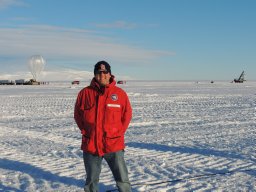 Brian Rauch合作论文数Washington University60Mitsuaki Nozaki合作论文数High Energy Accelerator Research Organization58C. De Marzo合作论文数58N. Zampa合作论文数58P. Schiavon合作论文数54
 Marco Casolino合作论文数Section of Rome Tor Vergata, National Institute of Nuclear Physics;Department of Physics, University of Rome Tor Vergata53William R. Webber合作论文数53S. Haino合作论文数52M. P. De Pascale合作论文数52N. Finetti合作论文数52Ulisse Bravar合作论文数50A. W. Labrador合作论文数47Jurgen Engelage合作论文数47




