Objectives Determinants of mortality may depend on the time and place where they are examined. China provides an important context in which to study the determinants of mortality at older ages because of its unique social, economic, and epidemiological circumstances. This study uses a nationally representative sample of persons in China to determine how socioeconomic characteristics, early-life conditions, biological and physical functioning, and disease burden predict 4-year mortality after age 60. Methods We used data from the China Health and Retirement Longitudinal Study. We employed a series of Cox proportional hazard models based on exact survival time to predict 4-year all-cause mortality between the 2011 baseline interview and the 2015 interview. Results We found that rural residence, poor physical functioning ability, uncontrolled hypertension, diabetes, cancer, a high level of systemic inflammation, and poor kidney functioning are strong predictors of mortality among older Chinese. Discussion The results show that the objectively measured indicators of physical functioning and biomarkers are independent and strong predictors of mortality risk after accounting for several additional self-reported health measures, confirming the value of incorporating biological and performance measurements in population health surveys to help understand health changes and aging processes that lead to mortality. This study also highlights the importance of social and historical context in the study of old-age mortality.
Background: To our knowledge, a comprehensive analysis of risk factors for mortality among mid-aged and older people in China based on a large nationally representative population study over an extended period has not yet been carried out. We investigated risk factors for mortality in the China Health and Retirement Study over 9 years. We aimed to investigate the associations between socioeconomic, demographic, psychosocial, behavioral, and health-related factors and all-cause mortality. Methods: Participants aged 45 and older were enrolled in the China Health and Retirement Longitudinal Study (CHARLS) from July 2011 to March 2012 following a multi-stage stratified sampling procedure to ensure national representativeness. The lower age limit of 45 was chosen so that CHARLS could evaluate the ageing process well before people become eligible for retirement Participants are followed up regularly, with the most recent assessments in 2020. The study is multi-disciplinary, including a wide-ranging set of 32 measures of health, health behavior, demographics, and socioeconomics. We used Cox proportional hazard modeling to study the independent and joint contribution of risk factors to 9-year all-cause mortality. Findings: Some 17,708 participants were included in the baseline sample; 586 were lost to follow-up, and we excluded 459 aged under 45 at the baseline, 24 whose dates of death were unknown, and 12 with missing marital status, education, or household registration status. Of the 16,627 (51.6% were women) included in this study, 2,352 (41.5% were women) died during a median follow-up of 4.9 years (IQR 2.67-6.83). In fully adjusted models, the following factors were independent risk factors for mortality: age (HR=13 .44 for 75+ relative to aged 45-49), male sex (HR=1.60), widowed or never married (HR=1.45), low education (HR=1.50 for illiterate relative to high school or above), below-median household per capita expenditure (HR=1.14), current (HR=1.32) and past smoking (HR=1.37), poor self-rated health (HR=1.48 relative to good health), any difficulty in basic activities of daily living (HR=1.26) or instrumental activities of daily living (HR=1.35), chronic lung disease (HR=1.22), hypertension (HR=1.34), diabetes (HR=1.37) and chronic kidney disease (HR=1.38), underweight (HR=1.45), all at the significance level of p<0.01. Doctor-diagnosed cancer (HR=1.61), asthma (HR=1.19), and general cognitive impairment (HR=1.16) were significant at p<0.05. The sex-stratified analysis indicated that doctor-diagnosed cancer was not significant for women and strengthened for men (HR=2.16, p<0.05), and that past smoking was a leading risk factor for men (HR=1.41, p<0.01) but not for women. When we excluded individuals with serious illness at baseline, the association with past smoking increased in magnitude (HR=1.55, p<0.01). Interpretation: Mortality in China is multi-faceted, and risk factors include demographic, socioeconomic, behavioral, psychosocial, and health factors. An integrated analysis of risk factors is more useful for policy-making than analyses of separate factors that can inflate the magnitude of associations. To further reduce mortality, China should increase access to quality health care services, improve the prevention, diagnosis and management of chronic diseases, continue to invest in education, occupational health and healthier home environments, and devote more efforts to tobacco control and ensure adequate nutrition among older people. Funding Information: National Institute on Aging, the Natural Science Foundation of China, the China Medical Board, the World Bank, and Peking University. Declaration of Interests: We declare no competing interests. Ethics Approval Statement: The study protocol was approved by the ethical review committee (IRB) of Peking University. Written informed consent was obtained from all study participants. Ethics approval for the data collection in CHARLS was obtained from the Biomedical Ethics Review Committee of Peking University (IRB00001052–11015 for biomarkers and IRB00001052–11014 for the survey).
Background Verbal autopsy is designed to ascertain causes of death that are not registered or certified. Verbal autopsy has been validated in multiple settings but has not been as widely evaluated for older populations as for younger age groups. Objective This study aims to provide empirical evidence of the value of verbal autopsy interviews in the context of population-based surveys of older adults by comparing the cause-of-death assignments derived from two methods of interpreting verbal autopsy data. Methods Data used in this study come from the China Health and Retirement Longitudinal Study, a nationally representative longitudinal survey of older Chinese. We compared 407 causes of death determined using InterVA, which is a computer-coded method, and causes of death as assigned by experts; then evaluated factors that affect the results of the two approaches. Results Among the 407 deaths, neoplasms, cardiac disease, and stroke are the leading causes of death according to both approaches. The consistency of the two approaches is about 45% at the individual level. The primary reason for the mismatch is that no cause of death could be assigned for more than 25% of the sample based on expert review. A higher likelihood of mismatch is associated with advanced age and a long period between death and verbal autopsy interview. Conclusion Both approaches identify the same leading causes of death at the aggregate level, but consistency is relatively low at the individual level. InterVA works well when causes of death are characterized by distinctive signs and symptoms. Grouping the various causes of death with shared etiology or common risk factors may help improve the quality of the ascertainment of causes of death. Open-ended narratives are helpful because they provide information about the circumstances surrounding the death that are not available in the structured verbal autopsy interviews.
The fiscal difficulties of LDC’s, and the important role for evasion as a part of them, are well-known. Drawing on the rich literature on tax evasion in the public finance literature, much recent research has shed light on two phenomena contributing to this problem: Fiscal corruption and evasion through illegal transactions. This note surveys some of this recent research.
Blood biomarkers provide critical information about the health of older populations, especially in large developing countries where self-reports of health are often inaccurate due to lack of access to health care. However, it is very difficult to collect blood samples in representative population surveys in such countries. The China Health and Retirement Longitudinal Study (CHARLS), a nationally representative study of middle-aged and older Chinese, represents one of the first efforts to include blood biomarkers in a nationally representative survey of China. In the 2015 wave of CHARLS, 13,013 respondents located in 150 counties around China donated whole blood, which was assayed on a range of indicators. Here we describe the process of the sample collection, transportation, storage, and analysis and present basic statistics.
Objective: Constructing a meaningful biopsychosocial model for the mental health field has been extremely elusive. Identifying the linkages between the biological, psychological and social domains has been especially daunting. There has been important progress in clarifying general correlations of certain social factors related to the mental health of individuals and in developing training programs to recognize these social factors. However, efforts have usually focused on broad correlations and there have been serious deficiencies in developing methods for understanding and dealing with the specific processes happening at the psychological and social interface. For this reason, it would be important to be able to do such things as for example have a means to clarify the processes that connect the individual's mental health and its specific interactions with his or her social class. In this report we suggest two approaches that can contribute to solving this problem. Methods: We will describe approaches from the fields of anthropology and microhistory that link the specific experiences of the individual and the nature of the social context in which he or she finds him/herself. Results: Careful application of certain anthropological and history study methods that "take seriously" the specific interactions between the environmental situation and the individual can provide approaches to improved understanding of the relevant variables and the causal links between "psycho" and "social" in the biopsychosocial model. Conclusions: Teaching and applying these principles in treatment and research can contribute to a more effective model of biopsychosocial interactions in the mental health field.
Abstract Determinants of mortality may differ depending on context. This study uses a nationally representative sample of persons aged 60 and over in China to determine if socioeconomic factors, early life conditions, community characteristics, biological and physical functioning, and disease burden predict four-year all-cause mortality. We employed a series of Weibull hazard models based on exact survival time to predict mortality. We find that current education and place of residence, physical functioning, uncontrolled hypertension, diabetes, cancer, a high level of systemic inflammation, and poor kidney functioning are strong predictors of mortality among older Chinese. We did not find linkages between early-life experiences or community infrastructure to mortality at older ages. Results from this study highlight the value of incorporating biological and performance measurements and the importance of social and historical context in studying old-age mortality.
Recently, after watching a series of lectures by a leader in the field of intellectual history, I wrote to him congratulating him on his view that having an understanding of the period in which one...
We document the recent profile of health insurance and health care among mid-aged and older Chinese using data from the China Health and Retirement Longitudinal Study conducted in 2011. Overall health insurance coverage is about 93%. Multivariate regressions show that respondents with lower income as measured by per capita expenditure have a lower chance of being insured, as do the less-educated, older, and divorced/widowed women and rural-registered people. Premiums and reimbursement rates of health insurance vary significantly by schemes. Inpatient reimbursement rates for urban people increase with total cost to a plateau of 60%; rural people receive much less. Demographic characteristics such as age, education, marriage status, per capita expenditure, and self-reported health status are not significantly associated with share of out-of-pocket cost after controlling community effects. For health service use, we find large gaps that vary across health insurance plans, especially for inpatient service. People with access to urban health insurance plans are more likely to use health services. In general, Chinese people have easy access to median low-level medical facilities. It is also not difficult to access general hospitals or specialized hospitals, but there exists better access to healthcare facilities in urban areas. Copyright © 2016 John Wiley & Sons, Ltd.
OBJECTIVE:The tendency over the years in the mental health field has been to cling in circular fashion to one single domain after another, biological, psychological, or social, to explain severe disorder and not even to consider the data from the domain of focus that came before. This report notes that attempts to explore more complex biopsychosocial explanations that integrate the diverse domains have been generally ignored or foundered on the problems posed by the complexities involved and suggests an approach for moving beyond these problems.METHOD:A case history using two different formats highlights the degree to which the single domain models ignore one or another area of data.RESULTS:Uncertainty theory is suggested as providing an important basis for exploring the complexities of a biopsychosocial understanding of mental health problems.CONCLUSIONS:This approach can provide a possible orientation to promote improved research, training, and treatment.
Our training in psychiatry during the early 1960s was at a time of intense controversy regarding the origins of schizophrenia. Rather comprehensive explanatory theory for psychopathology was postulated at the level of genetics/biology or psychology or social theory. These perspectives competed for dominance more often than seeking integration although the biopsychosocial medical model, espoused by Engel,1 integrated these perspectives in a general systems framework. At that time the Danish adoption studies confirmed that inherited genes conveyed familial risk for schizophrenia, but were often interpreted as not only establishing schizophrenia as a genetic disease but also as falsifying psychological and social theories of etiology.2 At the time of our early research concerning schizophrenia, there was the view that a careful diagnosis based on stringent criteria would identify persons with a disease entity that sharply reduced the heterogeneity observed in development and course of illness in cohorts based on a broad concept of schizophrenia. Schneider viewed symptoms of first rank as distinguished nuclear schizophrenia and Langfeldt separated true from pseudo schizophrenia with criteria including first rank symptoms. The view that a broad concept of schizophrenia without stringent criteria in the United States led to over-inclusion, and hence heterogeneity, suggested a solution partly based on first rank symptoms. Our understanding of the data including our analyses in the context of the International Pilot Study of Schizophrenia (IPSS)3 led to a very different interpretation. We had found that criteria specified by Schneider and Langfeldt were not associated with course of illness and did not reduce heterogeneity when applied to a broadly defined cohort.4 We also documented that these special symptom criteria were observed in other disorders with psychotic symptoms.5,6 We concluded that schizophrenia was a clinical syndrome, a poor target for discovery, and called attention to separable psychopathological targets within the syndrome as meaningful targets for investigation.7 We also found that components of developmental history predicted future course of the same component independent of positive psychotic symptoms including those of first rank.8 As a footnote on the role of ideology over science, note that of the 9 IPSS centers only the Washington center collected development based prognostic data and follow-up data related to heterogeneity. Also note that DSM-III allowed a single first rank symptom to be sufficient to meet the A criteria (corrected in DSM-5), omitted negative symptoms from the A criteria, and imposed a duration of illness criteria to assure chronicity. In the 1981 book, Schizophrenia,9 we introduced the developmental interactive concept of schizophrenia. Now, with 36 years of research in the field, how so we view this conceptual framework? The essential elements in the developmental interactive model of schizophrenia are:
This paper includes the household survey questionnaire used in the Malaysian Indonesia Family Life Survey, wave 5 (IFLS5).
To estimate prevalence of diabetes mellitus (DM), success in diagnosing, and methods of diabetes management in China.
This document describes the design and implementation and provides a preview of some key results of the Indonesia Family Life Survey, with an emphasis on wave 5 (IFLS5). It is the first of seven volumes documenting IFLS5.
This document describes the design and implementation and provides a preview of some key results of the Indonesia Family Life Survey, with an emphasis on wave 5 (IFLS5). It is the second of seven volumes documenting IFLS5.
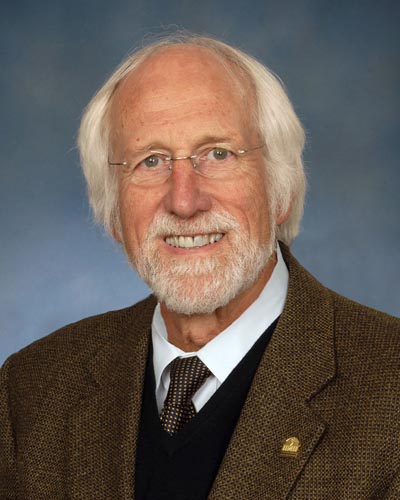 William T. Carpenter合作论文数Department of Psychiatry, School of Medicine, University of Maryland23
 Ronald F. Kokes合作论文数18
 Yuehui Zhao (赵耀辉)合作论文数Economics and Management School, Wuhan University17DW HARDER合作论文数14Ba Ritzler合作论文数11TE GIFT合作论文数11
 Xiaoyan Lei (雷晓燕)合作论文数China Center for Economic Research, National School of Development, Peking University;IZA - Institute of Labor Economics8Courtenay Harding合作论文数about outcome,for these patients thus significantly reducing their opport-unities for improvement,and/or recovery. Counter evidence is provided with8
 Firman Witoelar合作论文数The World Bank7
 James P. Smith合作论文数RAND Corporation6John J. Bartko合作论文数6
 Eileen Crimmins合作论文数Leonard Davis School of Gerontology, University of Southern California6Bondan Sikoki合作论文数University of North Carolina6
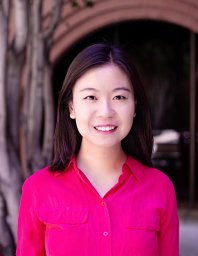 Zhang Yuan合作论文数College of Life Sciences, Peking University5
 Albert Park (朴之水)合作论文数Division of Social Science, School of Humanities and Social Science, The Hong Kong University of Science and Technology5Peifeng Hu合作论文数5DF GREENWALD合作论文数4
 Takashi Yamano合作论文数4
 Larry Davidson合作论文数Department of Psychiatry, School of Medicine, Yale University4
 Thomas S. Jayne合作论文数Department of Agricultural, Food, and Resource Economics, Michigan State University4Rafael Klorman合作论文数4
 Yafeng Wang (王亚峰)合作论文数Wuxi School of Medicine, Jiangnan University3
 Subha Mani合作论文数Dept Econ, Fordham Univ3
 Robert F. Schoeni合作论文数Gerald R.Ford School of Public Policy, University of Michigan-Ann Arbor3
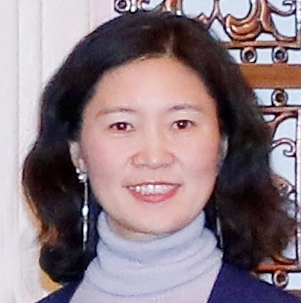 Yan Shen (沈艳)合作论文数National School of Development, Peking University3
 Thomas Gift合作论文数3
 Jaak Rakfeldt合作论文数3Pn Goering合作论文数2G W BROOKS合作论文数2Qinqin Meng合作论文数2Yisong Hu合作论文数2
 William H. Dow合作论文数Division of Health Policy and Management, School of Public Health, University of California, Berkeley;Center on the Economics and Demography of Aging, University of California, Berkeley;Department of Demography, University of California, Berkeley2
 John F. Hoddinott合作论文数College of Human Ecology, Cornell University/Division of Nutritional Sciences, College of Agriculture and Life Sciences, Cornell University/Charles H. Dyson School of Applied Economics and Management, College of Agriculture and Life Sciences, Cornell University2
 Duncan Thomas合作论文数Division of Biostatistics, Department of Population and Public Health Sciences, Keck School of Medicine, University of Southern California;Department of Preventive Medicine, Keck School of Medicine, University of Southern California2
 Thomas McGlashan合作论文数Connecticut Mental Health Center, Department of Psychiatry, Yale School of Medicine, Yale University2
 Gonghuan Yang (杨功焕)合作论文数Chinese Center For Disease Control and Prevention2Malcolm B. Bowers合作论文数2James Nyoro合作论文数2
 Daniel Karanja合作论文数CABI Africa, ICRAF Complex2Takamaru Ashikaga合作论文数2
 Kathleen Beegle合作论文数World Bank;Joachim De Weerdt;World Bank2Zhe Yang (杨哲)合作论文数2Dave Sells合作论文数1BARRY A. RITZLER合作论文数1David W. Harder合作论文数1Perry Hu合作论文数1Re Evenson合作论文数1




