Back to table of contents Next article Taking IssueFull AccessContinuity and Change: 75 Years of Psychiatric ServicesLisa B. Dixon, M.D., M.P.H., Howard H. Goldman, M.D., Ph.D., John A. Talbott, M.D.Lisa B. DixonSearch for more papers by this author, M.D., M.P.H., Howard H. GoldmanSearch for more papers by this author, M.D., Ph.D., John A. TalbottSearch for more papers by this author, M.D.Published Online:1 Jan 2024https://doi.org/10.1176/appi.ps.24075002AboutSectionsPDF/EPUB ToolsAdd to favoritesDownload CitationsTrack Citations ShareShare onFacebookTwitterLinked InEmail We write this Taking Issue as editors of Psychiatric Services for 54 of its 75 years and as colleagues, all having been together at the University of Maryland School of Medicine for some of that time. We reflect on how the journal has changed over its 75-year course and how it has remained true to its focus on psychiatric services in organized care settings with a special concern for service users with the greatest needs.The journal’s genesis was in 1950 as a four-page newsletter, A.P.A. Mental Hospital Service Bulletin, for administrators of mental health state hospitals. The world of behavioral health services has changed dramatically since the founding of the journal in 1951, when it was called Mental Hospitals. In 1966 the journal title was changed to Hospital & Community Psychiatry (H&CP), reflecting the dramatic expansion of services beyond hospitals and into community settings. In 1995 the journal became Psychiatric Services, signifying its reach beyond traditional services and service settings. Through all that change, the journal continued to focus on improving the care and treatment of those who are most in need—people with behavioral health conditions that diminish quality of life and people who may have substantial need and who experience significant barriers to receiving care.Dr. Talbott had been the author of several papers published in and a member of the editorial board of H&CP when deputy medical director of the APA, Donald Hammersley, offered him the position of editor. A friendly critic questioned whether Dr. Talbott could reconcile the tradition of publishing articles that were concerned with the nuts and bolts of services with his academic orientation. He answered that he hoped it was possible to treat subjects, such as the treatment of individuals with severe and chronic mental illnesses, in an academically rigorous manner. During his almost 25 years of service, he encouraged rigorous submissions about care, especially of people with severe mental illness, and he introduced columns on areas such as the law and psychiatry, economics, and the DSM, which informed readers working in care settings.Dr. Goldman became editor in 2004. He had coauthored the lead article in Dr. Talbott’s first issue. The article tackled how to define and count the number of people with severe and persistent mental disorders, the main focus of H&CP at the time. During his tenure, Dr. Goldman added a focus on public attitudes toward mental illness, delivery of mental health services in primary care, services for children with mental health problems, and services for the treatment of substance-related conditions. And he encouraged papers on behavioral health policy, particularly on financing of services and health insurance. He also edited an issue dedicated to the many writings of his predecessor, Dr. Talbott. To acknowledge the fifth anniversary of the attacks of September 11, 2001, he oversaw an issue on Project Liberty: New York City’s response to the mental health impacts of that tragedy. Throughout his tenure, Dr. Goldman strove to achieve a balance between rigorous empirical research and descriptive reports on early innovations in psychiatric services.Dr. Dixon took over the editorship in 2017 after years of publishing papers in Psychiatric Services. Throughout its iterations, the journal had always been her favorite. The journal’s perspective resonated with her priorities as a person receiving services, a family member, a psychiatrist, and a researcher. Recent global events have affected Psychiatric Services as a journal. The public now appreciates that mental health services are a key component of a national health care system and social safety net. The pain, loss, and disruption of the COVID-19 pandemic demanded attention. So did the imperative to address how structural racism has been embedded in psychiatry and its scholarship. We wanted the journal to reflect our belief in the centrality of the social determinants of health to mental health. In response, Dr. Dixon has developed additional columns and facilitated person-level participation in their leadership. She has engaged people from the full range of mental health professionals, reaching beyond the profession of psychiatry. This intentionally includes the contributions of those who are early in their careers. The journal has implemented a Race/Racialization, Ethnicity, and Culture (REC) checklist to hold authors and reviewers—and ultimately editors—accountable for considering diversity, equity, and inclusion (DEI) issues in work being submitted and for future submissions. Our collective hope is that the journal continues to follow this journey of scholarship and education to improve psychiatric care for all who need it and to avoid its use for those who do not.More than ever, the journal is about service users and DEI and improving the lives of individuals who use psychiatric services. We have learned from them and report on services to improve all of our lives, using research and collective perspectives to chart a better path forward. The journal is about change, but it is also about commitment to a constant and core concern to improve psychiatric services.ADDENDUMWe were saddened to learn that Dr. Talbott died on November 29, 2023. As noted in a tribute when he retired as editor of Psychiatric Services, Dr. Talbott was a “leader’s leader. . . . He was an early champion of those who most needed psychiatric services and a concerned observer of deinstitutionalization, who called for asylum, not asylums, and for assistance for those who were homeless, and who urged us to learn the lessons of our research” (Goldman HH, Hammersley D: A tribute to John A. Talbott, M.D. Psychiatr Serv 2004; 55:1089).Department of Psychiatry, Columbia University Vagelos College of Physicians and Surgeons, and Center for Practice Innovations, New York State Psychiatric Institute, New York City (Dixon); Department of Psychiatry, University of Maryland School of Medicine, Baltimore (Goldman, Talbott).Send correspondence to Dr. Dixon ([email protected]).The authors report no financial relationships with commercial interests. FiguresReferencesCited byDetailsCited byNone Volume 75Issue 1 January 01, 2024Pages 1-2 Metrics Keywordshistoryservice delivery systemsresearch/service deliverystructural racismPDF download History Published online 1 January 2024 Published in print 1 January 2024
University of Maryland School of Medicine, Baltimore, Maryland. Send reprint requests to John A. Talbott, MD, University of Maryland School of Medicine, 3908 North Charles Street, Unit 101, Baltimore, MD 21218. E-mail: [email protected].
The authors retrace the various stages of the birth of the SocieteMedico-Psychologique (SMP), which celebrated its 170th anniversary in 2022. They recall the context, notably a law enacted in 1838 that was considered as a foundation text for what was then called alienism and which would eventually become psychiatry. The work of Philippe Pinel and Jean Etienne Esquirol played an essential role in the founding of the SMP, and more broadly in the genesis of the discipline. Three phases can be distinguished in the foundation of the SMP: (1) the creation of the Annales Medico-Psychologiques (AMP), in 1843, a journal that would become the SMP bulletin; (2) the first constitution of the SMP which was announced by Jules Baillarger in the first issue of the AMP in 1848 and which included the first organizational rules and a first list of members; (3) For political reasons (The revolution of February 1848, a political coup d'etat on December 2, 1851), the foundation of the SMP would officially first take place in 1852. A commission of members modified the first internal rules. A principle was established whereby the Society would be composed of physicians, philosophers, magistrates, clergymen, moralists, teachers, poets, etc. The professional journals announced at the time the establishment of a Society where "all the instruments of psychological analysis will be gathered and applied simultaneously". The first meeting of the Society was held on the 26th of April 1852. The authors provide a list of the founding members, although there were some notable absences. The relations between the SMP and the Academy of Medicine, founded in 1820, are detailed. The first international members are mentioned. They came from The Netherlands, Spain, Italy, Russia, Austria and Germany, and at the end of the 19th century, from America as well During the same time period, similar learned societies were established, notably in the United Kingdom, Germany and Russia. The authors describe in detail the creation of the Association of Medical Superintendents of American Institutions for the Insane (ASAMSAII), the future American Psychiatric Association (APA), and of its Journal which would become the American Journal of Psychiatry. The details of joint meetings between the APA and the SMP in 1978 are reported. The birth of the SMP and of other learned societies in Germany, France and the United Kingdom marked the beginning of a discipline which was then called alienism and which would become Psychiatry. (c) 2022 Published by Elsevier Masson SAS.
Professor Emeritus and Chair Emeritus of Psychiatry, University of Maryland School of Medicine, Baltimore, Maryland. Send reprint requests to John Talbott, MD, Professor Emeritus and Chair Emeritus of Psychiatry, University of Maryland School of Medicine, 3908 North Charles Street, Unit 101, Baltimore, MD 21218. E-mail: [email protected].
Les auteurs retracent les différentes étapes de la naissance de la Société Médico-Psychologique (SMP), qui a célébré en 2022 ses 170 ans. Ils en rappellent le contexte et notamment la promulgation, en 1838, d’un texte de loi considéré comme un texte fondateur de ce qui s’appelait alors aliénisme et deviendra la psychiatrie. Les travaux de Philippe Pinel et Jean-Étienne Esquirol ont également tenu une place essentielle dans la naissance de la Société et plus largement dans les débuts de la discipline. Trois phases sont distinguées dans la fondation de la SMP : 1843, création des Annales MdicoPsychologiques (AMP) qui deviendront le bulletin de la SMP, constitution de la Société le 18 décembre 1847 annoncée par Jules Baillarger dans le numéro 1 des AMP de 1848, avec un début de règlement et une première liste de membres. Pour des raisons politiques (révolution de février 1848, coup d’État du 2 décembre 1851), la fondation officielle n’aura lieu qu’en 1852. Une commission modifie le règlement primitif. Le principe est posé d’une Société se composant de médecins, de philosophes, de magistrats, de ministres de la religion, de moralistes, d’instituteurs, de poètes, etc. Les revues professionnelles annoncent alors la formation d’une Société où « auront été rassemblés et appliqués à la fois tous les instruments de l’analyse psychologique ». La première séance se tient le 26 avril 1852. Les auteurs donnent la liste de membres fondateurs, où l’on note néanmoins quelques absents de marque. Sont abordées ensuite les relations entre la SMP et l’Académie de médecine, fondée en 1820. Sont également évoqués les premiers membres étrangers, hollandais, espagnols, italiens, russes, autrichiens, allemands et, à la fin du XIXe siècle, américains. Les pays européens verront, à la même période, la constitution de sociétés savantes similaires, notamment en Grande-Bretagne, en Allemagne mais aussi en Russie. Les auteurs détaillent la création de la Société des médecins des asiles d’aliénés américains, future American Psychiatric Association (APA), et de sa revue qui deviendra l’American Journal of Psychiatry. Sont rapportés quelques éléments de réunions communes entre la SMP et l’APA en 1978. La naissance de la SMP et celle d’autres Sociétés savantes en Allemagne, en France, au Royaume Uni marquent le début d’une discipline qui s’appelle alors aliénisme et qui deviendra la psychiatrie.
Back to table of contents Previous article Next article ArticleNo AccessA Note of AppreciationJohn A. TalbottJohn A. TalbottSearch for more papers by this authorPublished Online:1 Apr 2006https://doi.org/10.1176/ps.35.12.1183AboutSectionsPDF/EPUB ToolsAdd to favoritesDownload CitationsTrack Citations ShareShare onFacebookTwitterLinked InEmail PDFThis content is only available as a PDF. Access content To read the fulltext, please use one of the options below to sign in or purchase access. Personal login Institutional Login Sign in via OpenAthens Purchase Save for later Item saved, go to cart PPV Articles - Psychiatric Services $35.00 Add to cart PPV Articles - Psychiatric Services Checkout Please login/register if you wish to pair your device and check access availability. Not a subscriber? Subscribe Now / Learn More PsychiatryOnline subscription options offer access to the DSM-5 library, books, journals, CME, and patient resources. This all-in-one virtual library provides psychiatrists and mental health professionals with key resources for diagnosis, treatment, research, and professional development. Need more help? PsychiatryOnline Customer Service may be reached by emailing [email protected] or by calling 800-368-5777 (in the U.S.) or 703-907-7322 (outside the U.S.). FiguresReferencesCited byDetailsCited byNone Volume 35Issue 12 December 1984Pages 1183-1186 Metrics PDF download History Published online 1 April 2006 Published in print 1 December 1984
Professor Emeritus and Chair Emeritus of Psychiatry, University of Maryland School of Medicine, Baltimore, Maryland. Send reprint requests to John A. Talbott, MD, Professor Emeritus and Chair Emeritus of Psychiatry, University of Maryland School of Medicine, 3908 North Charles Street, Unit 101, Baltimore, MD 21218. E-mail: [email protected].
University of Maryland School of Medicine, Baltimore, Maryland. Send reprint requests to John A. Talbott, MD, University of Maryland School of Medicine, 3908 North Charles Street, Unit 101, Baltimore, MD 21218. E-mail: [email protected].
Department of Psychiatry, University of Maryland School of Medicine, Baltimore, Maryland. Send reprint requests to John A. Talbott, MD, Department of Psychiatry, University of Maryland School of Medicine, Baltimore, MD. E-mail: [email protected].
Department of Psychiatry, University of Maryland School of Medicine, Baltimore, Maryland. Send reprint requests to John A. Talbott, MD, Department of Psychiatry, University of Maryland School of Medicine, Baltimore, MD. E-mail: [email protected].
Department of Psychiatry, University of Maryland, Baltimore, Maryland. Send reprint requests to John A. Talbott, MD, Department of Psychiatry, University of Maryland, 4th Floor, 110 S. Paca Street, Baltimore, MD 21218. E-mail: [email protected].
The Journal of Nervous and Mental Disease: August 2018 - Volume 206 - Issue 8 - p 581 doi: 10.1097/NMD.0000000000000857
Editor-in-Chief, The Journal of Mental Disease and Disorders. Professor of Psychiatry, Department of Psychiatry, University of Maryland School of Medicine, Baltimore, MD Send reprint requests to John A. Talbott, MD, Department of Psychiatry, University of Maryland School of Medicine, 110 S. Paca St, 4th Floor, Baltimore, MD 21201. E-mail: [email protected].
Department of Psychiatry, University of Maryland School of Medicine, Baltimore, MD. Send reprint requests to John A. Talbott, MD, Department of Psychiatry, University of Maryland School of Medicine, Baltimore, MD. E-mail: [email protected].
Department of Psychiatry, University of Maryland School of Medicine, Baltimore, MD. Send reprint requests to John A. Talbott, MD, Department of Psychiatry, University of Maryland School of Medicine, 110 S. Paca St, 4th Floor, Baltimore, MD 21201. E-mail: [email protected].
Department of Psychiatry, University of Maryland School of Medicine, Baltimore, MD. Send reprint requests to John A. Talbott, MD, Department of Psychiatry, University of Maryland School of Medicine, 110 S Paca St, 4th Floor, Baltimore, MD 21201. E-mail: [email protected].
As editor-in-chief of the JNMD, I see literally hundreds of books or book promotions arrive in either my snail mailbox or e-mail—and therein lies the nut of the issue here. We live in two worlds that sometimes intersect—the real one and the virtual one. In any case, for reasons I will explain, I asked our hardworking book editor, Pedro Ruiz, and competent assistant managing editor, Lisa Cleary, if I could review this book, largely because I have been concerned about the downside of the Internet on behavior (Talbott, 2012, self-published) and wanted to see if the editors' assurance that they would equally discuss the upside, would be illuminating. To cut to the conclusion—it was. But let me return to my interest in Internet/cyber/digital behavior. I intended to spend a sabbatical year, quite some time back, exploring the future of artificial intelligence and mental health and illness, but as many worthy ideas prove to be, it was much too ambitious for one man in one year to even get a handle on. I had also been involved in the introduction of digital technology in my Department of Psychiatry, in the journal Hospital and Community Psychiatry (now Psychiatric Services) and, after serving as webmaster for a primitive ListServe for the Chairs of Departments of Psychiatry, I served a several year stint as co-host on a nonscientific website where 99% of the posters were anonymous international nonscientific citizens. The behavior I encountered was an astonishing flip-side of what I had seen from self-identified largely American scientists. The editors of the book under discussion asked chapter author pairs to discuss the research on the downside and upside of Internet usage on mental health and illness, and the issues I had identified experientially—anonymous posting, rage, “losing it” to the point of psychotic utterances, bullying, trolling, and addiction/overuse are certainly well covered here. As are video games, the neurobiology of pathology, “cyberchondria” (a new version of hypochondria), and suicide. But their chapter authors also cover the brighter side of things—specifically, psychoeducation, online psychotherapy (especially cognitive behavioral therapy and virtual exposure therapy), and mobile applications (apps) that track mood, sleep, energy levels, and symptoms. There is one last chapter, which although placed in the Opportunities (not in Challenges, aka negative) section on the electronic medical record subtitled “Promise and Pitfalls,” really serves as a summary as much as the editors' concluding section “Grave Dangers, Great Promise.” This book tries to balance the positive and negative aspects of the impact of the Internet on mental health and illness and does a pretty good job at it. Their conclusion is much like I was taught about the jungle before going to Vietnam, it's neither good nor bad, it's what you make it. Thus, they see both grave dangers (suicide and cyberbullying being the worst) and great promises (therapy and wellness being the best). Although this may be more of a book for specialists in the field, it's a very good snapshot of where we are on the subject. I look forward to their update in a few cyberseconds. John A. Talbott, MD Department of Psychiatry University of Maryland School of Medicine Baltimore, MD DISCLOSURE The author declares no conflict of interest.
Department of Psychiatry, University of Maryland School of Medicine, Baltimore. Send reprint requests to John A. Talbott, MD, Department of Psychiatry, University of Maryland School of Medicine, 110 S Paca St, 4th Floor, Baltimore, MD 21201. E-mail: [email protected].
T he Managing Editor of a scientific journal is many things, among them the voice and face of the journal to its readers, contributors, reviewers, board members and Editor-in-Chief. She is also the embodiment of the journal’s values: the publication of new science, the guarantee of its honesty and reliability, its integrity and its dedication to the best available information within its purview. When I was asked to take over the Editor’s chair five years ago the first thing I wanted to know was if its long-time trusted Managing Editor would stay on, since she was so essential to the journal that Eugene Brodie shepherded for so many years. Her “yes” insured that the institutional memory of the community of scholars who contributed to the journal’s reputation and success, would continue. While it is my name that appears on the masthead and correspondence, it is she who frames the tone of everything, answers the unexpected questions as well as the predictable ones and who insures that the copy delivered to the printer is the best it can be. It’s a job that requires enormous energy, flexibility and comprehensiveness. Her stepping down is logical and her retirement deserved but that does not mean we will not miss her. Best of luck Kathy as you proceed to the next step in life.
 robert e hales合作论文数4Ss Sharfstein合作论文数4
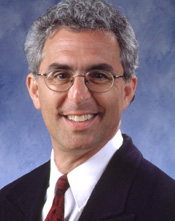 Howard H. Goldman合作论文数University of Maryland at Baltimore School of Medicine4H. Richard Lamb合作论文数4gary d sloan合作论文数2Carolyn B. Robinowitz合作论文数2C GILLEN合作论文数2Vh Godbey合作论文数2
 Michel Caire合作论文数2Leona L. Bachrach合作论文数2Frosch W A合作论文数2
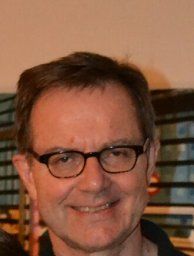 Francois Petitjean合作论文数2
 Ira D Glick合作论文数Department of Psychiatry and Behavioral Sciences, School of Medicine, Stanford University2
 Norman Sartorius合作论文数Division of Mental Health, World Health Organization2Edgar P. Nace合作论文数2Stuart L. Keill合作论文数2Stuart C. Yudofsky合作论文数2John C. Nemiah合作论文数2arthur t meyerson合作论文数2J S Eaton合作论文数1malini patel合作论文数1Wm Glazer合作论文数1Lr Faulkner合作论文数1AC NIELSEN合作论文数1Dn Osser合作论文数1K Minkoff合作论文数1
 M. Susan Ridgely合作论文数1Kathy McKnight合作论文数1william e baxter合作论文数1Rm Rankin合作论文数1Ej Douglas合作论文数1S M Goldfinger合作论文数1Samuel W. Perry合作论文数1Li Stein合作论文数1Jc Nemiah合作论文数1CB ROBINOWITZ合作论文数1Af Skerrett合作论文数1William H. Reid合作论文数1Barbara Smith合作论文数1Sl Satel合作论文数1
 Lois Flaherty合作论文数Harvard University1
 Oluwole Jegede合作论文数Connecticut Mental Hlth Ctr1
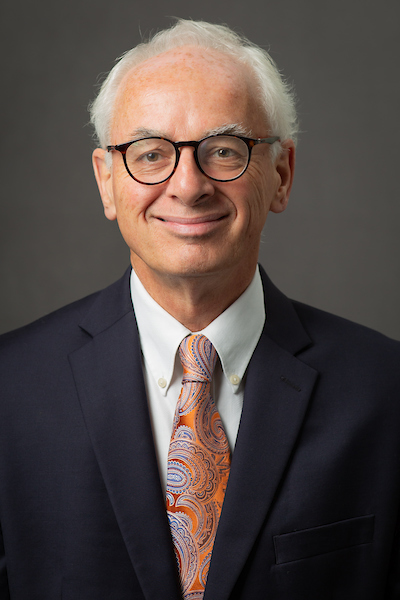 Peter Buckley合作论文数Department of Psychiatry, College of Medicine, The University of Tennessee Health Science Center1
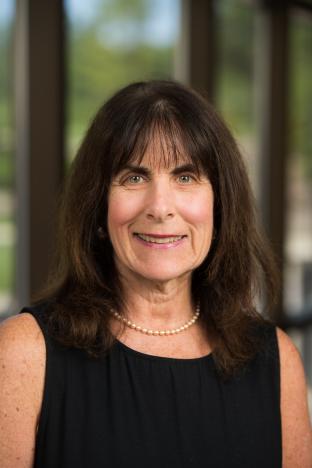 Michelle Riba合作论文数Department of Psychiatry, University of Michigan1
 Guarda Angela S合作论文数School of Medicine, Johns Hopkins University1J Klein合作论文数1Faulkner Larry R合作论文数1Ross J合作论文数1Sowers Wesley合作论文数1




