In 1971, Basil Bernstein presented his thesis on the packaging and distribution of educational knowledge, a curricular arrangement in which its classification and framing into disciplinary categories benefited those within the hierarchical structures. In the 50 years since Bernstein's proposition, there has been a growing awareness and rejection of such disciplinary approaches in favour of integrating curricular knowledge across disciplines, not only through areas of science, math, and technology, but also across all school subjects, whereas Bernstein, and a certain strand of literature building on Bernstein's thesis, asked why and who benefits from curriculum framing, a parallel strand in the curriculum integration literature. In the following article, we re-visit Bernstein's hypothesis by examining selected interests involved in curriculum framing, but here, we specifically investigate who stands to gain when curriculum is integrated. From an extensive and persistent literature review, analysis, and collegial discussion, we cluster support of curriculum integration into six broad categories, scrutinizing each according to their major premise, aims of education, main curriculum interest(s), understanding of knowledge, and key supporters for each. We then extend this analysis by examining what interests are most salient, where and how these interests overlap, and where support for particular forms of curricular packaging is conspicuously silent. In our synthesis, we highlight a "Worldly Perspective" to curriculum delivery, an approach with potential to both deepen and broaden student learning, and which, unlike a singular disciplinary or integrated approach, is not similarly beholden to narrow interests.
This chapter examines earthquakes as a real-world, socioscientific issue to explore how schools, school curricula, school systems, and communities respond to the learning opportunities created by a natural disaster in the local or global community. We identified some of the issues that determine how different countries deal with earthquake preparation, response, and the factors that affect recovery. We then reviewed school-based, curriculum, and community responses to the Canterbury earthquakes in New Zealand as a case study. In the immediate aftermath, attention focused on the emotional support of students, teachers, and families, and efforts were made in combination with the community to return to normal schooling and curriculum stability in students’ lives. We suggest that recovery from such natural disasters must be both flexible and integrated across curriculum and the community, drawing widely on available resources.
A decade of dedication: Giving, giving, giving… and giving up teachingAbstractIn this paper we explore the circumstances leading to an elementary teacher’s decision to leave the profession. We analyse her narratives of eleven years of teaching using a storyline technique and a framework provided by the five aspects of teacher self-understandings (Kelchtermans, 2009) and the interplay between vulnerability, micro-political literacy and self-understanding. We suggest that, particular types of job perception predispose teachers to high levels of vulnerability. We suggest that teachers need, well as developing micro political literacy, to consider reaching an understanding of their personal giving capacity in teaching contexts, in order to manage vulnerability and negative impact of self understanding. Dix ans de dévouement : don de soi et abandon de l’enseignement Dans cet article nous analysons les circonstances qui ont conduit une enseignante de niveau élémentaire à abandonner l’enseignement. Nous analysons les récits dans lesquels elle raconte ses onze années d’enseignement, au moyen d’une technique de récit et d’un cadre donné par les cinq aspects de la compréhension de soi chez les enseignants (Kelchtermans, 2009), et nous nous penchons également sur l’interaction entre la vulnérabilité, les connaissances micro-politiques et la compréhension de soi. Nous croyons que certains types de perception de leur travail prédisposent les enseignants à une plus grande vulnérabilité. Outre les connaissances micro-politiques, les enseignants doivent développer une meilleure compréhension de leur capacité personnelle de se donner en contexte d’enseignement, afin de gérer leur vulnérabilité et l’impact négatif de la compréhension de soi.
The central thesis of this paper is that the learning of science in integrated curricular contexts requires a broader theoretical framework than is typically adopted by researchers and teachers. The common practice of interpreting science learning in terms of conceptual and procedural understandings in such contexts is problematized through an examination of the literature. As an alternative to the traditional approach, a triangulation of three theoretical perspectives is undertaken to view the science learning in a classroom case study of integrated curriculum. The conclusion highlights the necessity of balance between the disciplinary forces on curriculum and the forces that better reflect the multiple dimensions of learning in the real world. The use of theoretical triangulation is demonstrated as a technique through which a balanced, and more complete, view of learning in integrated contexts can be achieved.
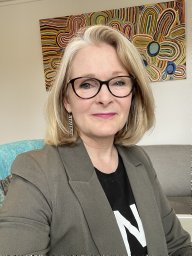 Grady Venville合作论文数Science and Mathematics Education Centre, Curtin University of Technology23
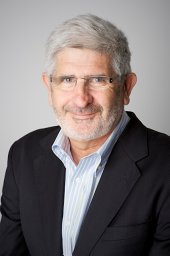 William Louden合作论文数EDITH COWAN UNIV21
 Leonie J Rennie合作论文数School of Education, Curtin University20
 Helen Wildy合作论文数The University of Western Australia14
 Judith Mulholland合作论文数Australian Catholic University13
 John Malone合作论文数3
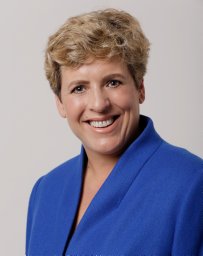 Rachel Sheffield合作论文数Curtin University of Technology3Ah Akatugba合作论文数2
 Joanne Nazir合作论文数Sch Educ, Univ West Indies2Erminia Pedretti合作论文数2
 Peter Charles Sinclair Taylor合作论文数Curtin University of Technology Bentley2
 Wayne Melville合作论文数Faculty of Education, Lakehead University2Ellen van den Berg合作论文数1elisabeth settelmaier合作论文数1john malone合作论文数1Hilary Inwood合作论文数1R. S. Maoto合作论文数Dept Math Sci & Technol Educ, Univ Limpopo1
 David G Lloyd合作论文数School of Allied Health Sciences, Griffith University1
 Barry J. Fraser合作论文数Curtin University1
 Sarah Bansilal合作论文数University of KwaZulu-Natal1
 David Geelan合作论文数Faculty of Education, University of Queensland1David Lloyd合作论文数1
 Gary Pluim合作论文数1Xiaohong Chi合作论文数1J. Mullholland合作论文数1Lesley H. Parker合作论文数1Ayo Harriet Akatugba合作论文数1Ching-Yang Chou合作论文数1Geoff Rogers合作论文数1Sheryl MacMath合作论文数1




