This paper introduces a Fractal Patch Antenna (FPA) integrated with Photonic Crystals (PhC) designed for Intelligent Transportation Systems (ITS) in the Millimeter-wave bands (mmWaves) given the importance of the application of mmWaves in Vehicle-to-Everything (V2X) networks, we assumed, as examples, that the antenna is designed to resonate at three frequency bands: 31.42 GHz, 37.76 GHz, and 38.92 GHz. With a gain of 10.88 dBi, at 38.92 GHz, the antenna demonstrates promising signal reception and transmission capabilities, which are anticipated to be important for ITS operations. The antenna bandwidth covers multiple frequency bands, enabling versatile communication in mmWaves V2X applications. To evaluate the performance of the antenna, we conducted a detailed analysis of its configuration. This included a comparison of the antenna with and without the PhC integration, as well as an exploration of rectangular lattice structure. In addition, variations in hole sizes and spacing were examined to assess their impact on key parameters such as the gain and reflection coefficient. The integration of fractal geometry and PhC structures results in a compact, high-performance antenna suitable for mmWave communication. The integration of fractal geometry and PhC structure results in compactness and high performance in mmWaves communication applications. Through simulation and analysis, including radiation pattern, gain, and reflection coefficient plot assessment, the antenna performance is thoroughly evaluated. The study highlights the potential of the proposed FPA-PhC antenna configuration to enhance communication networks within the ITS, significantly advancing the ITS system with support from the mmWave bands.
This paper presents a comprehensive set of radio resource management (RRM) algorithms for large constellations of non-geostationary orbit (NGSO) satellites. These algorithms address beam placement, satellite routing, beam hopping, and frequency channel allocation, and they do so in a way that remains computationally efficient when scaling to thousands of satellites. Unlike many previous papers, this paper tests its approach using a realistic subscriber model based on actual population densities. Simulation results show that the proposed algorithms for cell layout, satellite routing, and allocation of frequency-time resources significantly outperform conventional methods, yielding higher data rates for subscribers. The paper then uses this simulation to determine the spatial distribution of user data rate across the continental US, and shows the relationship between the data rates experienced in a region and that region’s population density and subscriber density.
This study examines the content and layout of the proposed broadband consumer disclosure labels mandated by the U.S. Federal Communications Commission (FCC). Our large-scale user study identifies key consumer preferences and comprehension factors through a two-phase survey of 2500 broadband internet consumers. Findings reveal strong support for broadband labels, but dissatisfaction with the FCC's proposed labels from 2016. Participants generally struggled to use the label for cost computations and plan comparisons. Technical terms confused participants, but providing participants with brief education made the terms useable. Participants desired additional information, including reliability, speed measures for both periods when performance is “normal” and periods when performance is much worse than normal, quality-of-experience ratings, and detailed network management practices. This feedback informed our improved label designs that outperformed the 2016 labels in comprehension and preference. Overall, consumers valued clear pricing and performance details, comprehensive information, and an easy-to-understand format for plan comparison. Requiring broadband service providers to deposit machine-readable plan information in a publicly accessible database would enable third parties to further customize how information is presented to meet these consumer needs. Our work additionally highlights the need for user studies of labels to ensure they meet consumer demands.
Extended reality (XR) is bridging the gap between virtual and real-world interactions enabling users to interact in realistic virtual worlds, removing physical obstacles, and establishing shared areas that promote greater comprehension and teamwork. The growing demand for high-frequency 5G communication systems supporting these new applications motivates the need of compact and efficient antennas capable of operating at millimeter-wave frequency bands. This work explores how the use of photonic crystal (PhC) leverages the properties of a multi-band antenna operating within the 27.0 GHz and 41.49 GHz resonant bands. The High-Frequency Structure Simulator (HFSS) software is utilized in this paper to outline a comprehensive design and modeling approach for the proposed microstrip patch antenna.The design process involves optimizing the geometry and periodicity of the PhC structure to obtain resonant modes at the desired frequency bands by exploiting its bandgap properties, whilst enabling high quality resonances within the targeted frequency bands. The electromagnetic simulations and numerical analysis results demonstrate that the designed multi-band PhC-based antenna achieves a gain of 9.57 dBi. The resonant modes exhibit high quality factors, resulting in improved radiation efficiency. The proposed PhC-based antenna compact size, high gain, and multiple resonant bands make it suitable for a wide range of applications, including next-generation wireless communication systems supporting XR, radar systems, or satellite communications in the upper frequency bands.
To meet the communications demands of connected vehicles, the wireless devices deployed in vehicles and on roadside infrastructure may need access to more spectrum than is available today. This paper proposes a novel approach that allows connected vehicle devices using V2X technology (e.g., C-V2X or NR-V2X) to share spectrum with Wi-Fi and other unlicensed devices, thereby gaining access to more spectrum. The proposed approach requires no change to Wi-Fi technology so there is no need to replace Wi-Fi devices that have been deployed, and only modest modifications to V2X which reduces cost and complexity. It uses a backward-compatible form of beaconing. Unlike previous work, the resources allocated to V2X are dynamically adjusted for greater efficiency. The approach also does not require involvement from a cellular operator or other centralized controller. One spectrum band where this approach could be especially beneficial is adjacent to the Intelligent Transportation System (ITS) band, where this approach could help meet the needs of both connected vehicles and Wi-Fi 6. Simulation results show that it is possible to protect quality of service for both V2X and Wi-Fi communications in a shared band, while greatly improving spectrum efficiency. This paper also describes steps that standards bodies (IEEE 802.11 and 3GPP) and spectrum regulators could take to advance this spectrum-sharing approach.
To meet the needs of connected vehicles, the wireless devices deployed in vehicles and on roadside infrastructure may need access to more spectrum than is allocated today. This paper proposes a new approach that would allow connected vehicle devices using C-V2X technology (and successors such as NR-V2X) to share spectrum with Wi-Fi and other kinds of unlicensed devices, thereby gaining access to additional spectrum. The proposed approach requires no change in Wi-Fi technology, and only modest changes in C-V2X. Simulation results show that it is possible to protect the quality of service of both C-V2X and Wi-Fi communications, while employing sharing that greatly improves spectrum efficiency. This paper describes steps that spectrum regulators such as the Federal Communications Commission and standards bodies such as IEEE 802.11 and 3GPP could take to advance this spectrum-sharing approach. One place this approach could be used is adjacent to the Intelligent Transportation System (ITS) band, where it could help meet the spectrum needs of both connected vehicles and Wi-Fi 6.
Low-Earth orbiting (LEO) satellites now can provide broadband service anywhere in the world, but they must share the radio spectrum with geosynchronous Earth-orbiting (GEO) satellites. The United Nations International Telecommunications Union (ITU) and the U.S. Federal Communications Commission (FCC) require that operators of LEO satellite systems avoid interfering with GEO satellite systems even though both use the same bands within the radio spectrum. Such interference can occur when a LEO satellite passes through an area between a GEO earth station and its intended GEO satellite. This is called an in-line event. LEO satellites that have beam steering capability can steer their main beams to avoid interfering with GEO earth stations, but even when they do this, LEO satellite antenna side lobes can still cause unacceptable interference. We describe here how these side lobes can be controlled to avoid such interference, and we develop estimates of maximum side lobe levels that must be maintained in currently deployed and future LEO satellite constellations.
Under 5G, network slicing will provide technical interfaces for the leasing of network capacity. This will facilitate multi-network access (MNA), a new scheme that allows a mobile device to use any one of multiple mobile network operators (MNOs) anywhere, anytime, instead of remaining on a single MNO whenever possible. This paper presents a comprehensive techno-economic assessment of MNA. MNA can reduce the spectrum and/or infrastructure resources needed to achieve a given system capacity by over 20%. MNA can be combined with colocation to provide even greater cost efficiency. This paper examines the effect of network selection algorithms on cost efficiency in a wide variety of circumstances. It explores MNOs’ incentives and disincentives to adopt MNA, and finds that incentives depend on how traffic volume is distributed among partner MNOs. The paper demonstrates unbalanced resources among MNOs can lead to differences in quality of service, and the implications. It shows the form of wholesale pricing structure that would benefit all stakeholders, and thus promote adoption. It also discusses the economic viability of a multi-network access provider.
Low-Earth orbiting (LEO) satellites now hold promise to provide broadband service anywhere in the world, but they must share the radio spectrum with geosynchronous Earth-orbiting (GEO) satellites. The United Nations International Telecommunications Union (ITU) and the U.S. Federal Communications Commission (FCC) require that operators of LEO satellite systems avoid interfering with GEO satellite systems even though both use the same bands within the radio spectrum. Such interference can occur when a LEO satellite passes through an area between a GEO earth station and its intended GEO satellite. This is called an in-line event. In this paper we develop a first order estimate of the probability of occurrence of such an event, an indication that Ku-band LEO-to-GEO interference is a serious problem. We describe the use of beam steering to mitigate such interference and consider its feasibility for currently deployed LEO constellations. We find that beam steering appears to be a practical and effective approach for a LEO constellation that has this capability and uses sufficiently narrow beams.
The next-generation television (TV) standard will give over-the-air (OTA) broadcasters the ability to target advertisements. This could give a competi-tive advantage to broadcasters with more channels and hence create incentive for consolidation. Consolidation in the OTA TV industry could concern policy -makers. We construct a model to estimate revenues and costs of targeted adver-tising and derive profit-maximizing strategies. We find that profit is maximized by sending targeted advertisements via fixed broadband, even on devices that are watched for only a few minutes per week, but until costs drop significantly, not via mobile broadband in most cases. Our results show that targeted advertise-ments would not create strong incentive for consolidation in the scenarios that we consider most likely, so policy-makers should be sceptical of arguments that consolidation should be allowed on the grounds that consolidation leads to large cost savings. However, we do identify plausible scenarios where broadcasters with more channels would be significantly more profitable.
When COVID-19 hit, many people began working, going to school, and living much of their lives from home. The Internet was a gateway to the world. This article uses data from Internet speed tests, consumer complaints, search engine optimization tools, and logs of Internet use from public libraries to understand the effects of the pandemic on Internet use and performance. Despite reports that the Internet handled the surge in traffic well, we find that complaints about Internet speed nearly tripled, and performance was degraded. Downstream data rates changed little, but median upstream data rates at midday dropped by about a third. When discussing Internet performance, people typically focus on downstream. This focus should shift. Internet service providers and policymakers should reduce the asymmetry by changing how infrastructure is designed, how Internet services are advertised, how regulators write transparency rules, and how government defines "broadband" in subsidy programs intended to reduce the digital divide. We also find significant increases in the use of many important categories of online content, including those used for work communications, education, grocery shopping, social media, news, and job searches. This shows the importance of the Internet during the crisis. Many people without Internet at home turned to public Wi-Fi hotspots during the pandemic. We find that this occurred disproportionately in neighborhoods with more students. Future distance learning initiatives should consider the challenges some students face in obtaining Internet access.
This work shows how both frequency and the election of path loss model affect estimated spectral efficiency. Six different frequency bands are considered, ranging from 2.6 GHz in the ultra high frequency (UHF) band to 73 GHz in the millimeter wave bands (mmWaves), using both single‐slope and two‐slope path‐loss models. We start by comparing four urban path loss models for UHF: the urban/vehicular and pedestrian test environment from the ITU‐R M. 1255 Report, which includes the two‐slope urban micro line‐of‐sight (LoS) and NLoS, from the ITU‐R 2135 Report. Then, we consider mmWaves taking into consideration the modified Friis propagation model, followed by an analysis of the throughput for the 2.6, 3.5, 28, 38, 60, and 73 GHz frequency bands. We have found that the signal‐to‐interference‐plus‐noise ratio, as estimated with the more realistic two‐slope model, is lower for devices that are within the break‐point of the transmitter, which is a small distance in the UHF/SHF band. As a result, spectral efficiency is higher with mmWaves than with UHF/SHF spectrum when cell radius is under 40 m but not when cells are larger. Consequently, mmWaves spectrum will be more valuable as cells get small. We also find that capacity as estimated with the two‐slope model is considerably smaller than one would obtain with the one‐slope model when cells are small but there is little difference in the models when cells are larger. Thus, as cells get smaller, the use of one‐slope models may underestimate the number of cells that must be deployed.
Before asynchronous transfer mode (ATM) network services can be efficiently provided, the pricing issue should be carefully addressed. Developing a general optimal pricing mechanism for any given ATM network is a broad and interesting problem. The result not only depends on economic parameters, such as consumer demand, but also is affected by technical specifics, such as network topology and routing algorithms. This chapter focuses on pricing ATM network services on point-to-point links. It presents the ATM network service model. Based on that service model, the optimal pricing framework is formulated, the resulting pricing schedule is discussed, and the advantage of that schedule is demonstrated. ATM network services can be classified as either guaranteed or best-effort services. The chapter discusses welfare-maximizing pricing without a break-even constraint. Existing pricing schemata are not efficient for ATM networks because they fail to consider differences in all the parameters among multiple services.
By bringing wireless communications technology to cars and trucks, we could prevent hundreds of thousands of car crashes every year, saving many lives. We could also reduce commute times, fuel consumption, air pollution and greenhouse gas emissions, and the cost of mobile Internet access. In the longer term, deployment of connected vehicle technology can lay groundwork for better autonomous (self-driving) vehicles. Nevertheless, after two decades of trying, there has been little progress on connected vehicle deployment. Those benefits of “connected vehicles” can only be achieved through a coherent strategy, meaningful leadership, and collective action. In the U.S., too many decision-makers are pushing in opposite directions, or at best, waiting for someone else to lead. The U.S. Department of Transportation (DoT) and the Federal Communications Commission (FCC) strongly and openly disagree with each other on direction, and often appear to have different objectives. The majority of state and local transportation agencies would oppose both of these federal agencies. Major companies are on opposite sides of contentious debates. Yet, for connected vehicles to succeed, all of these public and private sector actors must work in concert, sometimes making large investments that will only pay off if others follow as expected. This is not going to happen without a new approach to advancing connected vehicle policies. While U.S. decision-makers fail to work together, and government agencies fail to lead, other nations such as China move ahead, undermining U.S. competitiveness. In 2021, the federal government should establish a task force to develop a coherent vision through an open and inclusive process, and provide leadership to achieve that vision. This task force would work across federal agencies. It would coordinate with representatives of state and local governments, since state and local agencies are responsible for deploying much of the infrastructure. This task force would actively engage with the automobile industry, the telecommunications industry, public interest groups that are concerned with consumer safety and privacy, and experts from academia. Using this inclusive process, the task force would identify important applications that must be supported, agree on a technical standard, launch a new proceeding at the FCC to produce spectrum rules that suit the applications and standard, encourage consistent deployment by local governments by developing a set of guidelines and best practices, and create a grants program to put the technology in vehicles for which safety is especially important, such as school buses, fire trucks, police cars and ambulances.
This work is funded by FCT/MCTES through national funds and when applicable co-funded EU funds under the project UIDB/EEA/50008/2020, COST CA 15104 IRACON, ORCIP and CONQUEST (CMU/ECE/0030/2017), TeamUp5G project has received funding from the European Union’s Horizon 2020 research and innovation programme under the Marie Sklodowska-Curie project number 813391.
Richard Baldwinvs thesis in his new book, The Globotics Upheaval, is that globalization and AI robots constitute a “globotics” tidal wave that will shake the foundation of middle-class prosperity in wealthy nations. This, he argues, will lead to social upheaval, just as 19th-century steam engines and mechanical looms created workplace disruptions that brought workers to the streets in sometimes violent protest.
The quantity and complexity of scientific and technological information provided to policymakers have been on the rise for decades. Yet little is known about how to provide science advice to legislatures, even though scientific information is widely acknowledged as valuable for decision-making in many policy domains. We asked academics, science advisers, and policymakers from both developed and developing nations to identify, review and refine, and then rank the most pressing research questions on legislative science advice (LSA). Experts generally agree that the state of evidence is poor, especially regarding developing and lower-middle income countries. Many fundamental questions about science advice processes remain unanswered and are of great interest: whether legislative use of scientific evidence improves the implementation and outcome of social programs and policies; under what conditions legislators and staff seek out scientific information or use what is presented to them; and how different communication channels affect informational trust and use. Environment and health are the highest priority policy domains for the field. The context-specific nature of many of the submitted questions-whether to policy issues, institutions, or locations-suggests one of the significant challenges is aggregating generalizable evidence on LSA practices. Understanding these research needs represents a first step in advancing a global agenda for LSA research.
Globalization and AI are primed to disrupt tomorrow's workplace, argues an economist
Globalization and AI are primed to disrupt tomorrow's workplace, argues an economist Richard Baldwinvs thesis in his new book, The Globotics Upheaval, is that globalization and AI robots constitute a “globotics” tidal wave that will shake the foundation of middle-class prosperity in wealthy nations. This, he argues, will lead to social upheaval, just as 19th-century steam engines and mechanical looms created workplace disruptions that brought workers to the streets in sometimes violent protest.
This paper investigates how much spectrum should be available for intelligent transportation systems (ITS), and whether part of that spectrum should be shared with unlicensed devices, as has been considered by the U.S. Federal Communications Commission (FCC), and if so, what sharing scheme should be adopted. We found that the ITS bandwidth that maximizes social welfare could be either much more or much less than what has already been allocated, because optimal bandwidth is sensitive to uncertain factors, such as device penetration, future data rates, and spectrum opportunity cost. That uncertainty is offset if ITS spectrum is shared under a scheme of coexistence among equals. We also found that the bandwidth required to obtain given throughputs on shared spectrum can be considerably less than the bandwidth to obtain the same throughputs in separate bands. We conclude that the spectrum available for ITS should be maintained or increased, but much of ITS spectrum should be shared with non-ITS devices.
 Marvin Sirbu合作论文数Department of Engineering and Public Policy, College of Engineering, Carnegie Mellon University14
 Durga P. Satapathy合作论文数9
 Alexandre K. Ligo合作论文数Department of Engineering and Public Policy, Carnegie Mellon University, Pittsburgh, PA, USA8
 Fouad Tobagi合作论文数Department of Electrical Engineering, Stanford University8
 Fernando José Velez合作论文数Instituto de Telecomunicações;Department of Electromechanical Engineering, Universidade da Beira Interior8Ryan Hallahan合作论文数7Qiong Wang合作论文数6Emanuel Teixeira合作论文数5Alexandre M. Mateus合作论文数5
 Rathapon Saruthirathanaworakun合作论文数5
 Nandi Zhang合作论文数4
 João Barros合作论文数Department of Electrical and Computer Engineering, University of Porto4
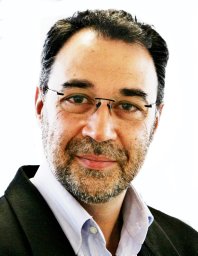 Luís M Correia合作论文数Instituto Superior Técnico, Technical University of Lisbon4Sofia Sousa合作论文数3
 Rolando Bettancourt合作论文数Dept Engn & Publ Policy, Carnegie Mellon Univ3
 William Lehr合作论文数Computer Science and Artificial Intelligence Laboratory, Massachusetts Institute of Technology;Advanced Network Architecture Group, Massachusetts Institute of Technology3
 Alex Hills合作论文数Department of Engineering and Public Policy, College of Engineering, Carnegie Mellon University3
 Sooksan Panichpapiboon合作论文数Electrical and Computer Engineering Department;Carnegie Mellon University;Electrical and Computer Engineering Department, Carnegie Mellon University3Marisa S. Lourenço合作论文数2
 Anderson Rocha Ramos合作论文数Inst Telecomunicacoes2Aman Tyagi合作论文数CASOS, Engineering and Public Policy, Carnegie Mellon University,Pittsburgh,PA,USA2Sutivong, A.合作论文数2Downing, A.R.合作论文数2
 Munk Jens合作论文数2
 M. Granger Morgan合作论文数Department of Engineering and Public Policy, College of Engineering, Carnegie Mellon University2Pitikorn Tengtrakul合作论文数2Ira B. Greenberg合作论文数and now author. He holds a BFA from Cornell University and an MFA from the University of Pennsylvania2Yue-Hsun Lin合作论文数1Erin Heath合作论文数1Christopher Choy合作论文数1Ildar M. Khamitov合作论文数1Selena Nelson合作论文数1
 Alessandro Allegra合作论文数1Stephanie Brown合作论文数1
 Ana Aguiar合作论文数University of Porto1Robert Cook-Deegan合作论文数1
 J. Tochukwu Omenma合作论文数1elin l klaseen合作论文数1B. L. Yankiver合作论文数1Cameryn J. Gonnella合作论文数1Zach Graves合作论文数1
 Nila Bagheri合作论文数1beth e gilden合作论文数1
 Laura Boeira合作论文数1
 Liam A. Berigan合作论文数1
 Olusegun M. Ogundele合作论文数Nigeria Sci Policy Platform Biodivers & Ecosyst S, Ibadan, Nigeria1
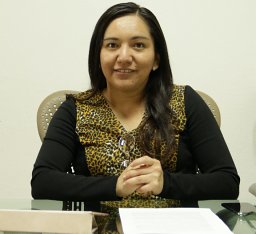 Alma Cristal Hernández-Mondragón合作论文数Center for Research and Advanced Studies, the National Polytechnic Institute1Donatus Dube合作论文数Natl Univ Sci & Technol1
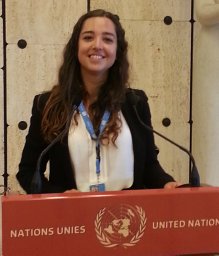 Marga Gual Soler合作论文数SciDipGLOBAL1




