Primary selection plays a fundamental role in display design. Primaries affect not only the gamut of colors the systems is able to reproduce, but also, they have an impact on the power consumption and other cost related variables. Using more than the traditional three primaries has been shown to be a versatile way of extending the color gamut, widening the angle view of LCD screens and improving power consumption of displays systems. Adequate selection of primaries requires a trade-off between the multiple benefits the system offers, the costs and the complexity it implies, among other design parameters. The purpose of this work is to present a methodology for optimal design for three primary and multiprimary display systems. We consider the gamut in perceptual spaces, which offer the advantage of an evaluation that correlates with human perception, and determine a design that maximize the gamut volume, constrained to a certain power budget, and analyze the benefits of increasing number of primaries, and their effect on other variables of performance like gamut coverage.
Gamut volume computations in perceptual spaces are useful for optimizing designs of color displays. We develop a useful representation of the gamut of an additive display that facilitates efficient numerical computation of the gamut volume. For three primary systems, our representation coincides with the obvious representation of a three-primary additive gamut, while for multi-primary systems, the representation we develop provides a partition of the device gamut as a disjoint union of displaced three primary gamuts thereby facilitating a computation of the overall gamut volume as the sum of these individual three primary gamut volumes. Based on our representation, we develop and evaluate several alternative numerical schemes for gamut volume computations in perceptual spaces, comparing their accuracy and computational requirements.
AbstractThis paper describes the application of a visual model to the spatial upsampling problem. The visual model includes an updated optical pointspread function that is adapted to a particular display's spectral emission characteristics. The visual model identifies locations of visible differences between high resolution groundtruth and 2X upsampled images, and allows quantifying the degree of difference between competing algorithms. Subjectivelydetermined image difference thresholds are compared to model predictions for both upsampsled Bluray and highresolution still images.
We propose a modification to the standard Bayer color filter array (CFA) and photodiode structure for CMOS image sensors, which we call 2PFC (TM) (two pixels, full color). The blue and red filters of the Bayer pattern are replaced by a magenta filter. Under each magenta filter are two stacked, pinned photodiodes; the diode nearest the surface absorbs mostly blue light, and the deeper diode absorbs mostly red light. The magenta filter absorbs green light, improving color separation between the blue and red diodes. We first present a frequency-based demosaicing method, which takes advantage of the new 2PFC geometry. Due to the spatial arrangement of red, green, and blue pixels, luminance and chrominance are very well separated in the Fourier space, allowing for computationally inexpensive linear filtering. In comparison with state-of-the-art demosaicing methods for the Bayer CFA, we show that our sensor and demosaicing method outperform the others in terms of color aliasing, peak signal to noise ratio, and zipper effect. As demosaicing alone does not determine image quality, we also analyze the whole system performance in terms of resolution and noise. (C) 2010 SPIE and IS&T. [DOI: 10.1117/1.3373512]
A modification to the standard Bayer CFA and photodiode structure for CMOS image sensors is proposed, which we call 2PFCTM, meaning "Two Pixel, Full Color". The blue and red filters of the Bayer pattern are replaced by magenta filters. Under each magenta filter are two stacked, pinned photodiodes; the diode nearest the surface absorbs mostly blue light and the deeper diode absorbs mostly red light. The magenta filter absorbs green light, improving color separation between the resulting blue and red diodes. The dopant implant defining the bottom of the red-absorbing region can be made the same as the green diodes, simplifying the fabrication. Since the spatial resolution for the red, green, and blue channels are identical, color aliasing is greatly reduced. Luminance resolution can also be improved, the thinner diodes lead to higher well capacity with resulting better dynamic range, and fabrication costs can be similar to or less than standard Bayer CMOS imagers. Also, the geometry of the layout lends itself naturally to frequency-based demosaicing.
A Visual Model (VM) is used to aid in the design of an Ultra-high Definition (UHD) upscaling algorithm that renders High Definition legacy content on a UHD display. The costly development of such algorithms is due, in part, to the time spent subjectively evaluating the adjustment of algorithm structural variations and parameters. The VM provides an image map that gives feedback to the design engineer about visual differences between algorithm variations, or about whether a costly algorithm improvement will be visible at expected viewing distances. Such visual feedback reduces the need for subjective evaluation. This paper presents the results of experimentally verifying the VM against subjective tests of visibility improvement versus viewing distance for three upscaling algorithms. Observers evaluated image differences for upscaled versions of high-resolution stills and HD (Blu-ray) images, viewing a reference and test image, and controlled a linear blending weight to determine the image discrimination threshold. The required thresholds vs. viewing distance varied as expected, with larger amounts of the test image required at further distances. We verify the VM by comparison of predicted discrimination thresholds versus the subjective data. After verification, VM visible difference maps are presented to illustrate the practical use of the VM during design.
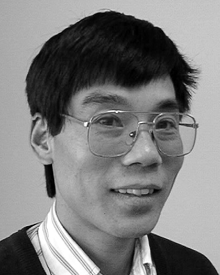 Xiao-Fan Feng合作论文数Sharp Laboratories of America6
 richard john campbell合作论文数5john e dolan合作论文数5Ahmet Mufit Ferman合作论文数5Douglas J. Tweet合作论文数4
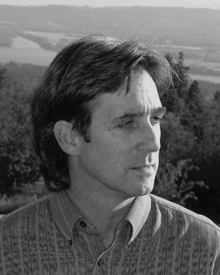 Scott J. Daly合作论文数Dolby Laboratories4Jong-Jan Lee合作论文数4
 M. Ibrahim Sezan合作论文数pSemi3Daniel Tamburrino合作论文数3
 Reginald George Golledge (Reginald Golledge)合作论文数Department of Geography, University of California, Santa Barbara2
 Carlos Eduardo Rodriguez-Pardo合作论文数2
 Louis Kerofsky合作论文数Sharp Laboratories of America2
 Mei-Po Kwan (关美宝)合作论文数Department of Geography and Resource Management, The Chinese University of Hong Kong2Dean S. Messing合作论文数2
 Gaurav Sharma合作论文数Department of Electrical and Computer Engineerin, Hajim School of Engineering & Applied Sciences, University of Rochester;Center for Excellence in Data Science, University of Rochester2CHANG JAMES ZHIXIN合作论文数1neil j runde合作论文数1
 David H. Brainard合作论文数Department of Psychology, University of Pennsylvania1
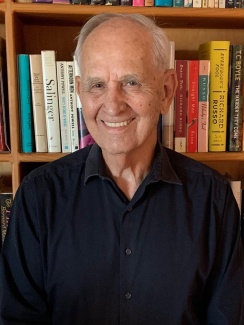 Jerry Jacobs合作论文数College of Letters & Science, University of California, Santa Barbara1Lawrence Shao-Hsien Chen合作论文数1Wendy A. Brunt合作论文数1




