Micronutrient deficiencies in human diets, often exacerbated by soil degradation, pose a significant global health challenge. Glacial flour, fine sediments produced by glacial erosion, may offer a sustainable, low-cost solution to improve soil fertility and enhance micronutrient availability in crops. This study evaluates the potential of glacial flour soil amendments from glaciers with two contrasting lithologies—basaltic Sólheimajökull (Iceland) and metasedimentary Chhota Shigri (Himalaya)—to enrich soybeans (Glycine max var. Black Jet) with essential nutrients while assessing the risk associated with potentially toxic elements. In a controlled glasshouse experiment, soybeans were grown in artificial soils amended with five doses of glacial flour (0.5–20 T ha−1) and analysed for 18 elements. Results demonstrated enhanced uptake of key nutrients such as Zn, Fe, Mo, and Se, particularly in Icelandic glacial flour treatments, supporting the potential for crop biofortification. However, Himalayan flour led to arsenic (As) accumulation at higher doses, exceeding food safety limits. Multivariate clustering revealed two distinct element uptake behaviours: oxyanion-mediated and mimicking elements (Mo, Se, Sr, As) and those driven by plant demand (macronutrients, Fe, Mn, Zn). These findings highlight glacial flour’s potential for nutrient enrichment but also of potentially toxic elements, underscoring the need for source-specific screening to ensure safe agricultural application in deglaciating regions.
Abstract Kerogen, insoluble macromolecular organic matter in sedimentary rocks, is the most abundant form of organic carbon on Earth and plays a role in deep biosphere processes. It is classified into four types (I–IV) based on origin and chemical composition, yet its influence on microbial communities and carbon cycling remains poorly understood. In this study, we examined how kerogen-rich shales and coals, each containing a distinct kerogen type, shape anaerobic microbial community development and activity. CFU counts showed that kerogen types I and II did not significantly alter overall microbial abundance, while type III-rich rocks inhibited growth, and type IV-rich rocks enhanced it. 16S rRNA gene sequencing revealed that type II-rich rocks selectively enriched for Burkholderiaceae, whereas type IV-rich rocks promoted the proliferation of Cellulomonadaceae and Pleomorphomonadaceae. Gas chromatography showed that CO2 production occurred only in the presence of type II-rich rocks, likely driven by Burkholderiaceae activity. These findings suggest that kerogen structure and geochemical properties drive microbial community assembly and organic matter mobilization in the deep subsurface. Beyond Earth, kerogen type IV-like material is widespread in extraterrestrial environments. Our results indicate the enhancement of the habitability of these environments, offering new insights into the potential for life.
Noachian-age (4.1-3.7Ga) hot spring deposits have been identified on Mars, in addition to fixed nitrogen compounds within Martian surface materials, yet the planet's nitrogen cycle remains enigmatic and implicates the plausibility of a Martian biosphere. On Earth's surface, nitrogen is cycled almost exclusively by biological processes which create distinctive isotopic fractionations. We combine geochemical and metagenomic analysis to investigate biological nitrogen cycling within four Mars analogue geothermal systems in Iceland ranging in temperature from 37.8 to 57.1 degrees C, and propose the geochemical parameters that control biological nitrogen fixation as the primary source of nitrogen into the microbial communities present. We find complete nitrogen fixation and ammonium assimilation gene clusters at all sites, which are also the most abundant nitrogen-cycling genes present. Isotopic fractionations (Delta(15) N) of similar to 6 parts per thousand between locally dissolved N-2 gas and biomass are most parsimoniously explained by organisms relying on Mo-independent nitrogenases for fixation of dinitrogen (N-2). This hypothesis is supported by the presence of genes encoding these enzymes in three out of four sites included in this study, in addition to the more commonly used MoFe nitrogenase. Finally, we find that molybdenum availability is low in the Icelandic hot springs investigated, and potentially therefore in Martian hot springs. This may inhibit conventional Mo-dependent nitrogen fixation in such settings and highlights the influence of wider geological conditions on local biochemistry.
[This retracts the article DOI: 10.1038/s43247-023-01196-4.].
Lightning has been suggested to play a role in triggering the occurrence of bio-ready chemical species. Future missions (PLATO, ARIEL, HWO, LIFE) and ground-based ELTs will investigate the atmospheres of potentially habitable exoplanets. We aim to study the effect of lightning on the atmospheric chemistry, how it affects false-positive and false-negative biosignatures, and if its effect would be observable on an exo-Earth and on TRAPPIST-1 planets. We use a combination of laboratory experiments, photochemical and radiative transfer modelling. With spark discharge experiments in N2-CO2-H2 gas mixtures, representing a range of possible rocky-planet atmospheres, we investigate the production of potential lightning signatures (CO, NO), possible biosignature gases (N2O, NH3, CH4), and important prebiotic precursors (HCN, Urea). Photochemical simulations are conducted for oxygen-rich and anoxic atmospheres for rocky planets in the habitable zones of the Sun and TRAPPIST-1 for a range of lightning flash rates. Synthetic spectra are calculated using SMART to study the atmosphere's reflectance, emission, and transmission spectra. Lightning enhances the spectral features of NO, NO2, and, in some cases, CO; CH4 and C2H6 may be enhanced indirectly. Lightning at a flash rate slightly higher than on modern Earth can mask the ozone features of an oxygen-rich, biotic atmosphere, making it harder to detect the biosphere. Lightning flash rates at least ten times higher than on modern Earth can mask the presence of ozone in the anoxic, abiotic atmosphere of a planet orbiting a late M dwarf, reducing the potential for a false-positive life-detection. The threshold lightning rates to eliminate oxygen and ozone false positive biosignatures on planets orbiting ultra-cool dwarfs is up to ten times higher than the modern flash rate, suggesting that lightning cannot always prevent these false-positive scenarios.
The role of subglacial abrasion in sustaining subglacial microbiomes is an area of growing interest. It is likely that subglacial abrasion produces a range of bio-utilisable compounds, some released from fluid inclusions in the confines of the mineral matrix and some produced via the surface free radicals that crushing produces in a variety of different minerals. As yet, the geochemical reactions which are initiated by abrasion remain poorly understood. This is largely because of the multiple potential sources and sinks of free radicals that occur in even the most simple of multi-mineralic system during crushing and subsequent wetting of the mixture. We illustrate this assertion by conducting a series of laboratory experiments where common, “simple” silicate minerals, such as quartz and feldspar, are abraded and incubated with ultra-pure water. Gaseous reaction products included CH4, H2 and CO2. The concentrations of major ions (including Na+, K+, Mg2+, and Ca2+), dissolved silicate, dissolved iron and pH of the solution during incubation are reported. These results were used to calculate HCO3− in solution and the saturation index with respect to various minerals using PHREEQCi. We found that abrasion of silicates produces bio-available gases and has the potential to increase the concentration of various weathering products in solution. Further, we found that even trace amounts of carbonates, an impurity in many natural rocks and minerals, may significantly affect the reaction products, making it challenging to concretize the reactions taking place. These results highlight the importance of conducting abrasion experiments utilising natural samples to better understand how apparently negligeable changes in mineralogy might affect the reaction products of abrasion and crushing.
The origin of life required membrane-bound compartments to allow the separation and concentration of internal biochemistry from the external environment and establish energy-harnessing ion gradients. Long-chain amphiphilic molecules, such as fatty acids, appear strong candidates to have formed the first cell membranes although how they were first generated remains unclear. Here we show that the reaction of dissolved hydrogen and bicarbonate with the iron-rich mineral magnetite under conditions of continuous flow, alkaline pH and relatively low temperatures (90 °C) generate a range of functionalised long-chain aliphatic compounds, including mixed fatty acids up to 18 carbon atoms in length. Readily generated membrane-forming amphiphilic organic molecules in the first cellular life may have been driven by similar chemistry generated from the mixing of bicarbonate-rich water (equilibrated with a carbon dioxide-enriched atmosphere) with alkaline hydrogen-rich fluids fed by the serpentinisation of the Earth’s iron-rich early crust.
The aeolian transport of sand generates fine material through abrasion. On Mars this process occurs at lower temperatures than on Earth, however, there is minimal data on the effects of temperature on aeolian abrasion rates. Here, results are reported of laboratory experiments where a suite of single-phase, Mars relevant minerals (feldspar, olivine, pyroxene, quartz and opal) were exposed to conditions simulating aeolian abrasion at temperatures common to the Martian surface (193 to 293 K). Our results suggest that mineral specific differences in solid phase parameters result in non-similar changes in abrasion rates with temperature. We propose this will ultimately exert a control on the composition and reactivity of the Martian surface.
Abstract. The microbial ecosystems that lie beneath ice sheets can impact and contribute to global biogeochemical cycles, yet remain poorly understood given the logistical challenges in directly accessing the subglacial environment. Studies instead often rely on indirect sampling of subglacial systems via the collection of meltwaters emerging from ice margins. However, the origin of exported material in these waters will change over a melt season as glacier hydrology responds to changes in surface melt. Here, we reveal trends in microbial sourcing (source environment) and assemblages in a large proglacial river in southwest Greenland by investigating three microbial datasets (16S rRNA) collected during different hydrological periods over three separate summer melt seasons. By combining microbial data with high-resolution hydrological and hydrochemical measurements, we show that changes in microbial assemblages follow changes in hydrological periods, likely influenced by variations in glacial drainage expansion inland with concomittant variations in inputs of surface melt and subglacial sediment exports. We further illustrate how relative changes in microbial assemblages can inform on the state of the glacial hydrological system, and also focus on methane-cycling populations to infer their potential distribution beneath the ice. Overall, our results highlight that timing matters when sampling proglacial rivers and we caution interpretations of exported assemblages without a good understanding of the catchment and system studied; this is especially true for larger systems which undergo more complex hydrological changes over a melt season.
Earth's deep continental subsurface is a prime setting to study the limits of life's relationship with environmental conditions and habitability. In Precambrian crystalline rocks worldwide, deep ancient groundwaters in fracture networks are typically oligotrophic, highly saline, and locally inhabited by low-biomass communities in which chemolithotrophic microorganisms may dominate. Periodic opening of new fractures can lead to penetration of surface water and/or migration of fracture fluids, both of which may trigger changes in subsurface microbial composition and activity. These hydrogeological processes and their impacts on subsurface communities may play a significant role in global cycles of key elements in the crust. However, to date, considerable uncertainty remains on how subsurface microbial communities may respond to these changes in hydrogeochemical conditions. To address this uncertainty, the biogeochemistry of Thompson mine (Manitoba, Canada) was investigated. Compositional and isotopic analyses of fracture waters collected here at ~1 km below land surface revealed different extents of mixing between subsurface brine and (paleo)meteoric waters. To investigate the effects this mixing may have had on microbial communities, the Most Probable Number technique was applied to test community response for a total of 13 different metabolisms. The results showed that all fracture waters were dominated by viable heterotrophic microorganisms which can utilize organic materials associated with aerobic/facultative anaerobic processes, sulfate reduction, or fermentation. Where mixing between subsurface brines and (paleo)meteoric waters occurs, the communities demonstrate higher cell densities and increased viable functional potentials, compared to the most saline sample. This study therefore highlights the connection between hydrogeologic heterogeneity and the heterogeneity of subsurface ecosystems in the crystalline rocks, and suggests that hydrogeology can have a considerable impact on the scope and scale of subsurface microbial communities on Earth and potentially beyond.
Subglacial environments harbour a diversity of microbial ecosystems capable of influencing biogeochemical cycles. However, the darkness and isolation of subglacial environments limit the energy sources available for microbial metabolism. A recently recognised energy source for these microbes in wet-based regions is the rock-water reactions that occur after the mechanical fracturing of glacial bedrock. These mechanochemical reactions produce H 2 and H 2 O 2 at 0°C from reactions with mineral surface defects (Si• and SiO•) and release Fe from within the mineral structures, providing electron donors and acceptors for microbial metabolism. However, the production of H 2 O 2 and H 2 may be underestimated as temperatures at rock abrasion sites can increase substantially above 0°C as glaciers “slip and grind” rocks, potentially accelerating the rates of mechanochemical reactions. Despite this, the effect of rapid heating on subsequent low-temperature mechanochemical reactions has yet to be examined. Here, we investigate H 2 , H 2 O 2 , and Fe production during low-temperature (0 °C) incubations of water with a range of ground rocks and minerals following “flash heating” to 30, 60, or 121 °C. We show that transient increases (as little as 5–10 min of heating) to moderate temperatures (30 or 60 °C) can significantly increase the rate of H 2 production, while short-term heating to 121 °C generates larger bursts of H 2 . In addition, pyrite is easily crushed, potentially releasing large quantities of Fe 2+ into subglacial systems and promoting mechanochemical reactions due to the resulting large surface area (10× larger than other materials). We provide the first evidence for H 2 production from water reactions with crushed pyrite and suggest that crushed pyrite has a greater influence on subglacial H 2 O 2 production than silicates. We conclude that electron donors in the form of Fe 2+ and H 2 bursts can be produced in subglacial ecosystems, which may be coupled to substantial concentrations of H 2 O 2 produced from crushed pyrite. This suggests that rock–water mechanochemical reactions may be a greater source of energy for subglacial environments than previously recognised.
Glaciers and ice sheets are renowned for their abrasive power, yet little is known of the mechanochemical reactions which are initiated by abrasion in these environments and their effect on subglacial biogeochemistry. Here, we use sedimentary rocks representative of different subglacial environments and from a previously glaciated terrain, along with subglacial sediments, to investigate the potential for subglacial erosion to generate H2O2 and to release bio-utilisable organic carbon and nutrients (N, Fe). Samples were crushed using a ball mill, water was added to rock powders within gastight vials, and samples were incubated in the dark at 4 ∘C. Headspace and water samples were taken immediately after the addition of water and then again after 5 and 25 h. Samples generated up to 1.5 µmol H2O2 g−1. The total sulfur content, a proxy for the sulfide content, did not correlate with H2O2 generation, suggesting that the pyrite content was not the sole determinant of net H2O2 production. Other factors including the presence of carbonates, Fe-driven Fenton reactions and the pH of the solution were also likely to be important in controlling both the initial rate of production and subsequent rates of destruction of H2O2. Further, we found that erosion can provide previously unaccounted sources of bio-utilisable energy substrates and nutrients, including up to 880 nmol CH4 g−1, 680 nmol H2 g−1, volatile fatty acids (up to 1.7 µmol acetate g−1) and 8.2 µmolNH4+g-1 to subglacial ecosystems. These results highlight the potentially important role that abrasion plays in providing nutrient and energy sources to subglacial microbial ecosystems underlain by sedimentary rocks.
The frequency of large supraglacial landslides (rock avalanches) occurring in glacial environments is thought to be increasing due to feedbacks with climate warming and permafrost degradation. However, it is difficult to (i) test this; (ii) establish cause-effect relationships; and (iii) determine associated lag-times, due to both temporal and spatial biases in detection rates. Here we applied the Google Earth Engine supraglacial debris input detector (GERALDINE) to Glacier Bay National Park & Preserve (GLBA), Alaska. We find that the number of rock ava-lanches (RAs) has previously been underestimated by 53 %, with a bias in past detections towards large area RAs. In total, GLBA experienced 69 RAs during 1984-2020, with the highest frequency in the last three years. Of these, 58 % were deposited into the accumulation zone and then sequestered into the ice within two years. RA sources clustered spatially at high elevations and around certain peaks and ridges, predominantly at the boundary of modelled permafrost likelihood. They also clustered temporally, occurring mainly between May and September when air temperatures were high enough to initiate rock-permafrost degradation mechanisms. There was a chronic background debris supply from RAs, with at least one RA occurring in all but nine years; however, a debris rich period during 2012-2016 was driven by three large RAs delivering 44 % of all (1984-2020) debris (by area). Comparable investigation of slope-failures in other remote currently glaciated regions is lacking. If RA rates are similar elsewhere, especially the bias towards emplacement onto/into accumulation zones, their contribution to glacial sediment budgets has been globally underestimated.
Perchlorate (ClO4−) is widespread in the solar system having been detected on Earth, on Mars, in chondrite meteorites and in lunar samples. On Mars, perchlorates expand the potential for habitable conditions by lowering the freezing point of liquid water in the formation of brines. In future manned space exploration their presence poses a hazard to human health, however, it also represents opportunities as a source of oxygen and fuel. Despite their prevalence, the mechanism(s) of perchlorate formation in different solar system environments are poorly understood. Here we demonstrate that perchlorate can be generated through the mechanical activation of silicates in the presence of chloride.
The surface of Mars is a dynamic, cold environment where aeolian abrasion leads to the fracturing of silicate minerals which can produce oxidants upon exposure to water. Here we report results of a series of laboratory experiments where the abrasion of sand sized (125 - 300 sim) quartz, labradorite, forsterite and opal were conducted under a simulated Martian atmosphere at a range of temperatures common to Mars' surface (193 to 273 K). Our results suggest that abrasion rates are controlled by temperature; an observation that may have potential for providing insight into Martian paleo-temperatures. On the addition of water, detectable H2O2 was generated in all abraded experiments with crystalline quartz, labradorite and forsterite, but not amorphous opal - supporting previous inferences that mineral crystal structure plays a role in oxidant production. Dissolved Fe concentrations also indicated a strong additional control on net H2O2 production by Fenton reactions. Detectable H-2 was similarly measured in abraded experiments with crystalline minerals and not for amorphous opal. Labradorite and forsterite generated minimal H-2 and only in more abraded samples, likely due to the reaction of Si center dot with water. In quartz experiments H-2 was only present in samples where a black magnetic trace mineral was also present, and where H2O2 concentrations had been reduced to close to detection. In the quartz samples we infer a mechanism of H-2 generation via the previously proposed model of spinel-surface-promoted-electron transfer to water. The presence of H2O2 may exert an additional control on net H-2 production rates either directly (via reaction of H-2 with OH center dot and H2O2) or indirectly (by the oxidation of H-2 generating sites on mineral surfaces). Overall, our data supports previous inferences that aeolian abrasion can produce additional oxidants within the Martian regolith that can increase the degradation of organic molecules. We further suggest that the apparent control of H2O2 concentrations on net H-2 generation in our experiments may help explain some previous apparently contradictory evidence for mineral-water H-2 generation at low temperatures. (c) 2022 Elsevier B.V. All rights reserved.
 Jemma Wadham合作论文数School of Geographical Sciences, University of Bristol;Department of Geosciences, UiT The Arctic University of Norway;Norwegian Polar Institute, University of Bristol49
 Martyn Tranter合作论文数Bristol Glaciology Centre, University of Bristol39
 Marek Stibal合作论文数School of Geographical Sciences, University of Bristol Bristol Glaciology Centre30
 Alexandre M Anesio合作论文数Institute of Biological Sciences, University of Wales27
 Barbara Sherwood Lollar合作论文数Department of Earth Sciences, University of Toronto;Institut de Physique du Globe de Paris, Université Paris Cité;Department of Chemical Engineering and Applied Chemistry, University of Toronto24
 Hawkings Jon合作论文数School of Geographical Sciences, University of Bristol Bristol23
 Elizabeth A Bagshaw合作论文数16
 Peter Nienow合作论文数Global Change, School of GeoSciences, The University of Edinburgh15
 Andrew J. Tedstone合作论文数School of Geosciences, University of Edinburgh;School of Geosciences, University of Edinburgh14
 Grzegorz P. Lis合作论文数14
 Andy Hodson合作论文数The University Centre in Svalbard12
 John Owen Edgar合作论文数Sch Nat & Environm Sci, Newcastle Univ9
 Dubnick Ashley合作论文数9Guillaume Lamarche-Gagnon合作论文数Univ Bristol, Sch Geog Sci, Bristol BS8 1SS, Avon, England8
 Emily C O'Donnell合作论文数Sch Geog, Univ Nottingham8
 Tyler J. Kohler合作论文数8Chandler David M合作论文数8
 Marian Yallop合作论文数School of Biological Sciences, University of Bristol8Georges Lacrampe-Couloume合作论文数Stable Isotope Laboratory, University of Toronto8
 Christopher M. Bellas合作论文数School of Geographical Sciences, University of Bristol8
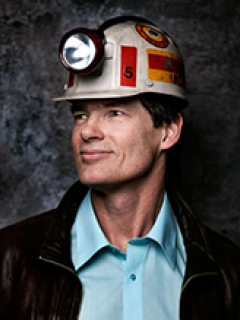 Tullis Onstott合作论文数The Department of Civil and Environmental Engineering, School of Engineering and Applied Science, Princeton University7
 Jakub Zarsky合作论文数Department of Ecology, Charles University in Prague Prague;Centre for Polar Ecology, University of South Bohemia České Budějovice;Charles University in Prague, University of South Bohemia České Budějovice7
 Charles Cockell合作论文数School of Physics and Astronomy, University of Edinburgh;Centre for Science at Extreme Conditions, University of Edinburgh7
 Martin J. Sharp (Martin Sharp)合作论文数Department of Earth and Atmospheric Sciences, Faculty of Science, University of Alberta7
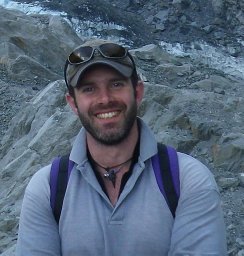 T. D. L. Irvine-Fynn合作论文数Department of Geography;University of Sheffield;University of Calgary;University of Sheffield, University of Calgary7
 Beatriz Gill Olivas合作论文数Dept Environm Sci, Aarhus Univ6
 Timo Ruskeeniemi合作论文数Geological Survey of Finland6
 Alexander D. Beaton合作论文数Bristol Glaciology Centre, University of Bristol6
 Shaun K. Frape合作论文数Department of Earth and Environmental Sciences, University of Waterloo6
 Jemma L Wadham合作论文数Bristol Glaciol Ctr, Univ Bristol6D. McGown合作论文数5Lawson Emily C合作论文数5
 Randy Stotler合作论文数Department of Earth and Environmental Sciences, University of Waterloo5
 Jacob C. Yde合作论文数Department of Earth Sciences, University of Aarhus5
 Jade E. Hatton合作论文数Univ Bristol, Sch Earth Sci, Bristol, Avon, England4
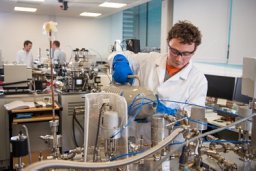 Oliver Warr合作论文数Department of Earth Sciences, University of Toronto4
 Andrew G. Fountain合作论文数Department of Geology, College of Liberal Arts and Sciences, Portland State University4
 Liane G. Benning合作论文数Department of Interface Geochemistry,GFZ Potsdam and Freie Universität Berlin4
 Mark Skidmore合作论文数School of Geographical Sciences, University of Bristol4
 Lisa M. Pratt (Lisa Pratt)合作论文数Department of Earth and Atmospheric Sciences, College of Arts and Sciences, Indiana University Bloomington4
 Matthew C Mowlem合作论文数National Oceanography Centre, University of Southampton—Waterfront Campus4
 Corien Bakermans合作论文数4
 Rob Raiswell合作论文数School of Earth and Environment, Faculty of Environment, University of Leeds4C. E. Butler合作论文数3Megan J Barnett合作论文数3elizabeth m pratt合作论文数3Joseph M. Cook合作论文数3
 Will Smith合作论文数Sch Geog Polit & Sociol, Newcastle Univ3




