Measuring observables to constrain models using maximum-likelihood estimation is fundamental to many physics experiments. Wilks' theorem provides a simple way to construct confidence intervals on model parameters, but it only applies under certain conditions. These conditions, such as nested hypotheses and unbounded parameters, are often violated in neutrino oscillation measurements and other experimental scenarios. Monte Carlo methods can address these issues, albeit at increased computational cost. In the presence of nuisance parameters, however, the best way to implement a Monte Carlo method is ambiguous. This paper documents the method selected by the NOvA experiment, the profile construction. It presents the toy studies that informed the choice of method, details of its implementation, and tests performed to validate it. It also includes some practical considerations which may be of use to others choosing to use the profile construction.
The determination of the direction of a stellar core collapse via its neutrino emission is crucial for the identification of the progenitor for a multimessenger follow-up. A highly effective method of reconstructing supernova directions within the Deep Underground Neutrino Experiment (DUNE) is introduced. The supernova neutrino pointing resolution is studied by simulating and reconstructing electron-neutrino charged-current absorption on Ar-40 and elastic scattering of neutrinos on electrons. Procedures to reconstruct individual interactions, including a newly developed technique called "brems flipping," as well as the burst direction from an ensemble of interactions are described. Performance of the burst direction reconstruction is evaluated for supernovae happening at a distance of 10 kpc for a specific supernova burst flux model. The pointing resolution is found to be 3.4 degrees at 68% coverage for a perfect interaction-channel classification and a fiducial mass of 40 kton, and 6.6 degrees for a 10 kton fiducial mass respectively. Assuming a 4% rate of charged-current interactions being misidentified as elastic scattering, DUNE's burst pointing resolution is found to be 4.3 degrees (8.7 degrees) at 68% coverage.
This paper introduces a novel track-length extension fitting algorithm for measuring the kinetic energies of inelastically interacting particles in liquid argon time projection chambers (LArTPCs). The algorithm finds the most probable offset in track length for a track-like object by comparing the measured ionization density as a function of position with a theoretical prediction of the energy loss as a function of the energy, including models of electron recombination and detector response. The algorithm can be used to measure the energies of particles that interact before they stop, such as charged pions that are absorbed by argon nuclei. The algorithm's energy measurement resolutions and fractional biases are presented as functions of particle kinetic energy and number of track hits using samples of stopping secondary charged pions in data collected by the ProtoDUNE-SP detector, and also in a detailed simulation. Additional studies describe the impact of the dE/dx model on energy measurement performance. The method described in this paper to characterize the energy measurement performance can be repeated in any LArTPC experiment using stopping secondary charged pions.
The Module-0 Demonstrator is a single-phase 600 kg liquid argon time projection chamber operated as a prototype for the DUNE liquid argon near detector. Based on the ArgonCube design concept, Module-0 features a novel 80k-channel pixelated charge readout and advanced high-coverage photon detection system. In this paper, we present an analysis of an eight-day data set consisting of 25 million cosmic ray events collected in the spring of 2021. We use this sample to demonstrate the imaging performance of the charge and light readout systems as well as the signal correlations between the two. We also report argon purity and detector uniformity measurements, and provide comparisons to detector simulations.
The NOvA collaboration reports cross-section measurements for ν_μ charged-current interactions with low hadronic energy (maximum kinetic energy of 250 MeV for protons and 175 MeV for pions) in the NOvA Near Detector. The results are presented as a double-differential cross section as a function of the direct observables of the final-state muon kinematics. Results are also presented as a single-differential cross section as a function of the derived square of the four-momentum transfer, Q^2, and as a function of the derived neutrino energy. The data correspond to an accumulated 8.09×10^20 protons-on-target (POT) in the neutrino mode of the NuMI beam, with a narrow band of neutrino energies peaked at 1.8 GeV. The analysis provides a sample of neutrino-nucleus interactions with an enhanced fraction of quasi-elastic and two-particle-two-hole (2p2h) interactions. This enhancement allows quantitative comparisons with various nuclear models. We find strong disagreement between data and theory-based models in various regions of the muon kinematic phase space, especially in the forward muon direction.
Double- and single-differential cross sections for inclusive charged-current neutrino-nucleus scattering are reported for the kinematic domain 0 to 2 GeV/c in three-momentum transfer and 0 to 2 GeV in available energy, at a mean muon-neutrino energy of 1.86 GeV. The measurements are based on an estimated 995,760 muon-neutrino CC interactions in the scintillator medium of the NOvA Near Detector. The subdomain populated by 2-particle-2-hole reactions is identified by the cross-section excess relative to predictions for neutrino-nucleus scattering that are constrained by a data control sample. Models for 2-particle-2- hole processes are rated by chi-square comparisons of the predicted-versus-measured muon-neutrino CC inclusive cross section over the full phase space and in the restricted subdomain. Shortfalls are observed in neutrino generator predictions obtained using the theory-based Val`encia and SuSAv2 2p2h models.
ProtoDUNE Single-Phase (ProtoDUNE-SP) is a 770-ton liquid argon time projection chamber that operated in a hadron test beam at the CERN Neutrino Platform in 2018. We present a measurement of the total inelastic cross section of charged kaons on argon as a function of kaon energy using 6 and 7 GeV/$c$ beam momentum settings. The flux-weighted average of the extracted inelastic cross section at each beam momentum setting was measured to be 380$\pm$26 mbarns for the 6 GeV/$c$ setting and 379$\pm$35 mbarns for the 7 GeV/$c$ setting.
This Letter reports a search for charge-parity (CP) symmetry violating non-standard interactions (NSI) of neutrinos with matter using the NOvA Experiment, and examines their effects on the determination of the standard oscillation parameters. Data from $\nu_{\mu}(\bar{\nu}_{\mu})\rightarrow\nu_{\mu}(\bar{\nu}_{\mu})$ and $\nu_{\mu}(\bar{\nu}_{\mu})\rightarrow\nu_{e}(\bar{\nu}_{e})$ oscillation channels are used to measure the effect of the NSI parameters $\varepsilon_{e\mu}$ and $\varepsilon_{e\tau}$. With 90% C.L. the magnitudes of the NSI couplings are constrained to be $|\varepsilon_{e\mu}| \, \lesssim 0.3$ and $|\varepsilon_{e\tau}| \, \lesssim 0.4$. A degeneracy at $|\varepsilon_{e\tau}| \, \approx 1.8$ is reported, and we observe that the presence of NSI limits sensitivity to the standard CP phase $\delta_{\tiny\text{CP}}$.
DUNE is an international experiment dedicated to addressing some of the questions at the forefront of particle physics and astrophysics, including the mystifying preponderance of matter over antimatter in the early universe. The dual-site experiment will employ an intense neutrino beam focused on a near and a far detector as it aims to determine the neutrino mass hierarchy and to make high-precision measurements of the PMNS matrix parameters, including the CP-violating phase. It will also stand ready to observe supernova neutrino bursts, and seeks to observe nucleon decay as a signature of a grand unified theory underlying the standard model. The DUNE far detector implements liquid argon time-projection chamber (LArTPC) technology, and combines the many tens-of-kiloton fiducial mass necessary for rare event searches with the sub-centimeter spatial resolution required to image those events with high precision. The addition of a photon detection system enhances physics capabilities for all DUNE physics drivers and opens prospects for further physics explorations. Given its size, the far detector will be implemented as a set of modules, with LArTPC designs that differ from one another as newer technologies arise. In the vertical drift LArTPC design, a horizontal cathode bisects the detector, creating two stacked drift volumes in which ionization charges drift towards anodes at either the top or bottom. The anodes are composed of perforated PCB layers with conductive strips, enabling reconstruction in 3D. Light-trap-style photon detection modules are placed both on the cryostat's side walls and on the central cathode where they are optically powered. This Technical Design Report describes in detail the technical implementations of each subsystem of this LArTPC that, together with the other far detector modules and the near detector, will enable DUNE to achieve its physics goals.
The international collaboration designing and constructing the Deep Underground Neutrino Experiment (DUNE) at the Long-Baseline Neutrino Facility (LBNF) has developed a two-phase strategy toward the implementation of this leading-edge, large-scale science project. The 2023 report of the US Particle Physics Project Prioritization Panel (P5) reaffirmed this vision and strongly endorsed DUNE Phase I and Phase II, as did the European Strategy for Particle Physics. While the construction of the DUNE Phase I is well underway, this White Paper focuses on DUNE Phase II planning. DUNE Phase-II consists of a third and fourth far detector (FD) module, an upgraded near detector complex, and an enhanced 2.1 MW beam. The fourth FD module is conceived as a "Module of Opportunity", aimed at expanding the physics opportunities, in addition to supporting the core DUNE science program, with more advanced technologies. This document highlights the increased science opportunities offered by the DUNE Phase II near and far detectors, including long-baseline neutrino oscillation physics, neutrino astrophysics, and physics beyond the standard model. It describes the DUNE Phase II near and far detector technologies and detector design concepts that are currently under consideration. A summary of key R&D goals and prototyping phases needed to realize the Phase II detector technical designs is also provided. DUNE's Phase II detectors, along with the increased beam power, will complete the full scope of DUNE, enabling a multi-decadal program of groundbreaking science with neutrinos.
Doping of liquid argon TPCs (LArTPCs) with a small concentration of xenon is a technique for light-shifting and facilitates the detection of the liquid argon scintillation light. In this paper, we present the results of the first doping test ever performed in a kiloton-scale LArTPC. From February to May 2020, we carried out this special run in the single-phase DUNE Far Detector prototype (ProtoDUNE-SP) at CERN, featuring 720 t of total liquid argon mass with 410 t of fiducial mass. A 5.4 ppm nitrogen contamination was present during the xenon doping campaign. The goal of the run was to measure the light and charge response of the detector to the addition of xenon, up to a concentration of 18.8 ppm. The main purpose was to test the possibility for reduction of non-uniformities in light collection, caused by deployment of photon detectors only within the anode planes. Light collection was analysed as a function of the xenon concentration, by using the pre-existing photon detection system (PDS) of ProtoDUNE-SP and an additional smaller set-up installed specifically for this run. In this paper we first summarize our current understanding of the argon-xenon energy transfer process and the impact of the presence of nitrogen in argon with and without xenon dopant. We then describe the key elements of ProtoDUNE-SP and the injection method deployed. Two dedicated photon detectors were able to collect the light produced by xenon and the total light. The ratio of these components was measured to be about 0.65 as 18.8 ppm of xenon were injected. We performed studies of the collection efficiency as a function of the distance between tracks and light detectors, demonstrating enhanced uniformity of response for the anode-mounted PDS. We also show that xenon doping can substantially recover light losses due to contamination of the liquid argon by nitrogen.
NOvA is a long-baseline neutrino oscillation experiment that measures oscillations in charged-current $\nu_{\mu} \rightarrow \nu_{\mu}$ (disappearance) and $\nu_{\mu} \rightarrow \nu_{e}$ (appearance) channels, and their antineutrino counterparts, using neutrinos of energies around 2 GeV over a distance of 810 km. In this work we reanalyze the dataset first examined in our previous paper [Phys. Rev. D 106, 032004 (2022)] using an alternative statistical approach based on Bayesian Markov Chain Monte Carlo. We measure oscillation parameters consistent with the previous results. We also extend our inferences to include the first NOvA measurements of the reactor mixing angle $\theta_{13}$ and the Jarlskog invariant. We use these results to quantify the strength of our inferences about CP violation, as well as to examine the effects of constraints from short-baseline measurements of $\theta_{13}$ using antineutrinos from nuclear reactors when making NOvA measurements of $\theta_{23}$. Our long-baseline measurement of $\theta_{13}$ is also shown to be consistent with the reactor measurements, supporting the general applicability and robustness of the PMNS framework for neutrino oscillations.
We report cross-section measurements of the final-state muon kinematics for nu mu charged-current interactions in the NOvA near detector using an accumulated 8.09 x 10²⁰ protons on target in the NuMI beam. We present the results as a double-differential cross section in the observed outgoing muon energy and angle, as well as single-differential cross sections in the derived neutrino energy, E nu, and square of the four-momentum transfer, Q(2). We compare the results to inclusive cross-section predictions from various neutrino event generators via chi(2) calculations using a covariance matrix that accounts for bin-to-bin correlations of systematic uncertainties. These comparisons show a clear discrepancy between the data and each of the tested predictions at forward muon angle and low Q(2), indicating a missing suppression of the cross section in current neutrino-nucleus scattering models.
We report an updated measurement of the $\nu_{\mu}$-induced, and the first measurement of the $\bar{\nu}_{\mu}$-induced coherent charged pion production cross section on $^{12}C$ nuclei in the T2K experiment. This is measured in a restricted region of the final-state phase space for which $p_{\mu,\pi}>0.2$ GeV, $\cos(\theta_{\mu})>0.8$ and $\cos(\theta_{\pi})>0.6$, and at a mean (anti)neutrino energy of 0.85 GeV using the T2K near detector. The measured $\nu_{\mu}$ CC coherent pion production flux-averaged cross section on $^{12}C$ is $(2.98 \pm 0.37 (stat.) \pm 0.31 (syst.) \substack{ +0.49 \\ -0.00 } \mathrm{ (Q^2\,model)}) \times 10^{-40}~\mathrm{cm}^{2}$. The new measurement of the $\bar{\nu}_{\mu}$-induced cross section on $^{12}{C}$ is $(3.05 \pm 0.71 (stat.) \pm 0.39 (syst.) \substack{ +0.74 \\ -0.00 } \mathrm{(Q^2\,model)}) \times 10^{-40}~\mathrm{cm}^{2}$. The results are compatible with both the NEUT 5.4.0 Berger-Sehgal (2009) and GENIE 2.8.0 Rein-Sehgal (2007) model predictions.
The rapid development of general-purpose computing on graphics processing units (GPGPU) is allowing the implementation of highly-parallelized Monte Carlo simulation chains for particle physics experiments. This technique is particularly suitable for the simulation of a pixelated charge readout for time projection chambers, given the large number of channels that this technology employs. Here we present the first implementation of a full microphysical simulator of a liquid argon time projection chamber (LArTPC) equipped with light readout and pixelated charge readout, developed for the DUNE Near Detector. The software is implemented with an end-to-end set of GPU-optimized algorithms. The algorithms have been written in Python and translated into CUDA kernels using Numba, a just-in-time compiler for a subset of Python and NumPy instructions. The GPU implementation achieves a speed up of four orders of magnitude compared with the equivalent CPU version. The simulation of the current induced on 10^3 pixels takes around 1 ms on the GPU, compared with approximately 10 s on the CPU. The results of the simulation are compared against data from a pixel-readout LArTPC prototype.
Measurements of electrons from $\nu_e$ interactions are crucial for the Deep Underground Neutrino Experiment (DUNE) neutrino oscillation program, as well as searches for physics beyond the standard model, supernova neutrino detection, and solar neutrino measurements. This article describes the selection and reconstruction of low-energy (Michel) electrons in the ProtoDUNE-SP detector. ProtoDUNE-SP is one of the prototypes for the DUNE far detector, built and operated at CERN as a charged particle test beam experiment. A sample of low-energy electrons produced by the decay of cosmic muons is selected with a purity of 95%. This sample is used to calibrate the low-energy electron energy scale with two techniques. An electron energy calibration based on a cosmic ray muon sample uses calibration constants derived from measured and simulated cosmic ray muon events. Another calibration technique makes use of the theoretically well-understood Michel electron energy spectrum to convert reconstructed charge to electron energy. In addition, the effects of detector response to low-energy electron energy scale and its resolution including readout electronics threshold effects are quantified. Finally, the relation between the theoretical and reconstructed low-energy electron energy spectrum is derived and the energy resolution is characterized. The low-energy electron selection presented here accounts for about 75% of the total electron deposited energy. After the addition of lost energy using a Monte Carlo simulation, the energy resolution improves from about 40% to 25% at 50~MeV. These results are used to validate the expected capabilities of the DUNE far detector to reconstruct low-energy electrons.
A primary goal of the upcoming Deep Underground Neutrino Experiment (DUNE) is to measure the $\mathcal{O}(10)$ MeV neutrinos produced by a Galactic core-collapse supernova if one should occur during the lifetime of the experiment. The liquid-argon-based detectors planned for DUNE are expected to be uniquely sensitive to the $\nu_e$ component of the supernova flux, enabling a wide variety of physics and astrophysics measurements. A key requirement for a correct interpretation of these measurements is a good understanding of the energy-dependent total cross section $\sigma(E_\nu)$ for charged-current $\nu_e$ absorption on argon. In the context of a simulated extraction of supernova $\nu_e$ spectral parameters from a toy analysis, we investigate the impact of $\sigma(E_\nu)$ modeling uncertainties on DUNE's supernova neutrino physics sensitivity for the first time. We find that the currently large theoretical uncertainties on $\sigma(E_\nu)$ must be substantially reduced before the $\nu_e$ flux parameters can be extracted reliably: in the absence of external constraints, a measurement of the integrated neutrino luminosity with less than 10\% bias with DUNE requires $\sigma(E_\nu)$ to be known to about 5%. The neutrino spectral shape parameters can be known to better than 10% for a 20% uncertainty on the cross-section scale, although they will be sensitive to uncertainties on the shape of $\sigma(E_\nu)$. A direct measurement of low-energy $\nu_e$-argon scattering would be invaluable for improving the theoretical precision to the needed level.
The inclusive electron neutrino charged-current cross section is measured in the NOvA near detector using 8.02×10^{20} protons-on-target in the NuMI beam. The sample of GeV electron neutrino interactions is the largest analyzed to date and is limited by ≃17% systematic rather than the ≃7.4% statistical uncertainties. The double-differential cross section in final-state electron energy and angle is presented for the first time, together with the single-differential dependence on Q^{2} (squared four-momentum transfer) and energy, in the range 1 GeV≤E_{ν}<6 GeV. Detailed comparisons are made to the predictions of the GENIE, GiBUU, NEUT, and NuWro neutrino event generators. The data do not strongly favor a model over the others consistently across all three cross sections measured, though some models have especially good or poor agreement in the single differential cross section vs Q^{2}.
The inclusive electron neutrino charged-current cross section is measured in the NOvA near detector using 8.02×10^{20} protons-on-target in the NuMI beam. The sample of GeV electron neutrino interactions is the largest analyzed to date and is limited by ≃17% systematic rather than the ≃7.4% statistical uncertainties. The double-differential cross section in final-state electron energy and angle is presented for the first time, together with the single-differential dependence on Q^{2} (squared four-momentum transfer) and energy, in the range 1 GeV≤E_{ν}<6 GeV. Detailed comparisons are made to the predictions of the GENIE, GiBUU, NEUT, and NuWro neutrino event generators. The data do not strongly favor a model over the others consistently across all three cross sections measured, though some models have especially good or poor agreement in the single differential cross section vs Q^{2}.
Cross sections for the interaction nu(mu)A -> mu(-)pi X-0 with neutrino energies between 1 and 5 GeV are measured using a sample of 165,000 selected events collected in the NOvA experiment's near detector, a hydrocarbon-based detector exposed to the Neutrinos from the Main Injector beam at the Fermi National Accelerator Laboratory. Results are presented as a flux-averaged total cross section and as differential cross sections in the momenta and angles of the outgoing muon and pi(0), the total four-momentum transfer, and the invariant mass of the hadronic system. Comparisons are made with predictions from a reference version of the GENIE neutrino interaction generator. The measured total cross section of (3.57 +/- 0.44THORN x 10(-39) cm(2) is 7.5% higher than the GENIE prediction, but is consistent within experimental errors.
 Marina Artuso合作论文数Department of Physics, College of Art and Sciences, Syracuse University528
 Ron Poling合作论文数School of Physics and Astronomy, College of Science and Engineering, University of Minnesota525
 David G. Cassel合作论文数Department of Physics, College of Arts & Sciences, Cornell University520
 Ralf Ehrlich合作论文数AGR519
 Bernard Gittelman合作论文数516
 David Cinabro合作论文数College of Liberal Arts and Sciences, Wayne State University;U.S. Department of Energy515
 K. K. Gan合作论文数Department of Physics, College of Arts and Sciences, The Ohio State University507
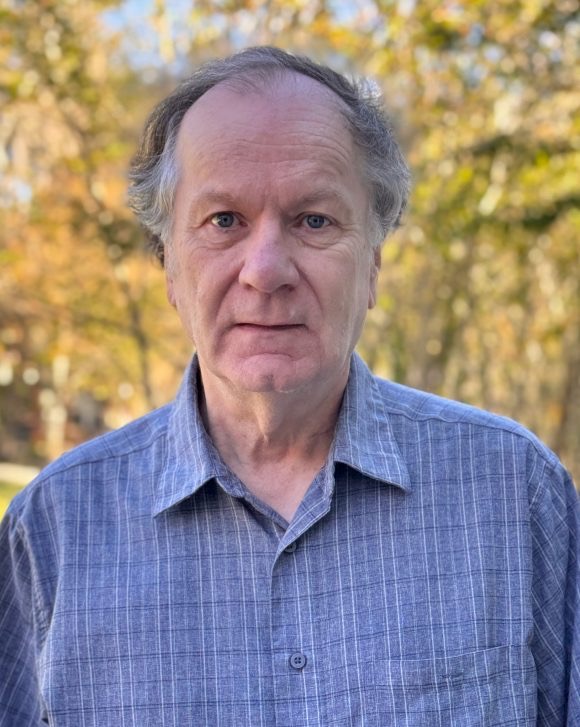 John Yelton合作论文数Department of Physics, College of Liberal Arts and Sciences, University of Florida;Institute for High Energy Physics and Astrophysics, College of Liberal Arts and Sciences, University of Florida505
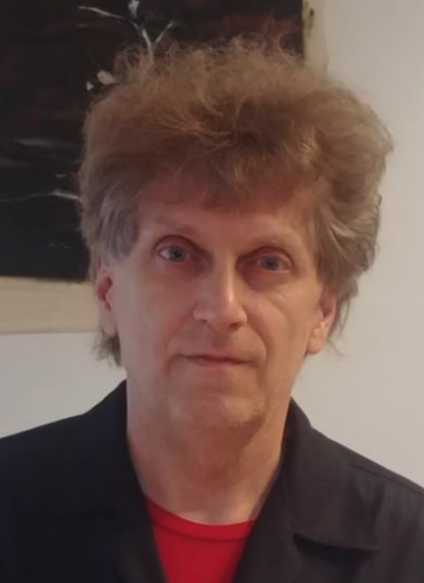 Vladimir Savinov合作论文数Department of Physics & Astronomy, University of Pittsburgh;The Department of Quantum Reality, University of Pittsburgh500
 Horst Severini合作论文数Homer L. Dodge Department of Physics and Astronomy, Dodge Family College of Arts and Sciences, The University of Oklahoma;Oklahoma Center for High Energy Physics497
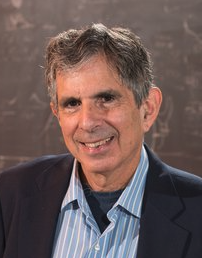 Sheldon Stone合作论文数Department of Physics, College of Arts and Sciences, Syracuse University497d riley合作论文数495M. Selen合作论文数493K. Berkelman合作论文数492
 Klaus Honscheid合作论文数Department of Physics, College of Arts and Sciences, The Ohio State University490S. W. Gray合作论文数474Dl Kreinick合作论文数471Dl Hartill合作论文数470L. Gibbons合作论文数469Ei Shibata合作论文数465
 A. Mahmood合作论文数University at Albany460B. Eisenstein合作论文数460A. Sadoff合作论文数456Patrick L. Skubic合作论文数452R. Ammar合作论文数448Bk Heltsley合作论文数446E. Nordberg合作论文数440
 Joel Ernst合作论文数Division of Experimental Medicine, Department of Medicine, School of Medicine, University of California San Francisco439
 Persis Drell合作论文数Physics Department, School of Humanities and Sciences, Stanford University;School of Engineering, Stanford University437C. Bebek合作论文数432D. Peterson合作论文数428
 Ryszard Stroynowski合作论文数Department of Physics, Southern Methodist University427
 Jean Etienne Duboscq合作论文数Cornell University426J. Kandaswamy合作论文数425Nb Mistry合作论文数422J. Hinson合作论文数422
 T. E. Coan合作论文数420
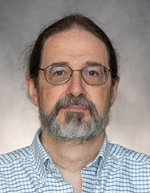 Roy A. Briere合作论文数Department of Physics, Mellon College of Science, Carnegie Mellon University415Kw Edwards合作论文数413Y. Kubota合作论文数409Eh Thorndike合作论文数404M. S. Alam合作论文数403Mm Zoeller合作论文数396S. Athar合作论文数390
 Raymond Joseph Mountain合作论文数Department of Physics, College of Arts & Sciences, Syracuse University388
 Alice L. Bean合作论文数Department of Physics & Astronomy, College of Liberal Arts & Sciences, University of Kansas387J. R. Patterson合作论文数Cornell University, Ithaca, USA384
 Giuliana Bonvicini合作论文数CEPRA378Carl D Jones合作论文数375




