Automatic guidance of urban electric vehicles relying on a sensory memory is addressed in this presentation. Two exteroceptive sensors are successively investigated in order to build the sensory memory: an RTK GPS sensor and a monocular camera. Then, nonlinear control laws, achieving an exact decoupling between lateral and longitudinal guidance functionalities is presented, so that path following and platoon control can be addressed separately. Inter-vehicles communication, relying on WiFi technology, is used in order to enable a global platoon control: each vehicle is aware on-line of the whole platoon configuration and not only of the preceding vehicle relative localization. Full scale experiments, carried out with Cycab vehicles, are finally reported, and demonstrate high accuracy vehicles control with any of the two exteroceptive sensors considered here
In order to solve problems of traffic saturation in cities, new alternative” Urban Transportation Systems” are based on electric vehicles in free-access. One necessary functionality of such systems is their ability to move in a platoon fashion. Platooning of these automatic guided vehicles, relying on RTK-GPS sensors and inter-vehicles communication, is addressed in this paper. More precisely, vehicles platoon is expected to follow a curved reference path. Relying on nonlinear control theory, lateral and longitudinal control are fully decoupled, and therefore addressed independently. To ensure passengers comfort, additional monitoring functions supervise our control system. Then, simulations followed by experiments carried out with urban vehicles, are presented.
To solve problems of traffic saturation in cities, new alternative ''urban transportation systems" are based on electric vehicles in free-access. One necessary functionality of such systems is their ability to move in a platoon fashion. Platooning of these automatic guided vehicles, relying on RTK-GPS sensors and inter-vehicles communication, is addressed in this paper. The developed control law is based on a global control strategy; actually, it can take into account all the platoon state, and not only the immediate previous vehicle state. Distance here is understood as difference of curvilinear abscissa along a reference trajectory. Relying on nonlinear control theory, lateral and longitudinal control are fully decoupled, and therefore addressed independently. To ensure passengers comfort, additional monitoring functions supervise our control system. Then, experiment, carried out with urban vehicles, and simulations of long platoon, are presented.
In this paper, a complete system for outdoor robot navigation is presented. It uses only monocular vision. The robot is first guided on a path by a human. During this learning step, the robot records a video sequence. From this sequence a three dimensional map of the trajectory and the environment is built. When this map has been computed, the robot is able to follow the same trajectory by itself, Experimental results carried out with an urban electric vehicle are shown and compared to the ground truth.
Automatic guidance of urban electric vehicles is addressed in this paper. It is shown that nonlinear control design (namely chained form conversion) and the use of a RTK GPS sensor allow to achieve curved path following with a very high accuracy. Extensive experiments, carried out with a Cycab vehicle, are discussed.
In this paper, the problem of autonomous navigation is addressed starting from the use of RTK-GPS until the use of vision as the main sensor. Using a decoupling strategy, it is possible to control separately lateral and longitudinal control in trajectory following tasks. Recent advances in vision, make possible to localize an urban vehicle in regard with a previously recorded trajectory. The concept of sensory memory (GPS, Vision), which tra- duces the learnt trajectory, is introduced and used to guide autonomously the vehicle. Then, an extension to vehicle platoon is described. Different kind of longitudinal control strategies are discussed : from a near to near approach, to a global strategy. Finally, in order to manage different kind of scenario which occur in a platoon context, a monitoring module is developed. All theses aspects are currently addressed through the BODEGA (ROBEA-CNRS national interdisciplinary research program) and MOBIVIP (PREDIT3 national research program) projects.
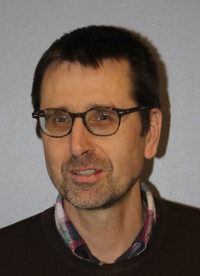 Benoit Thuilot合作论文数Département Sciences et Techniques de l'Ingénieur, Ecole Universitairede Physique et D'Ingenierie, Université Clermont Auvergne;Institut Pascal, Université Clermont Auvergne9
 P. Martinet合作论文数French Insitute in Advanced Mechanics
Campus Universitaire5Francois Marmoiton合作论文数5
P. Martinet合作论文数French Insitute in Advanced Mechanics
Campus Universitaire5Francois Marmoiton合作论文数5 Philippe Martinet合作论文数French Robotics Research Network3
 Michel Dhome合作论文数CNRS;University of Clermont-Ferrand1Eric Royer合作论文数université Blaise Pascal, Clermont Universites1Maxime Lhuillier合作论文数Institut Pascal, Universitaire des Cézeaux1




