Integrated simulation capabilities that are high-fidelity, fast, and have scalable architecture are essential to support autonomous vehicle design and performance assessment for the U.S. Army's growing use of unmanned ground vehicles (UGV). The HMMWV simulation described in this paper embodies key features of the real vehicle, including a complex suspension and steering dynamics, wheel-soil models, navigation, and control. This research uses advanced multibody techniques such as minimal coordinate representations with constraint embedding to model complex unmanned ground vehicles for fast mechanical simulations with high fidelity. In this work, we demonstrate high-fidelity dynamics models for autonomous UGV simulations in near real time that can be useful to the U.S. Army for future autonomous ground vehicle dynamics modeling and analysis research.
DARTS is a rigid/flexible multibody dynamics toolkit for the modeling and simulation of aerospace and robotic vehicles for engineering applications. In this paper we describe an on-line, browser-based environment using Jupyter notebooks to support training needs for the DARTS software. The suite of curated tutorial notebooks is organized into different topic areas, and into multiple themes within each topic area. The notebooks within a theme use a progression of examples for users to expand their understanding of the software. The topic areas include one on the DARTS multibody dynamics software and another one on the theory underlying the multibody dynamics formulation. We also describe a number of Jupyter extensions that were used — and some developed in house — to enhance the notebook interface for use with the dynamics simulation software. One significant extension we implemented allows the embedding of live 3D visualizations within simulation notebooks.
This paper assesses the use of variable altitude light gas balloons for the robotic exploration of Venus and Titan. Helium is the buoyancy gas chosen for this study. Inspired by recent terrestrial examples, we consider three different types of helium-filled balloons that control their altitude over a specified range, each with a different modulation technique. These techniques are: pumping helium between a non-pressurized “zero-pressure” balloon and a pressurized reservoir to adjust buoyancy; pumping air into a pressurized reservoir to adjust weight; and changing the volume of the helium balloon through direct mechanical compression to adjust buoyancy. Theoretical derivations are presented for the limiting case of equal balloon and atmospheric gas temperatures that show two linear scaling relationships depending on the balloon option. The reservoir pressure linearly scales with atmospheric temperature for the pumped helium and pumped air options, but scales linearly with atmospheric pressure for the mechanical compression option. Simplified point designs are presented for Venus and Titan mission scenarios that quantify differences between the aerobot options based on vehicle mass, altitude stability, altitude range, and the energy required to change altitude. The data show that the pumped helium balloon option has the least vehicle mass and lowest energy consumption to change altitude for the Venus mission scenario, but it also has the highest amount of helium pressurization. The pumped helium balloon option also has the least vehicle mass and lowest energy consumption to change altitude for the Titan mission scenario; however, all Titan options require an order of magnitude less balloon mass and energy to change altitude compared to the Venus mission scenario, indicating that the mass and energy differences are not a significant discriminator for Titan. Preliminary results are presented for a dynamics-based simulation model for a Venus pumped helium balloon using the Dynamics Simulator for Entry, Descent and Surface Landing (DSENDS) tool. These results show good agreement with the simplified neutral buoyancy calculations.
The goal of this research is to achieve close to real-time dynamics performance for allowing auto-pilot in-the-loop testing of unmanned ground vehicles (UGV) for urban as well as off-road scenarios. The overall vehicle dynamics performance is governed by the multibody dynamics model for the vehicle, the wheel/terrain interaction dynamics and the onboard control system. The topic of this paper is the development of computationally efficient and accurate dynamics model for ground vehicles with complex suspension dynamics. A challenge is that typical vehicle suspensions involve closed-chain loops which require expensive DAE integration techniques. In this paper, we illustrate the use the alternative constraint embedding technique to reduce the cost and improve the accuracy of the dynamics model for the vehicle.
Increasingly complex space missions require powerful and flexible simulation environments in order to design, analyze, and operate the missions. NASA’s Jet Propulsion Laboratory has created the DSENDS simulation environment that addresses these needs for a wide range of space missions. In this paper, we describe the DSENDS simulation environment and the key architectural components that make DSENDS a useful simulation and analysis framework. We also overview a variety of NASA missions and flight experiments that are using DSENDS.
The National Aeronautics and Space Administration have recently been investigating a mission concept known as the Asteroid Redirect Mission, aimed at collecting a large amount of asteroid material and transporting it into lunar orbit for inspection by human astronauts. Of the two mission options that have been considered, one involves the capture of an entire near-Earth asteroid in the 10-m class by a robotic spacecraft. The spacecraft would first make contact with the asteroid through a deformable membrane, before securing it inside a large flexible bagging mechanism. In this paper we describe the development and implementation of a model designed for simulation of the capture process, which includes a low-complexity representation of the interaction dynamics.
Abstract : The goal of this research is to achieve close to real-time dynamics performance for allowing the closed-loop testing of unmanned ground vehicles (UGV) for urban as well as off-road scenarios. The overall vehicle dynamics performance is governed by the multibody dynamics model for the vehicle, the wheel/terrain interaction dynamics and the onboard control system. The topic of this paper is the development of computationally efficient and accurate dynamics model for ground vehicles with complex suspension dynamics. In this paper, we describe the multibody dynamics modeling approach for our reference 4-wheeled vehicle, which has a double wishbone suspension and associated spring-damper unit at each wheel. Each of these wheel suspensions contains a number of articulated bodies with multiple kinematic closed loops. Despite the large number of internal degrees of freedom, due to the constraints, each suspension has only a single effective degree of freedom.
In this paper we analyze the dynamics of a spacecraft in proximity of Phobos by developing the equations of motion of a test mass in the Phobos rotating frame using a model based on circularly-restricted three body problem, and by analyzing the dynamics of a ATHLETE hopper vehicle interacting with the soil under different soil-interaction conditions. The main conclusion of the numerical studies is that the system response is dominated by the stiffness and damping parameters of the leg springs, with the soil characteristics having a much smaller effect. The system simulations identify ranges of parameters for which the vehicle emerges stably (relying only on the passive viscoelastic damper at each leg) or unstably (needing active attitude control) from the hop.The implication is that further experimental and possibly computational modeling work, as well as site characterization (from precursor missions) will be necessary to obtain validated performance models.
: Integrated simulation capabilities that are high-fidelity, fast, and have scalable architecture are essential to support autonomous vehicle design and performance assessment for the U.S. Army's growing use of unmanned ground vehicles (UGVs). With increased onboard autonomy, advanced vehicle models are needed to analyze and optimize control design and sensor packages over a range of urban and off-road scenarios. Recent work at US Army TARDEC has attempted to develop a high-fidelity mobility simulation of an autonomous vehicle in an off-road scenario using integrated sensor, controller, and multi-body dynamics models. The conclusion was that (a) real-time simulation was not feasible due to the complexity of the intervening formulation, (b) models had to be simplified to speed up the simulation, (c) interfacing the sensors was exceedingly difficult due to co-simulation, (d) the controls developed were very basic and could not be optimized, and (e) a rigid terrain model was used. The research described in this paper is from a collaborative project between US Army TARDEC and NASA Jet Propulsion Laboratory (JPL) to develop an advanced UGV mobility testbed using JPL's ROAMS vehicle modeling capability [2] and to address the aforementioned issues in meeting the US Army's UGV modeling and simulation needs. The ROAMS ground vehicle simulation framework can support tasks ranging from real-time embedded hardware- in-the-loop testing to large-scale Monte Carlo simulation based parametric studies. ROAMS has been successfully used at JPL in several space mission-critical scenarios for NASA across multiple domains (cruise/orbiter, landers, and rovers). ROAMS is unique in its integrated approach to handling the high-fidelity dynamics, sensors, environ- ment, control, and autonomy models that are required for such highly complex missions and are key attributes of future Army unmanned ground vehicles.
The National Aeronautics and Space Administration is currently considering an Asteroid Redirect Mission (ARM), the goal of which is to bring a near-Earth asteroid into lunar orbit for inspection by a team of human astronauts. In this paper we present the results of a simulation study that focuses on the challenge of capturing a target asteroid using a robotic spacecraft. This simulation study was conducted in parallel with an ongoing mechanical design process, with the goal of providing feedback on specific design concepts, deriving high-level design targets via optimization, and exploring the trade space of the capture problem independently. We present and discuss several simulation models, the results of which have influenced the evolution of the ARM project to date.
This paper derives the equations of motion of variable mass systems using a coordinatefree approach. These equations have been verified with simple models, and the terms originating in the steady and unsteady gas-dynamic interaction effects have been used in the modeling and simulation of the propulsive phase of the Supersonic Inflatable Advanced Decelerator when the vehicle is spinning. The variable mass terms have an effect both the translation and the rotation of the vehicle during thrust, indicating an increase in the roll rate.
This paper derives the equations of motion of varia ble mass systems using a coordinatefree approach. These equations have been verified with simple models, and the terms originating in the steady and unsteady gas-dynamic interaction effects have been used in the modeling and simulation of the propulsive phase of the Supersonic Inflatable Advanced Decelerator when the vehicle is spinning. The varia ble mass terms have an effect both the translation and the rotation of the vehicle during thrust, indicating an increase in the roll rate.
This software runs a suite of arbitrary software tests spanning various software languages and types of tests (unit level, system level, or file comparison tests). The dtest utility can be set to automate periodic testing of large suites of software, as well as running individual tests. It supports distributing multiple tests over multiple CPU cores, if available. The dtest tool is a utility program (written in Python) that scans through a directory (and its subdirectories) and finds all directories that match a certain pattern and then executes any tests in that directory as described in simple configuration files.
The Dartslab team at NASA's Jet Propulsion Laboratory (JPL) has a long history of developing physics-based simulations based on the Darts/Dshell simulation framework that have been used to simulate many planetary robotic missions, such as the Cassini spacecraft and the rovers that are currently driving on Mars. Recent collaboration efforts between the Dartslab team at JPL and the Mission Operations Directorate (MOD) at NASA Johnson Space Center (JSC) have led to significant enhancements to the Dartslab DSENDS (Dynamics Simulator for Entry, Descent and Surface landing) software framework. The new version of DSENDS is now being used for new planetary mission simulations at JPL. JSC is using DSENDS as the foundation for a suite of software known as COMPASS (Core Operations, Mission Planning, and Analysis Spacecraft Simulation) that is the basis for their new human space mission simulations and analysis. In this paper, we will describe the collaborative process with the JPL Dartslab and the JSC MOD team that resulted in the redesign and enhancement of the DSENDS software. We will outline the improvements in DSENDS that simplify creation of new high-fidelity robotic/spacecraft simulations. We will illustrate how DSENDS simulations are assembled and show results from several mission simulations.
On-body sensor systems for sport are challenging since the sensors must be lightweight and small to avoid discomfort, and yet robust and highly accurate to withstand and capture the fast movements associated with sport. In this work, we detail our experience of building such an on-body system for track athletes. The paper describes the design, implementation and deployment of an on-body sensor system for sprint training sessions. We autonomously profile sprints to derive quantitative metrics to improve training sessions. Inexpensive Force Sensitive Resistors (FSRs) are used to capture foot events that are subsequently analysed and presented back to the coach. We show how to identify periods of sprinting from the FSR data and how to compute metrics such as ground contact time. We evaluate our system using force plates and show that millisecond-level accuracy is achievable when estimating contact times.
 Joan Lasenby合作论文数Signal Processing and Communications Laboratory, Department of Engineering, University of Cambridge;Trinity College, University of Cambridge25
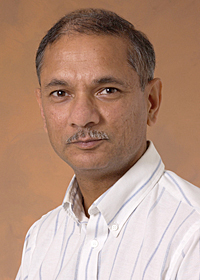 Abhinandan Jain合作论文数Jet Propulsion Laboratory, California Institute of Technology17
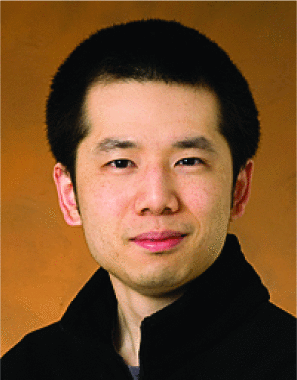 Steven Myint合作论文数12
 Richard Iles合作论文数11
 Jeffery L. Hall合作论文数10
 James A. Cutts合作论文数10J Bob Balaram合作论文数Jet Propulsion Laboratory9Rich Wareham合作论文数Department of Engineering, University of Cambridge9
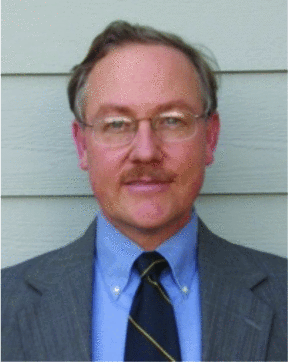 Marco B. Quadrelli合作论文数Jet Propulsion Laboratory;California Institute of Technology9
 Christopher Lim合作论文数8Andre Yavrouian合作论文数7
 J. Balaram合作论文数6e lau合作论文数Department of Orthopaedic Surgery, National University Hospital5Juliet Usher Smith合作论文数Department of Public Health and Primary Care, University of Cambridge5
 Marc I. Pomerantz合作论文数5
 Adar Pelah合作论文数5
 Hari Nayar合作论文数5a bachelder合作论文数4Abhi Jain合作论文数4
 Calvin Kuo合作论文数School of Biomedical Engineering, Faculty of Applied Science, The University of British Columbia/School of Biomedical Engineering, Faculty of Medicine, The University of British Columbia4P. D. Bridge合作论文数4
 Ronald Craig Arkin (Ronald C. Arkin)合作论文数GVU Center, College of Computing, Georgia Institute of Technology;School of Interactive Computing, College of Computing, Georgia Institute of Technology4V.V. Kerzhanovich合作论文数4
 Rudranarayan M. Mukherjee合作论文数4
 Paramsothy Jayakumar合作论文数U.S. Army RDECOM-TARDEC4j usher smith合作论文数3V. Kerzhanovich合作论文数3Arin Morfopoulos合作论文数3w hills合作论文数3Douglas Brand合作论文数3
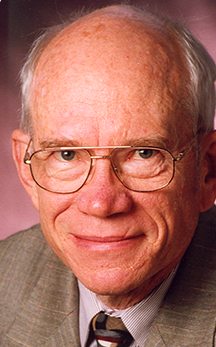 Wayne J. Book合作论文数School of Mechanical Engineering, Georgia Institute of Technology3
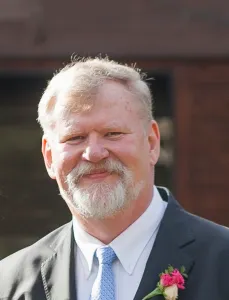 Alberto Elfes合作论文数CSIRO3
 James F. Montgomery合作论文数3
 Håvard Fjær Grip合作论文数School of Electrical Engineering and Computer Science, Washington State University3
 Douglas C. MacKenzie合作论文数3
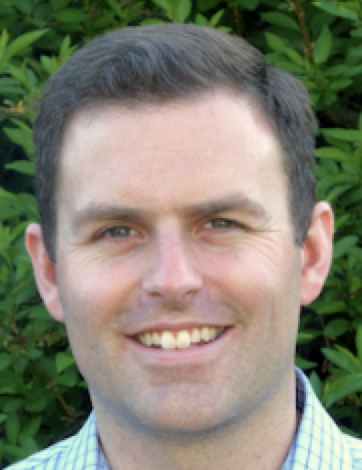 Thomas M. Howard合作论文数3
 Eric A. Kulczycki合作论文数3Daniel Clouse合作论文数3
 Pete Bridge合作论文数3james cutts合作论文数3
 Adnan Ansar合作论文数Jet Propulsion Laboratory, California Institute of Technology3Richard Wareham合作论文数2tim lachenmeier合作论文数2steve wall合作论文数2alex palkovic合作论文数2
 Michael Pauken合作论文数2d brand合作论文数2
 Jacob Izraelevitz合作论文数Dept Mech Engn, MIT2
 Tuhin Das合作论文数Mech., Matl., & Aero. Eng., Univ. of Central Florida;c;Mech., Matl., & Aero. Eng., Univ. of Central Florida2




