The invitation to think about “theory now” requires a double response. Insofar as theory has a “now,” it is a “now” in the time of disciplines and institutions, a point in an institutional trajectory. To ask where theory is now invites us to describe where theory has been and where it is heading. And certainly there is much that could be said about theory now: narratology, for some time in the doldrums, seems to be making a comeback, taking cognitive science rather than linguistics as a model, though it may be too early to say whether this will prove productive. Psychoanalysis plays a less central role in theory than it used to, except in the form of trauma theory, whose pertinence to a host of contemporary issues continues to be d emonstrated. Questions about the nature of identity seem to have receded, as Rei Terada points out, doubtless because theoretical debates have led to a more subtle understanding, that identities are neither simply imposed nor freely performed. Theories of haunting or spectrality provide new ways of thinking about a variety of perennial issues, including memory, the modes of being of the past, and intertextuality. The study of affect, once relegated by both philosophy and literary and cultural studies to the margins of psychology, has become central, with shame, compassion, envy, and sentimentality all requiring theorization and historical exploration. Queer theory continues to expand its purview, as a wider range of investigations and arguments is developed and new paradigms, such as that of reparative reading, emerge from theory's deep engagement with the pressures and the tragedies of gay lives. Race has come to be understood as much more complicated than early theorizations realized, and the problems of theorizing power and possibilities of resistance continue to engage thinkers, as the essays in this issue amply show.
Flaubert's realism is a topic that has been somewhat neglected of late-for a variety of reasons that at least deserve some reflection. First, though Madame Bovary remains the most widely read and studied of his novels, it would be fair to say, I think, that for critics of the last thirty years Bouvard et Pecuchet has become paradigmatic for Flaubert-as of course it is-and that stripped-down model of writerly activity, which centers the novel on the circulation of anonymous discourses, can lead one to neglect the extensive descriptions, analyses, and reflections that make up so much of Madame Bovary. Consider this passage.
For anyone who knows Neil Hertz, a great raconteur with an ironic sense of humor, a man of the people, able to talk to anyone, he seems a most unlikely theorist of the sublime, in the line of Longinus, Burke, and Kant. Longinus and Burke display an unbounded admiration for moments of elevation, in expression and nature-not so Hertz. Neither they nor Kant is notable for a sense of humor, and they are all quite snooty about the low or the trivial. "The use of trivial words," writes Longinus, "terribly disfigures passages in the grand style" (154). But the moments of incongruity that provoke and dismay Longinus are precisely what capture Hertz's attention, and his best stories are likely to have as a punch line something incongruous that somebody said. For Longinus sublimity comes from nobility of soul and manifests itself in elevated language. Hertz, au contraire, is suspicious of those moments when "the language rises," as he puts it in The End of the Line (62). He has a nose for precisely those moments of "tonal heightening," which attract his critical eye and reveal special investments, something suspicious going on-by contrast with moments of less inflated language. It is notjust Hertz the raconteur who savors the deflation produced by the vulgar or overly familiar but also Hertz the critic. In "Recognizing Casaubon," an essay whose centrality for his work is marked by the fact that it appears in George Eliot's Pulse as well as in The End of the Line, the opening page considers a passage where Eliot asks "Will not a tiny speck very close to our vision blot out the glory of the world and leave
It is an honor to inaugurate this discussion of Roland Barthes. In beginning the movement "Back to Barthes" which our title heralds, I want to say what I take to be the importance of Barthes the theorist and semiologist today. Thereafter, I will briefly take up Barthes's championing of the concept of textuality, both because I think that the development of this concept is a crucial in the advance of the humanities and social sciences, or sciences humaines, and because I have some quarrel with Barthes's particular dealings with the topic. But in all these remarks I want above all to stress that in my view it is the early and middle Barthes and not the late, nostalgic or sentimental Barthes, to whom we should return.
Benedict Anderson's Imagined Communities: Reflections on the Origins and Spread of Nationalism has, in the past decade, become a classic of the humanities and social sciences. Any theoretically savvy discussion of nations or of societies of any sort must cite it for its fundamental insight that nations and, as Anderson points out, "all communities larger than primordial villages of face-to-face contact (and perhaps even these) are imagined" [6]. In retrospect, it seems obvious that nationality, nationness, and nationalism "are cultural artifacts of a particular kind" [4], but this had previously been obscured by intellectuals' sense that nationalism was above all an atavistic passion, an often noxious prejudice of the unenlightened. Imagined Communities both argued that we had better seek to understand it, since "nation-ness is the most universally legitimate value in the political life of our time" [3], and gave us a constructivist way of thinking about the phenomenon of nationalism, which becomes more interesting and intellectually more acceptable when we ask how it is created, what discursive, imaginative activities bring particular nationalisms into being and give them their distinctive form. When nationalism was vulgar passion provoked by empirically occurring nations, it was vulnerable to the objection implicitly or explicitly mounted against it: why should I feel more affinity with people who happen to inhabit the country I live in than with others, more like-minded, who happen to have been born in other nations? Anderson neatly turned the tables on us by taking this as a serious question. Why indeed do we feel such affinities? How to explain the fact that people are more willing to make great sacrifices for others of the same nation whom they have never met (and whom they might dislike if they did) than for worthy and unfortunate people elsewhere?
ment of literary studies? In his History of Literary Criticism, Rene Wellek assigns journals no significant role in the history of American literary criticism, asserting that initiative rather than collective trends matters in criticism.' Can this be true, or has Wellek's notion of criticism as an individual act of judgment blinded him to the way criticism actually evolves? Certainly one could make a case for the importance of journals in the past half-century, a period marked by the decline of public, nonacademic criticism and the emergence of interpretive criticism as the major form of writing about literature. The New Criticism, for example, originated as an argument about the nature of poetry in T. S. Eliot's The Sacred Wood (1920), but also as a challenge to the historical scholarship in several new quarterlies, particularly The Southern Review and The Kenyon Review. Explicitly devoted to innovation, eschewing footnotes and bibliographies, thejournals adopted an anti-academic stance, though they were themselves part of the academic world. The Southern Review, edited by Cleanth Brooks and Robert Penn Warren from 1935-42, was financed, lavishly at first, by Louisiana State University, which Governor Huey Long wished to make a great university. The Kenyon Review, edited byJohn Crowe Ransom from
For the past half-dozen years, the GRIP group has pursued problems that are increasingly recognized as central to thinking about literary studies: how questions about the nature of literature and the methods of literary criticism are tied in with questions about institutional arrangements for the teaching and studying of literature, structures of authority, and professional procedures. Instead of introducing institutional considerations only in polemical acts of debunking, GRIP has from the beginning promoted the serious, comprehensive study of the formation rules of disciplines. Theirs has been the most sustained attempt in literary studies to carry out the sort of program Michel Foucault's work has encouraged: to situate intellectual activities in a history of knowledge that is also a history of relations of power. Another novel feature of GRIP's work has been the emphasis on collective investigation. They have sought not only to experiment with the usual conditions of research and writing in the humanities but also to give a practical immediacy to their claim that knowledge depends upon shared assumptions. The essays gathered here show a grasp of varied institutional and ideological realities, from Ann Michelini's description of the conceptions of literary form that have generated and constrained debates about Euripides to Henry Schmidt's discussion of the failure of classical German humanism to oppose Nazism. An important contribution to the genealogy of criticism in the United States is Elizabeth Wilson's argument that the conceptions of literary studies in twentieth-
Recorded in Ithaca, NY by Cornell University., Sponsored by: German Literature, Department of,Women's Studies Program., Lecture, March 16, 1985.
 George R. Wasserman合作论文数3richard d leppert合作论文数2Henry A. Millon合作论文数2Mary Patterson McPherson合作论文数2Susan McClary合作论文数2Hugh Lee合作论文数2Sheila Biddle合作论文数2Kwame Anthony Appiah合作论文数2Daniel J. Wright合作论文数2Christoph Wolff合作论文数2Scott L. Waugh合作论文数2Nancy J. Vickers合作论文数2Jochen Schulte-Sasse合作论文数2Arnold Rampersad合作论文数2Kathryn C. Preyer合作论文数2Robert O. Preyer合作论文数2Donald J. Munro合作论文数2Patrick Geary合作论文数2Dolores Warwick Frese合作论文数2Stephen F. Cohen合作论文数2Sue Wakeman Farquhar合作论文数2Pauline Yu合作论文数2Francis Oakley合作论文数2Paul Chilton合作论文数2vincent b leitch合作论文数2Joseph W. Esherick合作论文数2Thomas P. Saine合作论文数2James Douglas合作论文数2
 Margaret Jacob合作论文数Meyer and Renee Luskin Department of History, College of Social Sciences, University of California, Los Angeles2earl lewis合作论文数2Roger S. Bagnall合作论文数2
 Steven Wheatley合作论文数Am. Council of Learned Societies2
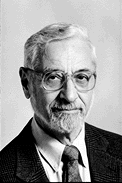 Roy Radner合作论文数Stern School of Business,New York University2Lilian Handlin合作论文数2David S. Nivison合作论文数2
 D. Ronald Daniel合作论文数McKinsey & Company;The Library of America2Michael Nylan合作论文数2Mark C. Carnes合作论文数2
 Bernard Bailyn合作论文数Department of History,Harvard University2Frederick M. Bohen合作论文数2
 Lynn Hunt合作论文数University of California Irvine2
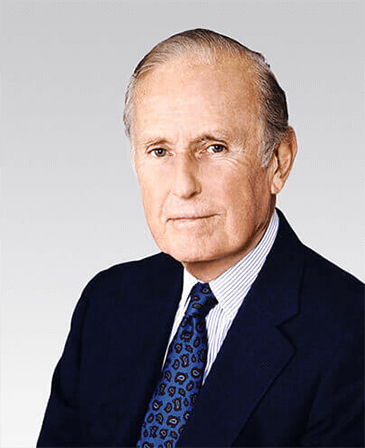 John P. Birkelund合作论文数Enterprise Investors2Caroline W. Bynum合作论文数1David Knechtges合作论文数1Lea H. Wakeman合作论文数1Barbara A. Shailor合作论文数1george gross合作论文数1
 Pheng Cheah合作论文数Department of Rhetoric, University of California, Berkeley1Lee Edelman合作论文数1




