One of the most important factors affecting quality of life is recreation, due to its positive role in social and physical health. Adaptive recreation can be difficult to access, largely because market availability for adaptive equipment, outside of assistive devices for daily living tasks, is extremely limited. The purpose of this project is to develop an open-source repository of affordable Sport and Recreation Activity Assistive Technology in response to idea submissions from the disability community. Prototypes are developed using predominantly 3D printing coupled with commonly available assembly materials, a fabrication approach that allows for rapid and reasonably affordable development of custom solutions. Each prototype follows a defined project methodology: need identification, design (prototyping and evaluation), fabrication testing, and dissemination. To date, several devices have been designed and made available with full documentation, including swim paddles, an attachment for a miniature golf club, billiards stick handles, a game piece mover, a cornhole bag adaptation, an arm prosthetic vehicle shifter adaptor, and a curling stone push stick attachment. All device designs, part files, bills of materials, and assembly instructions are accessible through a publicly available repository so that end users or their support networks can download and fabricate the devices themselves.
Obstacles and barriers in real-world settings can limit community participation for mobility device users. Effective training requires foundational device skills and realistic scenarios to help mobility device users anticipate and respond in real time. The HERL-Town is an educational board game designed to provide training on community transportation for mobility device users and other stakeholders. This study aimed to validate two game elements: transportation scenarios and a series of response options, respectively representing real-life transportation barriers and corresponding strategies to address these challenges. Through a nationwide online survey, Item-level Content Validity Index of 60 scenarios and preference for each of the four response options per scenario were rated by mobility device users and travel companions. A total of 126 individual participated in the study. Two scenarios did not satisfy the Item-level Content Validity Index standard (i.e., 0.78) were removed and 58 were retained. While most preferred (i.e., 1 st ranking) and least preferred (i.e., 4 th ranking) answers were consistent across participants, preference for the middle rankings (i.e., 2 nd and 3 rd tended to vary). Finalized scenarios and ranked response options can be applicable as game elements that simulate transportation barriers and facilitate discussions on safe and independent community mobility of mobility device users.
Several studies have shown that minorities including women, African Americans, and people with disabilities are underrepresented and face barriers to higher education, specifically in the Science, Technology, Engineering, and Math (STEM) fields. Inventing something useful to society and obtaining a patent is considered a pinnacle of these professions. However, the demographics of people obtaining patents is not currently known. This study aimed to quantify the demographics of people obtaining US patents from 2018 to 2022. Patent information and inventor addresses were accessed, compiled, and sampled, and surveys were sent to 4,951 inventors. The results showed that the inventors were 85% male, 80% White/Caucasian, 87% had no military service, and 7% had a disability. Additionally, 70% had a STEM degree. This survey shows that several minority groups are underrepresented in those receiving patents. Targeted programs utilizing frameworks such as social identity theory, social constructivism, and diversity and inclusion theories could help booster these numbers and bring diverse ideas and perspectives to the STEM professions resulting in inventions and innovations which could benefit society.
ABSTRACT:Obstacles and barriers in real-world settings can limit community participation for mobility device users. Effective training requires foundational device skills and realistic scenarios to help mobility device users anticipate and respond in real time. The HERL-Town is an educational board game designed to provide training on community transportation for mobility device users and other stakeholders. This study aimed to validate two game elements: transportation scenarios and a series of response options, respectively representing real-life transportation barriers and corresponding strategies to address these challenges. Through a nationwide online survey, Item-level Content Validity Index of 60 scenarios and preference for each of the four response options per scenario were rated by mobility device users and travel companions. A total of 126 individual participated in the study. Two scenarios did not satisfy the Item-level Content Validity Index standard (i.e., 0.78) were removed and 58 were retained. While most preferred (i.e., 1 st ranking) and least preferred (i.e., 4 th ranking) answers were consistent across participants, preference for the middle rankings (i.e., 2 nd and 3 rd tended to vary). Finalized scenarios and ranked response options can be applicable as game elements that simulate transportation barriers and facilitate discussions on safe and independent community mobility of mobility device users.
OBJECTIVES:Wheelchair transfers risk injury to users and caregivers. Conventional transfer devices are injury-prone and time inefficient. The Powered Personal Transfer System (PPTS), utilizing a modified Electric Powered Wheelchair (EPW) and a hospital bed, provides a no-lift solution for bed-to-wheelchair transfers. Objective 1: Assess PPTS workload compared to existing methods. Objective 2: Evaluate PPTS EPW in daily mobility tasks. Objective 3: Perform Rehabilitation Engineering and Assistive Technology Society of North America (RESNA) wheelchair standards testing for PPTS EPW stability and performance. METHODS:Fifteen professional and family caregivers, experienced in assisting EPW users, performed transfers between the bed and EPW using the PPTS. Subsequently, participants drove the PPTS EPW providing ratings on the ease of performing mobility tasks. Wheelchair testing was conducted following RESNA standards. SETTING:: Simulated bedroom in a laboratory setting. RESULTS:Participants reported low workload demands for employing the PPTS and indicated a preference for the PPTS over existing transfer devices/methods. Ease of performing everyday mobility tasks was not significantly different between the modified PPTS and the commercially available original manufacturer equipment EPW (p > 0.05). RESNA wheelchair standards testing confirmed that the PPTS EPW preserves functionality, stability and performance when compared to similar commercially available EPWs. CONCLUSION:The PPTS demonstrated promise in offering a practical, low demanding, and safe solution for transfers. It has the potential to enhance user and caregiver safety by reducing the incidence of caregiver injuries associated with assisting in transfer tasks. In addition to its efficiency and ease of use, it is an advancement in assistive technology for wheelchair transfers.
Caregivers that assist with wheelchair transfers are susceptible to back pain and occupational injuries. The study describes a prototype of the powered personal transfer system (PPTS) consisting of a novel powered hospital bed and a customized Medicare Group 2 electric powered wheelchair (EPW) working together to provide a no-lift solution for transfers. The study follows a participatory action design and engineering (PADE) process and describes the design, kinematics, and control system of the PPTS and end-users’ perception to provide qualitative guidance and feedback about the PPTS. Thirty-six participants (wheelchair users (n = 18) and caregivers (n = 18)) included in the focus groups reported an overall positive impression of the system. Caregivers reported that the PPTS would reduce the risk of injuries and make transfers easier. Feedback revealed limitations and unmet needs of mobility device users, including a lack of power seat functions in the Group-2 wheelchair, a need for no-caregiver assistance/capability for independent transfers, and a need for a more ergonomic touchscreen. These limitations may be mitigated with design modifications in future prototypes. The PPTS is a promising robotic transfer system that may aid in the higher independence of powered wheelchair users and provide a safer solution for transfers.
Clinical and engineering advancements from rehabilitation sciences, medicine, psychology, and bioengineering are becoming more appealing, as they provide those with neurological disabilities, and the people that care for them, the confidence and assistance to live independently (Kirby et al., Arch Phys Med Rehabil 99: 1295–1302, 2018; Dicianno et al., Mil Med 183: e518–e525, 2018). The purpose of this chapter is to provide an overview and examples of emerging clinical technologies assisting people with disabilities as they increasingly become independent, participating members of society. In completing the chapter, the reader should understand (1) technology design and research; (2) clinical applications for neuroengineering; and (3) translation for activities of daily living. Examples discussed will include neurostimulation as well as assisted robots, adaptable aids, mobile health (mhealth), internet of things, and telehealth. The reader will then be provided with a discussion recapping each section while providing additional detail on their long-term benefits and potential future research.
The COVID-19 pandemic stressed healthcare systems all over the world. Two primary challenges that healthcare systems faced were a shortage of personal protective equipment and the need for new technologies to handle infection prevention for staff and patients. The Department of Veteran's Affairs (VA) Technology Transfer Program responded by prioritizing the development of innovations in the Technology Transfer Assistance Project which addressed the pandemic. This paper describes several innovations that addressed the needs of the VA healthcare system during the pandemic and how they were rapidly developed.
Robotic wheelchair research and development is a growing sector. This article introduces a robotic wheelchair taxonomy, and a readiness model supported by a mini-review. The taxonomy is constructed by power wheelchair and, mobile robot standards, the ICF and, PHAATE models. The mini-review of 2797 articles spanning 7 databases produced 205 articles and 4 review articles that matched inclusion/exclusion criteria. The review and analysis illuminate how innovations in robotic wheelchair research progressed and have been slow to translate into the marketplace.
In the United States, about 26% of the population reports having some form of disability. However, people with disabilities (PwD) are under-represented in science, technology, engineering, and mathematics (STEM). The representation of PwD as patented inventors is unknown, but likely under-represented, given their limited numbers in STEM and the workplace. This study set the goal of identifying PwD with patented technologies that have also been introduced into the marketplace. Using web searches and patent awards/applications, 21 influential inventors with disabilities were identified. The impact of these inventors was assessed and is briefly described. Technologies that were invented for PwD that have had mainstream success were also identified. Inventors with disabilities have made important contributions, but further study is required, as the inclusion of PwD in the inventor community is a nascent field of study that is important for expanding the innovation community.
The powerful slogan “nothing about us without us” has been a motto of the disability rights movement for decades – and still remains a powerful reminder of the work we have yet to do. While assistive technology (AT) research is motivated by the needs of people with disabilities, as members of the AT community we recognize that there remains an alarming lack of representation of people with disabilities in AT research and development roles. In the U.S., people with disabilities are less likely to work in STEM fields when compared to their peers without disabilities; further, despite comprising 25% of the population, people with disabilities make up only 1% of medical students (CDC, AAMC). The lack of representation in STEM and medical fields translates into fewer people with disabilities leading and even participating in AT research and development. To add to the efforts being done to increase representation, we aim to first state that the Assistive Technology Journal believes in and supports engagement of AT users in all aspects of AT research; and further, we prioritize publications that demonstrate such inclusion. Disability rights have evolved greatly over the last century, first gaining significant traction in the U.S. during the civil rights movement of the 1960”s. Around this time, a group of disability activists formed the independent living movement, which asserted that people with disabilities should be considered the experts on their own needs. The broader disability rights movement continued to protest discrimination and advocate for accessibility, leading to the passage of the (U.S.) Rehabilitation Act of 1973 (and subsequent 1977 regulations), which prohibited discrimination in federal programs and services. In 1990 the Americans with Disabilities Act expanded anti-discrimination policies to public entities and required most workplaces and public spaces to make reasonable accommodations for people with disabilities. During the 1990”s, the phrase “nothing about us without us” was popularized by James Charlton’s book of the same name, and spread as a rallying cry throughout other liberation movements as well. Of course, the disability rights movement has global origins: Charlton’s Nothing About Us Without Us book begins by stating that he heard the phrase from South African disability activists, who themselves heard it from Eastern European activists. The motto was the theme of the 2004 United Nations’ International Day of Persons with Disabilities and was associated with the 2008 Convention on the Rights of Persons with Disabilities, a human rights treaty to protect the rights and dignity of people with disabilities. As of May 2022, the treaty has been ratified by 185 countries and signed by 164 countries – though there is still considerable debate on its effectiveness in preventing discrimination and increasing accessibility around the world. So recalling these efforts and the efforts of others, the question we pose is: how can we at Assistive Technology champion the philosophy of “nothing about us without us?” We can start by encouraging engagement of AT users at every possible stage of AT research and development. We can strive to make AT research processes more inclusive and to make AT user engagement more authentic. Instead of perpetuating the idea of people with disabilities as the “researched” and scientists or practitioners as the sole “researchers,” we can share ownership with AT users as “co-researchers” (Layton et al., 2022). We acknowledge that making significant changes will take time and funding, and we strongly believe the investment is worthwhile. Below we give a non-comprehensive list of practical suggestions and provide references with more details.
Clinicians and staff of the Department of Veterans Affairs Health Care System (VA), who provide services to veterans, have invented many devices and methods for improving veterans' lives. However, translating those inventions to the market has been a challenge due to limited collaboration between the clinical inventors and the scientists, researchers, and engineers who can produce the prototypes necessary for licensing the technology. The VA Technology Transfer Program office and the Human Engineering Research Laboratories, a research laboratory with experience with developing prototypes and licensing technology, jointly developed a program called the Technology Transfer Assistance Project (TTAP) to bridge the gap between clinical inventors and prototypes ready for licensing. This paper describes TTAP and provides examples of the first inventions that were developed or enhanced through TTAP.
Purpose: To identify adaptive sports opportunities for individuals who use powered wheelchairs for their primary means of mobility, and to determine barriers and facilitators for new sporting opportunities. Materials and methods: A structured literature review of the peer-reviewed scientific literature and analysis of major adaptive sport competitions information. Pubmed and Scopus were searched for the phrases "Power wheelchair sports" and "complex disability sport" to identify articles discussing competitive sport opportunities for power wheelchair users. Also, the websites and instructional materials were searched to identify what sports exist for power wheelchair users in the Paralympics, the National Veteran Wheelchair Games, the Invictus Games and the Warrior Games. Results: Eleven articles were found from Pubmed and Scopus which met the criteria, most of which were focused on power soccer. The search for sport opportunities from the four major competitions found few events where someone using a power wheelchair could participate, most of which involve a stationary chair during competition (e.g., archery, billiards). Conclusions: This literature review identified few programs for sports for people who use power wheelchairs. Many challenges such as lack of appropriate technology, lack of programs, and challenging classification categories all interact to contribute to this problem. Opportunities exist for better and more appropriate technology to be developed and for new and innovative sports and rules to be adopted for these athletes to benefit more from sport and recreation.
Purpose Physical activity and recreation are very important for people with disabilities and provide benefits for self-esteem, social relationships, employment, rehabilitation, and education. Para Table Tennis is an adaptive sport where participants compete in table tennis while sitting in a wheelchair. However, athletes generally use their everyday wheelchair instead of a device specifically designed for the sport. The specific support, movements, and posture needed to participate in table tennis at the highest level are different than general day-to-day mobility and a device could be optimized for the sport. This research describes the development of a wheelchair specifically designed for para table tennis. Materials and methods The design followed a participatory action design approach which identified the specific needs for a wheelchair to be used during para table tennis. Results Three design needs were identified which included 1) locking the casters in the forward direction, 2) ability to raise the seat height as high as possible while allowing the user's knees to fit under the table, and 3) adjustable seat angle which will allow some users to have anterior tilt to get their trunk even higher while other users could have posterior tilt for stability. A new chair meeting these needs was designed and prototyped. Conclusions Para table tennis has some specific requirements related to movements and posture which were improved by a new wheelchair design specific for the sport.
Wheelchair users are more than twice as likely to be obese compared to the general population. This is not surprising considering that it is challenging for wheelchair users to monitor their weight as well as maintain an active lifestyle, both of which are factors that strongly influence a person’s ability to manage their weight. The E-scale is a weight monitoring system that was designed for wheelchair users to be able to weigh themselves frequently in their homes. It is comprised of a set of weight sensors that are placed under the legs of a bed or other piece of furniture and passively and continuously measures the weight on each bed leg. This dissertation focuses on the design evolution of the E-scale, and specifically on developing and testing two key aspects of the E-scale that are related to its commercial viability. To make sure that the E-scale can be used in the common scenario where beds are shared by a couple, algorithms for monitoring and differentiating the weight of multiple people using the same bed were developed. To test the usefulness of the E-scale, a weight loss study for wheelchair users was conducted to determine if the E-scale is a feasible technology to use along with a standard behavioral weight loss program adapted specifically for wheelchair users. The results of these two studies as well as a description of future work and preliminary discussions of other applications of the E-scale are reported.
Pressure injuries are costly to the healthcare system and mostly preventable, yet incidence rates remain high. Recommendations for improved care and prevention of pressure injuries from the Joint Commission revolve around continuous monitoring of prevention protocols and prompts for the care team. The E-scale is a bed weight monitoring system with load cells placed under the legs of a bed. This study investigated the feasibility of the E-scale system for detecting and classifying movements in bed which are relevant for pressure injury risk assessment using a threshold-based detection algorithm and a K-nearest neighbor classification approach. The E-scale was able to detect and classify four types of movements (rolls, turns in place, extremity movements and assisted turns) with >94% accuracy. This analysis showed that the E-scale could be used to monitor movements in bed, which could be used to prompt the care team when interventions are needed and support research investigating the effectiveness of care plans.
Regular weight monitoring is known to help with weight management, which is an important part of maintaining a healthy, active lifestyle. Unfortunately, weight monitoring is challenging for wheelchair users because the few scales that are available are expensive and very large. Consequently, wheelchair users typically learn their weight at infrequent visits to their healthcare providers, which likely contributes to higher prevalence of obesity-related health risks among this population. In this article, we describe the design and development of the Embedded Scale, or E-Scale, which is a bed-integrated bodyweight measuring system that allows a user to measure and track their weight. The E-Scale team followed a standard product development approach to build the E-Scale prototype. Bench testing results indicate that the performance of the prototype is on par with commercially available wheelchair scales (capacity = 1,200 lbs, accuracy = 1.73 lbs, and precision = +/- 0.35 lbs over one-fourth rated capacity). Institutional Review Board (IRB)-approved focus groups with 20 Veterans who use wheelchairs for mobility were conducted to gather feedback about the design, which was very positive. Development and testing results suggests the E-Scale technology is feasible and may provide a valuable tool to help wheelchair users manage their weight.
In the United States, over three million people use a wheelchair for their primary means of mobility and they rely on functional and accessible pathways to participate in their communities. The Americans with Disabilities Act Accessibility Guidelines related to pathway roughness are currently ambiguous, subjective and therefore unable to be measured. Consequently, many public pathways are sufficiently rough to result in harmful vibrations and discomfort for wheelchair users. In previous research, subjective ratings and root-mean-square accelerations were reported from subjects traveling over surfaces with various roughnesses in their own wheelchairs. The purpose of the current study is to use previous data to propose roughness thresholds by correlating the roughness of surfaces to vibration data and subjective ratings from wheelchair users. The results suggest a pathway roughness index threshold of ≤50 mm/m (1.2 in./ft) for a surface segment of 100 m (328 ft) in length, and ≤100 mm/m (1.2 in./ft) for a surface segment of 3 m (9.8 ft) in length would protect wheelchair users against discomfort and possible health risks due to vibration exposure. For surfaces of different lengths, a 3 m (9.8 ft) and 100 m (328 ft) moving window should be used.
Wayfinding is a common task routinely performed by people traveling between unfamiliar locations, but can be a challenge for people with disabilities. In order to be able to travel safely and comfortably, people with physical disabilities depend on the accessibility of the built environment. It is through these accessibility elements that people who use wheelchairs can find their ways in unfamiliar environments. When used by people with disabilities, wayfinding and navigation services must contain accessibility data and support functions to utilize this data. However, while there are standards, such as the Americans with Disabilities Act Accessibility Guidelines, upon which accessibility data can be based or derived, currently there is no automated metric for evaluating the level of accessibility for pathways. To fill this gap, this paper proposes a Route Accessibility Index as a metric for evaluating a pathway’s accessibility and discusses its value in a wayfinding case study.
 Rory Cooper合作论文数Department of Rehabilitation Science and Technology, School of Health and Rehabilitation Sciences, University of Pittsburgh;U.S. Department of Veterans Affairs;Robotics Institute, Carnegie Mellon University18
 Jonathan Pearlman合作论文数10eric sinagra合作论文数9Rosemarie Cooper合作论文数Departments of Rehabilitation Science;Physical Medicine & Rehabilitation;University of Pittsburgh;Departments of Rehabilitation Science, University of Pittsburgh7dianna stuckey合作论文数5Grindle Garrett G合作论文数Human Engineering Research Laboratories, VA Pittsburgh Healthcare System;Department of Rehabilitation Science and Technology, University of Pittsburgh;Human Engineering Research Laboratories, University of Pittsburgh5
 Jorge Candiotti合作论文数5
 Rory A. Cooper合作论文数The Robotics Institute,Carnegie Mellon University5
 Sivashankar Sivakanthan合作论文数Human Engn Res Labs, Univ Pittsburgh4Gebrosky Benjamin合作论文数Human Engineering Research Laboratories, VA Pittsburgh Healthcare System4
 S Andrea Sundaram合作论文数3
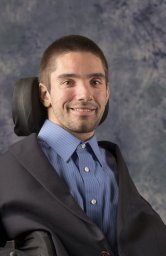 Brandon Daveler合作论文数Human Engn Res Labs, Univ Pittsburgh3
 Jon Pearlman合作论文数2Michael Lain合作论文数2John Kaplan合作论文数2
 Nikitha Deepak合作论文数Human Engn Res Labs, Univ Dr2
 Shantanu Satpute合作论文数Human Engineering Research Laboratories, VA Pittsburgh Healthcare System2
 Brown Joshua合作论文数2
 Alicia M. Koontz合作论文数University of Pittsburgh;Human Engineering Research Laboratories2Jonathan L. Pearlman合作论文数1Josh Brown合作论文数1Ian Eckstein合作论文数1D. Joshua Marino合作论文数1Hailee Kulich合作论文数Dept Rehabil Sci & Technol, Univ Pittsburgh1Sara L. Peterson合作论文数1
 Anand Mhatre合作论文数Dept Rehabil Sci & Technol, Univ Pittsburgh1Chang Dae Lee合作论文数Dept Occupat Therapy, NYU1Sangmi Park合作论文数1
 Mark Greenhalgh合作论文数Human Engn Res Labs, Univ Dr1
 Dan Ding (丁丹)合作论文数Department of Biomaterials and Tissue Engineering, College of Life Sciences, Nankai University;State Key Laboratory of Medicinal Chemical Biology, Nankai University1Patel Jenish R合作论文数Icahn School of Medicine at Mount Sinai, Icahn School of Medicine at Mount Sinai1Urs Schneider合作论文数1Turner Rose合作论文数Health Sciences Library System, University of Pittsburgh1
 Emma Maria Smith合作论文数Graduate Program in Rehabilitation Sciences, University of British Columbia1
 Johnson Reva E合作论文数Center for Bionic Medicine, Rehabilitation Institute of Chicago Chicago;Department of Biomedical Engineering, Northwestern University Evanston;Rehabilitation Institute of Chicago Chicago, Northwestern University Evanston1Livingston Ryan合作论文数1
 Hassan A. Karimi合作论文数Geoinformatics Laboratory, School of Computing and Information, University of Pittsburgh1
 Patricia Karg合作论文数Department of Rehabilitation Science and Technology, University of Pittsburgh1
 Timothy Reissman合作论文数Sibley School of Mechanical and Aerospace Engineering;Cornell University;Laboratory for Intelligent Machine Systems;Sibley School of Mechanical and Aerospace Engineering, Cornell University1
 Ian Rice合作论文数Department of Kinesiology and Community Health, College of Applied Health Sciences, University of Illinois at Urbana-Champaign1
 David Brienza合作论文数Department of Rehabilitation Science and Technology, School of Health and Rehabilitation Sciences, University of Pittsburgh;Department of Bioengineering, University of Pittsburgh;McGowan Institute for Regenerative Medicine, University of Pittsburgh1




